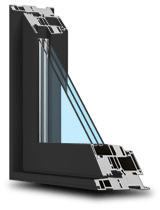
Window Replacement Cost in Edmonton: What You'll Pay and Why
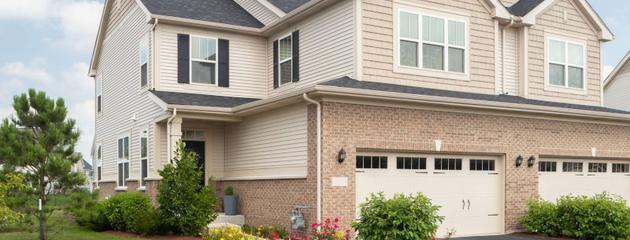

Window replacement in Edmonton typically costs $500 to $1,000 installed for a standard awning, casement, sliding tilt, or double hung tilt window, including removal of the old window, trim, and disposal.
Size, glass, and frame condition determine where a quote lands within that band, and we price a whole house as one job, from a small two-bedroom home to a large two-storey. Canadian Choice Windows & Doors™ installs year-round and never leaves openings exposed overnight. You can pay through city financing on your property tax bill, a seniors program (if you qualify), or an easy payment plan with low monthly payments. The ranges below follow the published Edmonton figures, and a measured quote sets the number for your house.
Key Takeaways
- A standard window typically costs $500 to $1,000 installed in Edmonton, including removal, trim, and disposal.
- TrueCrankless, architectural, bay, and bow windows sit in their own installed ranges, because they are not a single standard opening.
- A whole-home total follows house size and window count, and is planned as one job rather than a stack of single windows.
- Glazing, size, full-frame or retrofit, colour, and twindow count affectthe price. There is no flat percentage to add at the kitchen table.
- CEIP is financing repaid on the property tax bill, not a rebate. The program is nearing capacity, and intake pauses after 150 pre-qualifications.
How Much Does Window Replacement Cost in Edmonton?
A long heating season makes the installed price matter more than a supply-only sticker. A standard awning, casement, sliding tilt, or double-hung tilt window costs $500 to $1,000 installed, including removal, trim, and disposal. Homeowners comparing window replacement in Edmonton should start with the installed base price, then match the style. The table below shows the published installed range for each window style.
| Window style | Installed price |
|---|---|
| Awning, casement, sliding tilt, double hung tilt | $500 to $1,000 |
| TrueCrankless (tilt and turn) | $800 to $1,500 |
| Architectural | $700 to $3,200 |
| Bay | $3,000 to $5,000 |
| Bow | $3,000 to $5,000 |
A TrueCrankless window tilts in from the top or swings into the room and costs $800 to $1,500. Its concealed mechanism replaces external cranks and handles, and it opens up to 180 degrees for airflow and cleaning. Architectural windows run from $700 to $3,200 because their shape isn't a standard rectangle. A trapezoid over a staircase or an arched unit above a door is built to its own template, so the range is wide.
Bay and bow windows are $3,000 to $5,000 because the unit is a set of windows, not one sash. A bay projects from the wall, with a centre window and opening sashes at the sides. A bow is the wider set, joining four or five units into one opening. Do not divide either price by the standard per-window band.

"Before you compare two Edmonton quotes, line up three things: whether removal and trim are in the price, which glass package is written on each opening, and whether the old frame stays or comes out. When those three match, you are comparing the same job, and the totals start to make sense," explains Helen Sin, Consumer Success Manager at Canadian Choice Windows & Doors™ .
What Does the Installed Price Range Still Leave Open?
The band is a budget, not a measured quote. Width and height still move a standard window inside $500 to $1,000, and the written quote should show whether GST is included. A supply-only price leaves removal, trim, and disposal to someone else, so it is not the number to set beside this range. Glazing, colour, and the installation method are the other lines that move a single window within its band.
What It Costs to Replace Every Window in an Edmonton Home
Replacing every window is one project, so the window replacement Edmonton cost is a total for the house, not a pile of single-window stickers. The crew measures every opening, and the same scope includes removing the old windows and finishing the trim. The ranges below are the published Edmonton project ranges for each home size and window count.
- Small two-bedroom home: 15 to 19 windows, $7,500 to $19,000.
- Medium three-bedroom home: 20 to 29 windows, $10,000 to $29,000.
- Large two-storey home: 30 to 40 windows, $15,000 to $40,000.
- Luxury estate: 41 to 60 windows, $20,500 to $60,000.
Why Does the Same-Sized House Have Such a Wide Cost Range?
A house of standard casements sits lower in its band than a house with a bay or an architectural shape. Triple pane, a custom colour, or full-frame work on soft openings moves the same count upward. None of those shifts comes with a percentage you can add before a measure. Two real projects near Edmonton show the spread: five triple-pane windows in Bon Accord came to about $5,864, while 35 triple-pane windows, including shaped trapezoid units, and two doors in Sturgeon County came to about $79,956.
Dividing the house total by the window count will not give you the standard per-window price. A bow is priced as one set, at $3,000 to $5,000, not as four or five separate standard windows. Ask for the bay or bow as its own line so the rest of the house can be compared window by window. That keeps one large unit from making every other opening look expensive.
What Changes the Price of Your Windows?
Five choices move the price, and none of them has a flat add-on you should invent before a measure. Glazing, size and style, full-frame or retrofit, colour and finish, and how many windows you replace at once are the levers.
- Glazing: Double pane is two sheets with a sealed space. Triple pane adds a third sheet.
- Size and style: A wider opening uses more glass. A bay is a set of units, not one rectangle.
- Full-frame or retrofit: A sound, dry frame can stay. Rot or moisture means the frame comes out.
- Colour and finish: A custom colour, or wood- or aluminum-clad, is a different product from a standard vinyl colour.
- Number of windows: One visit includes setup, house protection, and disposal.
Ask for the glass package, the installation method, and the finish in writing before you compare totals. Sealed units use glass from Cardinal IG and Guardian Glass with Low-E coatings, an argon fill, and an Endur IG spacer. Quiet, when you need it, comes from glass thickness or laminated glass, not from the gas. Foam-filled frames are also available when you want extra thermal efficiency in the frame itself.
Why Can't You Add a Percentage at the Kitchen Table?
Each choice changes the unit we build. A wider opening needs more glass and a larger frame. A custom colour is made for that order, and wood- or aluminum-clad is a different product from a standard vinyl colour. That is why the measured quote prices each opening as it will be built, not as a percentage of a base window.
Is Triple-Pane Glass Worth It in Edmonton?
Triple pane windows in Edmonton are worth a close look when the heating season is long, and the glass you have now feels cold. The extra pane and second sealed space slow heat loss from the room.
ENERGY STAR in Canada is one national standard: a U-factor of 1.22 or lower, or an Energy Rating of 34 or higher. There are no separate climate zones. U-factor is the heat the unit lets through, so a lower number means a tighter window, and Energy Rating is another way to meet that same line.
The published DraftLOCK figures show what the third pane changes. A standard double-pane unit is rated at a U-value of 1.59 to 1.25 with an Energy Rating of 30 to 35, while the triple-pane DraftLOCK Plus is rated at 1.04 to 0.84 with an Energy Rating of 36 to 42. The slim-frame triple-pane series goes further, at 0.97 to 0.79 and an Energy Rating of 42 to 49. Your advisor confirms the rating of the exact configuration on your quote, because size and glass package change the number.
DraftLOCK Plus Slim Contour carries the ENERGY STAR Most Efficient designation. That label is for this series, not for every triple-pane window. Natural Resources Canada notes that windows, doors, and skylights can account for up to 25% of a home's energy loss. Over a long Edmonton heating season, that share of loss is where the third pane earns its place.
When Does an Extra Pane Fail to Fix the Cold?
An extra pane won't fix a rotten frame. If the wood is soft or wet, the frame comes first, and the glass choice follows. The written quote should name double or triple pane on each opening, so a triple-pane total is not set beside a double-pane total.
Retrofit or Full-Frame: Which Does Your Home Need?
We do both, and crews work year-round when the weather allows. A retrofit keeps a sound frame. Full-frame replacement is the right call when that frame shows rot or moisture damage. The advisor checks each opening at the consultation and writes the method on the quote, opening by opening.
What Does a Retrofit Leave in Place?
A retrofit sets the new window into the existing frame, provided the frame is solid and dry. The new sash and the new glass go in, and the old frame stays as the anchor. Interior trim is disturbed less than on a full-frame job.
It is the wrong choice if the wood is soft, stained, or letting water in. The quote should say, opening by opening, that the existing frame stays. A retrofit also keeps the existing frame depth, so the new unit has to suit that opening. When the old frame is solid, the job is quicker and requires less interior finishing.
When Does the Whole Frame Have to Come Out?
Full-frame replacement removes the old window back to the house framing, then installs the new frame. Before setting it, crews replace faulty or deteriorating frame components in line with Canadian Standards Association (CSA) guidelines, so the new unit isn't fastened to soft wood. Crews then insulate and seal the gap between the new frame and the framing. Licensed, in-house installers handle Edmonton projects, with no subcontractors.
Interior trim is disturbed more than on a retrofit because the old frame isn't left in place to save the casing. A cold day isn't an automatic delay, but unsafe weather is. Crews use cold-rated sealants and never leave an opening exposed overnight. That routine is the same in January as in July.
"Edmonton's freeze and thaw cycles work on a window frame every spring and fall, so I look at the sill and the bottom corners first when we decide between a retrofit and a full-frame job. If the wood is solid, the frame can stay. If it is soft, we take it back to the framing, because a new window is only as tight as what it is fastened to," notes Tony Wong, Project Manager at Canadian Choice Windows & Doors™ .
Ways to Pay: CEIP, SHARP and Payment Plans
CEIP Edmonton financing is a loan repaid on your property tax bill, not a discount off the window. The seniors program is a separate path if you qualify. Our easy payment plan offers low monthly payments, and the rate is not part of the published window range. Each option has its own test, and the window range stays the same no matter which one you use.
How Does CEIP Financing Work?
The Clean Energy Improvement Program is a financing tool, not a rebate. Canadian Choice Windows & Doors™ is a CEIP-qualified contractor in Edmonton. Residential owners can finance up to $50,000 in eligible energy upgrades, with a minimum of $3,000, and repay it on the property tax bill. The current tranche carries a fixed 6% rate for terms of up to 20 years, and you can pay the balance off early without a penalty.
If you sell, the remaining repayment can transfer to the new owner because it is tied to the property tax. Windows and doors are eligible upgrades, and only work that starts under the program qualifies. A job that has already started is not financed after the fact.
Most houses need at least three upgrades. Fewer can qualify if they are enough for the house to reach net zero, or if the property has used CEIP before. A windows-only replacement is a single upgrade, so it usually needs other eligible work.
The program is nearing capacity. New pre-qualifications go on a waitlist, and intake pauses after 150 pre-qualifications. An EnerGuide home evaluation comes before the project application, and a post-project evaluation confirms the new rating. There is no City of Edmonton rebate to subtract from the window price, though CEIP can be combined with other incentives.
What Can SHARP Cover for Seniors?
The Seniors Home Adaptation and Repair Program is an Alberta program for seniors who own and live in the home. It offers a low-interest home equity loan of up to $40,000 for repairs, adaptations, and renovations. A grant is available only to lower-income seniors who don't qualify for the loan, and it covers basic, essential repairs rather than upgrades. Check the current rules before work starts, because a window project has to fit what the program funds.
You need to be 65 or older, live in Alberta, own and occupy the home, and meet the program's income rules. The grant is not money off the window price until the program confirms you qualify.
When Does the Easy Payment Plan Fit?
The easy payment plan is the monthly option when city financing or the seniors program doesn't fit the job. The payment is set from the measured quote. The rate changes, so it is not part of the window range. It can also cover a smaller job, such as a few windows, that would not meet the CEIP three-upgrade rule.
We can only provide a price range after measuring your openings. During the consultation, we record the count, styles, glass, and your preferred payment method. It takes about 60 to 90 minutes, and we follow up with a written quote based on those measurements.
From Quote to Installation in Edmonton
Most homes are installed in one to two days once the windows are built, and the full process from consultation to installation usually takes about 2 to 6 weeks. Weather can move an installation day. It does not change production time. Once we verify the measurements, we make every window to measure at the Canadian Choice Windows & Doors™ plant in Vaughan, Ontario.
During the visit, we measure each opening and record the glass, colour, and installation method. Every installer is licensed and in-house, and Canadian Choice Windows & Doors™ has been operating in Canada since 1997. A crew of two or three arrives on the scheduled day, and each opening usually takes 45 to 90 minutes. The crew removes old units and debris.
When the site is safe, crews work through a cold snap the same way they work in milder weather: one opening at a time, and they close each opening before moving to the next. The same crews also serve the communities around the city. You can see the styles at the showroom at 10508 184 St NW. It is open Monday to Friday, so bring your measurements or photos of the openings.
What Does the Warranty Cover After the Windows Are In?
Windows carry a 25-year transferable warranty, which activates as soon as installation is complete. If a manufacturing or installation issue comes up, we dispatch a technician at no cost.
TrueCrankless windows carry a 40-year transferable warranty. Keep the warranty documents with the final quote, because a buyer will ask for them if you sell.
How to Сompare Edmonton Window Quotes
Compare the work, not only the grand total. Five checks show whether two companies priced the same job. A lower total helps only when those five items match.
- Confirm the same window count and the same styles, room by room.
- Confirm the same glazing package, including double- or triple-pane, on each opening.
- Confirm the same installation method, retrofit or full-frame, at each opening.
- Confirm that removal, trim, and disposal are named, not assumed.
- Confirm the warranty terms in writing, including what happens if you sell the house.
A window replacement quote should put those five items in writing, with taxes and exclusions easy to see. If the crew finds damage after the old window comes out, approve any change before the extra work starts.
When is a Lower Total a Different Job?
A supply-only price, a missing tax line, or a retrofit number set beside a full-frame number fails those checks. Double pane on one quote and triple pane on the other is the same kind of mismatch. If the house is outside Edmonton, replacement window costs in Canada follow different ranges. Those figures are not the Edmonton installed bands.
An Edmonton Window Budget Starts With the Installed Range
The useful number is $500 to $1,000 per standard window, installed, including removal, trim, and disposal. Whole-home totals follow the size of the house and the window count. CEIP can finance eligible work on the property tax bill, and it is not a rebate you subtract on the day you sign.
The limit is the measure. A published range cannot see rot in the frame, a custom shape, or whether the City is still taking new CEIP pre-qualifications. Book a free in-home consultation , and we will price the openings you actually have.
Frequently Asked Questions
How Much Does It Cost to Replace One Window in Edmonton?
A standard window costs $500 to $1,000 installed, including removal, trim, and disposal. A TrueCrankless window is $800 to $1,500, and a bay or bow set is $3,000 to $5,000. Architectural windows run from $700 to $3,200. The figure for your opening comes after measurement, because width and height still move the price within the range.
How Much Does It Cost to Replace All the Windows in a House in Edmonton?
A small two-bedroom home with 15 to 19 windows is $7,500 to $19,000. A medium three-bedroom home with 20 to 29 windows is $10,000 to $29,000. A large two-storey home with 30 to 40 windows is $15,000 to $40,000, and a luxury estate with 41 to 60 windows is $20,500 to $60,000. These are project ranges for that window count, not a price you get by multiplying one window.
Does the Price Include Removing the Old Windows?
Yes. The $500 to $1,000 standard price includes removal of the old windows, trim, and disposal. Ask the quote to say that in writing, including who hauls the old units away. A supply-only price is different and does not include installation.
Is CEIP a Rebate or a Loan?
CEIP is financing, not a rebate. You repay it on the property tax bill, and the remaining balance can transfer to a new owner if you sell. Residential owners can finance up to $50,000 of eligible upgrades, only for work that starts under the program. The program is nearing capacity, new pre-qualifications go on a waitlist, and intake pauses after 150 submissions.
How Long Does Window Replacement Take in Edmonton?
The full process from consultation to installation usually takes about 2 to 6 weeks. Installation of most homes takes one to two days. Crews work year-round when the weather allows, and they close up each opening as they go. Unsafe weather can move the install day. It does not restart the production clock.

1000’s of Colours & Textured Finishes
Transform your home from ordinary to extraordinary with our new coloured and non-glare textured finishes. Available in a wide array of colours as well as custom matched colours for your very own personalized design.
Our Most Popular Replacement Window Colours: