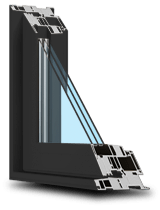
What is a window wall? A guide for Canadian homes
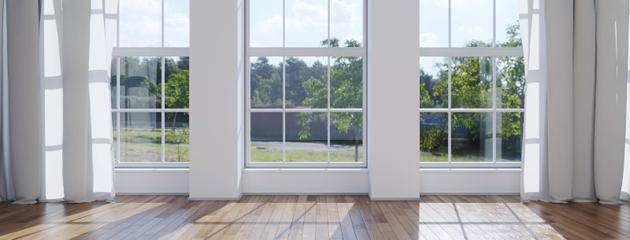

A window wall replaces a regular wall, or a large part of one, with a continuous run of glass. The idea is simple: bring in as much natural light as possible, frame the view outside, and blur the boundary between the indoor space and the backyard, garden, or city skyline.
In Canadian homes, window walls are usually built as folding (bifold) door systems or as a combination of large fixed and operable panels, rather than as the commercial slab-to-slab assemblies the term sometimes refers to. This guide explains how residential window walls actually work, where they fit, what they cost, and what to look for if you're considering one.
Key takeaways
- In residential design, a window wall is a large, continuous glass surface that opens a room to a view, often built as a folding or bifold door system in Canadian homes.
- The strict architectural term refers to a commercial system installed between floor slabs. This article uses the residential meaning, which is closer to a wall-sized door or window combination.
- Window walls bring in significantly more natural light than standard windows and create a direct connection to the outdoors.
- Energy efficiency depends on the full system glass package, frame construction, seals, and gas fills, not just the size of the glass.
- Canadian Choice Windows & Doors folding patio doors (also called bifold doors or window walls) use thermally broken aluminum profiles, German hardware, ASTM-approved acrylic sealing, and double or triple-pane glass with Low-E coatings.
- Cost varies widely based on size, glass package, configuration, and structural work. A proper in-home consultation is the only way to get a real number.
What is a window wall?
In a single-family home or low-rise residential context, "window wall" is used more loosely, usually describing one of these:
- A folding (bifold) patio door system that opens an entire wall to the backyard.
- A combination of large fixed picture windows and operable casements or sliders that together replace most or all of a wall.
- A floor-to-ceiling glass area built as part of a custom home design.
Canadian Choice Windows & Doors product line calls its folding patio doors "bifold doors or window walls." In other words, in a residential project, when someone says they want a window wall, they're usually picturing a folding door system or a large operable-plus-fixed window combination.
Why the distinction matters
If you're designing a new home or doing a major renovation, the structural and engineering requirements for a true commercial-style window wall (slab-to-slab) differ from those for a folding door system or a large window combination. The latter is what Canadian Choice Windows & Doors manufactures, installs, and services across Canada. The former usually requires a different supplier and an architect.
Why install a window wall in your home?

A few benefits drive most residential window wall decisions:
Maximum natural light
A traditional window opens up part of a wall to daylight. A window wall opens up most of it. The effect on the room is significant: colours read more accurately, the space feels larger, and the dependence on artificial light drops during the day. For rooms with a view worth framing, this is the main reason homeowners commit to the project.
Indoor-outdoor connection
When a folding window wall is fully open, the boundary between the room and the patio largely disappears. The space behind it functions like an extension of the outdoor area, useful for entertaining, family meals on a deck, or simply opening up the back of the home on a warm summer day. Even when closed, the glass keeps the view visible from inside.
Ventilation
Folding systems open fully, providing ventilation through a much wider opening than any standard sliding or French door can match. Combination systems with operable casements alongside large fixed windows provide targeted airflow without compromising the view.
Resale appeal
A well-designed window wall is often a selling feature. Buyers reading a listing pay attention to the back of the home, and a wall of glass facing a garden or backyard reads as a premium upgrade. The actual contribution to resale value depends on the home, the neighbourhood, and how the window wall integrates with the rest of the renovation.
Energy savings: with caveats
Modern window walls with the right glass package can perform reasonably well thermally. They won't outperform a well-insulated solid wall, but they don't need to; they need to outperform the older single or double-pane glass they replaced. Where homeowners often see the biggest improvement is in air leakage: a properly sealed folding system with a multi-point compression seal lets significantly less air through than the older sliding doors many homes had.
“What surprises most homeowners during the consultation is how much the right glass package matters on a project this size. Double-pane glass with Low-E and argon makes a window wall feel like a finished wall in winter. The wrong glass on the same project can feel cold against your skin if you stand near it. We spend most of the design conversation on the glass and the seal, not the frame colour.”
— Helen Sin, Consumer Success Manager, Canadian Choice Windows & Doors
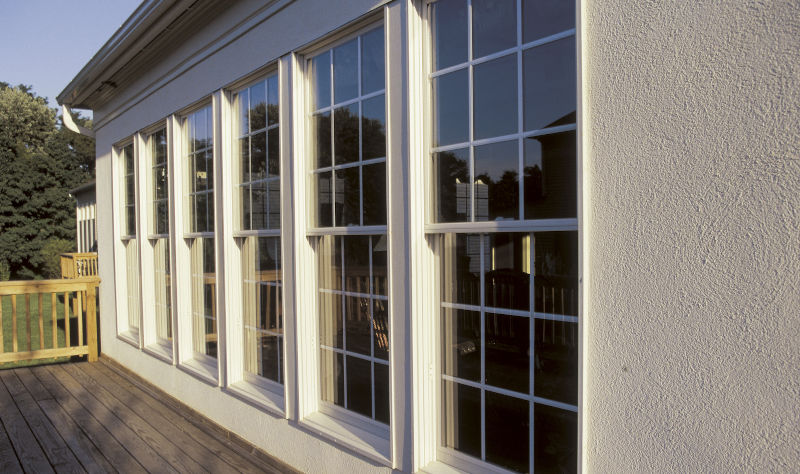
How Canadian Choice Windows & Doors builds residential window walls
Canadian Choice Windows & Doors folding patio doors, sold and labelled as bifold doors or window walls, are built with a few specific components worth understanding:
Frame construction
- Thermally broken aluminum profiles. The thermal break inside the frame prevents heat transfer from the outside to the inside, which is essential in a large glazed system, where the frame would otherwise be a major source of heat loss.
- Premium German hardware. The hinges, rollers, and locking points are sourced from a category in which engineering tolerances directly affect how the door operates after a decade of use.
- Interlocking panels that close with an air-tight compression seal. This is the same sealing principle that makes casement windows energy-efficient , applied to a multi-panel system.
Glass package
- Double-pane glass is the baseline for Canadian climates. Triple-pane is recommended in prolonged cold conditions or for north-facing walls that lose more heat.
- Low-E coatings reflect heat back into the room in winter and block UV rays year-round.
- Glass units sourced from Cardinal I.G. and Guardian Glass manufacturers, known for the quality of their LoE coatings and insulated glass assembly.
- Argon gas fills the space between the panes, further slowing heat transfer.
Sealing system
- ASTM-approved acrylic system that bonds the sealed glass unit to the sash. This replaces the older rubber strips that deteriorate over time.
- A compression seal that engages as the multi-point lock closes, with the seal compressing harder against the frame in high winds, improving the seal under exactly the conditions that would let drafts through other systems.
Other features
- Built-in retractable screen on every folding system, with independent movement from the glass panels. Tucks behind the frame when not in use.
- Optional foam insulation to increase thermal efficiency.
- TrueCrankless Series available for the folding configuration.
- Exceeds NFRC, CSA, and Energy Star standards.
- Up to 30% improvement in home energy rating through air-leak prevention and thermal upgrades.
- 25-year transferable warranty.
Pairing window walls with other windows and doors
A window wall rarely stands alone. The combinations that work well depend on the room behind it and how the space is used.
Folding door + clerestory windows
Above a folding door, a row of clerestory windows (high, narrow fixed windows) adds extra daylight without affecting privacy or the ground-level view. Works well in rooms with high ceilings.
Folding door + side picture windows
On a back wall wider than the folding door alone, fixed picture windows on either side extend the glass without the cost or complexity of additional operable panels. The room reads as a single window wall, but only the centre folds open.
Large casement combination
If a folding door isn't the right solution, for example, in a room that doesn't open to a patio or where the budget doesn't fit, a combination of large fixed picture windows with casement windows on the sides can achieve a similar window-wall effect. Canadian Choice Windows & Doors manufactures both styles in matching frame profiles, so the combination reads as a continuous system.
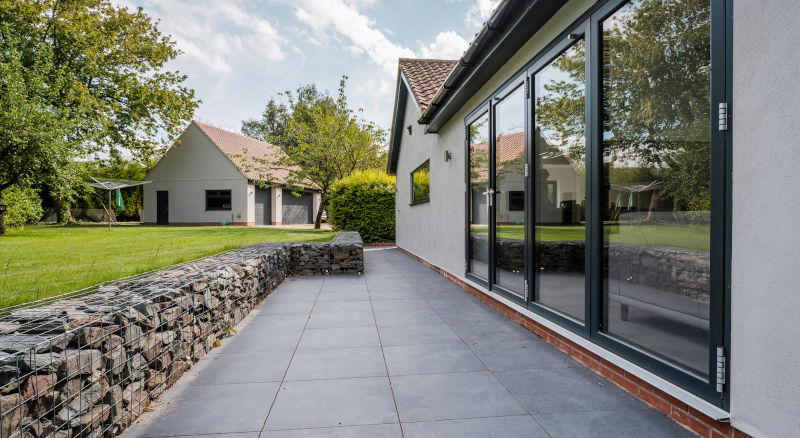
Energy efficiency: what actually matters on a window wall
A window wall is one of the largest single-glazed surfaces in any home. That means the components matter more here than they do on a small window — what you'd barely notice in a 2x3-foot opening can become a real heat-loss issue across a 12-foot folding door.
Glass package
- Double-pane vs. triple-pane: triple-pane adds significant thermal resistance on large surfaces. Worth considering for cold regions, north-facing walls, or any window wall wider than 8 feet.
- Low-E coatings: reflect infrared heat back into the room in winter and block UV year-round. Standard for modern energy-efficient systems.
- Argon gas fills: slow heat transfer between panes. Common in quality manufacturers' standard configurations.
- Warm-edge spacers: the strip separating the panes around the perimeter. Reduces heat loss at the edge of each glass unit, one of the weakest points in any insulated glass assembly.
Frame and seal
- Thermal break in aluminum frames is non-negotiable on a window wall. Without one, the frame conducts cold straight through, defeating the glass package.
- Compression seals at every panel interface and at the meeting point between panels.
- Self-draining sill and threshold design direct water outward and prevent leaks behind the system.
How does a Canadian Choice Windows & Doors window wall handle this
- Thermally broken aluminum profiles standard.
- Double or triple-pane glass with Low-E coatings.
- ASTM-approved acrylic sealing system.
- Multi-panel compression seal.
- Optional foam insulation for additional thermal performance.
Are window walls secure?
A window wall is a large glazed entry point, so it gets more security attention than a smaller window. The features that matter are the same as those on any quality patio door system.
Standard security features
- A multi-point locking system that engages the panels at several points, not just at the centre.
- Reinforced frame profiles. On thermally broken aluminum, the metal itself contributes to structural rigidity.
- Tempered safety glass: shatters into small, blunt pieces if broken, as required by building code on most large glazed openings.
- Optional laminated glass holds together even when broken, making forced entry through the glass significantly harder.
Additional considerations
- Impact-resistant glass options for homes in areas with severe weather exposure.
- Security pin or floor bolt on the operable panels.
- Exterior-facing motion lighting near the system doesn't change the door but reduces its appeal as an entry point.
How much do window walls cost?
Honestly, a single price range for a residential window wall isn't useful. The cost is driven by several variables, and pretending otherwise sets expectations that won't match the actual quote.
What drives the cost
- Total size of the opening: width, height, and number of panels.
- Glass package: double vs. triple pane, Low-E coatings, argon vs. krypton gas fills, tempered vs. laminated.
- Frame configuration: folding system, sliding combination, or large fixed-plus-operable combination.
- Hardware quality: basic locks vs. multi-point European hardware.
- Structural work on most window walls requires an engineer's review and sometimes structural changes to the wall, especially if the opening is being enlarged.
- Site access to second-floor or upper-storey installations costs more to install than ground-floor ones.
- Location pricing varies across Canadian markets.
Why an in-home consultation matters
Because so many variables affect cost, a meaningful quote requires an on-site visit. Canadian Choice Windows & Doors in-home consultation is free, no-obligation, and includes professional measurements, a structural review of the opening, and a detailed quote based on the actual configuration you're considering. Confirm pricing the same way you'd confirm pricing for any major renovation — with a site assessment, not generic figures.
“On a window wall project, accurate measurement and proper structural assessment are essential. The opening is often larger than the original framing, so we check the wall structure, the header, and the surrounding finishes before we order anything. It's faster to address a hidden issue at consultation than to discover it during install.”
— Tony Wong, Project Manager, Canadian Choice Windows & Doors
Window walls compared to traditional windows
| Feature | Residential window wall | Traditional windows |
|---|---|---|
| Glass area | Wall-sized, often floor-to-ceiling | Sized to the opening, typically a fraction of the wall |
| Frame material | Thermally broken aluminum (folding systems); uPVC is also available in combination systems | uPVC, fibreglass, wood, or aluminum |
| Installation | Often involves structural review and engineering input | Fits an existing rough opening with minimal structural work |
| Energy performance | Strong when properly specified — glass and seal are critical | The wide range depends on the style and the glass package |
| Operability | Folding panels open the entire opening; combination systems mix operable and fixed | Each window operates independently within its own opening |
| Best for | Rear walls, walkouts, rooms facing scenic views | Most rooms in most homes |
When a window wall is the right choice
- The room behind it faces a yard, garden, lake, or city view worth framing.
- You spend a significant amount of time in the room and want it brighter.
- The space is used for entertaining, indoor-outdoor living, or family gatherings.
- You're already planning a major renovation and can incorporate the structural work.
- Resale value is part of your calculation, and the home is in a market that rewards architectural features.
When it might not be
- The wall faces a neighbour's home, a busy street, or a view you'd rather not look at.
- The opening is on a north-facing wall that gets little direct sunlight (the glass area increases heat loss without delivering the daylight benefit).
- The budget is tight enough that the project would force compromises on the glass or seal; a smaller, well-specified window wall outperforms a larger one with weaker components.
- The room doesn't connect to the outdoor space, and you don't need the indoor-outdoor function. A large picture window combination may give you the daylight benefit without the cost and structural work of a folding system.
Window wall maintenance
Window walls are low-maintenance, but a few routine habits keep them performing well over the long term:
- Clean the glass regularly. Large glass surfaces show streaks and water spots more visibly than small ones.
- Wipe down the compression seals once or twice a year. Built-up grit in the seal channel affects how completely the panels close.
- Lubricate the multi-point lock and hinges annually with a light silicone-based lubricant.
- Inspect the threshold drain channels in spring and fall. Debris in the drainage path causes water to back up under the sill.
- Check the screen if installed. Retractable screens on folding systems are durable but benefit from occasional cleaning of the track.
Canadian Choice Windows & Doors' 25-year transferable warranty covers manufacturer defects and certain hardware failures. After-sales service is part of the install; if something stops working as it should, the service team can address it.
Why Canadian homeowners choose Canadian Choice Windows & Doors for window walls
Canadian Choice Windows & Doors has been serving Canadian homes for over 40 years. Every system is manufactured in Canada at our facility, custom-built for your opening, and installed by our own in-house teams — no subcontractors.
- Recommended by Bryan Baeumler, HGTV host and Canada's recognized construction expert.
- Over 3,100 positive reviews on HomeStars.
- More than 1 million windows and doors have been installed across Canada.
- 25-year transferable warranty on every folding patio door/window wall system.
- Thermally broken aluminum profiles with premium German hardware.
- ASTM-approved acrylic sealing system bonded directly to the glass unit.
- Cardinal I.G. and Guardian Glass insulated glass units with LoĒ coatings.
- A built-in retractable screen is included on every folding system.
- Exceeds NFRC, CSA, and Energy Star standards. Up to 30% improvement in home energy rating.
- Dedicated project manager from consultation through installation.
H2: Frequently asked questions
What's the difference between a window wall and a curtain wall?
In commercial construction, a window wall is installed between the floor slabs of a building, supported by the slab below and tucked under the slab above. A curtain wall hangs on the outside of the floor slabs and is structurally independent. In residential construction, the term "window wall" is used more loosely to describe a large glass system that replaces most of a wall, often a folding (bifold) door system or a combination of fixed and operable windows. Canadian Choice Windows & Doors residential window walls are built as folding patio door systems.
Can a window wall be opened for ventilation?
Yes, depending on the configuration. Folding (bifold) systems open the entire wall when fully folded back, giving you the widest possible ventilation. Combination window walls (with operable casements or sliders alongside fixed panels) provide targeted airflow without opening the full system. Pure fixed glass window walls don't open, but pair well with operable windows in adjacent walls.
Are window walls energy-efficient?
Modern window walls with the right glass package perform well thermally. The components that drive efficiency are the glass (double or triple-pane, Low-E coatings, argon gas fills, warm-edge spacers), the frame (thermally broken aluminum), and the seals (compression sealing at every panel interface). Canadian Choice Windows & Doors' folding patio door window walls use thermally broken aluminum profiles, ASTM-approved acrylic sealing, and Cardinal I.G. or Guardian Glass insulated glass units and can improve a home's energy rating by up to 30% compared to the older glass systems they replace.
Do window walls reduce outside noise?
Yes, meaningfully. Double-pane and triple-pane glass dampens sound significantly compared to single-pane glass, and laminated glass options further reduce noise transmission. The seal also matters: a tight compression seal prevents airborne noise from leaking through gaps. Window walls in homes near busy streets or under flight paths benefit from a thicker glass package and laminated layers specifically chosen for sound reduction.
How customizable are window walls?
Highly. You can choose the configuration (folding system, sliding combination, fixed-plus-operable), the panel sizes, the frame colour, the glass package (double- or triple-pane, clear or tinted, Low-E or premium coatings), the hardware finishes, and the threshold style. Canadian Choice Windows & Doors folding systems are available in multiple panel counts with custom widths and heights, and the frame is available in a range of factory finishes.
Are window walls hard to maintain?
No. Regular cleaning of the glass, occasional wiping of the seals, annual lubrication of the multi-point lock and hinges, and seasonal inspection of the threshold drain channels keep most systems performing well for decades. Folding systems have more moving parts than a fixed window wall, so they need slightly more attention, but the maintenance is straightforward and rarely requires professional service.
Do I need a building permit for a window wall installation?
In most cases, yes. Window wall installations typically involve enlarging or modifying an existing opening, which usually requires a building permit and may require structural engineering review. The Canadian Choice Windows & Doors project team can advise during the in-home consultation. Permit requirements vary by municipality, so confirm locally before signing the order.
How long does a window wall installation take?
Site work for a typical residential window wall installation usually runs 1 to 3 days, depending on the size of the opening, whether the opening needs structural modification, and any finishing work required around the new system. Manufacturing lead time before installation is typically several weeks for a custom-configured system.

1000’s of Colours & Textured Finishes
Transform your home from ordinary to extraordinary with our new coloured and non-glare textured finishes. Available in a wide array of colours as well as custom matched colours for your very own personalized design.
Our Most Popular Replacement Window Colours: