A Homeowner's Guide to Common Window Sizes for Different Rooms


If you're replacing windows or planning a new build, one of the first questions homeowners face is what window size is required. The answer depends on the room, the window type, and whether your existing frame is standard. Choosing the correct size simplifies installation, while incorrect sizing can lead to additional costs and structural adjustments.
This guide gives you the practical information you need: standard dimensions by window type, room-by-room recommendations, and clear guidance on when standard sizing works and when you genuinely need to go custom. This guide provides clear, practical information to support informed decision-making.
Most Canadian homes use standard window sizes . In many homes built within the last few decades, standard replacement sizes often fit without structural changes. That means faster installation, lower cost, and no surprises.
Most standard replacement windows in Canada range from:
- Double-hung: 24–48" wide
- Casement: 16–40" wide
- Sliding: 36–84" wide
- Awning: 24–48" wide
Exact dimensions depend on room type and manufacturer.
Key Takeaways
- Standard window sizes in Canada are measured width × height in inches — for example, 32×54 means 32 inches wide, 54 inches tall.
- Most window types follow commonly available size ranges: double-hung runs 24–48" wide, casement 16–40" wide, sliding windows 36–84" wide.
- Room function drives sizing decisions: bedrooms prioritize egress compliance, kitchens prioritize ventilation, and living rooms prioritize light and views.
- Standard sizes are typically more cost-effective and faster to install. Custom windows typically increase costs and lead times compared to standard options.
- Canadian building codes require bedroom and basement windows to meet egress minimums — a fixed requirement regardless of your style preference.
- Triple-pane glazing is worth considering in colder Canadian climates: it reduces heat loss and improves year-round comfort.
- Professional measurement before ordering prevents the most common and most expensive installation mistakes.
Understanding Window Size Notation in Canada
Canadian windows are measured in inches using a width-by-height format. A window listed as 32×54 is 32 inches wide and 54 inches tall. The first number represents width, and the second represents height.

Confusion often arises when distinguishing among the rough opening (the framed hole in the wall), the frame size (the outer dimensions of the window unit), and the glass size (the visible area). In most replacement scenarios, measurements are taken from the existing frame, though this may vary depending on installation requirements.
Replacement Windows vs. New Construction Windows
Replacement windows are sized to fit into an existing frame without disturbing the surrounding wall. They're slightly smaller than the rough opening, so they drop into place cleanly. New-construction windows include a nailing fin around the perimeter. They're designed for new builds, where the frame is built around the window.
If you're updating windows in an existing Canadian home, In most cases, replacement windows are the appropriate option. Knowing which type you need before you measure saves time and prevents you from ordering the wrong product entirely.

Common Window Sizes by Type
The table below covers the most commonly available dimensions for each major window type sold in Canada . These represent the sizes that manufacturers produce in volume, meaning they're readily available, competitively priced, and suited to the vast majority of Canadian residential frames.
| Window Type | Common Widths (inches) | Common Heights (inches) |
|---|---|---|
| Double-Hung | 24, 28, 32, 36, 40, 48 | 36, 46, 54, 60, 66, 72 |
| Single-Hung | 24, 28, 32, 36 | 36, 46, 54, 60, 66 |
| Casement | 16, 24, 30, 36 | 24, 36, 48, 60, 72, 84 |
| Sliding | 36, 48, 60, 72, 84 | 24, 36, 48 |
| Awning | 24, 30, 36, 48 | 20, 24, 30, 36 |
| Picture | 24, 36, 48, 60, 72 | 24, 36, 48, 60, 72 |
| Bay (3-panel) | 126, 146, 184 (total width) | 48, 60 |
A Note on Manufacturer Variation
These ranges reflect common industry standards rather than a single universal specification. Individual manufacturers may offer slightly different increments. Before ordering, always confirm the exact sizes your supplier stocks and verify against your measured opening.
Double-Hung Windows
The most common window type in Canadian homes. Both sashes move; the top sash drops independently, the bottom sash rises, allowing flexible ventilation control. Standard widths run from 24 to 48 inches, and heights from 36 to 72 inches. They work in almost every room and suit most architectural styles.

Casement Windows
Hinged on one side and cranked open outward, casement windows create an excellent seal when closed, a real advantage in Canadian winters. They're also the most effective window type for capturing side breezes. Standard widths range from 16 to 40 inches; heights can reach 84 inches. Very wide casement windows (over 36 inches) typically require a heavier-duty operator to function well over the long term.

Sliding Windows
Sliding windows move horizontally and are particularly well-suited to wide, low openings common above countertops or in basements. Standard widths run 36 to 84 inches; heights are typically 24 to 48 inches. They're straightforward to operate and require no clearance for swing, making them practical in tight spaces.

Awning Windows
Hinged at the top, awning windows open outward from the bottom . The key practical advantage is that they can remain open during light rain without letting water in. Standard sizes run 24 to 48 inches wide and 20 to 36 inches tall. Often used in combination with fixed or picture windows to add ventilation without sacrificing the view.

Picture Windows
Fixed windows with no moving parts . Their purpose is to maximize natural light and frame exterior views; they do not open. Available in a wide range of sizes from 24×24 up to 72×72 or larger on custom orders. Frequently paired with operable windows on either side to get both unobstructed views and ventilation in the same wall section.

Bay and Bow Windows
Bay windows project outward from the wall at 30°, 45°, or 90° angles, with a larger central panel flanked by two smaller sidelights. Total widths typically run 126 to 184 inches. Bow windows use four or more panels in a gentle curve. Both types add interior space and create a strong visual focal point. Because they project from the wall, installations are more involved than with a standard flat window.

Window Sizes by Room: What Works Where
Window size is determined not only by the opening but also by the room's function. A bathroom and a living room have fundamentally different requirements. The table below gives a practical starting point for each room in a typical Canadian home.
| Room | Recommended Size Range | Best Window Type | Priority |
|---|---|---|---|
| Living Room | 36×48 to 60×72 | Picture, Casement, Bay | Light, views, aesthetics |
| Bedroom | 24×36 to 36×60 | Double-Hung, Casement | Light, privacy, egress |
| Kitchen | 24×24 to 36×48 | Casement, Awning, Sliding | Ventilation, light |
| Bathroom | 14×24 to 30×36 | Awning, Frosted Casement | Privacy, ventilation |
| Basement | Min. 20×24 (egress) | Slider, Hopper, Casement | Egress safety, light |
Living Rooms: Maximizing Light and Views
Living rooms benefit from the largest windows in the house. A picture window in the 48×60 to 60×72 range creates a strong visual anchor and floods the room with natural light. Pair it with operable casement or double-hung windows on either side for ventilation. Bay windows are also effective in this setting; they add depth, increase the perceived size of the room, and create natural seating or display space.
South-facing living room windows capture the most daylight across the full day. For rooms with significant western exposure, low-E glass coating is worth specifying to reduce afternoon glare and heat gain without sacrificing light.

Bedrooms: Egress Requirements Matter
Every bedroom in a Canadian home must have at least one window that meets egress requirements, meaning it can be used as an emergency exit. The minimum opening is 5.7 square feet (0.53 m²), with a clear width of at least 20 inches and a clear height of at least 24 inches. This is a building code requirement, not a preference.
Many double-hung or casement windows in the 28×54 to 36×60 range tend to meet egress requirements, though this depends on the specific product and opening configuration.
For privacy, consider placement height carefully. Windows positioned higher on the wall bring in light without allowing easy sightlines from outside. Frosted or textured glazing is another option for ground-floor bedrooms facing a street or neighbour.

Kitchens: Ventilation is the Priority
Kitchen windows let in light and move air. Over-sink windows are typically 24 to 36 inches wide and 24 to 30 inches tall, sized to fit within standard cabinet configurations. Casement windows are the strongest choice here: they open fully, create a direct airflow path, and are easy to operate with one hand.
Awning windows above a counter or range are useful where a full casement would swing into a work area. Garden windows, small projections with side panels, are a practical option for suitable for growing herbs with adequate light exposure without taking up counter space, typically measuring around 42×36 inches.

Bathrooms: Privacy Without Sacrificing Ventilation
Bathroom windows are typically smaller, placed higher on the wall, and specify frosted or obscure glass. Awning windows work particularly well in bathrooms because they provide ventilation even in rain and, when placed above eye level, offer natural privacy without needing a covering.
Common sizes run from 14×24 to 24×36 inches. The goal is enough ventilation to reduce moisture and prevent mould, without compromising privacy or creating a security concern.
Basements: Egress and Light
Basement windows serve two distinct purposes: providing emergency egress from below-grade rooms used for sleeping and bringing in natural light to typically dark spaces. Where a basement room is used as a bedroom, the same egress minimums apply as for above-grade bedrooms.
For egress compliance in below-grade installations, window wells are commonly used to allow a standard-sized window to meet the required clear opening dimensions even when the window sits partially below grade. If you're adding or upgrading basement windows, confirm both the window size and the well dimensions meet your local building authority's current requirements.
Standard vs. Custom Window Sizes: How to Decide
For most Canadian homeowners, replacing existing windows with standard sizing is the right choice. It's faster, less expensive, and covers the overwhelming majority of residential frames built in the last three decades. Custom windows are required when the opening genuinely can't accommodate a standard size, not as a default option.
| Factor | Standard Sizes | Custom Sizes |
|---|---|---|
| Cost | Lower — mass production keeps prices down | Typically 20–50% higher |
| Lead time | Usually in stock or with a short lead time | 4–8 weeks manufacturing time |
| Availability | Wide selection, readily accessible | Made to order for your specific opening |
| Best for | Replacements, new builds, standard frames | Older homes, unique architecture, and renovations |
| Installation | Faster — frames are pre-designed | May need framing adjustments |
When You Actually Need Custom
Custom sizing is genuinely necessary when you're working with an older home where frames were built before standardization took hold, when you're enlarging an existing opening as part of a renovation, or when the architectural design calls for a specific proportion that no standard size matches. It's also the right call for historic homes where matching original window profiles matters.
If a contractor suggests custom sizing for a straightforward replacement in a post-1990 home, it is advisable to seek a second professional assessment. Most standard Canadian frames accommodate readily available sizes with minimal or no adjustment.
Window Size, Glass, and Energy Performance
In Canada, window sizing decisions are inseparable from energy performance. A larger window means more glass, and glass transfers heat more readily than an insulated wall in both directions. Getting the size right for the room, combined with the right glazing specification, is how you maintain comfort year-round without driving up heating and cooling costs.
Double Pane vs. Triple Pane for Canadian Conditions
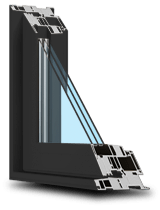
Double-pane windows are widely used in modern Canadian construction.In modern Canadian construction and perform adequately in most climates. Triple-pane windows add a third layer of insulating gas, typically argon or krypton, and are meaningfully better in regions where winter temperatures regularly drop below -20°C, or where an exterior wall faces prevailing winds.
| Glass Type | U-Factor Range | SHGC Range | Best For |
|---|---|---|---|
| Double Pane (standard) | 0.30 – 0.50 | 0.25 – 0.60 | Most Canadian climates |
| Double Pane (low-E) | 0.27 – 0.40 | 0.20 – 0.45 | Energy savings focus |
| Triple Pane | 0.15 – 0.30 | 0.20 – 0.40 | Cold climates, noise reduction |
U-factor measures how much heat passes through a window; the lower, the better. SHGC (Solar Heat Gain Coefficient) measures how much solar heat the window lets in. You want this higher on south-facing windows in cold climates and lower on west-facing windows where afternoon heat is a problem.
ENERGY STAR Certification in Canada
ENERGY STAR-certified windows are independently verified to meet performance thresholds for Canada's climate zones. There are four zones across the country, from the milder Pacific coast through to the extreme cold of the Prairies and Northern regions. Specifying ENERGY STAR windows for your climate zone is the most reliable way to ensure your windows meet current efficiency standards without interpreting the ratings yourself.
A well-sized window in the wrong climate zone specification still underperforms. Size and energy rating need to be considered together.
How to Measure for a Replacement Window
Accurate measurement is the single most important step in the replacement process. An incorrectly measured window either won't fit at all or will fit with gaps that let in drafts, moisture, and insects, negating the energy and comfort benefits of a new installation.
Step-by-Step Measuring Guide
- Measure the width at three points: top, middle, and bottom of the existing frame. Use the smallest measurement.
- Measure the height at three points: left, centre, and right from the sill to the top of the frame. Use the smallest measurement.
- Check for a square by measuring the corners to the corners diagonally in both directions. If the two diagonal measurements differ by more than 6mm, the frame is out of square and may need to be addressed before a new window is ordered.
- Note the frame depth and the thickness of the wall from interior to exterior. This confirms whether a standard frame profile fits or whether a custom depth is needed.
- For replacement windows, deduct approximately 6mm from both width and height measurements to allow for installation tolerances and shimming.
Even with careful self-measurement, it is strongly recommended to have a professional take final measurements before ordering. A single incorrect measurement on a custom window costs significantly more to fix than a pre-installation site visit.
Common Mistakes When Choosing Window Sizes
Most window sizing problems are preventable. These are the errors that are the most common issues in replacement and renovation projects:
- Measuring the glass area instead of the frame: the glass is always smaller than the frame. Always measure the full frame opening.
- Ignoring the rough opening: the rough opening is larger than the frame. Confusing the two leads to ordering a window that's too large to fit.
- Choosing size for aesthetics only: a larger window may look better on paper, but create energy performance issues if it's not paired with the right glazing for your climate zone and orientation.
- Skipping egress checks on bedroom or basement windows: this is a safety and building code issue, not just a sizing preference. Confirm compliance before ordering.
- Not accounting for swing clearance with casement or awning windows: an outward-opening casement positioned above a deck or walkway may not be able to open fully, or may create a hazard. Check clearance before specifying.
- Ordering custom when standard would work: custom windows add cost and time. If your frame is standard, a standard window almost always fits correctly with minor shimming.
Getting It Right the First Time
Window sizing decisions have long-term consequences. A window that's slightly too small creates air infiltration at the edges. One that's too large requires structural work you didn't plan or budget for. The right glazing specification in the wrong climate zone still costs you on heating bills every winter.
Working with an experienced window provider ensures accurate sizing and appropriate product selection based on your home and climate. The process is straightforward: accurate measurement first, then a clear recommendation based on your room, your frame, and your climate. No pressure to go custom when standard works, no oversized glazing packages where they're not needed, just honest guidance built around what your home actually requires.
Confirming measurements with a qualified professional before ordering helps prevent costly errors. Getting the measurements and specifications confirmed by a professional before placing an order is significantly less expensive than correcting a sizing mistake after the window arrives.
Frequently Asked Questions
What window sizes are most common in Canada?
There is no single "standard" size — it varies by window type. For the most common type, double-hung windows, standard sizes run from 24 to 48 inches wide and 36 to 72 inches tall. The most frequently installed size in Canadian residential homes is around 32×54 inches. For sliding windows, 48×24 and 60×24 are common. For casements, 24×48 and 30×48 are typical starting points.
How do I know if I need a standard or custom window?
If your home was built after roughly 1985 and you're doing a like-for-like replacement, you almost certainly need a standard window. Measure the existing frame, compare against the standard sizes your supplier stocks, and select the closest match. Custom sizing is necessary when the opening is genuinely non-standard, when you're enlarging the opening, or when the home predates standardized residential construction.
Does a larger window always mean more heat loss?
A larger window does mean more glass area, and glass transfers heat differently than an insulated wall. However, the glazing specification matters as much as the size. A large triple-pane, low-E window with an insulated frame can perform comparably to a much smaller single-pane window in terms of heat loss. The key is matching the glazing specification to your climate zone — which is exactly what ENERGY STAR certification is designed to confirm.
What are the egress requirements for bedroom windows in Canada?
Canadian building codes require at least one bedroom window to have a minimum clear opening of 5.7 square feet (0.53 m²), with a minimum clear width of 20 inches and a minimum clear height of 24 inches. The sill height must be no more than 1 metre (approximately 39 inches) from the floor. These are minimum requirements — local building authorities may have additional specifications, so it's worth confirming with your municipality before ordering.
Can I install a window myself, or do I need a professional?
A straightforward replacement of a standard-sized window in a standard frame can be done by an experienced DIYer, but it requires accurate measurements, proper sealing, and correct shimming. Errors in any of these areas create air leaks, moisture infiltration, and voided warranties. For anything involving structural changes, custom sizing, bay or bow windows, or below-grade installations, professional installation is the practical choice. Most manufacturer warranties also require installation by a certified installer to remain valid.
How long does window replacement take?
For standard in-stock windows, the installation itself typically takes two to four hours per window for an experienced installer. Lead time for standard windows is usually one to three weeks. Custom windows typically add four to eight weeks of manufacturing time before installation can begin. If you're replacing multiple windows across the house, the work is usually staged over one or two days, depending on the total number of units.

1000’s of Colours & Textured Finishes
Transform your home from ordinary to extraordinary with our new coloured and non-glare textured finishes. Available in a wide array of colours as well as custom matched colours for your very own personalized design.
Our Most Popular Replacement Window Colours: