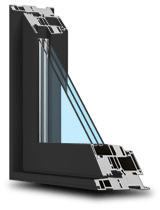
Best windows for Canadian winters: what to look for, part by part
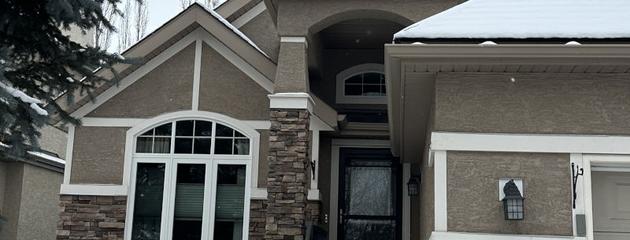

The best windows for Canadian winters share six things: a well-insulated frame, a low-E glass package with argon fill, a warm-edge spacer, an operating style that closes against a compression seal, certified ENERGY STAR performance and careful installation. The brand matters less than how those parts work together.
If you're searching for the best windows Canada has to offer, compare parts, not brochures. This guide explains each part in plain language, so you can read any quote and see what's missing.
What makes a window good for a Canadian winter
A good winter window keeps heat in, stops cold air at the seals and keeps the room-side glass warm enough to resist frost. Six parts decide how well it does that.
| Component | What to look for | Why it matters in winter |
|---|---|---|
| Frame | Multi-chamber uPVC with welded corners, or a protected wood or aluminum-clad wood frame | Frames conduct heat and can leak air at the corners |
| Glass package | Double or triple pane, low-E coating, argon fill | Glass is the largest surface, so it carries most of the heat loss |
| Spacer | A warm-edge spacer rather than plain aluminum | Keeps the edge of the inside pane warmer, where frost forms first |
| Operating style | Casement, awning or tilt & turn, which close against a compression seal | Less air leakage than styles that slide past their weatherstripping |
| Ratings | ENERGY STAR certified: U-factor of 1.22 W/m²·K or lower, or Energy Rating of 34 or higher | One national standard lets you compare windows across brands |
| Installation | An insulated, air-sealed gap and any damaged framing repaired first | A leaky gap around the frame can undo the best glass |
Frame: material and construction
For most Canadian homes, a multi-chamber uPVC frame with fusion-welded corners gives the best balance of insulation, airtightness and low upkeep. Wood and aluminum-clad wood frames suit homeowners who want a real wood interior and are happy to maintain it.
Hollow chambers inside a vinyl frame slow the flow of heat, and welded corners leave no mechanical joint for air or water to work through. Our DraftLOCK vinyl windows are built from lead-free uPVC with multi-chamber frames and sashes, fusion-welded corners, a triple-seal design and internal thermal insulators, with optional foam insulation inside the frame. The sealed glass unit is bonded to the sash with an ASTM-approved acrylic system, so no rubber glazing strips crack in the cold.
If you prefer real wood, all-wood and aluminum-clad wood windows give you a wood interior, and the clad version adds a weather-resistant aluminum exterior. Whatever the material, ask how many chambers the frame has, how the corners join, and how the glass seals into the sash.

Glass package: double or triple pane windows, coatings and gas fill
Double-pane glass with a low-E coating and argon fill handles most Canadian winters well. Triple-pane windows add a third pane and a second gas space, which helps most where deep cold, wind, or cold rooms are a problem.
Whether the extra pane pays off depends as much on your house as your city; our guide to choosing double- or triple-pane windows covers that decision.
A low-E coating is a microscopically thin metal layer that reflects heat back into the room in winter. Argon, a dense inert gas sealed between the panes, slows heat moving from the warm pane to the cold one. Canadian Choice Windows & Doors uses argon as standard in glass units sourced from Cardinal I.G. and Guardian Glass with low-E coatings. For why factory-sealed units matter, see our comparison of pre-sealed glass and in-house assembled glass .
The gas fill does little for outside noise: for that, ask about thicker or laminated glass.
Spacers and the cold glass edge
The spacer holds the panes apart around the glass edge, and a warm-edge spacer keeps that edge warmer. That matters because the bottom edge of the inside pane is usually where condensation and frost appear first.
Plain aluminum spacers conduct cold to the room-side glass; warm-edge designs, such as the stainless-steel Endur IG system listed on our vinyl window pages, cut that heat flow. Our article on how window spacers prevent condensation and heat loss explains the types. On a quote, ask for the spacer by name.
Which window styles seal best in winter
Windows that close by pressing the sash against the frame (casement, awning and tilt & turn) generally seal tighter than sliding or hung windows, because the weatherstripping is squeezed shut instead of brushing past the frame. Fixed windows are tighter still.
| Style | How it closes | Winter airtightness |
|---|---|---|
| Casement | Sash cranks shut against the frame | Compression seal around the sash |
| Awning | Hinged at the top, closes against the frame | Compression seal, and it can stay open a crack in light rain |
| Tilt & turn (TrueCrankless) | Handle pulls the sash in; locking points engage on all four sides | Compression seal with multipoint locking |
| Sliding tilt and double hung tilt | Sash slides along a track | Relies on weatherstripping along the sliding edges |
| Fixed or architectural | Doesn't open | No operable seal to leak |
Sliders still have a place in basements and tight spaces, and many homes mix styles: compression-seal windows on the windy side, sliders where they suit the room.
If you'd like a compression-seal window that also opens inward for cleaning, TrueCrankless tilt and turn windows are the tilt & turn design from Canadian Choice Windows & Doors. Turning the handle down pulls the window tight against the DraftLOCK seal with steel locking points on all four sides. Triple glazing is available on request.
How to read U-factor and Energy Rating
U-factor tells you how quickly heat escapes through the whole window, so lower is better. Energy Rating combines heat loss, air leakage, and the free solar heat a window lets in, so higher is better.
Since 1 January 2020, Natural Resources Canada has used one national ENERGY STAR standard: a window qualifies with a U-factor of 1.22 W/m²·K or lower, or an Energy Rating of 34 or higher, wherever you live. There are no regional tiers to decode.
Check that the rating applies to the exact model and glass option you're buying, and ask whether a number covers the whole window or only the centre of the glass, which always looks better because it leaves out the frame and edge. See how these features combine in our energy-efficient windows .
Why installation matters as much as the window
A window only performs as well as the seal between its frame and your wall. If the gap isn't insulated and air-sealed, cold air simply goes around the glass.
The National Building Code of Canada points installers to CSA A440.4, the national installation standard for windows and doors. Good practice means measuring before the old window comes out, replacing rotted framing first, filling the gap with low-expansion foam without overpacking it (too much pressure can bow a frame) and air-sealing the interior side.
At Canadian Choice Windows & Doors, every installation is done by our own factory-trained, bonded and insured installers, never a subcontractor. Read more about how our window installation works .
Regional notes across Canada
Prairies. Deep, long cold and wind make the pane question more pressing. See our guides to triple pane windows in Calgary , triple vs double pane windows in Edmonton and the best windows for Manitoba's climate .
- BC coast. Weeks of wet weather make drainage and condensation control as important as insulation. See why window drainage matters in Coquitlam .
- Ontario. Big seasonal temperature swings keep frames and seals moving. Read how windows handle temperature swings in Brampton .
- Atlantic Canada. Wind-driven rain and salt air test seals and hardware. See our guide to weatherproof windows for Amherst winters .
Choosing the best replacement windows in Canada
The best replacement windows Canada homeowners can buy get all six parts right for their house. Ask for whole-window ratings and the installation method in writing.
Our vinyl windows are made at our own Canadian facility, installed by our own crews and backed by a 25-year transferable warranty . For a quote to compare, book a free consultation and we'll walk through every opening with you.
Frequently asked questions
Do I need triple-pane windows in Canada?
Not always. Triple-pane windows help most in older, draftier homes and wind-exposed rooms. In many newer, well-sealed homes, a good double-pane window with low-E glass and argon gives similar comfort. Our guide to double or triple pane windows walks through the decision.
What U-factor should a window have for a Canadian winter?
To be ENERGY STAR certified in Canada, a window needs a U-factor of 1.22 W/m²·K or lower, or an Energy Rating of 34 or higher. Lower means less heat loss, so treat 1.22 as the floor and compare whole-window values.
Which window style lets in the fewest drafts?
Fixed windows, because nothing opens. Among windows that open, casement, awning and tilt-and-turn styles usually seal tightest, since the sash presses against the frame and compresses the weatherstripping.
Do vinyl windows hold up in extreme cold?
Yes, when they're well made and well installed. A multi-chamber uPVC frame with welded corners handles freezing temperatures and won't rot or swell, which makes it one of the best windows for cold weather with very little maintenance.
Is it worth replacing windows before winter?
You can install windows in winter: each opening is replaced and closed quickly to limit heat loss during the job. If drafts or frost are already a problem, you don't need to wait for spring to get the best windows for winter comfort.

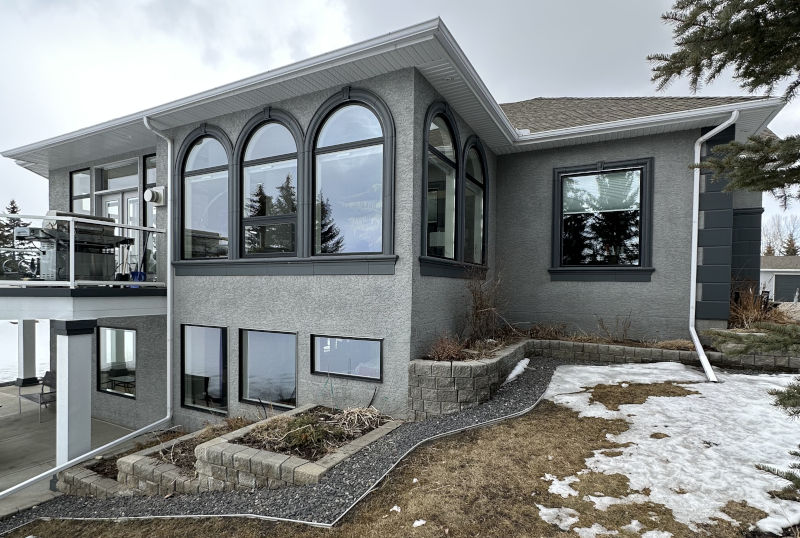
1000’s of Colours & Textured Finishes
Transform your home from ordinary to extraordinary with our new coloured and non-glare textured finishes. Available in a wide array of colours as well as custom matched colours for your very own personalized design.
Our Most Popular Replacement Window Colours: