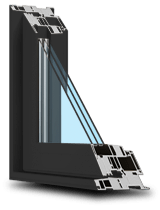
Pre-Sealed Cardinal Glass vs. in-house assembled Glass
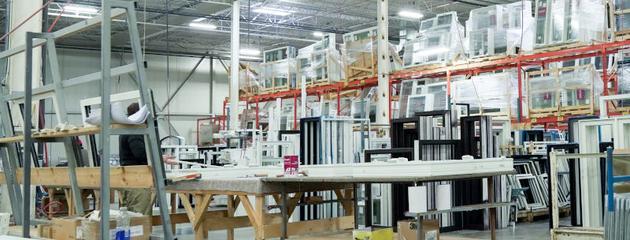

If you're looking at energy-efficient windows or planning a vinyl window replacement , the glass inside matters more than most homeowners realize. The insulating glass (IG) unit sitting between your window frames determines how well your home holds heat, resists condensation, and performs decade after decade. Two fundamentally different approaches exist for assembling that glass: pre-sealed units made by a dedicated glass manufacturer such as Cardinal Glass, and units assembled in-house by window manufacturers themselves. Neither approach is inherently superior, but the gap between a well-executed process and a poorly controlled one can translate directly into comfort, energy costs, and the lifespan of your windows.
Key Takeaways
- An insulating glass (IG) unit is the sealed assembly at the heart of every double-pane window or triple-pane window replacement project. Its quality determines long-term performance.
- Pre-sealed Cardinal Glass is assembled in controlled factory conditions with automated quality checks at every production stage, resulting in consistent seal integrity and argon fill.
- In-house assembled glass can match factory quality when a manufacturer invests in proper equipment, process controls, and trained staff, but outcomes vary widely.
- Seal failure is the primary cause of performance loss in IG units. Condensation between panes, gas escape, and low-E coating degradation all trace back to compromised edge seals.
- NRCan confirms that triple-glazed products can be up to 50% more efficient than double-glazed, meaning glass unit quality directly affects energy bills.
- Vinyl window frames and IG unit quality work together. A high-performing glass package in a well-sealed vinyl frame delivers the full efficiency benefit.
- When evaluating any manufacturer, ask for certifications, disclosed U-factor specs, third-party test data, and warranty terms before committing.
What is the difference between pre-sealed Cardinal Glass and in-house assembled glass?
Before comparing the two approaches, it helps to understand what each one actually means at the production level.
What is a sealed unit?
A sealed insulating glass unit consists of two or more panes of glass separated by a spacer bar and sealed around the edges to form an airtight cavity. That cavity is typically filled with argon gas to reduce heat transfer. A low-emissivity (Low-E) coating is usually applied to one or more glass surfaces to manage solar gain and radiated heat loss. The seal around the perimeter is what holds everything together and keeps moisture out.
Where does assembly happen?
Pre-sealed Cardinal Glass units are produced entirely within Cardinal's automated facilities, where glass cutting, cleaning, coating, spacer installation, gas filling, and sealing happen under tightly controlled conditions. Automated inspection systems check every unit at multiple stages before it leaves the plant.
In-house-assembled glass, by contrast, is assembled at the window manufacturer's own facility. The window company purchases glass panes and spacer materials, then builds the IG unit on its premises. The quality of the result depends heavily on the available equipment, staff training, and the production standards the manufacturer maintains.
Why homeowners should care
When you order double-pane windows or a triple-pane window replacement , you're investing in decades of performance. The IG unit is the component most directly responsible for your energy bills, indoor comfort, and condensation control. Understanding who built it and how it was built is a reasonable question.

| Factor | Pre-Sealed Cardinal Glass | In-House Assembled Glass |
|---|---|---|
| Assembly location | Dedicated glass manufacturing plant | Window manufacturer's facility |
| Automation level | Fully automated production lines | Varies: manual to semi-automated |
| Quality checks | Automated defect detection at every stage | Depends on the manufacturer's investment |
| Argon fill verification | Measured by the Assembly Gas Press per unit | Measured if equipment is in place |
| Seal system | Dual-seal PIB and silicone, stainless steel spacer | Varies by materials purchased |
| Coating integration | In-plant application on Cardinal float glass | Applied before or after delivery |
| Warranty (IG unit) | 20 years on XL Edge units | Varies by manufacturer |
Why does glass unit quality matter so much in a finished window?
Glass is not just the transparent part of a window. It is the primary insulating layer. Everything else, the frame, the weatherstripping, the hardware, supports the glass in doing its job. When the IG unit degrades, the whole window underperforms.
Impact on energy bills
According to Natural Resources Canada's Technology Primer on energy-efficient windows , triple-glazed products can be up to 50% more efficient than double-glazed products. That comparison assumes the IG units are performing as intended. A unit with a compromised seal and lost argon fill closes that efficiency gap quickly. The insulating gas provides a meaningful portion of the thermal benefit, and once it escapes through a failed seal, the window reverts toward the performance of a standard air-gap unit.
Impact on comfort
Cold glass surfaces cause radiant heat loss, drafts near windows, and condensation on interior surfaces. A high-performing IG unit keeps the inner glass surface warmer, reducing radiant chill. When seal integrity is maintained, the Low-E coating continues to function properly, preventing heat from escaping in winter and blocking unwanted solar gain in summer.
Impact on lifespan
Research on insulating glass durability has consistently identified perimeter seal degradation as the leading cause of IG unit failure. Once the seal system begins to deteriorate, moisture infiltration and gradual loss of insulating gas can follow, reducing thermal performance over time. Because the spacer and seal assembly serve as the primary barrier against these effects, their quality plays a major role in determining the long-term durability of an IG unit, particularly in climates with frequent temperature fluctuations.
How is Cardinal Glass positioned in the window industry?
Cardinal Glass Industries is a North American glass manufacturer founded in 1962, with facilities across the United States. It is among the most widely referenced suppliers to residential window manufacturers in Canada and the US. Its products are used by many window brands across the country, which is why you'll often see Cardinal Glass mentioned as a glass source in product specifications.
What Cardinal Glass is known for
Cardinal has built its industry position around automated production and documented quality assurance. Its LoE coatings are applied in-plant to its own float glass, meaning the coating and the glass come from the same controlled environment. Its XL Edge spacer system uses a stainless steel spacer with bent corners to eliminate joints, combined with a dual-seal construction of polyisobutylene and silicone.
How manufacturers use Cardinal products
Window manufacturers who use pre-sealed Cardinal units receive a finished IG assembly ready for installation into the frame. They are not building the glass unit themselves; they are incorporating an externally manufactured component into their window system. This shifts the glass quality risk to a supplier whose core business is producing that component consistently at scale.
“When homeowners ask me about window quality, the conversation always comes back to the glass unit. A well-sealed IG unit from a verified manufacturer is one of the clearest indicators of long-term performance you can look for.” — Helen Sin, Customer Success Manager at Canadian Choice Windows & Doors
What manufacturing advantages can pre-sealed Cardinal Glass offer?
The strongest case for factory-sealed glass is consistency. In any manufacturing process, the more automated and controlled the conditions, the lower the variation between units.
Factory-controlled processes
Cardinal's Intelligent Quality Assurance program includes automated water-quality tracking in glass washers, automated defect detection for scratches and coating faults, an Assembly Gas Press that controls unit thickness to within thousandths of an inch, argon fill-level measurement, and spectrophotometric colour checks on coatings. These checkpoints happen on every unit, not on random samples.
Consistency at scale
Because every production parameter is monitored automatically, a Cardinal glass unit made on a Tuesday in one facility should perform identically to one made on a Friday in another. For homeowners, this means the glass performance claims in a product specification are backed by a documented manufacturing process.
Reduced assembly variation
Seal quality depends heavily on surface preparation, spacer geometry, sealant application uniformity, and gas fill precision. When these steps are automated and machine-verified, the failure rate at installation is lower, and the expected lifespan under field conditions is more predictable.
When can in-house assembled glass still be a reasonable option?
Not all in-house assembled IG units are inferior. The quality of the output depends entirely on the quality of the inputs and the process behind them.
When local assembly works well
A window manufacturer who has invested in modern assembly equipment, uses quality spacers and sealant materials, employs trained glass technicians, and runs their own process verification can produce IG units that perform reliably for many years. In these cases, the in-house model offers the manufacturer more direct control over its product and the ability to quickly customize unit specifications.
The challenge is that homeowners have no easy way to verify which category a given manufacturer falls into. Visiting a production facility, requesting documented failure rates, and verifying that certifications are current are all reasonable steps, but most buyers don't take them.
What separates strong and weak production standards
The key variables in in-house assembly quality include the spacer system used, whether argon fill is measured per unit or estimated, the sealant quality and application method, how glass surfaces are cleaned before assembly, and whether the finished units are leak-tested before dispatch. A manufacturer willing to disclose these specifics openly is signalling a higher level of process confidence than one who deflects the question.
How do seal quality and spacer systems affect long-term window performance?
The edge seal is the most vulnerable part of an IG unit. It endures constant thermal cycling as windows heat and cool with the weather, mechanical stress from wind load and frame movement, and long-term UV exposure depending on orientation.
What causes seal failure?
The NFRC Consumer Guide on window durability identifies seal failure as the primary route to IG unit performance loss. When the seal degrades, argon gas escapes, moisture enters the inter-pane cavity, and condensation forms on interior glass surfaces. This condensation can attack the Low-E coating from inside, accelerating further degradation. The process is slow and often invisible in its early stages, which is why many homeowners don't notice until the fogging is already visible.
Why spacers matter in cold climates
Traditional aluminum spacer bars conduct heat along the glass edge, creating a cold zone that promotes condensation along the glass perimeter. Warm-edge spacer systems, including Cardinal's XL Edge stainless steel spacer, reduce this thermal bridging. According to Natural Resources Canada's energy-efficient windows guidance , traditional aluminum spacers contribute to heat loss and condensation problems, making spacer design a meaningful performance variable in Canadian climates.
“We've seen windows come in for assessment where the glass unit has lost its argon fill completely within ten years. It almost always traces back to the original seal quality. That's why we look at what glass a manufacturer is specifying before we recommend it.” — Tony Wong, Project Manager at Canadian Choice Windows & Doors
Is Cardinal Glass's demand in Canada growing because homeowners want better energy efficiency?
There's a clear shift in what Canadian homeowners expect from a window replacement. Energy codes, rebate programmes, and rising energy costs have moved the conversation from price alone to performance.
Cold-weather priorities
In Canadian climates where winter temperatures routinely drop below- 20 degrees Celsius, every thermal weak point in the building envelope is felt in the monthly heating bill. A window's glass package, including the number of panes, the gas fill, and the Low-E coating, is the single biggest performance variable within the window assembly.
Energy-code awareness
ENERGY STAR certification in Canada is administered by Natural Resources Canada, and certified products must meet national efficiency standards for U-factor and Energy Rating. While certification applies to the completed window system, the insulating glass unit is a major contributor to overall thermal performance. For that reason, the quality and long-term reliability of the glass unit remain important factors when evaluating different window manufacturers.
Replacement window expectations in Canada
When homeowners invest in window replacement , they're typically planning for a 20- to 30-year service life. During that period, the IG unit will go through thousands of thermal cycles. Paying attention to what glass unit is being installed, who built it, and what warranty covers it is a reasonable part of that investment decision.
How do Cardinal IG windows compare with other insulated glass options?
Cardinal is not the only supplier of quality IG units, and in-house assembly is not the only alternative. The broader market includes several tiers of glass quality.
Premium vs standard IG units
At the premium end, glass units from manufacturers like Cardinal feature independently verified quality assurance, documented low-failure rates, named spacer systems with published performance data, and long-form warranties. At the standard end, IG units may use basic aluminum spacers, minimal quality documentation, and shorter or less clearly defined warranty terms.
What to compare before buying
Regardless of the glass supplier, the performance questions worth asking are consistent:
- U-factor: lower is better for cold-climate performance
- Energy Rating (ER): Canada-specific metric combining U-factor, solar gain, and air leakage
- Argon fill percentage: should be confirmed per unit, not estimated
- Spacer type: Warm-edge spacers outperform aluminum in cold climates
- Seal warranty: how long, what is covered, and who backs it
Which performance features matter most in real Canadian climates?
Performance specs are only useful if they map to the conditions your windows will actually face. Canadian climates are demanding and varied, but most residential buyers share a core set of priorities.
Features that matter in winter
U-factor is the most important cold-climate metric. It measures how much heat escapes through the entire window assembly, including the glass. A lower U-factor means less heat loss. For Canadian winters, a U-factor below 1.4 W/(m²K) is generally considered efficient for double-pane configurations, while triple-pane units can achieve values well below 1.0.
Features that matter for sun exposure
Solar Heat Gain Coefficient (SHGC) measures how much solar energy passes through the glass. In southern exposures, a moderate SHGC can contribute to free passive heating in winter. In western exposures, a lower SHGC reduces summer overheating. Low-E coatings, which are standard in quality IG units, including Cardinal's product line, give the window designer control over this variable.
Features buyers often overlook
Condensation Resistance (CR) is a rating that indicates how well a window resists condensation forming on the interior surface under cold conditions. Warm-edge spacers and high-quality sealed glass units both contribute to a higher CR score. In Canadian climates, this matters particularly in kitchens, bathrooms, and areas with higher interior humidity.
Do premium glass features always justify the added cost?
Not always. The value of premium glass depends on how the home is used, where it's located, and what the existing windows are being replaced with.
Best-fit scenarios
Triple-pane windows replacement makes strong financial sense in:
- Homes in Climate Zone 3 (most of Canada outside the coasts), where winters are long, and energy costs are high
- Rooms with large north-facing glazing where passive solar gain is minimal
- Homes where the existing windows are single-pane or early-generation double-pane with basic spacers
- Homeowners planning a long-term hold of at least 15 years to recover the higher upfront cost through energy savings
When standard performance may be enough
A quality double-pane window replacement using certified IG units with argon fill, warm-edge spacers, and Low-E coating can deliver ENERGY STAR-level performance at a lower window cost. For mild-climate locations, moderate-budget renovations, or homes already performing well thermally, the incremental step to triple-pane may not deliver proportional returns.
| Scenario | Recommended Glass Option | Reason |
|---|---|---|
| Cold climate, long-term ownership | Triple-pane, premium IG | Maximum efficiency over 20+ years |
| Moderate climate, budget-conscious | Double-pane, certified IG with argon | Meets ENERGY STAR, lower windows cost |
| Large north-facing windows | Triple-pane with low U-factor | Reduces heat loss on cold exposures |
| South-facing sun exposure | Double or triple-pane, moderate SHGC Low-E | Balances solar gain and heat loss |
| Rental property, shorter hold | Double-pane, quality IG unit | Reliable performance at lower upfront cost |
How can homeowners tell whether manufacturing quality claims are actually credible?
A performance claim is only as useful as the evidence behind it. The window industry includes both manufacturers who can substantiate their specifications and those who cannot.
Claims vs proof
Look beyond marketing language. Any manufacturer can describe their windows as "high-performance" or "energy-efficient." What separates credible claims from promotional copy is the presence of verifiable supporting evidence:
- ENERGY STAR certification listed in NRCan's searchable product database
- Published U-factor and ER values from a certified testing laboratory
- Named glass supplier with publicly available quality documentation
- Specific seal warranty terms, not just a general lifetime guarantee
- Disclosed spacer type and sealant system
What credible manufacturers show publicly
A window manufacturer confident in their glass quality should be willing to identify their glass supplier, confirm whether the IG units are pre-sealed or in-house assembled, provide a copy of the product's NRCan certification, and explain what the IG seal warranty covers and who backs it. Reluctance to provide these details is itself informative.
What should homeowners conclude when comparing pre-sealed Cardinal Glass with in-house assembled glass?
The honest answer is that the quality of glass units depends on the process, not the origin. A pre-sealed Cardinal IG unit carries well-documented manufacturing controls and a claimed seal failure rate of fewer than 0.2% over 20 years , backed by a dual-seal construction. That is a meaningful benchmark. But in-house assembly by a manufacturer with serious quality controls and the right equipment can also produce reliable results.
What homeowners should avoid is assuming that all in-house assembly is poor, or that any product labelled as using Cardinal Glass is automatically the best available. The relevant question is always: what quality controls exist, how are they verified, and what does the warranty actually cover?
For a vinyl window replacement that will last 20 to 30 years, the glass unit is the component that will either hold its performance through that period or gradually lose it. Asking about it directly is not a specialized technical question. It's a practical ownership question. Visit Canadian Choice Windows & Doors to explore vinyl window options with quality glass packages designed for Canadian conditions.
Frequently Asked Questions
Can I tell from the outside whether my windows use Cardinal Glass or in-house assembled units?
Not from the outside, no. The best approach is to ask your window manufacturer directly which glass supplier they use and whether the IG units arrive pre-sealed or are assembled at their facility. A credible manufacturer will answer this question without hesitation and should be able to provide documentation.
Does Cardinal Glass come with its own warranty, or does the window manufacturer cover it?
Cardinal offers a 20-year warranty on its XL Edge sealed units, but it is typically administered by the window manufacturer rather than directly by the homeowner. When reviewing any window purchase, ask specifically who backs the IG seal warranty and what the claim process looks like if condensation develops between the panes.
Is triple-pane glass always better than double-pane for Canadian homes?
Triple-pane units generally offer better thermal performance, but the right choice depends on your climate zone, budget, and how long you plan to stay in the home. A quality double-pane unit with argon fill, a warm-edge spacer, and a Low-E coating can meet ENERGY STAR requirements and deliver reliable long-term performance at a lower upfront cost.
What does it actually mean when argon gas escapes from an IG unit?
Once the edge seal degrades and argon escapes, the insulating cavity fills with regular air, which conducts more heat than argon. The window doesn't fail immediately; its U-factor gradually worsens. Eventually, moisture enters the cavity, and you'll notice fogging or condensation between the panes. At that point, the unit needs to be replaced.
Does the spacer type really make a difference in everyday use?
In Canadian climates, yes. Traditional aluminum spacers conduct cold along the glass edge, which can cause condensation along the interior perimeter and make the area near the window feel drafty even when the glass is intact. Warm-edge spacers reduce this thermal bridge, keeping the glass edge warmer and reducing the chance of perimeter condensation.
How do I verify that a window product is genuinely ENERGY STAR certified?
You can search the Natural Resources Canada certified products database directly at nrcan.gc.ca. Look up the specific window model or manufacturer to confirm that certification is current. Marketing materials may describe windows as "energy-efficient" without formal certification, so checking the NRCan database directly is the most reliable way to verify.
If a window manufacturer uses Cardinal Glass, does that automatically mean the windows are high quality?
Not automatically. Cardinal Glass is a reputable glass supplier, but the finished window's performance also depends on how the frame is constructed, how the IG unit is installed into the frame, what weatherstripping is used, and how the window is installed in your home. Glass quality is one important variable, not the only one.

1000’s of Colours & Textured Finishes
Transform your home from ordinary to extraordinary with our new coloured and non-glare textured finishes. Available in a wide array of colours as well as custom matched colours for your very own personalized design.
Our Most Popular Replacement Window Colours: