Windows That Handle Temperature Swings in Brampton’s Climate

If you live in Brampton, your windows face one of the most demanding climates in the country: temperatures that swing from below −20°C in winter to above 33°C in summer, freeze-thaw cycles that stress frames and seals every year, and high humidity that accelerates moisture damage. Choosing the right energy-efficient windows, with the right glass package and a proper professional installation, is one of the most effective upgrades most homeowners can make for year-round comfort and lower energy bills.
Vinyl windows designed for Canadian conditions, ENERGY STAR-certified and low-E coating and argon gas fill, are built to handle this kind of climate without warping, rotting, or losing their seal. The key is understanding what to look for, how installation affects performance, and when replacement makes more sense than repairs.
What makes Brampton's climate so challenging for residential windows?
Brampton sits in the Greater Toronto Area and experiences a humid continental climate: genuinely cold winters, warm, often humid summers, and shoulder seasons in which temperatures can shift dramatically within a single week. For windows, this causes constant expansion and contraction, along with moisture exposure, which gradually wears them down.
The region regularly sees winter lows below −20°C and summer highs above 33°C. ENERGY STAR Canada sets strict performance standards for windows across the country, reflecting how demanding our climate can be.
Freeze-thaw cycles: the real culprit
The most damaging pattern for windows in this region isn't the cold itself; it's the freeze-thaw cycle. Every time temperatures cross zero and rise back up, moisture inside or around frames and seals expands and contracts. Repeat this dozens of times over a winter, and this repeated movement gradually damages seals, frames, and components: sealants crack, weather stripping loses its compression, and frames shift out of square.
Southern Ontario typically sees this transition pattern from November through March. For window seals and frame integrity, this repeated movement is the primary cause of premature degradation in products that aren't engineered for it.

Thermal expansion under daily and seasonal swings
All window materials expand and contract with temperature changes. Vinyl frames expand and contract noticeably between winter and summer temperatures. This movement is a predictable physical property, not a defect, and modern vinyl windows are engineered to accommodate it without compromising the seal or the frame. The key is quality manufacturing and proper installation, which account for this movement.
A south-facing window in Brampton can absorb enough solar radiation on a clear February day to raise its surface temperature by 20°C above the outside air temperature, creating a significant thermal differential within the unit itself. Windows that aren't designed for this daily thermal load will show seal stress much earlier than their rated lifespan.
Why do windows in Brampton homes fail under temperature fluctuations?
Most window failures in this climate are gradual. The signs build slowly, and by the time they're obvious, the window has usually been underperforming for a couple of seasons already. Understanding where and why failure happens helps you spot problems earlier and choose products that are built to avoid them.
Insulated glass unit seal failure
The sealed cavity between the panes in a double or triple-glazed window is what gives it its insulating power. When that seal fails, moist air enters the space and condensation forms between the panes. Research published on ScienceDirect about high-performance window thermal resilience found that upgrading to high-performance windows can extend a home's thermal survivability during power outages and cold events by up to 3.8 days and lower HVAC energy use by up to 18%. This reflects how much energy-degraded insulated glass units cost a home before a homeowner even notices a draft.
Seal failure in vinyl windows is almost always caused by one of three things: installation that left the unit under stress, a low-quality spacer bar that didn't flex adequately with temperature movement, or a product that wasn't engineered for the temperature range it's experiencing. Quality vinyl windows with warm-edge spacers handle this far better because the spacer material accommodates the different expansion rates between the glass and the frame.
Frame performance under sustained thermal stress
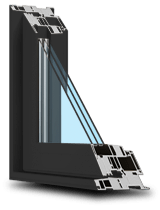
The relationship between vinyl frames and glass panes under temperature cycling is well documented. Modern vinyl windows use multi-chamber frame designs that create insulating air pockets to slow heat transfer, along with fusion-welded corners that eliminate the weak joints found in mechanically fastened construction. In cold conditions, well-engineered vinyl maintains its structural performance because the frame system is designed to work as a single unit rather than as separate parts that move differently.
Cheaper or older vinyl products without these design features are more vulnerable. If the frame doesn't flex in a controlled way, stress concentrates at the corners and at the glass-to-frame seal, which is exactly where failure first shows up.
Installation gaps: where climate does the most damage
Even a high-quality window won’t perform as expected without proper installation. Gaps in the rough opening, insufficient foam insulation around the frame, and missing or improperly lapped flashing all create pathways for cold air and moisture infiltration. In a climate with wide temperature swings, those pathways aren't just uncomfortable: they accelerate frame stress and seal deterioration from the outside in.
What types of windows should Brampton homeowners choose for durability
When it comes to windows, Brampton homes need lasting performance, and the frame material is the starting point. The right choice handles this climate's thermal cycling without requiring constant maintenance or early replacement.
| Frame material | Performance in Ontario's climate | Maintenance level | Best suited for |
|---|---|---|---|
| Vinyl (uPVC) | Excellent: doesn't absorb moisture, resists rot, engineered to flex with temperature movement | Low: no painting, sealing, or seasonal treatment required | Most Brampton homeowners are looking for long-term performance with minimal upkeep |
| Fiberglass | Very good: dimensionally stable, expands and contracts at a rate closer to glass | Low to medium | Larger window openings or homes where the budget allows a premium product |
| Wood | Good if maintained: absorbs moisture, vulnerable to freeze-thaw cycles without regular sealing | High: requires painting, sealing, and inspection every one to two years | Heritage homes where appearance is the overriding priority |
For the vast majority of homes in Brampton, vinyl is often the most practical choice. It doesn't rot, doesn't need painting, and won't warp if the frame is well designed and properly installed. The multi-chamber profiles used in quality vinyl windows also provide meaningful thermal resistance in the frame itself, which contributes to the unit's overall U-factor.
"Seasonal transitions consistently highlight how different window materials perform under stress. Frames engineered to resist moisture and temperature fluctuations tend to maintain their integrity over time. Vinyl, in particular, does not warp or rot, and when properly installed, it preserves a stable seal through years of thermal cycling. That consistency is what ultimately protects a home." — Helen Sin, Consumer Success Manager at Canadian Choice Windows & Doors
What role does proper window installation in Brampton play in durability?
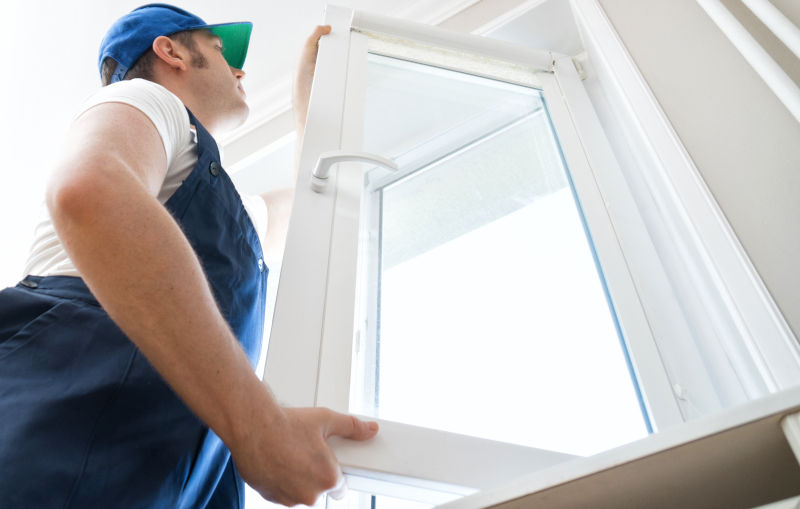
The window itself is only half the story. A high-rated product installed incorrectly will still draft, still let moisture in, and still underperform its stated energy rating. In a climate with wide seasonal swings, installation quality determines whether a window performs as designed for 20 or 30 years or begins to show problems within 5 years.
In Canada, ENERGY STAR certification requires that windows meet verified U-factor and Energy Rating (ER) standards as tested in controlled laboratory conditions. But as the NRCan ENERGY STAR labelling requirements for fenestration make clear, those ratings assume correct installation. The real-world performance of any window, certified or not, depends heavily on how it's fitted into the home.
What a professional installation looks like
- Removal of the old window and a thorough inspection of the rough opening for rot, moisture damage, or structural issues before anything new goes in.
- Application of a continuous waterproof flashing membrane around the opening perimeter. This step seals the transition between the window frame and the wall assembly and is one of the most commonly skipped shortcuts in lower-quality installations.
- Levelling and shimming the new window precisely so it sits square in the opening. Even slight misalignment puts stress on the frame and affects how the sash seals against the weatherstripping.
- Filling the gap between the window frame and the rough opening with low-expansion spray foam. This seals against air infiltration and adds insulation in the cavity around the frame, which is often a significant source of heat loss.
- Installing and caulking exterior casing to prevent water from working behind the frame.
- A final operational check: every window should open, close, and lock smoothly with the sash making firm, even contact with the weatherstripping all the way around.
"The installation is where a lot of window jobs go sideways. A good window, installed badly, will still draft. We take the rough opening seriously on every job: check for rot, make sure the flashing is continuous, and never rush the foam. The climate here will find any gap you leave." — Tony Wong, Project Manager at Canadian Choice Windows & Doors
How do double and triple-pane windows perform in extreme temperatures?
The number of panes in a window determines the degree of thermal barrier between indoor and outdoor air. In a climate with Brampton's temperature range, this difference is meaningful in both comfort and operating costs.
Double-pane windows typically achieve R-values in the range of R-3 to R-5, while triple-pane units reach approximately R-6 to R-9. In practical terms, this difference directly affects comfort and efficiency, influencing how effectively heat is retained in cold weather and how well solar heat gain is reduced in warmer conditions.
| Feature | Double-pane (ENERGY STAR® certified) | Triple-pane |
|---|---|---|
| Typical R-value | R-3 to R-5 | R-6 to R-9 |
| U-factor (lower numbers mean better insulation) | Around 1.22 W/m²K or lower for ENERGY STAR Canada certification | Often 0.85 to 1.10 W/m²K: superior insulation at the frame edge |
| Energy savings vs. single-pane | ENERGY STAR certified windows can save Ontario homeowners 7 to 12% on annual energy costs | Upgrading to triple-pane from single-pane can reduce heating and cooling costs by up to 15-25% |
| Condensation resistance | Good with low-E coating: interior pane stays warmer than single-pane | Excellent: interior pane stays closer to room temperature even at −20°C outside |
| Sound reduction | Good | Very good: triple-pane can reduce noise by up to 50% more than double-pane |
| Upfront cost | Lower upfront cost; solid performance for most home upgrades | 10 to 15% higher than double-pane, sometimes more; offset by energy savings and rebate eligibility |
For most Brampton homeowners upgrading from older single-pane or degraded double-pane windows, ENERGY STAR-certified double-pane vinyl windows are a strong, cost-effective upgrade. Homes with large window areas, north-facing exposures, or high energy costs will often see a faster return on investment with triple-pane windows.
What features should you look for in replacement windows for Brampton homes?
Choosing replacement windows goes beyond picking a style you like. These are the performance features that determine how the window actually functions in a cold, wet, high-swing-temperature climate.
Performance feature checklist:
-
ENERGY STAR® Canada certification
Since 2020, all certified windows in Canada must meet a unified national standard, including a U-factor of 1.22 W/m² · K or lower and an Energy Rating (ER) of 34 or higher. This is the baseline requirement for reliable performance in Ontario’s climate. -
Low-E coating
A microscopically thin metallic layer that reflects heat back into the home in winter and reduces solar heat gain in summer, helping maintain stable indoor temperatures year-round. -
Argon or krypton gas fill
These inert gases are denser than air and significantly reduce heat transfer between panes. Argon is standard in most quality windows, while krypton is often used in higher-performance triple-pane units. -
Warm-edge spacer bar
Replaces traditional aluminum spacers with low-conductivity materials, reducing heat loss at the glass edge and minimizing the risk of interior condensation. -
Multi-chamber vinyl frame
Internal air chambers improve insulation and allow the frame to handle expansion and contraction without losing structural integrity. -
Fusion-welded corners
Welded joints are far more resistant to air and water infiltration than mechanically fastened corners and maintain their strength through repeated temperature cycling. -
Multi-point locking system
Secures the sash at multiple points, ensuring even compression of the weatherstripping and a tighter overall seal. -
Reinforced weatherstripping
Must compress evenly and return to shape after use. If it remains flattened or uneven, it can no longer provide an effective air seal.
In Brampton’s climate, these features are not upgrades — they are essential for long-term performance. Each one plays a specific role in managing heat loss, moisture, and structural stress caused by constant temperature swings.
What are the signs that you need replacement windows, and what do Brampton homeowners often miss?
Windows give plenty of warning before they fail completely. The problem is that the early signs are easy to explain away as general house noise, normal seasonal shifts, or thermostat issues. Here's what to look for and what each sign actually means:
-
Condensation or fogging between panes
The insulating seal has failed, allowing moist air to enter the glass unit. In most cases, the unit cannot be repaired and needs to be replaced. -
Drafts near closed windows
This may indicate worn weatherstripping, frame movement, or gaps in the installation. While weatherstripping can sometimes be replaced, a warped or shifted frame typically requires full window replacement. -
Rising heating or cooling bills with no clear cause
Windows can account for a significant portion of energy loss. A steady increase in energy costs over time often points to declining window performance. -
Ice forming on the interior glass surface
This occurs in very cold conditions when the window’s insulation is insufficient. It is a strong sign that the glazing is no longer performing effectively. -
Difficulty opening, closing, or locking the window
This usually indicates frame warping or hardware wear. If the window cannot close tightly, it cannot properly seal the home. -
Increased outside noise levels
A noticeable rise in outdoor noise indoors may suggest that the window’s seal integrity has degraded, reducing its sound insulation performance. -
Visible cracking or separation in exterior caulking
Damaged caulking creates a direct path for water and air infiltration, accelerating deterioration of both the frame and the surrounding structure.
A practical rule of thumb: if your windows are more than 20 years old, any of these signs is a strong indicator that replacement is the more effective solution. The performance gap between older windows and modern certified vinyl systems is significant enough that energy savings alone can often justify the investment.
How can homeowners extend the lifespan of their windows in Brampton?
Good windows are a long-term investment, and a simple maintenance routine protects that investment. It doesn't take much time, but it makes a real difference in how long your windows perform at their best.
Seasonal maintenance checklist
Spring (after the last freeze):
- Inspect all exterior caulking for cracks, gaps, or separation. Recaulk anywhere you see daylight or softness, particularly at corners and where the frame meets the siding.
- Check for any moisture staining or soft spots around the interior frame, which can indicate water infiltration over the winter.
- Clear weep holes on casement and sliding windows. Blocked drainage causes standing water that accelerates frame stress.
- Test all weatherstripping. Press it with your finger: it should spring back fully. If it stays compressed or has hard sections, replace it.
Summer:
- Clean frames and glass with a mild soap and water solution. Avoid abrasive cleaners on vinyl.
- Apply a small amount of silicone-based lubricant to hinges, operators, and locking hardware. This keeps moving parts operating smoothly and reduces the wear that loosens seals over time.
- Check screens for tears or bent frames and repair or replace as needed.
Fall (before the first hard freeze):
- Test every window's air seal. On a windy day, hold a candle or a thin piece of tissue near the closed frame: movement indicates a draught and a compromised seal.
- Check all locks and latches. A window that doesn't latch firmly isn't compressing its weatherstripping, which means it isn't sealing your home.
- Inspect drainage channels and clean out any debris. Water that pools at the base of a window frame during a freeze will expand and damage the seal.
Winter:
- Monitor indoor humidity. In cold weather, indoor relative humidity above 40 to 45 percent increases condensation on even well-performing windows. A hygrometer is a simple and inexpensive tool to check this.
- If you notice a draught in cold weather, use temporary foam weatherstrip tape as a short-term measure and schedule an inspection before spring.
For any signs of seal failure, frame movement, or persistent condensation, a professional inspection from an experienced windows company is the right next step. Some issues are simple maintenance fixes; others indicate a window that has reached the end of its effective service life. Knowing the difference saves both time and money.
Why the right window system matters in Brampton’s climate
In Brampton, window performance is defined by how well the entire system handles constant thermal movement, moisture, and installation stress. Failures rarely happen suddenly — they develop over time when materials, design, or installation are not aligned with the realities of this climate.
The most reliable results come from a complete approach: choosing engineered vinyl windows, ensuring proper installation, and maintaining seal integrity over time. When these factors work together, windows deliver consistent comfort, energy efficiency, and long-term durability instead of becoming a recurring source of problems.
Frequently Asked Questions
How long do windows typically last in Brampton’s climate?
Most modern windows are designed to last 20–30 years, but in Brampton’s climate, performance depends heavily on how well they handle temperature swings and installation quality. Poor installation or lower-quality materials can lead to issues much earlier.
What is the main cause of window failure in Brampton homes?
The most common cause is not a single factor but a combination of thermal expansion, freeze-thaw cycles, and installation gaps. These stresses gradually weaken seals and frames.
Are triple-pane windows worth it in Brampton?
Yes, especially in homes exposed to extreme cold or high energy costs. Triple-pane windows provide better insulation, reduce heat loss, and improve indoor comfort, particularly during winter.
Can window seals be repaired once they fail?
No. Once the seal in an insulated glass unit fails and moisture enters between the panes, the unit cannot be restored. The only reliable solution is replacing the sealed glass unit or the entire window.
How much does installation quality really affect window performance?
Installation is critical. Even high-performance windows will underperform if they are not properly sealed, levelled, and insulated. In many cases, poor installation is the main reason windows fail prematurely.
What type of window frame is best for Brampton homes?
Vinyl frames are the most practical choice for this climate. They resist moisture, do not warp or rot, and are engineered to handle expansion and contraction caused by temperature changes.
How can I tell if my windows need to be replaced or just repaired?
Minor issues like worn weatherstripping can sometimes be repaired, but signs such as fogging between panes, frame warping, or persistent drafts usually indicate the need for full replacement.
What is the most overlooked maintenance step for windows?
Clearing drainage (weep) holes and checking exterior caulking are often overlooked. Both are essential to prevent water buildup and long-term damage to seals and frames.

1000’s of Colours & Textured Finishes
Transform your home from ordinary to extraordinary with our new coloured and non-glare textured finishes. Available in a wide array of colours as well as custom matched colours for your very own personalized design.
Our Most Popular Replacement Window Colours: