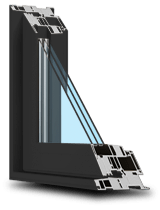
Are Triple Pane Windows Worth It in Calgary Homes? (Cost vs Energy Savings Explained)
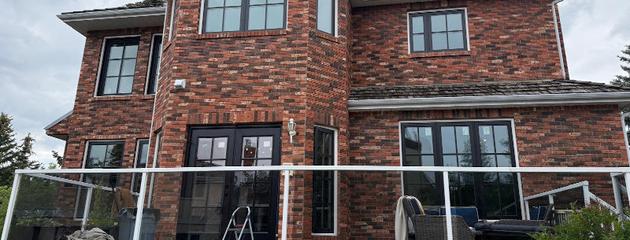

Triple pane windows can be worth it in Calgary, especially for homes exposed to strong winds and extreme winter temperatures. However, in many cases, high-quality double pane windows with proper installation provide similar performance at a lower cost. The right choice depends on your home type, insulation level, and budget.
Key Takeaways
- Triple-pane windows are often worth it in older Calgary homes (generally pre–early 2000s), especially on wind-exposed elevations or where drafts are a comfort issue.
- In many newer, well-insulated homes, premium double-pane windows are enough, with smaller real-world gains from triple-pane.
- In Calgary, wind, pressure changes, and air leakage often matter more than glass count, especially during Chinook swings.
- Installation quality and window-to-wall air sealing heavily influence comfort and energy results — sometimes more than U-factor.
- Triple-pane units are heavier, so frame reinforcement and proper opening prep are essential for long-term performance.
- If the main issue is traffic or transit noise, laminated or asymmetric glass packages are usually more effective than simply adding a third pane.
When are triple pane windows NOT worth it in Calgary?
After the short answer, a natural follow-up question for many Calgary homeowners is:
“If triple pane is better, why isn’t it always the right choice?”
The reason comes down to how costs and real-world performance actually align in Calgary homes.
Upgrading from double- to triple-pane windows can add thousands of dollars to a replacement project. On paper, the performance numbers look impressive. But in practice, many homes aren’t built in a way that allows them to fully benefit from that extra layer of glass.
The most common misunderstanding is simple:
“Calgary is cold, so triple pane must be necessary.”
In reality, what usually drives comfort problems here isn’t just temperature — it’s wind, pressure, and how the window is integrated into the wall system.

Here’s where decisions often go off track:
- The focus shifts to glass count, instead of air leakage, frame stability, and wind exposure
- Sales conversations highlight lab ratings, without explaining how Calgary’s rapid temperature swings affect real heat loss
- The home’s age, wall construction, and exposure are treated as secondary — when they should be central
When that happens, the outcome is predictable:
- Higher upfront cost
- Little noticeable change in comfort
- Energy savings that don’t match expectations
For homeowners, this can feel frustrating — not because triple pane windows are “bad,” but because the solution didn’t match the house.
In Calgary, choosing the wrong window configuration isn’t just inefficient; it's costly. It’s often a mismatch between the product and how the home actually behaves under wind and pressure.
Do triple pane windows make a difference in Calgary winters?
Calgary’s climate is not just cold; it is characterized by rapid, often unpredictable temperature shifts. And that difference matters more for windows than most people expect.
Unlike cities with long, steady winters, Calgary regularly experiences rapid temperature swings caused by Chinook winds. Warm, dry air can push temperatures up by 15–20°C in a matter of hours, only to drop again just as quickly once the Chinook passes.
For homeowners, this doesn’t appear as a gradual loss of warmth.
It shows up as sudden drafts, pressure changes, and discomfort that seems to come and go.
What this means for windows is simple but often overlooked:
- Window systems expand and contract repeatedly
- Seals and frames are stressed by pressure changes, not just cold
- Air leakage becomes a bigger issue than steady heat loss through the glass
Helen Sin, Consumer Success Manager , explains it in practical terms:
“What surprises most homeowners is that Calgary homes don’t lose heat slowly.
They lose it in bursts — usually when the wind picks up or when temperatures swing fast.”
Why extreme cold isn’t the whole story
Calgary has seen its share of extreme cold events — from historic lows in the mid-20th century to prolonged cold snaps like the one in February 2021. Wind chill during these periods can push effective exposure far below the actual temperature.
But building science research increasingly shows that instability, not just minimum temperature, is the greatest stressor on homes.
In practical terms:
- Windows are more likely to fail from movement and pressure, not from steady cold
- Seals, spacers, and installation details are tested hardest during rapid temperature changes
This is why simply adding another pane of glass doesn’t automatically solve comfort issues.
How Calgary neighbourhoods change the equation
Calgary’s housing stock isn’t uniform — and that matters.
Many detached homes built between the 1970s and 1990s in communities like Beddington, Huntington Hills, and parts of Lake Bonavista were constructed before modern energy and air-sealing standards. These homes often have:
- thinner wall insulation
- window openings not designed for today’s tighter assemblies
- higher sensitivity to wind-driven air movement
By contrast, many post-2010 developments were built with:
- improved insulation
- better air barriers
- more controlled building envelopes
As George puts it:
“In newer houses, the window often isn’t the weakest point anymore.
In older ones, it still usually is — especially on the wind-facing sides.”
Why this local context matters
In Calgary:
- Wind exposure can matter more than glass count
- Air leakage often outweighs theoretical U-values
- Installation quality determines whether triple-pane benefits are realized at all
That’s why the same window package can perform very differently:
- on two different streets
- or even on opposite sides of the same house
This local, street-level reality is what makes Calgary window decisions more nuanced than a simple “double vs triple-pane” comparison.
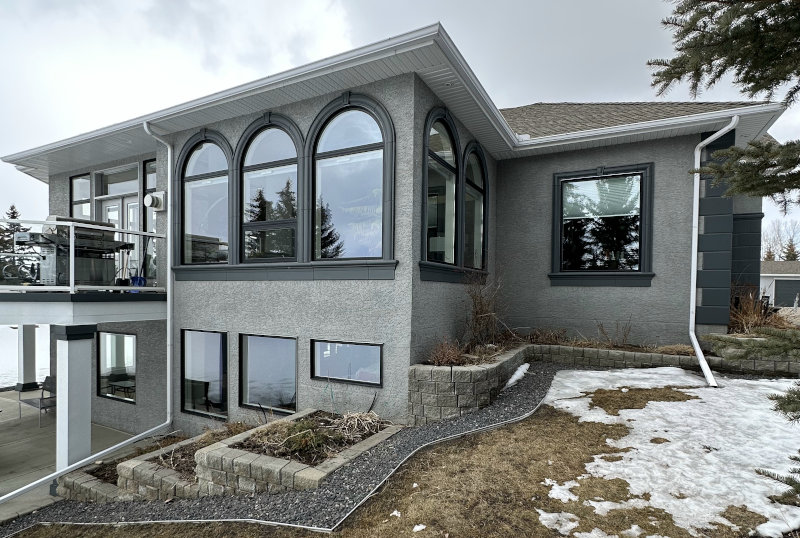
Is triple pane better than double pane for energy efficiency in Calgary?
Why comfort often depends on air movement, not just glass
Triple-pane windows are often explained with a simple idea:
More glass equals more warmth.
In Calgary, homes perform a little differently.
Most heat loss here doesn’t happen evenly through the glass. It happens when air moves — pushed by wind, pressure changes, and temperature swings. Understanding this difference helps explain when triple-pane windows improve comfort, and when they don’t.
Heat loss isn’t one problem — it’s two
There are two main ways a window loses heat:
-
Heat passes through the glass itself
This is what U-factor measures. Lower U-factor means less heat escapes through the glass. -
Air leakage around the window assembly
This happens when wind and pressure force cold air through gaps around the frame, seals, or wall connection.
Triple-pane glass mainly improves the first point.
It does not automatically fix the second.
As George Sachyk puts it:
“If cold air is getting around the window, adding a third pane doesn’t stop that.
It only slows heat loss through the glass — not around it.”
In Calgary’s windy conditions, that distinction matters.
Why wind changes everything
Calgary homes are regularly exposed to:
- strong, gusting winds
- open terrain in many neighbourhoods
- pressure changes during Chinook events
Wind creates pressure differences between indoors and outdoors. When that happens, cold air looks for the easiest path in — usually through:
- weak seals
- poorly insulated gaps
- imperfect window-to-wall connections
This is why homeowners often describe discomfort as drafts, not just a cooler room.
In these conditions:
- A window with excellent lab ratings can still feel uncomfortable
- Comfort loss happens suddenly, not gradually
Triple pane glass helps only when:
- The frame remains rigid under wind load
- Sealing is continuous
- The installation is properly integrated with the wall system
What triple-pane glass really improves
When conditions are right, triple-pane windows do provide real benefits:
- An extra insulating gas layer
- Better resistance to radiant heat loss
- Warmer interior glass surfaces on very cold days
For homeowners, this usually shows up as:
- Less “cold window” feeling when sitting nearby
- More stable comfort during prolonged cold spells
These benefits are most noticeable when:
- Temperature differences are large and relatively steady
- The rest of the building envelope can support the upgrade
In Calgary, that combination exists — but not in every home.
Lab ratings vs real life
Performance ratings like NFRC U-factor are measured under ideal conditions:
- Steady temperatures
- No wind gusts
- Perfect installation assumptions
Real Calgary conditions include:
- Sudden cold snaps
- Wind-driven pressure
- Repeated expansion and contraction during Chinooks
As George explains:
“A window can test great on paper and still disappoint in the field
If the house moves air more than heat.”
This is why:
- A lower U-factor doesn’t guarantee better comfort
- Installation quality can matter more than glass configuration
Frame strength and sealing (often overlooked)
Triple-pane units are heavier. That extra weight increases:
- load on the frame
- stress on corners and joints
- sensitivity to poor reinforcement
If a frame flexes under wind load or the opening isn’t properly prepared, the added glass mass can actually increase long-term seal stress rather than reduce it.
This matters most in:
- Older Calgary homes
- Larger window openings
- Wind-exposed elevations
A practical Calgary comparison
| Feature | Double Pane | Triple Pane |
|---|---|---|
| Heat loss through glass | Moderate | Lower |
| Air leakage control | Installation-dependent | Installation-dependent |
| Wind performance | Depends on frame & install | Depends on frame & install |
| Benefit in older homes | Noticeable | Often more noticeable |
| Benefit in newer homes | Often sufficient | Sometimes marginal |
Triple-pane windows improve one part of the system.
In Calgary, overall performance depends on how the entire window assembly handles wind, pressure, and movement.
George’s field summary captures it well:
“Triple pane works best when the house is ready for it.
If it isn’t, you pay for insulation that the building can’t fully use.”
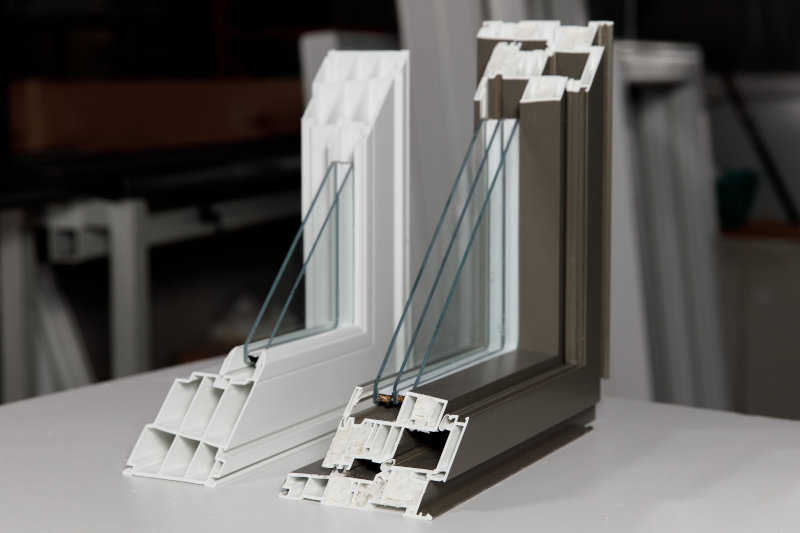
When are triple pane windows worth it in Calgary homes?
Where the upgrade actually changes comfort and performance
In Calgary, triple-pane windows aren’t a blanket upgrade.
They make sense only when certain conditions are present — conditions that affect how your home handles wind, noise, and temperature changes.
Below are the situations where homeowners typically see a real, noticeable difference.
Older homes with limited insulation
In many Calgary neighbourhoods built before the mid-1990s — including Bowness, Ogden, Forest Lawn, Thorncliffe, and parts of Southwood — homes were constructed before modern energy and air-sealing standards.
These homes often have:
- Thinner wall insulation
- Window openings not designed for today’s tighter systems
- Greater sensitivity to wind-driven heat loss
In these cases, windows can account for a much larger share of total heat loss than in newer homes.
Tony Wong, Project Manager , explains:
“In older Calgary houses, the wall system doesn’t stabilize the window.
That’s where triple pane can help — but only if the frame and opening are corrected.”
For homeowners, this often shows up as:
- Warmer interior glass
- Fewer drafts near windows
- More stable comfort during cold snaps
Homes exposed to strong winds and pressure changes
Some Calgary homes sit directly in wind corridors — especially near:
- The Bow River
- Nose Hill
- Open northwest-facing elevations in areas like Tuscany, Evanston, and Sage Hill
During Chinook events, wind speeds can exceed 70–90 km/h, increasing pressure on windows and seals.
Why this matters:
- Wind increases air leakage, not glass heat loss
- Pressure changes stress frames and seals over time
In these locations, triple-pane windows paired with reinforced frames can reduce glass deflection and help maintain seal integrity under load.
When the structure can support the extra weight
Triple-pane glass is significantly heavier than double pane.
Typical weights:
- Double pane IGU: ~20–24 kg/m²
- Triple pane IGU: ~30–38 kg/m²
That’s a 40–60% increase.
Triple pane only makes sense when:
- The frame is steel- or composite-reinforced
- The rough opening is square and load-capable
- The wall anchoring can safely carry the added weight
George puts it:
“If the wall can’t carry the weight, triple pane works against itself.
Reinforcing the opening is sometimes more important than the glass.”
This is where full-system installation — not just glass selection — becomes critical.
Homes affected by traffic or transit noise
For many Calgary homeowners, triple-pane windows are chosen for noise control rather than temperature control.
They’re most effective in areas near:
- Deerfoot Trail
- Crowchild Trail
- Macleod Trail
- C-Train corridors
When paired with asymmetric or laminated glass, triple pane systems can reduce noise by 30–40%, which is clearly noticeable in:
- bedrooms
- home offices
- street-facing living spaces
On quieter residential streets, however, similar comfort can often be achieved with optimized double-pane solutions at a lower cost.
North- and west-facing elevations
North- and west-facing windows in Calgary:
- receive less passive solar gain
- are exposed to prevailing winds
- experience colder interior glass temperatures
Triple pane helps here by keeping the interior glass surface warmer, reducing the “cold window” effect — even when the room temperature is technically stable.
Full-frame replacement with proper air sealing
Triple pane windows deliver their benefits only when:
- The entire window assembly is replaced
- Air sealing is continuous with the wall system
- Insulation and sealants are installed correctly
Glass-only upgrades or insert installs cancel most of the benefits.
When are triple pane windows NOT worth it in Calgary?
Despite Calgary’s reputation for cold winters, triple-pane windows aren’t always the right investment. In many homes, the added cost and weight simply don’t translate into meaningful comfort or energy savings.
Below are the most common situations where homeowners typically see limited real-world benefit.
Newer homes built to modern energy standards
(Where the envelope already does the work)
Homes built after the mid-2000s — including communities like Mahogany, Auburn Bay, Cranston, Legacy, and Skyview Ranch — were designed with:
- tighter building envelopes
- improved air barriers
- higher wall insulation levels
In these homes, windows are no longer the main source of heat loss. Upgrading from a high-quality double-pane window to a triple-pane window often yields only a modest improvement in overall comfort, especially given the cost.
As George Sachyk explains:
“When the envelope is already tight, glass alone can’t change the system.”
For many homeowners, investing in better air sealing, shading, or targeted upgrades delivers more noticeable results.
Retrofit-only or insert installations
Triple-pane glass is 40–60% heavier than double-pane units. That extra weight assumes:
- reinforced frames
- properly prepared openings
- verified anchoring into the wall system
When triple pane units are installed into existing frames or uncorrected openings, the added mass can lead to:
- increased sash deflection
- faster seal fatigue during Chinook pressure cycles
- alignment issues over time
In these cases, homeowners often pay more — and get less — because the structure wasn’t designed to support the upgrade.
Expecting fast payback from energy bills alone
Triple-pane windows do improve window efficiency. However, in most Calgary homes:
- Total heating savings are influenced more by air leakage than by glass performance
- Energy savings alone rarely justify the upgrade in the short term
When triple-pane windows are installed without addressing air leakage, return on investment can stretch well beyond a typical ownership timeline.
In practical terms, homeowners may not feel a meaningful difference on their utility bills — even though the glass itself performs better.
Sheltered locations with low wind and noise exposure
Homes located:
- Deep within subdivisions
- Away from major roads
- Shielded from prevailing winds
often don’t experience the conditions where triple-pane glass shines.
In these situations:
- Drafts are minimal
- The exterior noise is low
- optimized double pane windows often deliver comparable comfort
For these homes, triple-pane upgrades tend to offer diminishing returns.
Frames or openings not designed for triple-pane loads
Triple pane performance assumes:
- Rigid, reinforced frames
- Controlled deflection under wind load
Without this support, heavier glass can:
- Accelerate frame distortion
- Reduce long-term seal reliability
- Shorten the effective lifespan of the window system
Choosing based on climate fear alone
A common belief is that Calgary’s occasional extreme cold automatically requires triple-pane windows.
In reality:
- Calgary’s climate is defined more by variability and pressure changes than by constant deep cold
- Most window performance issues stem from air leakage and frame movement
Triple pane glass doesn’t compensate for:
- Poor sealing
- Weak frames
- Discontinuities in the building envelope
When the decision is driven by fear rather than measured exposure, homeowners often end up over-investing.
A clear boundary rule
Triple pane windows are usually not the right choice when:
- The home already meets modern envelope standards
- Installation is limited to inserts or glass-only upgrades
- Frames and openings aren’t reinforced
- ROI expectations ignore air leakage
- The decision is based on climate reputation, not real conditions
Is triple pane better than double pane windows in Calgary?
The table below compares high-quality double-pane and triple-pane window systems in the context of Calgary’s climate. It’s designed to help homeowners understand where the differences actually matter — and where they don’t.
Window Performance Comparison
| Parameter | High-Quality Double Pane | Triple Pane (Standard) | Triple Pane (Advanced / Laminated) |
|---|---|---|---|
| Typical U-Factor | 0.30–0.35 | 0.18–0.22 | 0.15–0.18 |
| Relative heat loss | Baseline | ~20–25% lower | ~25–30% lower |
| Low-E coatings | 1 Low-E layer | 2 Low-E layers | 2+ selective Low-E layers |
| Gas fill | Argon (90–95%) | Argon or Argon/Krypton | Optimized Argon/Krypton |
| Interior glass temp (−25 °C outside) | ~11–13 °C | ~15–17 °C | ~17–18 °C |
| “Cold window” feeling | Noticeable | Reduced | Minimal |
| Sound reduction (STC) | ~28–30 dB | ~32–35 dB | ~35–38 dB |
| Noise improvement vs double | — | +20–25% | +25–30% |
| Weight per m² | ~20–24 kg | ~30–34 kg | ~34–38 kg |
| Frame reinforcement | Optional | Required | Mandatory |
| Seal stress (Chinook cycles) | Moderate | Higher | Higher (must be controlled) |
| Typical glass/seal warranty | 15–20 years | 20–25 years | ~25 years |
| Installed cost vs double | Baseline | +10–15% | +15–25% |
| Best fit | Newer, tighter homes | Older / wind-exposed homes | Noise-exposed, long-term homes |
| Poor fit | High wind/noise | Weak frames, retrofit-only | Budget-limited, short stays |
Key takeaway from the comparison
Triple-pane windows do not replace good design and installation.
They enhance performance only when the rest of the system is ready for them.
This is why Canadian Choice Windows & Doors evaluates:
- The house
- The exposure
- The structure
Before recommending a glass configuration.
What do Calgary homeowners often misunderstand about triple pane windows?
When homeowners start researching triple-pane windows, they often run into a few common assumptions. Most of them come from simplified marketing messages or from applying advice that works well in other climates, but not always in Calgary.
Let’s clear up the most frequent ones — calmly and practically.
Triple-pane windows automatically make a home quiet.
It’s easy to assume that more glass means less noise. In reality, noise reduction depends more on glass design than on the number of panes.
In Calgary, especially near Deerfoot Trail, Crowchild Trail, or Macleod Trail, the most disruptive sounds are low-frequency traffic noise. These vibrations travel through symmetric glass packages surprisingly well.
What actually helps :
- laminated glass
- asymmetric glass thickness
- proper frame rigidity
A standard triple-pane unit without these features may reduce some noise, but often less than homeowners expect.
What this means for homeowners
:
If noise is the main concern, the right glass configuration matters more than simply choosing triple pane.
ENERGY STAR certification means installation quality matters less
ENERGY STAR certification is important — but it applies to the window unit, not to its installation.
In many older Calgary homes, especially in areas like Forest Lawn, Ogden, or Southwood, window openings may be:
- Out of square
- Uneven
- Not designed for modern sealed systems
If those conditions aren’t corrected, even a certified window can lose performance through air leakage.
What this means for homeowners:
Certification is a starting point. Real comfort depends on how well the window is integrated into the wall.
Triple pane is always the best option in cold climates
This idea comes up often — and it’s understandable. Calgary is known for cold winters.
What’s less obvious is that Calgary’s challenges come from wind, pressure changes, and rapid temperature swings, not just low temperatures. In many homes, addressing air leakage and frame stability delivers more comfort than adding another pane of glass.
What this means for homeowners:
The “best” window isn’t defined solely by climate. It’s defined by how your specific home handles wind, pressure, and movement.
Triple-pane windows are basically soundproof
Triple pane windows can improve sound control — but they’re not soundproof.
In quieter residential areas, the difference between a well-designed double-pane system and a standard triple-pane unit may be subtle. In high-noise areas, specialized glass configurations matter far more than the number of panes.
What this means for homeowners:
If sound is a concern, the solution should be tailored to the noise source — not assumed based on glass layers.
A quick perspective from the field
George Sachyk summarizes it this way:
“In Calgary, most window problems aren’t caused by missing glass layers.
They’re caused by air leakage, frame movement, or openings that were never corrected.”
This is why Canadian Choice Windows & Doors focuses on understanding the problem first, before recommending a specific window configuration.
Which window solutions work best in different Calgary neighbourhoods?
Deerfoot Trail (NE sections near McKnight Blvd)
What homeowners notice
Low-frequency traffic noise travels through living spaces, especially at night, even when windows appear closed and sealed.
What works best
Asymmetric or laminated glass units — not standard triple pane.
Why
Low-frequency noise behaves like vibration. Symmetrical glass packages (even with three panes) don’t stop it effectively. What helps is glass mass and asymmetry, which disrupt vibration paths.
What this means for homeowners
If traffic rumble is the main issue, choosing the
right glass configuration
matters more than adding another pane.
Crowchild Trail (NW, Brentwood / Varsity)
What homeowners notice
Interior vibration and audible pressure changes during strong wind gusts.
What works best
Reinforced frames with verified deflection ratings and continuous air sealing.
Why
This corridor experiences wind channelling. Over time, frame movement — not glass thickness — determines whether seals hold or fail.
What this means for homeowners
In wind-exposed areas, frame rigidity and anchoring provide greater comfort protection than heavier glass alone.
International Avenue (17 Ave SE, Forest Lawn)
What homeowners notice
Cold interior glass surfaces and recurring condensation during winter.
What works best
Triple pane units installed as full-frame replacements, with insulated perimeter sealing.
Why
Many homes here date to the 1950s–70s and have shallow wall assemblies. Glass-only upgrades don’t raise interior surface temperatures enough if the opening itself isn’t corrected.
What this means for homeowners
Here, triple-pane helps — but only when the entire window system is addressed.
Kensington Road NW (near the Bow River)
What homeowners notice
Drafts near large modern windows, even in relatively newer homes.
What works best
Structural frame reinforcement and correction of the wall-to-window interface.
Why
Wind exposure near the river creates a pressure imbalance. Air movement occurs at the frame-wall junction, not through the glass.
What this means for homeowners
Comfort issues here are usually solved by sealing and structural improvements — not by changing the pane count.
Macleod Trail (SW residential side streets)
What homeowners notice
Daytime traffic noise is reduced, but low-frequency rumble remains at night.
What works best
Laminated inner panes or mixed glass thickness configurations.
Why
Night traffic produces longer-wavelength noise that standard triple-pane glass doesn’t effectively attenuate.
What this means for homeowners
Targeted acoustic glass outperforms generic “triple pane” solutions in these locations.
Evanston / Nolan Hill (post-2010 subdivisions)
What homeowners notice
No major comfort or energy issues — upgrades are driven by expectation, not failure.
What works best
High-quality double-pane ENERGY STAR® units.
Why
These homes already meet modern airtightness and insulation standards. The marginal gains from triple-pane rarely justify the added weight and cost.
What this means for homeowners
In newer builds, doing it right matters more than doing it bigger.
Ogden (industrial-adjacent residential)
What homeowners notice
Frame movement and seal fatigue over time.
What works best
Heavier-duty frames with corrected anchoring into the wall structure.
Why
Rail and industrial vibration stress window assemblies. Structural integrity matters more than glazing layers.
What this means for homeowners
Durability here comes from engineering and installation, not from glass thickness.
How should you choose the right windows for your Calgary home?
Calgary is not a “triple-pane city” — and not a “double-pane city” either. It’s a micro-condition city, where the right window solution depends on street exposure, building age, wall structure, and noise profile — not on slogans.
What Actually Determines Window Performance in Calgary Homes
| What matters | Why it matters in Calgary | What actually improves comfort |
|---|---|---|
| Glass alone | Triple pane reduces heat through glass, but pressure and vibration still pass through frames and openings | Glass works only when the structure can support it properly |
| Frame rigidity | Wind corridors cause frame movement, which leads to seal fatigue and drafts over time | Reinforced frames with verified deflection ratings |
| Window weight | Triple pane units are 30–40% heavier, increasing stress on older walls | Structural assessment and reinforcement where needed |
| Energy savings | Heat loss through glass drops by 20–30%, but whole-home savings are usually lower | Correct installation and air leakage control |
| Noise exposure | Traffic and rail noise vary by street, not by city | Laminated or asymmetric glass matched to the noise source |
The right decision model
Instead of asking: “Should I install triple-pane windows?”
Ask:
- Where is my house located?
- How old are the walls and openings?
- What kind of noise and wind affects this street?
- Can the structure carry additional load?
- Is the main problem heat, sound, drafts, or a mix?
Final positioning
Canadian Choice Windows & Doors doesn’t sell “more panes.”
It delivers properly engineered window systems, adapted to:
- Calgary’s wind behaviour
- Neighbourhood Construction History
- real noise and pressure conditions
- current NBC(AE) 2023 and ENERGY STAR® requirements
If you’re unsure which solution fits your home, that’s normal.
The right choice starts with understanding how your house actually behaves — not with guessing or overbuilding. A careful assessment makes the difference between a window that looks good on paper and one that quietly does its job for decades.
What is the best window option for Calgary homes?
For most Calgary homes, the best choice is not simply triple pane windows, but the right combination of window quality, proper installation, and insulation. In many cases, well-installed double pane windows outperform poorly installed triple pane systems.
Frequently Asked Questions: Triple Pane Windows in Calgary
Are triple-pane windows required in Calgary?
No. Calgary building codes and ENERGY STAR programs do not require triple-pane windows for most homes. Many homeowners achieve excellent comfort and efficiency with high-quality double-pane windows — especially in newer, well-sealed houses. Triple-pane windows become worthwhile only when exposure, building age, or noise conditions warrant them.
What this means for you: requirements depend on your home, not a citywide rule.
Do triple-pane windows always reduce heating bills?
They can reduce heat loss through the glass, but total heating bills depend more on air leakage and installation quality. In windy conditions, drafts around the frame can outweigh the benefits of a lower U-factor.
What this means for you: controlling air movement often delivers bigger savings than adding a third pane.
Are triple-pane windows noticeably warmer to sit near?
Often, yes. Triple-pane units typically keep the interior glass surface warmer during very cold weather, reducing the “cold window” feeling — especially in north- or west-facing rooms.
What this means for you: comfort near the window can improve, even if the room temperature stays the same.
Will triple-pane windows make my home quiet?
Not automatically. Noise reduction depends on glass design (laminated or asymmetric thickness), frame rigidity, and installation. Standard triple-pane units may help, but targeted acoustic glass often performs better near major roads or transit lines.
What this means for you: if noise is the goal, specify the glass — don’t rely on pane count.
Are triple-pane windows heavier than double-pane?
Yes. Triple pane units are typically 40–60% heavier. That extra weight requires reinforced frames and properly prepared openings to avoid long-term seal stress or alignment issues.
What this means for you: structure and installation matter as much as the glass.
Is triple pane worth it for newer homes?
Often not. Many post-2005 homes already have tight envelopes and good air barriers. In these cases, the comfort and energy gains from triple pane are usually modest compared to the added cost and weight.
What this means for you: a premium double-pane window can be the smarter choice.
Does ENERGY STAR certification guarantee good performance?
ENERGY STAR certifies the window unit, not the installation. Real-world performance still depends on air sealing, frame stability, and how the window connects to the wall.
What this means for you: certification is important, but installation quality completes the system.
How do I know which option is right for my home?
The right choice comes from assessing:
- your home’s age and wall construction
- wind and noise exposure on your street
- window orientation and size
- frame reinforcement and installation scope
What this means for you: the best decision is site-specific, not one-size-fits-all.

1000’s of Colours & Textured Finishes
Transform your home from ordinary to extraordinary with our new coloured and non-glare textured finishes. Available in a wide array of colours as well as custom matched colours for your very own personalized design.
Our Most Popular Replacement Window Colours: