Sliding Patio Doors: Everything You Need to Know Before Buying in Canada
Before you buy a sliding patio door in Canada, the decision really comes down to five things: energy performance for our climate, the frame material, the glass package, the security hardware, and the quality of the installation. Get those elements right, and you are more likely to have a door that operates smoothly, limits drafts, and performs reliably over the long term. A sliding patio door earns its popularity by bringing in more daylight, saving floor space, and giving you easy access to the backyard, but the model on the showroom floor is only as good as the numbers behind it and the crew that installs it. This guide walks you through each of those decisions in plain language so you can shop with confidence, compare quotes fairly, and know exactly what you are paying for before you sign anything.
Key Takeaways
-
A sliding patio door runs on a horizontal track, so it saves floor space and delivers a wide, uninterrupted view compared with doors that swing open.
-
In Canada, thermal performance matters most. Look for an ENERGY STAR certified door with a U-factor of 1.22 W/m2 or lower, or an Energy Rating of 34 or higher.
-
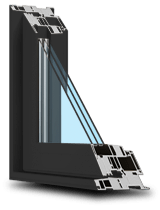
Vinyl frames are a strong all-round choice for Canadian weather because they insulate well, resist moisture, and need very little upkeep.
-
The glass package has a major influence on comfort and energy performance. Double or triple glazing, Low-E coatings, and argon fill all reduce heat loss and cut down on drafts and condensation.
-
Security comes from the whole system: multi-point locks, anti-lift hardware, a reinforced frame, and a solid track, not from any single add-on.
Locations -
Proper professional installation helps the door perform as intended and may be required to maintain applicable warranty coverage.

What is a sliding patio door, and why is it so popular in Canadian homes?
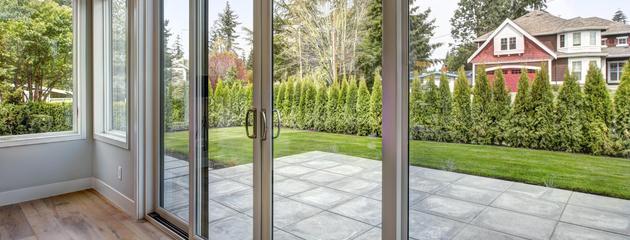
A sliding patio door is a large glass door with one or more panels that glide horizontally along a track, usually opening onto a deck, patio, or backyard.
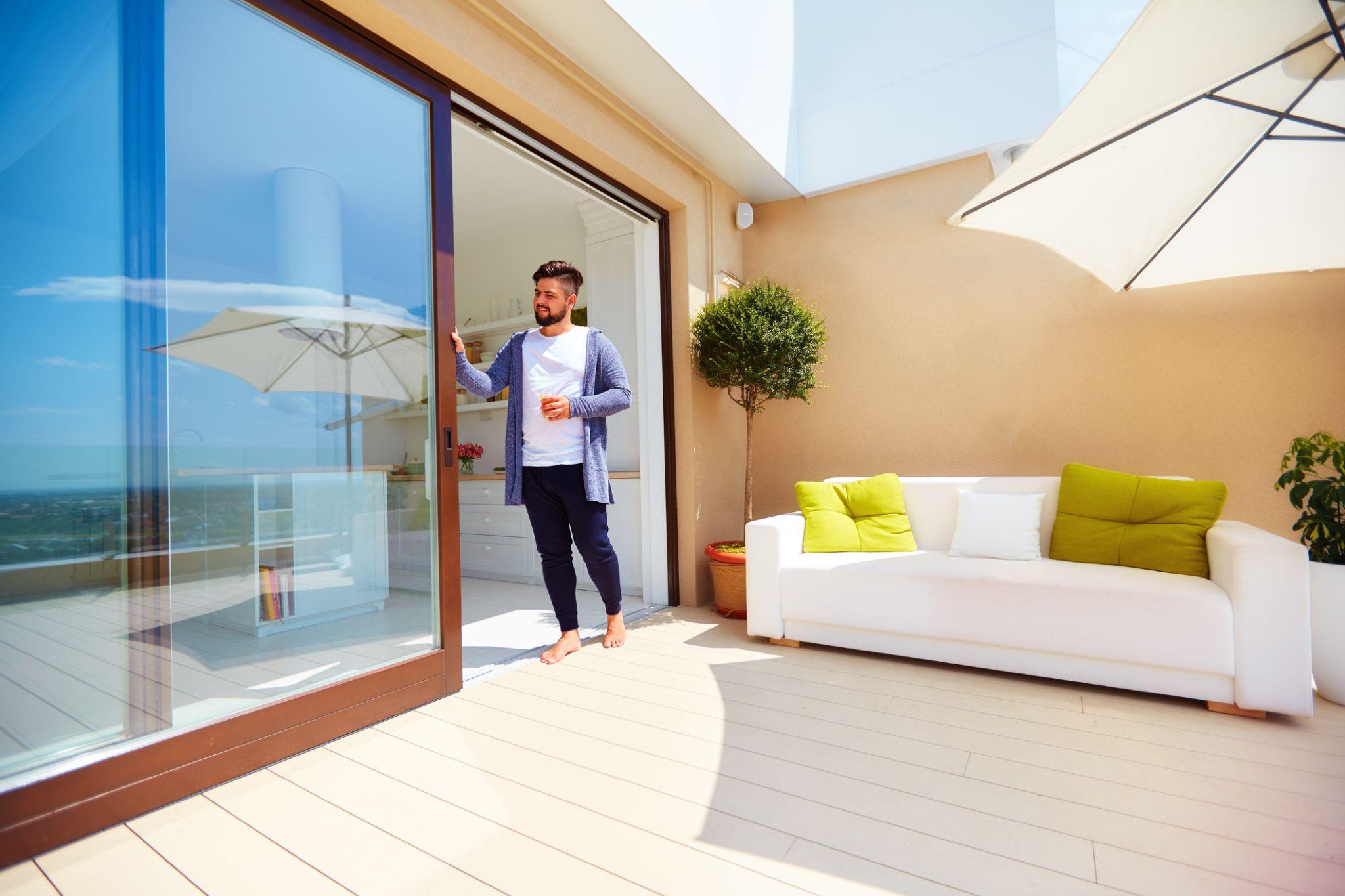
The appeal is easy to understand once you picture how it works. Instead of swinging into a room the way a hinged door does, the moving panel slides sideways past a fixed panel, which means you never lose floor space to a door arc. That makes sliding doors a favourite in kitchens, dining areas, and living rooms where furniture is close to the opening. The wide glass area also pulls in a lot of natural light and frames the yard almost like a picture window, which is a big part of why so many homeowners choose them during a renovation. For families, the low, wide threshold makes it simple to move between indoors and out while carrying groceries, a laundry basket, or a tray of food for the barbecue.
How sliding doors work
Most residential sliding patio doors use a two-panel layout, with one fixed panel and one operating panel that rolls on rollers set into the bottom track. Many quality doors use adjustable tandem rollers, which can support smoother operation and make future adjustments easier, and they seal against the frame with compression or brush weatherstripping to block drafts. Some larger openings use three or four panels, and a few designs stack or pocket them to create an even wider gap. Whatever the layout, the two things that determine how well the door performs day-to-day are the quality of the rollers and the quality of the seals.
Where are sliding patio doors most often installed?
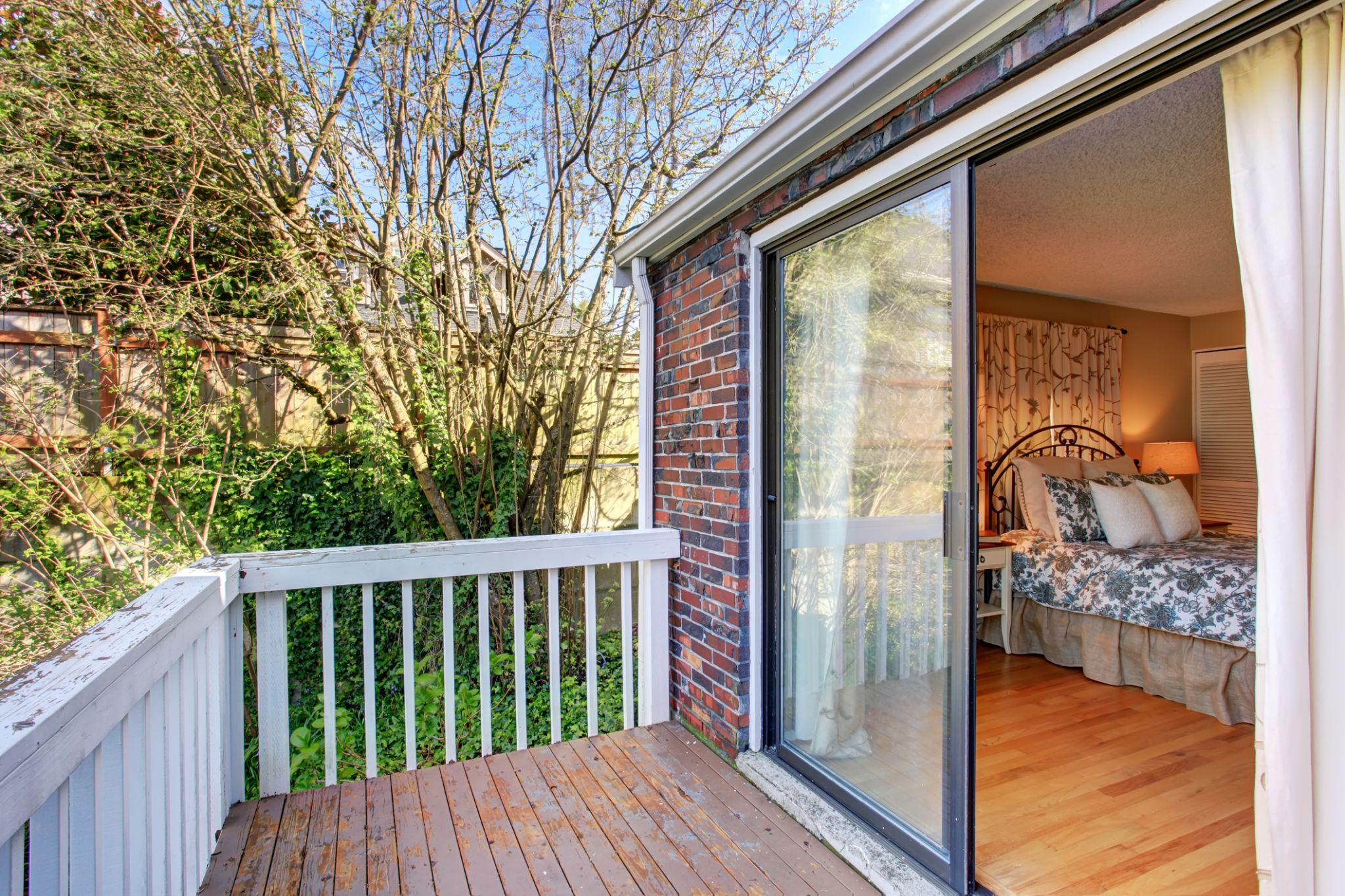
Sliding patio doors are most commonly fitted at the back of the house, connecting a kitchen or family room to a deck or garden. They also work well for walk-outs from a finished basement, for balconies on upper floors, and for any wall where you want light and a view without the swing clearance a hinged door demands. Because the panels stay within the width of the opening, they suit tighter spaces and open-concept layouts where a swinging door would get in the way.
How do sliding patio doors perform in Canada’s climate?
A well-built sliding patio door performs well in the Canadian climate, as long as it is properly insulated and sealed correctly during installation.
Our winters put real stress on any exterior door. A quality sliding door answers that with an insulated frame, a multi-pane glass unit, and weatherstripping that remains flexible in cold weather, so the panel continues to seal tightly when temperatures drop. The U-factor is one of the most useful figures to compare because it indicates the rate of heat transfer through the entire door assembly, measuring how much heat escapes through the door; the lower it is, the better the door holds warmth inside. Natural Resources Canada sets a clear benchmark here. To earn ENERGY STAR certification, a sliding glass door must have a U-factor of 1.22 W/m²·K or lower, or an Energy Rating of 34 or higher. The most efficient models achieve a U-factor of 1.05 W/m2 or lower, according to Natural Resources Canada's searchable product list for sliding glass doors . Those figures give you an objective way to compare doors instead of relying on marketing language.
Cold-weather performance
In a cold climate, the frame material and the glass package decide whether a door feels comfortable to stand beside in January. Insulated frames and multi-pane sealed units can keep the interior glass surface warmer, improving comfort and reducing the likelihood of condensation or frost under typical conditions. A tight seal matters just as much because even a great glass unit will feel cold if air leaks past a worn or poorly fitted gasket. This is one reason quality hardware and careful installation are not optional extras in Canada.
Air leakage and condensation
Condensation on the inside of a patio door is usually a sign of indoor humidity meeting a cold surface rather than a fault in the door itself. Managing the moisture in your home helps. Health Canada generally recommends keeping indoor relative humidity between 30% and 50%. During cold weather, a level closer to 30%–35% may help reduce condensation, depending on outdoor temperatures and the building envelope's performance. Pair sensible humidity control with a well-sealed, well-insulated door, and you greatly reduce the chance of fogging, frost, and the mould problems that can follow.
Which frame material is best for a sliding patio door?
The best frame material for most Canadian homes balances insulation, low maintenance, and a long service life, which is why vinyl is such a popular pick, though aluminum, wood, and composite each have their place.
Frame material shapes almost everything about a door: how well it insulates, how much upkeep it needs, how it looks, and how long it lasts. Vinyl frames commonly use multi-chamber profiles that help limit heat transfer. Their actual energy performance depends on the complete frame design, glass package, weatherstripping, and installation, and they never need painting or staining. They also withstand moisture without warping or rotting, which matters a great deal during freeze-and-thaw cycles. Wood offers a warm, classic look but asks for regular sealing to keep the weather out. Aluminum is strong and slim but conducts heat readily unless it has a thermal break. Composite frames aim to combine the strength of one material with the low upkeep of another. The table below lays out the practical trade-offs so you can match a material to your priorities.
|
Frame material |
Insulation |
Maintenance |
Typical lifespan |
Best suited for |
|
Vinyl |
Good to very good |
Very low, no painting |
Long |
Homeowners who want low upkeep and dependable comfort |
|
Wood |
Good |
Higher, needs sealing |
Along with care |
Traditional or heritage-style homes |
|
Aluminum |
Lower unless thermally broken |
Low |
Long |
Modern looks and very large openings |
|
Composite |
Good |
Low |
Long |
Buyers wanting strength with minimal upkeep |
The best low-maintenance option
If you would rather not think about your door once it is installed, vinyl is hard to beat. There is no finish to repaint, no sealing schedule to keep, and the surface simply wipes clean. When paired with quality glass and proper installation, a vinyl sliding patio door provides steady comfort and years of easy operation with very little effort on your part. That mix of insulation and low maintenance is exactly why it has become the default choice for so many Canadian renovations.
When homeowners tell me what they want from a patio door, it almost always comes down to comfort and simplicity. That is why we point people toward a well-insulated vinyl frame with a proper multi-pane glass unit. It keeps the room comfortable in every season, and it takes the maintenance worry off their plate for good. Helen Sin, Consumer Success Manager at Canadian Choice Windows & Doors
Which glass options make the biggest difference in comfort and energy efficiency?
Glass is where you win or lose the most comfort, so the upgrades that matter most are the number of panes, a Low-E coating, and argon fill between the panes.
A sliding patio door is mostly glass, so the sealed unit inside it does more for comfort and efficiency than almost anything else. Double glazing uses two panes with an insulating gap between them, while triple glazing adds a third pane for even better insulation and sound control, which many Canadian homeowners appreciate through a long winter. A Low-E coating is a nearly invisible layer that reflects heat back where it belongs, keeping warmth inside during winter and blocking unwanted solar heat in summer. Argon gas is commonly used between panes because it has lower thermal conductivity than air, helping reduce heat transfer through the sealed glass unit. Together, these features enable a door to meet the ENERGY STAR U-factor and Energy Rating levels described earlier.
-
Double versus triple glazing: triple glazing improves insulation and noise reduction, which is worth considering for cold regions or noisy streets.
-
Low-E coatings: reflect radiant heat to keep rooms comfortable year-round without cutting daylight.
-
Argon fill: adds insulating value between the panes at a little extra cost.
-
Tempered and laminated glass: boost safety and, in the case of laminated glass, add security and sound dampening.
-
UV protection helps limit fading of floors, rugs, and furniture near the door.
The best glass option for cold climates
For most of Canada, a sealed unit with Low-E glass and argon fill is the sensible baseline, and stepping up to triple glazing makes sense in colder regions or where you want extra quiet. The goal is a warmer interior glass surface, which keeps rooms comfortable and cuts the risk of condensation. When comparing doors, ask for the U-factor and Energy Rating of the specific glass package being quoted, because the same frame can be offered with very different glass packages.
How can you identify the best sliding patio doors for your home in Canada?
The best sliding patio doors for your home in Canada are the ones that match your climate zone, your energy goals, your budget, and how your family actually uses the space.
There is no single best door for everyone, which is why it helps to work from your own priorities. Start with performance, since a certified U-factor and Energy Rating indicate how the door will handle cold. Then think about the opening: a wider three-or four-panel layout suits a big backyard view, while a standard two-panel door fits most spaces and budgets. Factor in maintenance tolerance, the look you want, and any family needs such as child safety or accessibility. When you weigh those together, the right door usually becomes clear, and a good local team can confirm the fit for your home.
Best for energy efficiency, large openings, and long-term value
If energy performance is your top priority, compare models recognized as ENERGY STAR Most Efficient. For 2025, qualifying windows and sliding glass doors must have a U-factor of 1.05 W/m²·K or lower or an Energy Rating of 40 or higher. The required performance may be achieved through different frame and glass configurations. If you are opening up a large wall to the yard, look at multi-panel configurations built on a sturdy frame with heavy-duty rollers so the wide panels still glide easily. If value matters most, A quality two-panel vinyl door with Low-E glass and argon fill can provide a practical balance of thermal performance and cost for many homes. In every case, matching the door to your region and how you use the room is what separates a good purchase from a great one.
What security features should a modern sliding patio door include?
A secure sliding patio door relies on a layered system: a multi-point lock, anti-lift hardware, a reinforced frame, a solid track, and, where wanted, laminated glass.
Older sliding doors earned a reputation for weak security, but modern units have moved well past that. The foundation is a multi-point lock that secures the panel at several points along the frame rather than at a single latch, which makes the door far harder to force. Anti-lift blocks or pins stop someone from popping the panel off its track, a classic weak spot on older doors. A reinforced frame and a robust track resist prying, and an auxiliary foot lock or a security bar adds a simple, visible layer of protection. For families, keyed or child-resistant locks and ventilation latches that hold the door open just a few centimetres add everyday peace of mind.
Security Upgrades Worth Paying For
From an installer's point of view, the upgrades that genuinely improve protection are the ones built into the door's structure: a quality multi-point lock, anti-lift hardware, and laminated glass, which holds together even when struck. These features can strengthen the door assembly and improve resistance to common forced-entry methods. By contrast, some add-ons are mostly decorative or offer only marginal gains, such as basic pin locks used on their own or aftermarket gadgets that do not integrate with the door. Spend your budget on the structural features first, then add convenience items like a security bar if you want them.
How much does a sliding patio door cost in Canada?
The cost of a sliding patio door in Canada depends mainly on size, frame material, glass package, hardware, and installation labour, including removal of the old unit.
Rather than quote a single number, it is more useful to understand what drives the price, because that is what you will actually be comparing between quotes. A standard-size two-panel door in a common material costs less than a custom-size or multi-panel door. Upgrading the glass to triple glazing or adding premium security hardware raises the price, as does a difficult installation where the opening needs reframing. Removing and disposing of the old door and finishing the surrounding trim also add to the total. The table below shows the main factors and how each one tends to move the final quote, so you can read an estimate with a clear eye.
|
Cost factor |
Effect on price |
What to ask about |
|
Size and panel count |
Larger or multi-panel doors cost more |
Standard versus custom sizing |
|
Frame material |
Varies by material and quality |
What is included at the quoted grade |
|
Glass package |
Triple glazing and coatings add cost |
U-factor and Energy Rating of the unit |
|
Hardware and security |
Premium locks and rollers add cost |
Type of locking system included |
|
Labour and old-unit removal |
Reframing or disposal adds cost |
Whether removal and trim are included |
What has the biggest impact on the final quote?
In practice, size, glass package, and installation complexity drive the price more than anything else. Two quotes can look far apart simply because one includes triple glazing, old-door removal, and finished trim while the other does not. The fix is to ask each contractor for an itemized quote that lists the door specification, the glass rating, the hardware, and exactly what labour is covered. When you compare like for like, the real value of each offer becomes obvious.
When does replacing a sliding patio door make more sense than repairing it?
A sliding door replacement in Canada makes more sense than repair once the door fogs between the panes, sticks or drags badly, leaks air or water, or no longer locks securely.
Some problems are worth fixing, while others signal that the door has reached the end of its useful life. A worn-out roller or a lock that needs adjusting can often be repaired affordably. But certain issues clearly point to replacement because they indicate that the sealed unit or the frame itself has failed, and repairs would only be a temporary patch. Use the checklist below to sort a quick fix from a genuine replacement.
Repairable issues
-
Worn rollers that make the door drag, but the frame and glass are sound
-
A misaligned or sticky lock that can be adjusted
-
Damaged weatherstripping that can be replaced
-
A dirty or slightly bent track that can be cleaned or straightened
Replacement red flags
-
Fogging or moisture trapped between the panes, which means the sealed unit has failed
-
A warped or rotted frame that no longer seals
-
Persistent drafts or water getting in despite new weatherstripping
-
Outdated or broken locks that cannot be brought up to a secure standard
-
Rising energy bills traced to heat loss through an old, single-pane door
When several of these red flags appear together, a new energy-efficient door usually pays you back in comfort, quieter operation, and lower heating costs, and it removes the security worries that come with aging hardware.
How can you choose the right sliding patio door style for your space and budget?
Choose your style by matching the opening size, your home's design, your ventilation and sightline needs, and your total budget, then narrow from there.
Style is not only about looks; it is about how the door fits your room and your daily life. A clean, minimal frame with large glass suits a modern home and maximizes the view, while a door with more traditional detailing complements an older house. Think about how much ventilation you want, whether you prefer slim sightlines, and how much upkeep you are willing to take on. Then set those wishes against your budget so you land on a door that feels right and fits the numbers. The scenarios below show how those choices play out in real homes.
-
Condos and apartments: a compact two-panel door with a slim frame preserves the view and suits tighter balconies, while low-maintenance vinyl keeps upkeep simple.
-
Suburban houses: a standard or wide two-panel door with Low-E, argon-filled glass balances comfort, looks, and value for a typical backyard.
-
Renovation projects: if you are opening up a wall, a multi-panel layout on a sturdy frame delivers a dramatic view, provided the budget covers the larger glass and the extra labour.
Modern vs. traditional styles for small and large spaces
For a contemporary look, choose a large-format panel with minimal framing and a neutral finish. For a traditional home, a door with a slightly heavier frame profile and a warm finish sits more naturally. In small spaces, the sliding design already helps because it needs no swing clearance, and a two-panel unit keeps the configuration simple while providing a broad glazed area for natural light. Whatever direction you lean, confirm the glass rating and hardware, so the style you love also performs as it should.
Why does professional installation matter as much as the door itself?
Professional installation matters as much as the door because even a high-quality door may develop air leakage, operational problems, or premature wear if the frame is not installed level, square, properly supported, insulated, and sealed.
A sliding patio door is heavy and precise, and it only performs to its rating when it is installed correctly. If the frame is not level and square, the panel will not glide smoothly, and the seals will not close evenly, inviting drafts. If the gap around the frame is not properly insulated and sealed, warm air escapes and moisture can enter the wall. Improper installation may affect warranty coverage, depending on the manufacturer’s terms and the cause of the problem and shorten the hardware's lifespan. In other words, the installation is what turns a good product into a door that actually delivers the comfort and efficiency you paid for.
I tell every homeowner the same thing: the door and the installation are one purchase, not two. We take the time to set the frame perfectly level, insulate the full perimeter, and test the seal before we leave. That is what protects the energy rating on the label and keeps the door gliding smoothly for years. Tony Wong, Project Manager at Canadian Choice Windows & Doors
DIY vs. professional installation
It can be tempting to install a patio door yourself, but the weight of the panels, the need for a perfectly square opening, and the importance of a continuous air seal make this a job where mistakes are costly. Signs of a poor install include a panel that drags or will not lock cleanly, visible gaps around the frame, drafts you can feel, and water pooling on the sill after rain. A professional crew brings the tools and the experience to avoid all of that, and a reputable installer stands behind the work, which is why professional installation is the safer investment for a door meant to last.
What should you remember before buying a sliding patio door in Canada?
Before you buy, remember that the right sliding patio door balances certified energy performance, a durable low-maintenance frame, a strong glass package, layered security, and professional installation.
It helps to keep the decision simple. Confirm the door meets the ENERGY STAR benchmarks for your needs, choose a frame material that suits your climate and maintenance tolerance, and ensure the glass package is rated for comfort. Add the security features that genuinely protect your home, then have the door installed by a professional to ensure all that performance is preserved. The summary table below brings the key buying factors together for a final check before you commit.
A quick comparison recap
Energy performance: aim for ENERGY STAR certification, with a U-factor of 1.22 W/m2 or lower or an Energy Rating of 34 or higher.
-
Frame material: vinyl offers a dependable balance of insulation and low maintenance for Canadian weather.
-
Glass package: Low-E and argon fill are the baseline; triple glazing is suited to colder regions.
-
Security: prioritize a multi-point lock, anti-lift hardware, and a reinforced frame.
-
Installation: insist on professional installation to ensure efficiency, warranty coverage, and lifespan.
Conclusion
Choosing a sliding patio door in Canada comes down to a handful of clear decisions. Confirm the energy performance with a certified U-factor or Energy Rating, choose a frame material that suits your climate and the upkeep you are willing to do, select a glass package that keeps the room comfortable, and add security features that genuinely protect your home. Get those right and back them with professional installation, and you end up with a door that glides smoothly, keeps the weather out, and looks the part for decades.
If you are ready to compare options for your home, the team at Canadian Choice Windows & Doors can help you match the right door, glass, and hardware to your space and budget. Explore sliding patio door options and get a quote so you can take the next step with confidence.
Frequently Asked Questions
Are sliding patio doors energy efficient enough for Canadian winters?
Yes, when they are ENERGY STAR certified. A door with a U-factor of 1.22 W/m2 or lower, or an Energy Rating of 34 or higher, is built to handle Canadian winters, and Most Efficient models perform even better. Pair the right rating with a Low-E, argon-filled glass unit and proper installation for the best cold-weather comfort.
Which frame material is best for a sliding patio door?
For most Canadian homes, vinyl is a strong all-round choice because it insulates well, resists moisture, and needs almost no maintenance. Wood, aluminum, and composite each have their place depending on your style, budget, and how much upkeep you are willing to do.
Is double or triple glazing better for a patio door?
Double glazing with a Low-E coating and argon fill is a solid baseline across most of Canada. Triple glazing provides greater insulation and improved sound control, making it worthwhile in colder regions or on busy streets.
How secure are modern sliding patio doors?
Modern doors are far more secure than older models. Security comes from a layered system: a multi-point lock, anti-lift hardware, a reinforced frame, a solid track, and, if you want extra protection, laminated glass.
Should I repair or replace my sliding patio door?
Worn rollers, a misaligned lock, or damaged weatherstripping are usually repairable. Fogging between the panes, a warped or rotted frame, persistent drafts, or locks that can no longer secure the door are signs that replacement is the better long-term choice.
Does professional installation really make a difference?
It makes a large difference. Correct installation keeps the door level and square, seals the perimeter against air and water, protects the warranty, and preserves the energy rating on the label. Poor installation undoes much of what you paid for.
How do I keep condensation off my patio door in winter?
Condensation usually occurs when indoor humidity meets a cold surface. Health Canada generally recommends maintaining indoor relative humidity between 30% and 50%. In colder weather, keeping it closer to 30%–35% may help limit window condensation, although the appropriate level depends on outdoor temperatures and the home’s construction. A well-insulated, well-sealed door keeps the interior glass warmer, which further reduces fogging.
What size sliding patio door should I choose?
A standard two-panel door fits most openings and budgets, while wider three- or four-panel layouts suit large backyard walls and dramatic views. The right size depends on your opening, your desired sightlines, and your budget, so it is worth confirming the fit with a professional.
1000’s of Colours & Textured Finishes
Transform your home from ordinary to extraordinary with our new coloured and non-glare textured finishes. Available in a wide array of colours as well as custom matched colours for your very own personalized design.
Our Most Popular Replacement Window Colours: