DraftLOCK vs. Standard Window: What's Actually Different?

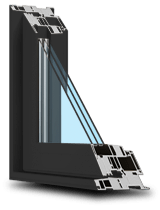
A DraftLOCK™ vs. standard window decision is a seal and frame decision. A standard window sits in the 3 1/4 inch frame the industry treats as typical, with a seal setup that varies by maker. DraftLOCK closes with a triple seal and a welded frame built 4 5/8 inches deep, so the unit can sit further into the wall.
A window air seal comparison then looks past that first close. Frame chambers, the spacer at the edge of the glass, argon between the panes, and foam (if ordered) all change how much air the sash lets through. A coating on the glass helps, and it does not replace a sash that no longer meets the frame.
Key takeaways
- A standard window in this comparison uses the 3 1/4-inch industry-standard frame; its seals and chamber count vary by maker, and any weatherstripping wears with age.
- DraftLOCK is built with a 4 5/8-inch frame depth, compared with the 3 1/4-inch industry-standard frame, so the unit can sit further inside the wall.
- The foam fill helps only when it is on the order, and the deeper frame helps only when the unit is set into the wall.
- A cold draft at the sash and moisture on the room side of the glass are seal and humidity problems. Moisture between the panes means the sealed unit has failed.
- No single savings percentage fits every house. The opening, the glass, and the install decide the bill.
What "standard" window sealing actually means
A standard window here is an industry-average unit, not a brand: a 3 1/4 inch frame whose seal setup and chamber count depend on the maker.
Against that 3 1/4 inch industry standard, described in the windows and doors FAQ , DraftLOCK is built with a 4 5/8-inch frame depth, so the unit can sit further inside the wall.
What a weatherstrip does not stop
A weatherstrip stops air only while it fills the gap. It does not square a racked sash, and it does not insulate a hollow chamber. When the strip hardens, the lock closes on a line of air.
A fresh strip can quiet an old sash for a season. It does not give you a new frame or a new position in the wall. Air at the trim, outside the sash, was never the weatherstrip's leak.

What DraftLOCK actually changes
The best window seal technology Canada homes can use in a hard winter seals in more than one place and still seals after the strip ages. DraftLOCK is the sealing system Canadian Choice Windows & Doors™ builds into its vinyl windows.
On those vinyl windows , the frame is triple-sealed and welded, with internal thermal insulators and multi-chamber frame and sash construction.
The glass edge, the gas, and the foam you have to order
The sealed unit uses an Endur® IG Cardinal spacer system, with Low-E glass from Cardinal I.G. and Guardian Glass. Argon between the panes improves the U-value by roughly 10% because it carries heat across the gap more slowly than air does. Low-E is a coating that reflects heat. It is not a seal.
Foam-filled chambers are optional. The 4 5/8-inch frame is part of the build, but the deeper profile only helps if the window is set further into the opening. If it sits outside the insulation, the way a 3 1/4 inch frame often does, the extra depth stays outside the wall.
DraftLOCK vs standard window: feature-by-feature
A window air seal comparison is easier as a grid once each part has a job. The left column shows where a generic window follows the 3 1/4-inch industry standard and where it depends on the maker. The right column is what DraftLOCK changes, and a row marked optional is a question for the quote, not a feature you already own.
| Feature | Standard window | DraftLOCK |
|---|---|---|
| Frame depth | 3 1/4 in industry standard | 4 5/8 in frame depth |
| Seal | Varies by maker | Triple-sealed welded frame |
| Chambers | Varies by maker | Multi-chamber frame and sash |
| Corners | Varies by maker | Fusion-welded frame and sash corners |
| Spacer and glass | Varies by maker | Endur IG Cardinal system, Low-E, argon |
| Foam | Not a standard feature | Optional foam-filled chambers |
| Locking | Varies by style and maker | Multi-point hardware on doors and select styles |
| Warranty on vinyl windows | Set by that maker | 25-year transferable; periods vary by component |
Vinyl windows from Canadian Choice Windows & Doors carry a 25-year transferable warranty . Periods vary by component, so the frame, glass, hardware, and finish are not one flat promise. Door systems follow their own terms. Installation-related air leaks are included. Accidental damage, misuse, and unauthorized modifications are not.
A model certified under the Canadian ENERGY STAR specification must keep air leakage at or below 1.5 L/s/m2 , for both infiltration and exfiltration. That ceiling is not a heating-bill forecast.
The grid still leaves three checks that no row can settle for you.
- A crooked opening. The deeper frame cannot square a wall that is out of plane.
- Air at the trim. That draft is going around the window, through the rough opening.
- Foam on the order. If the quote does not name foam, the chambers are hollow.
Why sealing technology matters through a Canadian winter
Cold air comes in at the sash, warm air leaves, and the room near the glass stays colder than the thermostat. The furnace replaces air that already left.
In 2023, 46% of households in Canada used a forced-air furnace as their main heat. A sash that no longer meets the frame makes that furnace replace air the room is giving away. That is not a fixed percentage of the bill.
Interior condensation happens when moisture meets a cold pane. Cooking, showers, and drying clothes add that moisture. A tighter seal and Low-E glass leave the room-side surface warmer, so the film is less likely. They don't remove the humidity you are still adding.
Moisture between the panes means the sealed unit has failed. The warranty treats that internal condensation as a sealed-unit failure. A new weatherstrip on the sash doesn't dry the cavity, and it doesn't turn a failed unit into a sound one.
A long heating season, with days cold enough that an install has to wait, is when a weak seal shows itself. Replacement windows in Edmonton are ordered for that kind of winter. The crew does not install below -10 C, because the house loses too much heat while the opening is open.
Short-term fixes still have a place. Weatherstripping and caulking can quiet window drafts in winter for a season. They do not add chambers or move a shallow frame into the wall.
"On a replacement, the cold spot is usually a gap you can feel at the sash with the back of your hand. Older windows that closed on one weatherstrip let that gap come back the first hard cold night. We check that joint before we talk about the glass," says Tony Wong, Project Manager, Canadian Choice Windows & Doors.
Where DraftLOCK is available on Canadian Choice Windows & Doors' window and door range
DraftLOCK is the sealing system named on the vinyl window line: casement, awning, sliding tilt, bay and bow, double hung tilt, architectural shapes, and TrueCrankless tilt and turn. Naming the line does not make every option standard.
TrueCrankless tilt-and-turn windows are a DraftLOCK series: the sash tilts in for ventilation and swings in for cleaning, and multi-point hardware pulls it into the seals.
What the name does not automatically include
Foam-filled chambers are still an option, not a default on every opening. Canadian Choice Windows & Doors has manufactured in Canada since 1997. The trusted choice. Canadian-made. Steel entry doors are described as DraftLOCK doors. Sliding patio doors are uPVC, and stacking patio doors use Thermal Commercial Grade Aluminum, so a window-seal comparison does not become a claim about every door.
Wood and aluminum-clad windows are a separate line, so do not assume the same uPVC frame or foam-filled chambers. Ask which series, which frame depth, and whether foam is on that opening.
What Canadian Choice Windows & Doors' project managers see in the field
Project managers see windows that still click shut after the weatherstrip has hardened. The click means the hardware closed. It is not proof the gap is filled. They mark sash or trim on the measure, because those two findings are not the same repair. A sash leak points to the window itself: a worn seal, a racked frame, or hardware that no longer pulls the sash in. A trim leak points to the rough opening, where the insulation and sealant around the frame decide how much air gets past. Knowing which one you have before the quote keeps the order focused on the fix the opening actually needs.
On the measure, three quick checks help separate the two:
- Sash: air you can feel along the line where the sash meets the frame, with the window closed and locked.
- Trim: air moving at the casing or between the frame and the wall, outside the sash.
- Frame: a sash that rubs, sticks, or leaves an uneven gap, which can mean the opening is out of square.
Order the seal you can point to on the frame
A standard window sits in a 3 1/4 inch frame, and how well it seals depends on the maker and on how its weatherstrip has aged. DraftLOCK builds that seal into the frame itself, with a triple-sealed welded frame 4 5/8 inches deep and multi-chamber construction. The deeper profile only works if the unit sits in the wall, and the foam only if it is on the order.
No single savings figure fits every house, and a new sash seal won't dry out a failed unit or fix a draft at the trim. Installation work also waits when the air is below -10 C. A free window estimate checks how the 4 5/8-inch frame will fit in your existing opening and which foam and glass options work.
Frequently asked questions
Is DraftLOCK better than a standard vinyl window?
It gives you a defined seal path: a triple-sealed welded frame, multi-chamber construction, and a 4 5/8-inch frame depth, whereas a standard vinyl window’s seals and chambers depend on the manufacturer. Better does not mean every option is on every unit. Foam-filled chambers are optional. A standard vinyl window with a fresh weatherstrip can still close well, but it won’t give you the same frame.
Does DraftLOCK reduce condensation on windows?
It can reduce the film on the room side of the glass because a tighter seal and Low-E glass leave that surface warmer, and moisture condenses on a cold pane. Cooking, showers, and indoor drying still add humidity, and the window can't remove it. Moisture between the panes means the sealed unit has failed, and a sash seal won't dry it.
How much can DraftLOCK lower my energy bills?
There is no single published saving that fits every house, so a fixed percentage would be a guess. A furnace runs less when the sash stops leaking air it has already heated, and the size of that change depends on the glass, the wall, and the install. Ask for a measure of your openings rather than a promised share of the bill.
Is DraftLOCK available on every Canadian Choice Windows & Doors window style?
It is the system named on the vinyl windows, including the TrueCrankless tilt-and-turn series, and steel entry doors are described as DraftLOCK doors. The foam is an option. Wood and aluminum-clad windows are a separate line, so do not assume the same uPVC frame. Confirm the series, the frame depth, and the foam on the quote.
Does a DraftLOCK window cost more than a standard window?
The price depends on size, style, and options, including foam and triple glass. There is no single published gap between a DraftLOCK window and a generic standard window. The average price of a window varies with size and type, so the measure is where that gap, if there is one, shows up for your openings.

1000’s of Colours & Textured Finishes
Transform your home from ordinary to extraordinary with our new coloured and non-glare textured finishes. Available in a wide array of colours as well as custom matched colours for your very own personalized design.
Our Most Popular Replacement Window Colours: