How to Determine the Backset of Your Entry Door


Backset is one of those measurements most homeowners never think about — until a new handle, deadbolt, or smart lock refuses to fit. You can have a perfectly good entry door and still end up with a latch that won’t catch, a deadbolt that binds, or hardware that sits awkwardly on the slab. In cold Canadian winters, even minor fit issues can become bigger problems: sticking locks, misalignment due to seasonal movement, and premature wear.
The good news is that backset is easy to understand once it’s explained properly. The challenge is measuring it accurately, and knowing when it’s safe to DIY versus when you’re about to permanently modify a door (and potentially weaken the lock area). This updated guide walks you through backset step by step, shows how it affects different types of entry door hardware, and explains why professional measurement and installation from Canadian Choice Windows & Doors is often the most reliable way to achieve a clean, secure result the first time.
Key Takeaways
- Backset is the distance from the edge of the door to the centre of the handle/lock bore hole — this measurement controls where the latch sits inside the door.
- Most residential entry doors in Canada use 2-3/8 in. (60 mm) or 2-3/4 in. (70 mm) backset, but older and custom doors can differ.
- Backset affects more than “fit”: it influences latch/strike alignment, smooth locking, wear over time, and overall security performance.
- Smart locks and handlesets are less forgiving than standard knobs — clearance, latch depth, and alignment matter more than most people expect.
- Changing backset is possible, but it permanently alters the door slab and often requires moving the strike plate — professional work is strongly recommended.
- If you’re upgrading hardware or replacing an entry door, Canadian Choice Windows & Doors can verify measurements and install compatible hardware for a long-term, secure result.
What Is Door Backset?
Door backset is the horizontal distance from the edge of the door (the latch edge) to the centre of the bore hole where the knob, lever, or lock body sits. It’s a standardized measurement used by hardware manufacturers to build latch assemblies and locksets that align correctly with the door frame’s strike plate.
Backset sounds like a small detail, but it determines the geometry of your entry hardware. When the backset is wrong, you may still be able to “force” a lock into place — but the door often won’t latch smoothly, the deadbolt may scrape, or the handle will feel tight and inconsistent.
Backset vs. Other Door Measurements
Backset is often mistaken for other door dimensions. Here’s the clean separation:
| Measurement | What it means | Why it matters |
|---|---|---|
| Backset | Door edge to centre of bore hole | Determines lock/latch position and alignment |
| Door thickness | Interior face to exterior face of the slab | Controls lock body fit and hardware length |
| Cross bore | The hole through the door face (typically ~2-1/8 in.) | Must match lockset design and spacing |
| Edge bore | The latch hole is drilled into the door edge | Must match latch diameter and depth |
| Strike position | Where the latch/bolt meets the frame | Controls reliable latching and security |
Why Backset Matters for Security and Performance

Backset affects how the latch and deadbolt engage the frame. If the latch hits the strike plate off-centre, the door may still close — but it will wear faster and can become more prone to sticking, especially with seasonal expansion and contraction. Over time, homeowners often compensate by slamming the door or “lifting” the handle, which further stresses hinges and hardware.
Backset also affects the amount of material surrounding the lock body. On some door types — especially modern fibreglass, steel, and composite doors — lock reinforcement zones are engineered for specific hardware positions. Drilling or relocating holes without understanding the door’s internal structure can weaken the lock area and reduce long-term durability.
Common Backset Sizes in Canadian Homes
Most Canadian residential doors use one of two standard backsets. However, variations appear in older homes and custom slabs.
| Common backset | Metric equivalent | Where you’ll see it | Notes |
|---|---|---|---|
| 2-3/8 in. | 60 mm | Many standard residential doors | Very common; widely supported by locksets |
| 2-3/4 in. | 70 mm | Newer doors, many handlesets | Often used when more clearance is desired |
| Non-standard | Varies | Older/custom/import doors | Requires careful verification; may need custom solutions |
How to Measure Backset Accurately
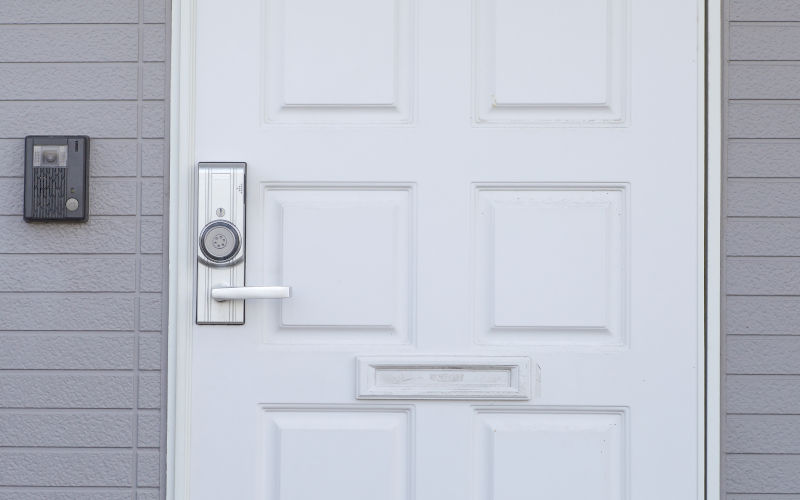
You can measure backset with a basic tape measure. The key is measuring to the centre of the borehole — not the edge.
Tools you’ll want
- Rigid tape measure (or a combination square)
- Pencil or painter’s tape for marking the centre
- Flashlight (helpful if hardware is still installed)
Step-by-step measurement
- Open the door and locate the latch edge (the edge with the latch).
- Find the centre of the bore hole on the door face. If hardware is installed, use the centre of the knob/lever spindle as the reference point.
- Measure from the door edge straight to that centre point.
- Record the measurement in inches and/or millimetres.
- Repeat once to confirm (small errors are the most common cause of wrong hardware purchases).
Quick accuracy tips
- Don’t measure to the edge of the hole — measure to the centre.
- Don’t measure from the door face — measure from the door edge.
- If you’re replacing hardware on multiple doors, measure each door (homes often have mixed hardware over time).
How to Tell If Your Latch Is Adjustable
Many modern locksets include an adjustable latch that works with both 2-3/8 in. and 2-3/4 in. backsets. If your latch is adjustable, you may see a mechanism that extends or retracts the latch body (often by twisting or sliding the assembly).
Even with adjustable latches, you still need proper alignment and proper door preparation (cross-bore and edge-bore). Adjustable does not mean universal — especially for handlesets, smart locks, and higher-security hardware.
“Backset may look like a small measurement, but it controls how the entire locking system sits inside the door. When it’s wrong, the door never performs properly, no matter how good the hardware is.” — Tony Wong, Project Manager, Canadian Choice Windows & Doors
Choosing Hardware Once You Know the Backset
Backset is the first filter, not the only filter. Hardware selection also depends on door thickness, latch depth, existing hole sizes, and the type of lock you’re installing.
| Hardware type | Backset sensitivity | Common fit issues | Best practice |
|---|---|---|---|
| Knob/lever lockset | Medium | Latch misalignment; binding handle | Confirm backset + door thickness; choose an adjustable latch if suitable |
| Deadbolt | High | Bolt scraping; difficult locking | Ensure bolt centres in strike; verify frame alignment |
| Handleset | High | Misaligned trim; improper spacing | Verify all dimensions; a professional layout helps |
| Smart lock | Very high | Clearance conflicts; latch depth limits; misalignment | Verify compatibility before purchase; pro install recommended |
| Multi-point system | Very high | Gearbox/strip misfit | System-level assessment; avoid DIY retrofits |
Backset and Smart Locks
Smart locks are increasingly popular in Canada, but they’re less forgiving than standard hardware. Beyond backset, smart locks often require specific internal clearance for motor assemblies and battery packs. If the bore position, door thickness, or latch depth is off, you may end up with a lock that technically installs but performs inconsistently.
If you’re upgrading to a smart lock, consider professional verification first — especially on older doors, doors with decorative glass, or doors that have been modified in the past.
Backset and Entry Door Replacement Projects
When you replace an entry door , you’re not just swapping a slab — you’re installing a complete system: slab, frame, weather sealing, threshold, and hardware. Backset must be compatible with the lock package you plan to use, and the frame strike must be positioned so the latch and deadbolt engage cleanly.
This is where professional installation matters most. A door that’s slightly out of square, or a strike plate that’s even a few millimetres off, can cause repeated issues: sticking locks, drafts, and a door that needs extra force to close. Professional teams aim for alignment that is reliable across Canadian seasonal movement.
Can You Change the Backset of a Door?
Yes — but this is where many DIY attempts go wrong. Changing backset usually means drilling a new cross bore, adjusting the edge bore, and relocating the strike plate on the frame. It also means repairing the old hole location so the door doesn’t look patched or weakened.
If the door is steel or composite, changing the backset incorrectly can cause structural issues or visible surface damage. Even with wooden doors, a poor layout can cause misalignment that affects security and daily use.
Backset and Door Material
The type of door you have affects the safety of drilling or modifying hardware positions.
| Door type | What can go wrong | Why pros are recommended |
|---|---|---|
| Steel | Damaging skins or internal supports | Requires correct tools and careful layout |
| Fiberglass | Cracking/chipping surface; misalignment | Precision drilling protects the finish |
| Wood | Splintering; weakened lock area | Reinforcement and clean finishing matter |
| Composite | Missing reinforcement zones; structural weakening | Assessment prevents damage and performance issues |
Troubleshooting: Common Backset-Related Problems
If your hardware is installed but doesn’t feel right, these symptoms often indicate measurement or alignment issues.
| Symptom | Likely cause | What to do next |
|---|---|---|
| The door won’t latch unless you push hard | Latch not centred on strike; misalignment | Check strike position; verify backset; consider pro adjustment |
| Deadbolt binds or needs force | Bolt hits a strike off-centre; frame movement | Inspect alignment; adjust strike; verify door fit |
| The handle feels tight or springy | Lock body under stress; improper hole layout | Confirm bore sizing and backset; reinstall correctly |
| Smart lock drains batteries or jams | Misalignment is causing motor strain | Verify latch/strike alignment; professional assessment recommended |
| Visible gaps or crooked hardware | Incorrect layout or worn door prep | Re-measure and correct; consider professional installation |
“We see homeowners struggle with fit issues simply because the door was never measured professionally. A proper assessment saves time, prevents damage, and ensures long-term reliability.” — Helen Sin, Consumer Success Manager, Canadian Choice Windows & Doors

When It’s OK to DIY — and When It’s Better to Call a Pro
DIY can make sense for straightforward swaps with standard, adjustable hardware on a door that’s already functioning well. But there are clear situations where professional help is the smarter move.
| Scenario | DIY risk level | Recommendation |
|---|---|---|
| Replacing a like-for-like knob/lever with the same backset | Low | DIY is usually fine if measurements are confirmed |
| Installing a new deadbolt or handleset | Medium–High | Verify alignment carefully; pro install avoids binding issues |
| Installing a smart lock on an older door | High | Professional assessment recommended |
| Changing backset or drilling new holes | Very high | Professional modification strongly recommended |
| Door is sticking / out of square/seasonal movement issues | High | Address door fit and frame alignment professionally |
Canadian Choice Approach: Measure Once, Install for the Long Term
Canadian Choice Windows & Doors treats entry doors as complete systems. That means checking more than just backset: door thickness, latch depth, frame alignment, weather sealing, and hardware compatibility are all part of the process. The goal is a door that closes smoothly, locks confidently, and stays reliable over time.
If you’re planning a hardware upgrade or an entry door replacement, a professional assessment can help prevent common pitfalls: buying incompatible hardware, drilling mistakes, and alignment issues that only show up after the first cold snap.
Final Thoughts
Backset is a small measurement with an outsized impact. When it’s correct, your entry door hardware operates smoothly and locks securely. When it’s off by even a small amount, you can end up with daily frustration, premature wear, and security compromises.
If you want the job done cleanly the first time, Canadian Choice Windows & Doors can measure, verify compatibility, and install your entry door hardware professionally — so your entry system looks right, works right, and stays reliable in Canadian conditions.
FAQs
What is the standard backset for a front door in Canada?
Most residential entry doors use 2-3/8 in. (60 mm) or 2-3/4 in. (70 mm). Older or custom doors may differ, so measurement is always recommended.
Can I install a lockset designed for a different backset?
Only if the lockset includes an adjustable latch that supports your door’s backset. Otherwise, you risk poor alignment or the need for door modification.
Will changing the backset affect my door’s warranty?
It can. Drilling or modifying a door outside manufacturer guidelines may void warranties, especially for fibreglass, steel, and composite doors.
Why does my deadbolt feel tight in winter?
Seasonal movement and slight misalignment can make bolts bind. Correct alignment (including backset and strike placement) is key to consistent operation.
What’s the safest next step if I’m not sure?
Book a professional measurement and compatibility check. It’s the fastest way to avoid buying the wrong hardware or damaging the door.

1000’s of Colours & Textured Finishes
Transform your home from ordinary to extraordinary with our new coloured and non-glare textured finishes. Available in a wide array of colours as well as custom matched colours for your very own personalized design.
Our Most Popular Replacement Window Colours: