4 Signs Your Windows Need Replacing (And 2 That Just Need a Repair)


Replace a window when the sealed glass has fogged, the frame has rotted or warped, drafts persist after sealing has been ruled out, or the sash no longer opens and locks properly. Failed caulking and worn hardware are usually repairs.
The difference between the two lists is not how annoying the problem feels, but where the failure sits. Caulking, weatherstripping, and hardware are serviceable parts that were always meant to be renewed. A sealed glass unit and the frame that carries it are the window itself, and once either gives way, the performance you paid for does not come back with a tube of sealant. This guide works through each sign, explains how to tell one from another, and covers the two problems that homeowners most often misdiagnose.
Key Takeaways
- Fog or moisture trapped between the panes means the sealed glazing unit has failed, and Natural Resources Canada advises correcting it by replacing the glazing unit.
- Rot, warping, and recurring water entry points in the frame rather than in the finish, and surface repairs rarely resolve them.
- Drafts are only a replacement sign once perimeter sealing and weatherstripping have been ruled out as the cause.
- A sash that sticks, will not stay open, or no longer locks is a safety issue as well as a comfort one.
- Failed caulking or weatherstripping is a normal maintenance item and usually a straightforward repair.
- Isolated hardware faults, such as a worn lock or a damaged crank, do not justify replacing a sound window.
- Age is context rather than a rule, so combine it with the actual condition of the frame, glass, and seals.
How can you tell whether your windows need replacing or only need a repair?
Judge the problem by where it sits, how often it comes back, and how much of the window it affects rather than by how much it bothers you.
Four questions sort most cases quickly. First, which component has actually failed: a serviceable part such as caulking or hardware, or the sealed glass and frame that make up the window itself. Second, is the problem confined to one spot or repeating across several windows, since a pattern usually points to age rather than an accident? Third, has it come back after a previous fix? If so, a repair that does not hold indicates an underlying condition. Fourth, how old is the unit, and what shape is the frame in? That sets how much a repair is worth investing in.
Questions worth asking before you decide
Homeowners often reach for a verdict before they have gathered the evidence. Ask whether the symptom appears in one room or throughout the house, whether it worsens in specific weather, and whether anything changed recently, such as a new humidifier or a renovation. Check whether the window is still under warranty before paying for anything, since a failed sealed unit within its coverage period is a claim rather than a purchase. You can review what a window warranty typically covers before you call. Note what you have already tried, because a draft that returned after new weatherstripping is a different problem from one you have never addressed.
The table below maps the most common symptoms to their usual causes and the direction each one typically points, which is a useful starting point before any hands-on inspection.

| Symptom | Usually caused by | Typical direction |
|---|---|---|
| Fog or moisture between the panes | Failure of the sealed glazing unit | Replacement of the glazing unit or the window |
| Soft, rotted, or visibly warped frame | Long-term water entry and material breakdown | Replacement |
| Draft that persists after resealing | Degraded window performance or installation gaps | Investigate, then usually replacement |
| Sash sticks, drops, or will not lock | Frame distortion, worn balances, or failed hardware | Depends on whether the frame is square |
| Draft with visible gaps or cracked caulk | Failed perimeter sealing | Repair |
| Loose handle, stiff crank, worn lock | Isolated hardware wear | Repair |
Is condensation between the glass panes a sign your windows need replacing?
Yes. Moisture trapped between the panes means the sealed unit has lost its seal, and no amount of cleaning or drying will restore it. Of the four replacement signs, this is the least ambiguous, because the space holding that moisture is closed and nothing you do in the room can reach it. What remains to be decided is scope rather than diagnosis, and that depends on the age and condition of everything around the glass.
What seal failure actually looks like
A sealed glazing unit consists of two or three panes bonded around a spacer, with an insulating cavity between them, often filled with argon. When that perimeter seal fails, the gas escapes and humid outdoor air moves in, which is why the fog sits where you cannot wipe it. Early failure often appears as a faint haze on cold mornings that clears by afternoon, so it is easy to dismiss for a season or two. Later it becomes permanent, and mineral streaking or a white film may etch into the inner glass surfaces. The insulating value drops at the same time, quietly, which is the part homeowners feel on the heating bill rather than see.
Replacing the glass unit or the whole window
The remedy depends on the unit's age and construction. Natural Resources Canada advises that when condensation occurs inside a sealed double-glazed unit because the seal has broken , the problem is best corrected by replacing the glazing unit, and notes that refurbishing a failed sealed unit is a temporary fix that will not restore the original energy efficiency. The same guidance suggests checking whether the window is still under warranty first, which is worth doing before any money changes hands. On a relatively young window with a sound frame and working hardware, swapping the sealed unit is often the sensible route. On an older unit where the frame is tired, the hardware is worn, and other windows are showing the same haze, replacing the window makes more sense than restoring a single failing component.
“When someone calls about a foggy window, the first thing I want to know is how old the unit is and whether it is the only one. A single failure on a newer window is often just the sealed unit, and that is a straightforward fix. When three windows in the same wall are hazing in the same winter, we are usually looking at the end of a service life rather than three separate accidents, and it helps to know that before deciding what to spend.” Helen Sin, Consumer Success Manager at Canadian Choice Windows & Doors™
Do rotting, warped, or water-damaged frames mean the whole window should be replaced?
In most cases, yes, because a frame that has softened or moved can no longer hold the sash square or keep water out.
The frame is the structural part of the assembly. It carries the weight of the glass, holds the sash in alignment, and provides the surface every seal presses against. Once the material has gone soft under a fingernail, split along the grain, or bowed enough that the sash no longer meets it evenly, patching the surface treats the symptom and leaves the cause running. Water that has reached the frame has usually been getting in for some time through a failed flashing detail, a blocked drainage path, or a gap that opened as the building moved. Fixing the appearance without finding that path simply hides the next few years of damage.
Distinguishing cosmetic from structural damage is the practical skill here. Peeling paint, minor surface checking, and discoloured trim are finishes doing what finishes do, and they can be sanded, sealed, and repainted with a clear conscience. Wood that gives under light pressure, corners that have opened, a sill that holds standing water, and staining that reappears after every heavy rain are all telling you the water is inside the assembly. Interior signs matter as well, since swollen drywall below a sill, a musty smell in the reveal, or a persistent damp patch on the wall usually means the leak has moved past the window and into the wall. At that point, the question shifts from the window to what the water has already reached.
When do persistent drafts and poor comfort indicate that it is time to replace windows?
A draft becomes a replacement sign only when it survives proper sealing, which means the leak is in the window rather than around it.
Start by separating two very different problems. Air moving between the frame and the wall is a perimeter sealing issue and belongs in the repair column, while air moving through the sash seal, a distorted frame, or a unit that no longer closes tightly belongs in the window column. The test is a sequence rather than an intuition: reseal and apply new weatherstripping first, then reassess under the same weather conditions. If the draft is unchanged, the window itself is leaking. Cold interior glass is a separate signal that points the same way, since a single-pane or early double-pane unit pulls heat from the room even when it is perfectly airtight, and no sealant changes that.
How drafts show up in daily comfort
Comfort complaints usually arrive before anyone suspects the windows. A room that never holds its temperature, a chair nobody wants to sit in through the winter, curtains that stir on a still day, and a furnace that runs longer on the same thermostat setting are the common ones. Cold glass also creates a chill you feel from a distance because your body radiates heat toward it, even when the air is warm. These are worth writing down room by room, since a pattern across one elevation of the house tells a different story than a single window that has always been drafty.
Should windows that no longer open, close, or lock properly be replaced?
Not always, but persistent operational problems that persist after cleaning and hardware work usually mean the frame has moved. This is also the sign homeowners tolerate longest, because a stiff sash reads as an inconvenience rather than a failure, and people quietly adapt to it. It deserves more urgency than that, since a window that will not close tightly leaks air, and one that will not lock compromises both security and escape.
Telling a hardware problem from a frame problem
Start with the simple explanations, because many stiff windows are only dirty. Tracks fill with grit, hinges dry out, balances lose tension, and paint bridges the gap between sash and frame after a repaint. Clean the track, clear the weep holes, lubricate where the manufacturer says to, and try again. If the sash then moves freely and locks with normal pressure, you have found a maintenance item rather than a failure. If it binds only at one corner, drops when you let go, or needs a shove to close, look at the geometry instead of the mechanism.
When difficult operation points to replacement
A frame that has racked out of square shows itself consistently. The gap between sash and frame varies from one corner to the other, the lock will not reach its keeper without lifting or pressing the sash, and light or daylight is visible along one edge when the window is shut. Repeated hardware replacement on the same window is the other giveaway, since new parts fitted into a distorted opening wear out at the same rate as the old ones. There is a safety dimension here too, because a bedroom window that will not open under pressure is a compromised escape route, and one that will not lock is a security problem. Both of those move the decision along faster than comfort alone would.
Can a drafty window sometimes be fixed with new caulking or weatherstripping instead?
Often, yes. Perimeter sealing and weatherstripping are consumable parts, and their failure can cause drafts around otherwise sound windows.
This is the repair worth trying first and the highest-value one. Natural Resources Canada describes air leakage control as the single most important retrofit activity to consider first in any upgrade strategy for a house, and windows are among the paths it identifies. Exterior caulk becomes brittle, shrinks, and cracks after years of sun and freeze cycles, which opens a path between the frame and the wall. Weatherstripping compresses, hardens, or tears where the sash closes against it, and once it stops rebounding, it no longer seals. Neither failure says anything about the glass or the frame.
Knowing which of the two has failed changes the job, and the signs below separate them without any special equipment.
- Cracked, shrunken, or missing exterior caulk where the frame meets the cladding, often with a visible line of daylight or a gap you can slip a card into.
- Drafts felt at the outer edge of the trim rather than at the sash, which places the leak outside the window.
- Weatherstripping that stays flat after the sash is opened instead of springing back, or that has torn, hardened, or pulled loose from its groove.
- A draft you feel along the closing edge of the sash while the perimeter feels still, which places the leak in the seal.
- Paint peeling in a band around the frame, which often marks where moist air has been moving through a gap.
Does damaged window hardware mean you need a new window?
No. A worn lock, loose handle, stiff crank, or tired hinge is a component fault on a window that may have years of service left.
Hardware is designed to be replaced. Operators, balances, locks, keepers, and hinges are wear items on any operable window, and most manufacturers supply them as parts precisely because they are expected to fail before the frame does. A crank that turns without moving the sash usually has stripped gears, a handle that spins freely has lost its set screw, and a lock that no longer engages may only need its keeper realigned. These are inexpensive fixes on a sound unit, and choosing replacement over a 20-dollar part is rarely the better decision.
Signs the problem goes beyond the hardware
The exception is when the hardware fails for another reason. If a new operator strips during a season, the sash is probably binding, forcing the mechanism to work against a frame that has moved. If a lock will not line up even after the keeper is adjusted, the sash and frame are no longer parallel. If the same window has consumed three sets of balances, the weight it is carrying or the track it runs in is the actual problem. Repeated hardware failure on one unit, while identical windows elsewhere in the house behave normally, is the clearest version of this pattern, and it shifts the conversation from parts to the window itself.
How much should window age influence the decision about when to replace windows?
Treat age as context that shapes how much a repair is worth, not as a countdown that decides the question for you.
Windows typically enter a replacement conversation somewhere around 20 to 25 years, and across Canadian conditions, the practical range runs to roughly 30 years, depending on materials, installation quality, maintenance, and local climate. Those numbers are useful for setting expectations rather than issuing verdicts. A 25-year-old window with a square frame, tight seals, and clear glass is doing its job and deserves the repair. A 15-year-old window with a rotted sill and two failed sealed units is not made young by the calendar. Our guide on whether older windows are still worth keeping walks through how to weigh the age against what you can actually see.
Climate and installation explain most of the variation within that range. A window in a window company in Langley service area contends with steady coastal damp, where frames stay wet for long stretches and seals and fasteners corrode rather than crack, while a window company Mississauga homeowner deals with humid summers followed by hard freezes, a cycle that works joints loose and stresses sealed units from both directions. Long stretches of intense summer sun age exterior finishes and gaskets on any elevation that faces it. Installation quality matters just as much, because a unit that was never properly shimmed, insulated, and flashed has been working under stress since day one. Where age genuinely earns weight in the decision is in the arithmetic of repeated repairs, since money spent on a unit near the end of its service life buys less time than the same money spent on one in its first decade.
Does condensation always mean your windows have failed?
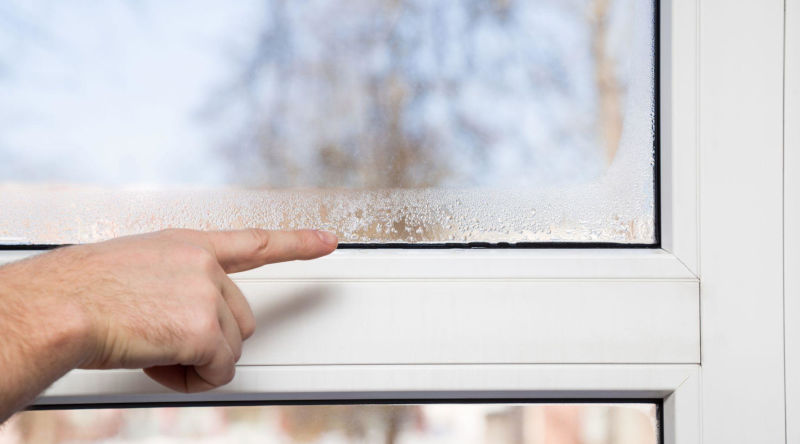
No, and this is the single most common misdiagnosis in the whole subject. The three versions of window condensation look similar from a metre away yet lead to completely different answers, ranging from a change in household habits to a new sealed unit. Spending one minute identifying which surface the water is actually on prevents most of the unnecessary quotes in this category.
Moisture on the room-side surface
Condensation on the interior surface of the glass, which you can wipe away with a cloth, means the glass is colder than the dew point of the air in the room. That is a humidity story first and a window story second. Cooking, showering, drying laundry indoors, a humidifier running during a cold snap, and simply having several people in a closed house all raise indoor moisture levels, and Health Canada advises keeping indoor relative humidity in a moderate range of roughly 30 to 50 percent to limit condensation and mould growth. Improving ventilation, running exhaust fans, and backing off the humidifier usually solves it, though persistent heavy condensation on a very cold surface can also indicate that the glass itself is performing poorly. Our guide to window condensation covers the moisture side of the problem in more detail.
Moisture you cannot reach
Fog sitting between the panes is a different diagnosis entirely, because the space it occupies is sealed and nothing you do in the room will reach it. That is the failed sealed unit described earlier, and it does not respond to ventilation, dehumidifiers, or heat. Exterior condensation on the outer face is the third case and is not a fault at all. It is a sign the window is doing its job: the outer pane stays cold while the insulating glass keeps your heat inside, the same way a cold drink beads up on a warm afternoon. Homeowners often read any condensation as proof that a window has failed, so it is worth making clear that dew on the outside surface is normal and requires no repair. Before deciding anything, note which surface the moisture is on, whether it clears through the day, and whether it appears on one window or many.
The comparison below sets the three cases side by side, since telling them apart in the first minute saves an unnecessary quote.
| Where the moisture sits | What it indicates | What to do first |
|---|---|---|
| Room-side surface, wipes away | Indoor humidity meeting a cold glass surface | Ventilate, run exhaust fans, and check humidifier settings |
| Between the panes, cannot be reached | Failed seal on the insulated glass unit | Check the warranty, then plan a glass unit or window replacement |
| Outside face of the glass | Outer pane staying cold because the unit insulates well | Nothing; it clears as the day warms |
How can you check for drafts, leaks, and other signs windows need replacing?
A short, methodical walkthrough tells you far more than a general sense that something feels cold, and it costs nothing.
The aim is diagnosis rather than repair work. Pick a cold or windy day, since drafts announce themselves under pressure differences, and work one window at a time so you are comparing like with like. Take photographs as you go, because a contractor can often tell more from three clear pictures of a corner than from a description over the phone. Our home inspection checklist is a useful companion if you would rather work through the whole house at once. The steps below cover what to look at, what to test, and what to record.
- Look along the perimeter for cracked caulk, gaps at the trim, peeling paint in a band, and daylight visible at any edge.
- Run the back of your hand slowly around the frame and along the closing edge of the sash to locate where air is moving.
- Open and close every sash fully, then lock each one, noting anything that binds, drops, or needs force.
- Press the frame material at the sill and lower corners, since softness there is the earliest sign of water damage.
- Check the glass in daylight for haze, streaking, or a film that does not clean off, and note which windows show it.
- Look for water staining, swollen material, or a musty smell below the sill and in the reveal.
- Photograph each problem area with something for scale, and note the room, the elevation, and the weather that day.
What to hand a contractor
Arriving with organized notes changes the quality of the conversation. A list of which windows show which symptoms, roughly how old the units are, what has already been repaired and when, and whether problems cluster on one side of the house lets an assessor look for causes instead of starting from scratch. Mention anything that changed recently, such as new landscaping that alters drainage or a renovation that changed how the house is ventilated. That context often explains a pattern that otherwise looks random.
Should you repair one problem now or replace an aging window before more issues develop?
Count the separate failures on the same unit, then decide whether the repair restores the entire window or only one part. The choice is rarely about a single invoice, because a window that has needed attention twice tends to need it again within a season or two. What matters is whether the fix returns the unit to full service or simply postpones the same conversation.
When a repair clearly makes sense
A repair is the right call when the failure is isolated, the rest of the unit is sound, and the fix restores full function rather than buying a season. New weatherstripping on a square-framed window, a replacement operator on a unit that otherwise works, a single sealed unit swapped in a young window, and fresh exterior caulk on sound cladding all qualify. Warranty coverage further strengthens the case, since a claim may cost you nothing beyond the call. In these situations, the repair is not a delay tactic; it is the correct maintenance for a window that is still doing its job.
When repeated repairs become the warning
The pattern to watch is accumulation. Three separate faults on one unit, a repair that has already failed once, or the same symptom spreading to neighbouring windows all suggest you are maintaining a unit that is past its useful life rather than fixing an incident. Frame condition is the deciding factor because hardware and glass can be replaced, whereas a compromised frame cannot. It is also worth thinking in terms of what each option actually buys: a repair that returns a window to full function for another decade is good value, while one that restores partial function for two winters is usually money spent twice. Comparing replacement window costs against several years of accumulating repairs is a fairer comparison than weighing it against a single invoice.
Can replacing inefficient windows improve comfort as well as energy performance?
Yes, and comfort is usually the change homeowners notice first, well before anything shows up on a utility bill.
The mechanism is straightforward. A modern insulated glass unit with a Low-E coating, a gas fill, and a warm-edge spacer keeps the room-side surface of the glass warmer, which removes the cold radiant zone you feel when you sit near a window in winter. Tighter sash seals reduce air movement that produces floor-level drafts, and warmer glass also condenses less moisture at the same indoor humidity. Natural Resources Canada links properly installed energy-efficient windows to fewer drafts and higher interior glass temperatures, both of which are felt rather than measured. The energy side follows the same logic, though the size of the change depends on what you are replacing and on the rest of your building envelope.
Installation determines whether any of that arrives. A high-performing unit fitted into an opening that has not been shimmed square, insulated at the perimeter, and sealed properly will leak around itself, and the rating on the label describes the window rather than the hole it sits in. This is why quality window installation services matter as much as the product specification, and why it is fair to ask an installer exactly how they handle the perimeter before you compare two quotes. Vinyl frames are a common choice in Canadian homes for the same practical reasons: they insulate well, resist moisture, and need very little upkeep across a long service life.
What should a professional inspect before recommending window repair or replacement?
A proper assessment looks at the whole assembly and the surrounding opening, not at the single symptom that prompted the call.
Expect the sash, frame, sealed glass, seals, hardware, drainage paths, and perimeter air sealing to be examined together, along with the interior and exterior finishes for signs of water tracking. A good assessor will also want to know the history: what has been repaired, when, and whether it held. The point of that breadth is to find the cause rather than the symptom, because a foggy pane and a rotted sill in the same window are often the same story told twice. If the diagnosis is replacement, this is also the moment to discuss which window styles suit each opening, since the operating style affects sealing, ventilation, and how the unit will age in that particular wall.
Questions worth asking during the inspection
Ask which specific component has failed and how the assessor reached that conclusion, since a clear answer is easy to give and hard to fake. Ask whether the frame is square and how that was checked, whether the problem is likely to recur if only the visible fault is addressed, and what the repair would restore compared with a replacement. Ask what the perimeter condition looks like, because an installation problem masquerading as a window problem is common in homes where several units were fitted at once. If the recommendation is replacement, ask which parts of the diagnosis drove it, and expect the frame condition and the number of separate failures to feature in the answer.
“I would rather spend twenty minutes finding out why a window is failing than five minutes writing a quote to replace it. Half the time, the sash is fine, and the water is coming in above the window; replacing the unit would have left the homeowner with the same stain next spring. When the frame really has gone, the evidence is easy to show them, and that is a much better conversation than asking anyone to take my word for it.” Tony Wong, Project Manager at Canadian Choice Windows & Doors™
What are the four replacement signs and two repair signs to remember?
Four signs point toward replacement: fog or moisture sealed between the panes, a frame that has rotted, warped, or continues to let water in, drafts that persist after the perimeter and weatherstripping have been properly renewed, and a sash that no longer opens, closes, or locks because the frame has moved. Two problems that look similar are usually repairs: failed exterior caulking or worn weatherstripping, and isolated hardware faults such as a stiff crank, a loose handle, or a lock that has lost its alignment. Age belongs in the decision as context rather than as a rule; condensation should be diagnosed by the surface it sits on, and repeated repairs on the same unit warrant more attention than any single symptom.
If your own walkthrough has left you unsure which list a window belongs on, an assessment will usually settle it in one visit. Canadian Choice Windows & Doors™ can review what you have, explain which component has actually failed, and tell you plainly when a repair is the better option. You can book a consultation at a time that suits you and go through the windows that concern you most, with no pressure to decide on the spot.
Frequently Asked Questions
Can a foggy window be fixed without replacing it?
Not permanently. Once the seal on an insulated glass unit fails, the insulating gas escapes and moist air enters the cavity. Natural Resources Canada advises replacing the glazing unit, and describes refurbishing a failed unit as a temporary fix that will not restore the original energy efficiency. Check the warranty before arranging anything.
How do I know if a draft is the window or the installation?
Reseal first. Renew the exterior caulk and weatherstripping, then reassess in similar weather conditions. If the draft has gone, it was the perimeter or the seals. If it remains unchanged, air is moving through the window itself, which suggests a distorted frame or a unit that no longer closes tightly.
Is condensation on the inside of my window a sign of failure?
Usually not. Moisture you can wipe off the room-side glass means indoor humidity is meeting a cold surface, so ventilation and humidity control come first. Health Canada advises keeping indoor relative humidity roughly between 30 and 50 percent . Fog between the panes indicates a failed seal.
At what age should windows be replaced?
There is no fixed age. Windows commonly enter the replacement conversation around 20 to 25 years, and the practical range under Canadian conditions runs to roughly 30 years, depending on materials, installation, maintenance, and climate. Condition matters more than the calendar.
Is it worth replacing just one window?
Often yes, particularly when one unit has failed and the rest are sound. Replacing a single window makes sense when the failure is isolated, and doing several at once makes sense when the same symptoms appear across a wall or elevation.
Can worn hardware damage the window itself?
It can, if the underlying cause is ignored. A sash that binds because the frame has moved will keep destroying operators and balances, and forcing a stiff window can further distort the sash. Repeated hardware failures on one unit warrant investigation rather than simply repairing it again.
Do new windows stop condensation completely?
No, because condensation depends on both indoor humidity and glass temperature. Better-performing glass keeps the room-side surface warmer, so condensation forms less readily at the same humidity, but a home with high moisture levels and limited ventilation can still see it on the coldest days.

1000’s of Colours & Textured Finishes
Transform your home from ordinary to extraordinary with our new coloured and non-glare textured finishes. Available in a wide array of colours as well as custom matched colours for your very own personalized design.
Our Most Popular Replacement Window Colours: