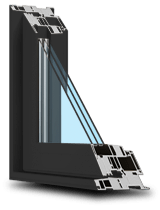
Crying Windows or How to Resolve the Condensation Issue?
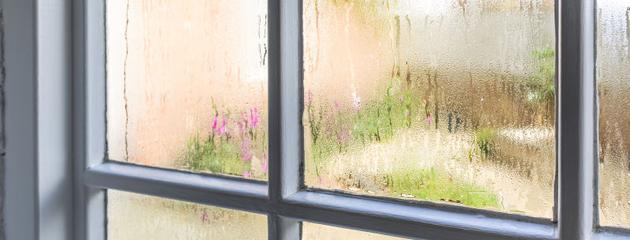

In Canada, “crying windows” are almost as common in winter as icy sidewalks and fogged-up windshields. You notice a light haze on the glass in the morning, and by evening, there are droplets running down the pane and a damp sill underneath. What many homeowners don’t realize is that condensation is not automatically a sign of “bad windows.” It’s usually the result of an imbalance between three practical factors: the temperature of the glass, the amount of moisture in your indoor air, and how well your home circulates and exhausts that moisture.
The good news is that condensation problems can almost always be solved — sometimes with targeted habit and ventilation changes, and sometimes with a professional assessment to identify air leakage, installation weak points, or insulated glass that’s no longer performing. This updated guide breaks down what’s normal, what’s not, and the most effective paths to a lasting fix — with a clear emphasis on professional diagnostics and installation quality from Canadian Choice Windows & Doors.
Key Takeaways
- Condensation happens when warm, moist indoor air meets glass that’s cold enough to reach the dew point — humidity and surface temperature work together.
- Not all condensation is the same: moisture on the room side points to indoor humidity/airflow; fogging between panes often indicates sealed unit failure.
- Quick wins include improving bathroom/kitchen exhaust use, reducing moisture sources, and increasing airflow to the window surface (especially behind coverings).
- Weatherproofing can reduce drafts, but it won’t solve high indoor humidity or failed insulated glass — treat it as a targeted step, not the final answer.
- For recurring “crying windows,” the fastest path to a real fix is a professional assessment that looks at both the windows and the home’s humidity/ventilation system.
Why Do Windows “Cry”? A Practical Explanation
Window condensation occurs when water vapour in your indoor air condenses on a cold surface. Your windows often become the coldest interior surface in winter, so they reveal humidity problems first. If your indoor air is humid and the glass temperature drops low enough, moisture will collect — sometimes as a light fog, sometimes as visible droplets.
The key point for homeowners: condensation is usually not a single-cause problem. It’s often a combination of indoor moisture, airflow patterns (especially around blinds and curtains), and window performance or air leakage. That’s why the most reliable solutions don’t guess — they diagnose.
The 3 Types of Window Condensation

Type 1 – Condensation on the inside surface (room side of the glass)
What it usually means: Indoor humidity is high relative to the glass temperature. This is common in bedrooms, kitchens, and bathrooms, and it’s often exacerbated by drafts or older glazing that remains colder.
Best next step: Reduce indoor humidity, improve airflow toward the window surface, and check for air leakage around the frame and trim.
Type 2 – Condensation on the outside surface (exterior side of the glass)
What it usually means: This can be normal with higher-performance windows , especially during cool mornings and rapid temperature swings. In many cases, it’s a sign the window is insulating well, and the exterior pane is staying cooler.
Best next step: In most cases, no action is required.
Type 3 – Condensation or fogging between the panes
What it usually means: The insulated glass unit has lost its seal, and moisture has entered the space between panes. At that point, indoor humidity changes won’t remove the fogging because the problem is inside the sealed unit.
Best next step: Book a professional inspection. Caulking, weatherstripping, or dehumidifiers will not fix this issue. The sealed glass unit — or, in some cases, the entire window — requires professional service or replacement.
What’s “Normal” in a Canadian Winter (and What’s a Red Flag)
A small amount of fog on very cold mornings can be normal, especially after showers or cooking. However, recurring or heavy condensation is a red flag because it can lead to damp trim, peeling paint, and mould growth over time.
Treat condensation as “actionable” if you notice any of the following:
- You’re wiping water off the glass or sill most days for more than a week.
- Wood trim, drywall, or paint near the window feels damp, soft, or swollen.
- You see dark spotting, persistent musty odours, or staining around the frame.
- Condensation appears between panes (sealed unit failure).
- Some rooms are consistently worse than others (airflow, ventilation, or installation issues are likely).
The Real Causes of Condensation (Beyond “It’s Cold Outside”)
1) Indoor humidity is too high for the season
Everyday activities add moisture to the air: showers, cooking, laundry, and even breathing while you sleep. If humidity stays high during cold weather, the dew point rises — and your windows become the first place moisture shows up.
2) The glass surface is too cold
Older or lower-performance windows tend to have colder interior glass temperatures. Drafts and air leakage around the frame can also chill the interior surface, increasing the likelihood of condensation even at moderate humidity levels.
3) Air isn’t reaching the window
Heavy blinds, tight curtains, and furniture placement can trap a pocket of cool air against the glass. That reduces surface temperature and encourages condensation — especially overnight.
4) Ventilation isn’t removing moisture effectively
If bathroom fans are weak, run for too short a time, or vent improperly, humidity stays in the home. The same goes for range hoods that recirculate rather than vent outdoors. Ventilation is often the missing link.
A Simple Humidity Check That Changes Everything
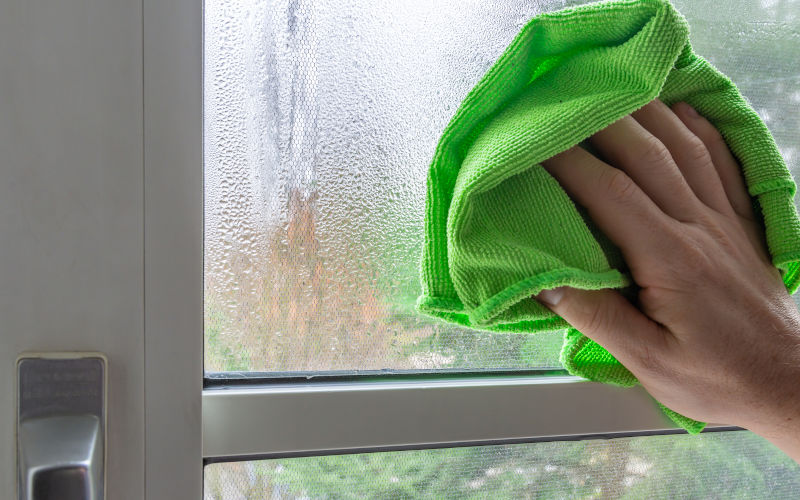
If you’re serious about fixing window condensation, start with measurement — not guessing. A small hygrometer (humidity meter) can tell you if moisture levels are the real driver.
As a practical target, most homes perform well when indoor relative humidity is kept within a comfortable midrange in winter. If your RH regularly runs high and you see condensation daily, focus first on moisture sources and ventilation.
| Condensation Pattern | What it suggests | Practical first move |
|---|---|---|
| Only after showers or cooking | Short spikes in humidity | Use exhaust fans properly for longer periods |
| Most mornings in bedrooms | Overnight humidity build-up + low airflow | Crack coverings improve airflow/heat at windows |
| Daily droplets and wet sills | Sustained high humidity and/or cold glass/drafts | Measure RH + check for drafts + consider pro assessment |
| Fogging between panes | Sealed unit failure | Professional inspection, service, or replacement |
Step-by-Step: How to Stop Condensation on Windows
Step 1 – Reduce moisture at the source (fast wins)
These changes can noticeably reduce condensation within days:
- Run the bathroom fan during showers and for 20–30 minutes afterward.
- Use the range hood while cooking (especially boiling and simmering).
- Keep lids on pots and minimize long simmering when possible.
- Vent clothes dryers outdoors and avoid drying laundry inside living spaces.
- Fix plumbing leaks quickly (even small drips can raise humidity).
Step 2 – Increase airflow to the glass
Condensation loves still air. Improve circulation near windows by:
- Keeping blinds and curtains slightly open overnight so warm room air can reach the glass.
- Ensuring the supply of heat isn’t blocked by furniture or thick curtains.
- Using ceiling fans on a low setting (winter direction) to gently move warm air.
Step 3 – Targeted sealing and weatherproofing (helpful, but not magic)
Weatherproofing is most effective when drafts are a contributor. It can reduce the cold-air wash that drops glass temperature. That said, it won’t fix high indoor humidity or a failed sealed unit — so treat it as one tool, not the whole plan.
Common professional-grade checks include:
- Replacing worn weatherstripping and checking compression seals.
- Sealing visible gaps between trim and wall (interior air leakage).
- Inspecting exterior caulking for cracks — especially at corners and joints.
- Confirming that previous “quick fixes” didn’t trap moisture where it shouldn’t be.
“Weatherproofing can reduce drafts and help minimize condensation, but if the window is past its service life, you’re usually treating symptoms — not the cause.” — Tony Wong, Project Manager, Canadian Choice Windows & Doors
When Ventilation Upgrades Make the Biggest Difference (Including HRV Systems)
If your home is relatively airtight — common after renovations — humidity can build up faster than it can escape. In that situation, improved ventilation is often the long-term fix, especially when condensation appears across multiple rooms.
Heat Recovery Ventilation (HRV) systems can help balance fresh air and exhaust moisture while recovering heat. The most important detail is proper sizing and setup for your home. A pro can also assess whether the issue is whole-home humidity, localized moisture sources, or specific airflow problems near windows.
Professional assessments matter because the right solution depends on your layout, fan performance, ducting, and how the building envelope behaves — not a generic one-size-fits-all recommendation.
“Condensation is rarely one single issue. We look at the windows, but also how your home handles moisture — ventilation, airflow, and where drafts are coming from — so the solution actually sticks.” — Helen Sin, Consumer Success Manager, Canadian Choice Windows & Doors
The Big Warning Sign: Condensation Between Panes
If you see fogging, haze, or droplets between the panes, the insulated glass unit seal is likely compromised. At this stage, humidity adjustments won’t clear the glass because moisture is trapped where you can’t reach it.
This is a strong signal to book a professional inspection . In many cases, the most cost-effective solution is to service the glass unit or replace the window, especially if the frame is older, drafty, or showing wear.
When Window Replacement Is the Right Move
You don’t need new windows because you saw a bit of fog once. But replacement becomes the right call when condensation is persistent, and you’ve already addressed humidity and airflow.
Replacement is worth considering when:
- Condensation is constant even when indoor humidity is reasonable.
- Frames feel drafty, or you can detect air movement near the trim.
- You have older windows that stay cold, or the insulated glass seal has failed.
- Trim, paint, or drywall shows water damage around the window opening.
- You want better comfort (fewer cold spots) and lower heating costs.
Modern, properly installed windows help by raising interior surface temperatures, improving airtightness, and reducing cold drafts. In other words, they address the two conditions that increase the likelihood of condensation: cold glass and uncontrolled air leakage.
Why Professional Installation Matters as Much as the Window Itself
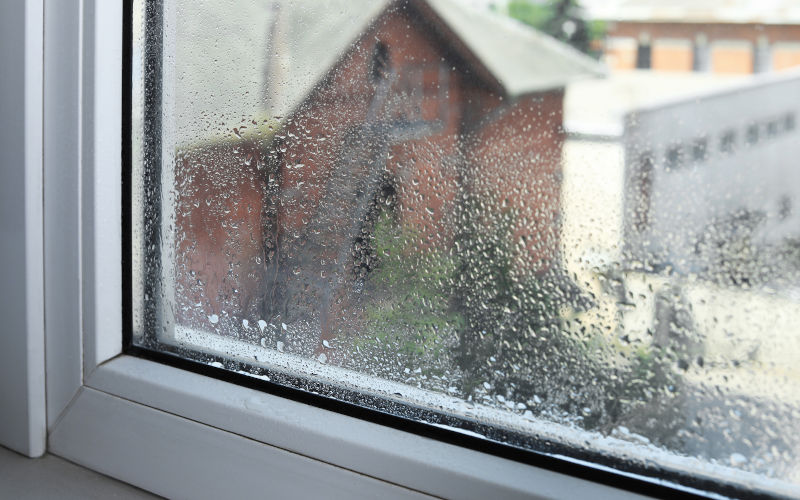
Even a high-quality window won’t perform as intended if installation details are weak. Air leakage, uneven shimming, poor perimeter sealing, or incorrect flashing can create cold spots and moisture pathways.
Canadian Choice Windows & Doors focuses on results homeowners can feel every day — consistent comfort, clean finishes, and a home that’s easier to heat. That includes experienced teams, professional assessment, and installation practices designed to keep your window openings tight and properly sealed.
Vinyl vs. Wood Windows for Condensation Resistance
When condensation is the primary concern, material behaviour matters. Vinyl is popular across Canada for its moisture resistance and typically requires less maintenance. Wood can be beautiful, but it is more susceptible to repeated moisture exposure and requires ongoing maintenance to remain protected.
| Feature | Vinyl Windows | Wood Windows |
|---|---|---|
| Moisture resistance | High; resists rot and swelling | Lower; can swell/rot if moisture persists |
| Maintenance | Low (typically cleaning only) | Higher (painting/sealing to protect against moisture) |
| Condensation risk (practical) | Often lower with modern airtight builds | Can increase if seals degrade or moisture affects the frame |
| Best fit | Cold climates, busy households, moisture-prone rooms | Aesthetic-led projects with ongoing maintenance |
Solution Comparison: What Works, When
| Solution | Best for | Pros | Cons |
|---|---|---|---|
| Ventilation habits (fans, lids, timing) | Mild to moderate condensation | Low cost, immediate impact | Requires consistency |
| Weatherproofing/air sealing | Draft-driven condensation | Affordable, improves comfort | Limited if the humidity is high or the glass is cold |
| Dehumidifier (targeted) | Basements, laundry areas | Fast RH reduction | Needs maintenance; not a fix for seal failure |
| Ventilation upgrade / HRV | Whole-home humidity | Long-term moisture control | Upfront cost; must be sized properly |
| Window replacement | Old windows, seal failure, cold glass | Permanent comfort + performance upgrade | Higher upfront cost; pro install required |
A Practical Homeowner Checklist (Before You Spend Money)
- Check where the condensation occurs: inside surface, outside surface, or between panes.
- Measure indoor humidity with a hygrometer for a week (kitchen + bedroom are good spots).
- Use bathroom and kitchen exhaust consistently and long enough to clear moisture.
- Improve airflow to glass: open coverings slightly, clear vents, keep warm air moving.
- Inspect for drafts: feel around trim, look for gaps, and check weatherstripping.
- If condensation persists, book a professional assessment to identify the root cause.
Why Canadian Choice Windows & Doors Is the Right Call for Condensation Problems
Condensation is one of those issues where homeowners can lose months (and money) trying random fixes. The most efficient approach is to identify the root cause — humidity, airflow, air leakage, or window performance — and then select the solution that addresses it.
Canadian Choice Windows & Doors takes a homeowner-first approach: speak simply, focus on benefits you can feel, and recommend the most practical next step. The goal isn’t to sell you “more.” It’s to help you stop the problem in a way that lasts — whether that’s targeted sealing, better ventilation strategy, or upgrading to modern, Canadian-made windows installed professionally.
If your windows are “crying” regularly — especially if you’re seeing water on sills or fogging between panes — book a professional assessment with Canadian Choice Windows & Doors. You’ll get clear answers on what’s causing the condensation, which fixes will work, and what’s the most cost-effective path to a comfortable, dry home.

Final Thoughts: Don’t Let Condensation Turn Into Moisture Damage
Condensation may seem like a minor annoyance, but repeated condensation on windows can quietly damage trim, drywall, and finishes. If quick fixes aren’t working, don’t keep guessing. A professional assessment will tell you whether the issue is humidity, airflow, drafts, or window performance — and what to do next to keep your home comfortable, dry, and efficient.
For homeowners who want a lasting fix, Canadian Choice Windows & Doors offers the professional guidance and installation quality that condensation problems demand — so you can stop wiping water off your windows and start enjoying a clearer, more comfortable home.
FAQs
Why do my windows have condensation in winter even when my home feels warm?
Warm air can still hold significant moisture. If that moist air touches cold glass, the moisture turns into water. It’s common when indoor humidity is high, or the glass is colder due to drafts or older window performance.
Is condensation on windows a sign that I need to replace them?
Not always. If condensation is occasional and limited to the inside surface, you can address it through ventilation and humidity control. However, condensation between panes, persistent daily droplets, or drafts around the frame are stronger signs that repair or replacement may be needed.
Why is one room worse than others?
Bedrooms, bathrooms, and kitchens create more humidity. Some rooms also have poor window airflow (tight curtains, blocked vents) or older windows. A pro assessment can identify whether the issue is room-specific ventilation or window performance.
Will re-caulking fix window condensation?
Re-caulking can reduce drafts and help address air leakage. But it won’t address high indoor humidity or fogging between panes caused by sealed-unit failure.
What’s the difference between normal fog and a failed window seal?
Normal fog appears on the room-side surface and can be wiped away. A failed seal usually shows fogging or droplets between panes that you can’t wipe off.
What’s the most reliable long-term solution if I keep getting condensation?
The most reliable long-term solution is to identify the root cause and address it with the right combination of ventilation, sealing, and (when needed) window upgrades. For older or drafty windows, professionally installed modern windows can be the permanent fix — especially when condensation is causing damage.

1000’s of Colours & Textured Finishes
Transform your home from ordinary to extraordinary with our new coloured and non-glare textured finishes. Available in a wide array of colours as well as custom matched colours for your very own personalized design.
Our Most Popular Replacement Window Colours: