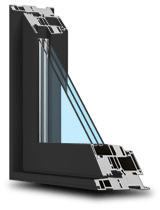
Exterior doors for Vancouver's rain and humidity
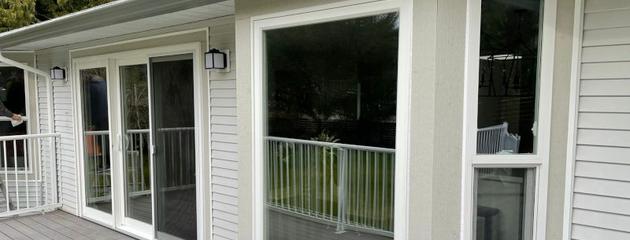

The front doors that last in Vancouver don't swell when they get wet, and they sit on a sealed sill pan with flashing that sends water back outside. Most leaks start where the door, frame and wall meet, so the installation matters as much as the door. Canadian Choice Windows & Doors makes DraftLOCK steel entry doors and handles door replacement in Vancouver and across the Lower Mainland from our Surrey showroom.
Key takeaways
- Rain gets past old doors at swollen wood, rotted bottom rails, worn thresholds and missing flashing.
- A steel door doesn't absorb water, so it won't swell or rot, but its factory finish needs touching up when chipped.
- A sill pan, flashing, a drip cap, sealed trim and an adjustable threshold keep water out of the opening.
- The BC Home Renovation Rebate pays $100 per window or door, up to $2,000, according to BC Hydro , but not for homes inside the City of Vancouver.
Why exterior doors fail in Vancouver's rain
Exterior doors in Vancouver usually fail where the door, frame and wall meet. Wind pushes rain into gaps at the sill, the sides of the frame and the head above the door. Old wood doors absorb that water, swell, rot and stop sealing, which means leaks, drafts and a door that sticks every wet season.
Before comparing entry door types and styles , check your current door for these four problems.
Wood swelling and sticking
Wood takes on moisture through the wet season, swells and sticks. Planing the edge to free it strips the paint that protected it, so the next season's rain soaks in faster.
Rot at the bottom rail and jamb
Water collects at the bottom rail, the horizontal piece across the base of the slab, and at the foot of the jamb, the vertical side of the frame. Wood that dents under a fingernail there has started to rot.
Failed thresholds and sweeps
The threshold is the strip under the door, and the sweep is the flexible seal along the bottom of the slab. When either wears out, wind-driven rain gets underneath.

Missing or failed flashing above the door
Flashing is a strip of metal or membrane that steers water away from an opening. Without it above the door, water gets behind the trim and into the wall framing, where you can't see it.
Steel or wood entry doors in a wet climate?
A steel entry door doesn't absorb water, so it doesn't swell, stick or rot the way wood does. That makes steel the lower-maintenance choice for entry doors in Vancouver, where a door can stay damp for weeks. The trade-off is that steel relies on its factory finish, so scratches and chips need touching up.
Our DraftLOCK steel entry doors come in the Shaker, Design, Prestige and Classic collections. We don't sell wood entry doors, so wood appears below as the door many homeowners are replacing. For a broader comparison, see our guide to steel vs wood exterior doors .
Table 1. Steel and wood entry doors in a wet climate
| Factor | Steel entry door | Wood entry door |
|---|---|---|
| Response to moisture | Steel skin doesn't absorb water | Absorbs water through gaps in the finish |
| Swelling and sticking | Holds its shape year-round | Swells in wet months, shrinks in dry ones |
| Rot risk | None in the slab; frame and sill still need protecting | Bottom rail, edges and joints rot where water sits |
| Finish care | Touch up chips and scratches | Repaint or re-stain regularly, edges included |
| Insulation | Insulated core between steel skins | Depends on thickness; thin panels insulate less |
| Upkeep in a rainy climate | Seasonal finish and weatherstripping check | Finish checks, adjustment, rot repairs |
When you compare a Vancouver entry door at our Surrey showroom, look at the threshold and bottom edge as closely as the panel style.
Installation details that keep water out
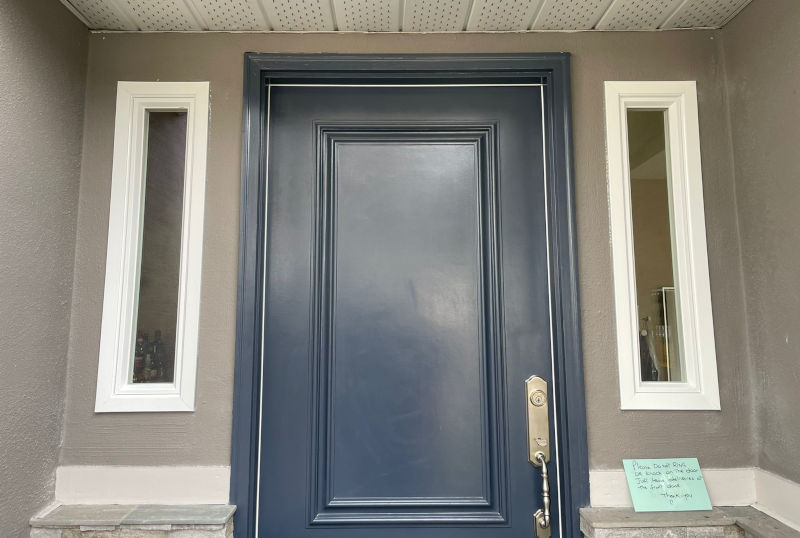
Most leaks around a new door come from the opening, not the door. A sill pan under the threshold, flashing at the sides and head, a drip cap over the trim and a sealed exterior joint send water back outside before it reaches the wall. In a wet climate, these details matter as much as the door slab.
These are good-practice steps an installer follows, and each backs up the others. The sill pan goes into the rough opening before the door, sloped to the outside, with its back and ends turned up and lapped under the side flashing. Windows work the same way, as our article on why drainage matters for windows in Coquitlam explains.
Table 2. Installation details and the signs they're missing
| Detail | What it does | Sign it's missing on your old door |
|---|---|---|
| Sill pan | A tray under the threshold that drains water outside | Stained or soft floor inside the door |
| Side and head flashing | Membrane or metal that sends water out over the cladding | Stains on the drywall beside or above the door |
| Drip cap | An angled metal cap that throws water clear of the top trim | Peeling paint or rot along the top trim |
| Sealant at the exterior trim | A continuous bead where trim meets cladding | Cracked or missing caulking |
| Adjustable threshold and sweep | A threshold you raise to meet the sweep as the house settles | Light, drafts or water under the closed door |
"Across Greater Vancouver and the Fraser Valley, homeowners call us most about condensation, drafts and heat loss, and around an old door those problems often start in the opening. Years of rain and seasonal temperature swings are hard on older doors and the frame and sill around them. That's why my team checks the sill and the opening before the new door goes in, and we tell homeowners honestly what we find."
Kateryna Mamusheva , Operations Manager, Vancouver, Canadian Choice Windows & Doors
Book a free consultation at our Surrey showroom, 5433 152nd Street, Unit 105, and have the opening checked before you choose a door.
Do Vancouver front doors need an overhang?
An overhang or porch roof keeps most rain off the door and sill, which extends the life of any door. Vancouver front doors on exposed walls, with nothing overhead, take rain on the slab and threshold all season. Those doors need a sill pan, flashing and a drip cap even more than sheltered ones do.
During a winter storm, note which walls of your house stay wet: a door there gets rain blown in under shallow eaves. Upper-storey doors, such as a second-floor deck door, sit higher in the wind with less shelter from fences, trees and neighbouring houses.
If an overhang isn't possible, choose a steel door, insist on a full sill pan and head flashing, and keep the threshold and sweep adjusted.
Humidity, condensation and your front door
Indoor moisture condenses on the coldest surfaces in a room, and around a front door that means the glass and any metal edges. Through Metro Vancouver's damp months, that water can feed mould on the trim and the floor below. Ventilation, a careful choice of glass and good weatherstripping keep the entry dry.
Condensation is water that forms when warm, moist indoor air touches a cold surface. Run bathroom and kitchen fans, and avoid drying laundry near the entry. Glass inserts and sidelites, the narrow glass panels beside a door, are colder than an insulated slab, so they fog first. Worn weatherstripping lets cold air chill the frame further. Windows face the same problem, covered in our article on window mould risks in Vancouver's humid climate .
Replacing doors on Vancouver Specials and older homes
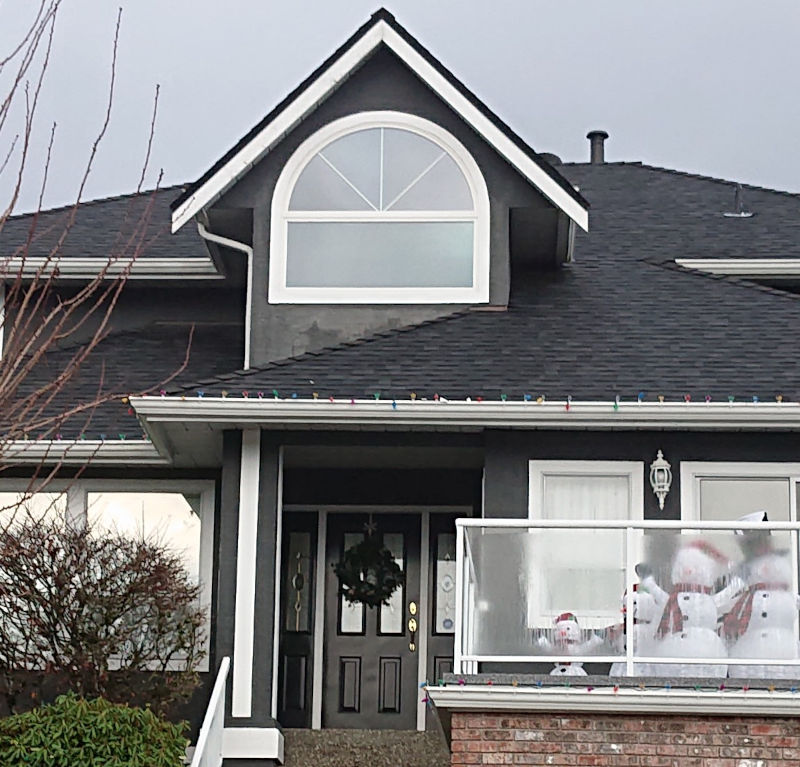
Older homes in Metro Vancouver often have wood doors set into frames that have taken years of water. Before you order a replacement door in Vancouver, expect the installer to check the sill, the bottom of the jambs and the framing around the opening. Soft or rotted wood found there has to be repaired before the new door goes in.
Vancouver Specials, the boxy two-storey houses on many East Vancouver streets, are now decades old, so assume their door sills have been wet before. Our factory-trained crews check the opening first, because a new door on a damaged sill will leak like the old one.
Most Vancouver Specials are inside the City of Vancouver, where the BC window and door rebate doesn't apply. Older homes in Surrey, Burnaby, Langley, Delta, White Rock and on the North Shore are outside the city boundary, so the rebate can apply there.
Does the BC rebate cover new doors?
Yes, the BC Home Renovation Rebate covers exterior doors as well as windows, but only for homes outside the City of Vancouver. According to BC Hydro , eligible doors and windows earn $100 each, up to $2,000 per home, with a U-factor of 1.22 W/m²·K or lower.
The U-factor measures how fast heat passes through a door or window; lower numbers insulate better. The CleanBC Better Homes program requirements add these terms:
- Each rough opening, the framed hole in the wall, counts as one door or window.
- Self-installs aren't eligible.
- You apply within six months of the invoice date.
- Homes inside the City of Vancouver municipal boundary aren't eligible.
Canadian Choice is a registered contractor for the program. Ask us to confirm the U-factor of the door you choose before you order.
How to choose an exterior door for a wet climate
Match the door and its installation to how much rain the opening takes, then check the rebate before you order.
- Exposed wall, no overhang: a steel door with a full sill pan and flashing.
- Old wood door that swells every winter: replace it rather than plane it again.
- Glass insert or sidelites: check whether the old glass has a history of condensation.
- Home outside the City of Vancouver: confirm the rebate before ordering.
Frequently asked questions
How do I stop water leaking under my front door before it's replaced?
Adjust or replace the threshold and door sweep, then reseal gaps where the exterior trim meets the siding. Many thresholds have screws that raise them to meet the sweep. If water still gets in, the sill pan or flashing has likely failed, and an installer needs to repair the area around the sill.
Can a door be replaced in the rainy season?
Yes. Canadian Choice installs year-round when weather allows. A door installation takes one to two days, so it can be booked for a drier stretch in the forecast. Doors take four to eight weeks from order, so ordering in the fall can still mean a winter installation.
Will a steel door rust in coastal BC?
A steel door is protected by its factory finish, so keep that finish intact. Touch up chips and scratches when you see them, especially near the bottom of the door and around the lockset, and keep hinges and hardware clean. A check each spring and fall catches damage early.
How long does a door replacement take in Metro Vancouver?
Expect four to eight weeks from order to installation day, then one to two days of installation for a home. The lead time covers making your door to fit the measured opening. If the sill or jamb needs repair, ask at the consultation how that affects the schedule.
Do you replace doors outside Vancouver, in the Fraser Valley and on the North Shore?
Yes. Canadian Choice serves Metro Vancouver from our Surrey showroom at 5433 152nd Street, Unit 105, and our service area includes Langley, Abbotsford, Delta, White Rock and the North Shore. Homes there are outside the City of Vancouver, so they can qualify for the BC window and door rebate.
Choosing between front doors in Vancouver? Book a free consultation or visit our Surrey showroom to compare DraftLOCK steel entry doors and our windows and doors in Vancouver . This month only: 50% off installation, built for Canadian homes.

1000’s of Colours & Textured Finishes
Transform your home from ordinary to extraordinary with our new coloured and non-glare textured finishes. Available in a wide array of colours as well as custom matched colours for your very own personalized design.
Our Most Popular Replacement Window Colours: