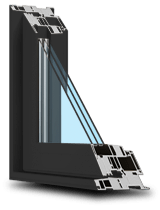
Bifold vs Stacking Patio Doors: Which One Is Better for Large Openings?
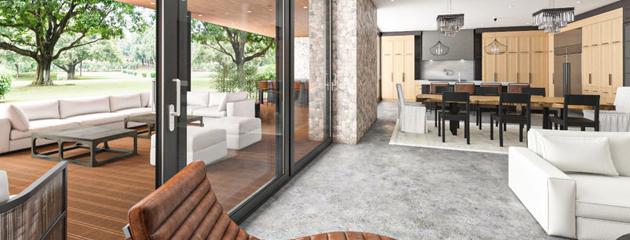

Choosing patio doors for a large opening isn’t just about how they look — it’s about how your space actually works every day. The right system should bring in more natural light, improve comfort, and create a smooth connection between your indoor and outdoor living areas, without compromising performance in changing Canadian weather.
Bifold and stacking patio doors approach that goal in different ways. One maximizes the width of your space. The other focuses on clean sightlines and effortless daily use. Both can be built to perform well in colder climates — but the better choice depends on how you live, how you use your space, and what matters most over time.
Key Takeaways
- Bifold doors fold like an accordion and can open up to approximately 90–95% of the opening width.
- Stacking (multi-slide) doors slide on a track and typically open 50–75% of the total width, depending on configuration.
- The right choice depends on opening size, desired airflow, and how you use your indoor-outdoor space.
- Stacking doors often deliver slimmer sightlines and a cleaner, modern look.
- Bifold doors create larger total openings when fully retracted.
- Cold-climate regions require strong thermal performance and proper installation, regardless of door type.
What is the Difference Between Bifold vs Stacking Patio Doors?
When comparing bifold and stacking patio doors, it helps to look beyond how they open and focus on how they support everyday living. The right system should enhance comfort, maximize natural light, and perform reliably through changing Canadian seasons. Each option offers distinct structural and functional advantages, and understanding those differences ensures you choose a solution built around your home — not just the opening.
Basic Definition of Bifold Doors
Bifold patio doors consist of multiple panels connected by hinges. When opened, the panels fold together and stack neatly on one or both sides of the frame. Think of it as an accordion-style system — engineered for larger openings and maximum accessibility.
Because the panels are hinged together, the system operates as a single unit. When you pull the lead panel, the rest follow smoothly along a top and bottom track.
Bifold doors are often chosen for:

- Full backyard openings
- Entertainment-focused spaces
- Homes with wide structural spans
- Projects prioritizing maximum airflow
Basic Definition of Stacking (Multi-Slide) Doors
Stacking patio doors — often called multi-slide doors — operate differently. Each panel slides independently along a dedicated track. When opened, the panels stack behind one another at one side (or split-stack on both sides, depending on design).
Unlike bifold systems, stacking doors do not fold. They remain parallel throughout the operation.
They’re typically selected for:
- Clean, modern aesthetics
- Large glass surfaces
- Panoramic views
- Homes where consistent sightlines matter
If you're exploring patio door options, our Patio Doors Collection outlines available configurations built for Canadian climates.
Panel Configuration Explained
The biggest structural distinction lies in how the panels connect and move.
Bifold Configuration:
- Panels are hinged together.
- Operate as one folding system.
- Stack width equals the combined folded panels.
- Requires reinforced header support due to concentrated load.
Stacking Configuration:
- Panels slide independently.
- Each panel rides on its own track.
- Stack depth depends on the number of panels.
- Weight distribution is more evenly spread across the track system.
Because bifold panels are interdependent, hardware precision is critical. Stacking systems rely heavily on track engineering and roller durability.
Key Structural Differences
| Feature | Bifold Doors | Stacking (Multi-Slide) Doors |
|---|---|---|
| Panel Movement | Folding, hinged together | Sliding independently |
| Opening Capacity | Up to ~95% of the width | Typically 50–75% |
| Hardware Complexity | High (hinges + rollers) | Moderate (rollers + tracks) |
| Sightlines (Closed) | More vertical breaks | Cleaner, uninterrupted glass |
| Structural Load | Concentrated at the stack side | Distributed along the track |
Specification Comparison
| Specification | Bifold | Stacking |
|---|---|---|
| Maximum Panel Count | 8–10 panels (varies by manufacturer) | 4–6 panels (standard systems) |
| Track Type | Top-hung or bottom-rolling | Multi-track sliding system |
| Threshold Options | Standard or low-profile | Standard, low-profile, recessed |
| Sealing Points | Between each hinged panel | Between each sliding panel |
| Installation Complexity | High precision required | Moderate to high |
Best Use Cases for Each
Choose bifold doors if:
- You want near-complete wall removal.
- You entertain frequently.
- You prioritize airflow and accessibility.
- You’re designing a transitional indoor-outdoor space.
Choose stacking doors if:
- You want clean architectural lines.
- You prefer larger, uninterrupted glass panels.
- You want an easier daily operation.
- You’re focused on panoramic views over maximum opening.
Glazing systems must deliver strong thermal performance, particularly in colder climates. That’s why effective sealing and energy-efficient glazing are essential considerations for any patio door system, regardless of its operating mechanism.
How Do Bifold vs Stacking Doors Operate in Large Openings?
Performance in large openings goes beyond simple movement — it’s about structural stability, precise alignment, and long-term reliability. In wider spans, the quality of hardware, track systems, and installation accuracy directly affects everyday usability and seasonal durability. The right configuration should operate smoothly, seal properly, and continue performing as expected year after year.
Folding Mechanism vs Sliding Stacking System
Bifold systems rely on:
- Hinges connecting panels
- Rollers guiding movement along tracks
- A lead panel with a locking mechanism
The folding motion requires consistent alignment. Even minor installation errors can affect performance.
Stacking systems operate through:
- Individual roller carriages
- Parallel track channels
- Independent panel gliding
Because panels move separately, daily operation may feel smoother for frequent use.
Helen Sin, Consumer Success Manager at Canadian Choice , explains:
“Homeowners often think it’s purely about how wide the opening looks. But smooth operation and long-term reliability matter just as much — especially through freeze-thaw cycles.”
Track Systems
Bifold doors may be:
- Top-hung (weight supported by header)
- Bottom-rolling (weight supported by floor track)
Stacking doors use:
- Two- or three-track systems
- Heavy-duty bottom rollers
- Optional recessed thresholds
In colder climates, exposed bottom tracks require thoughtful consideration, as snow, ice, and everyday debris can accumulate and affect smooth operation if not properly managed.
Opening Width Percentage
Opening capacity depends on the configuration.
| System Type | Typical Opening Percentage |
|---|---|
| Bifold | 90–95% |
| 3-Panel Stacking | 66% |
| 4-Panel Stacking | 50–75% (depending on direction) |
Tony Wong, Project Manager at Canadian Choice , notes:
“For maximum clear access, bifold systems lead. But for homeowners using the door daily, stacking systems often provide a more practical balance.”
Smoothness of Operation & Hardware Importance
Large glass panels are heavy. Some exceed 200 pounds per panel.
Quality depends on:
- Stainless steel rollers
- Precision-engineered tracks
- Reinforced frames
- Proper weight distribution
Inferior hardware leads to sagging, misalignment, and premature wear — especially in fluctuating Canadian temperatures.
Which Door System Provides a Wider and More Seamless Opening?
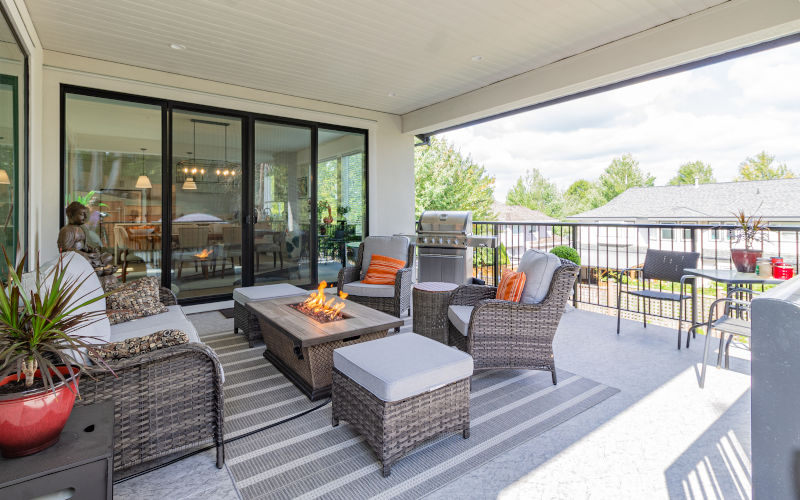
For many homeowners, the real question isn’t just how the doors look — it’s how open the space can truly feel. The size of the clear opening affects airflow, sightlines, and the connection between indoor and outdoor living areas. Understanding how each system stacks, slides, or folds helps set realistic expectations about usable space and everyday functionality.
Maximum Opening Capacity
Bifold doors typically provide the largest total clear span when fully opened. When fully opened, nearly the entire wall can be unobstructed. Stacking doors leave at least one panel fixed (in many configurations), reducing total open width. If maximum openness is the goal, bifold systems offer the largest clearance.
Threshold Design & Indoor-Outdoor Transition
Threshold design affects accessibility and visual flow.
Options include:
- Standard raised threshold
- Low-profile sill
- Fully recessed (in some stacking systems)
Stacking doors often allows more discreet threshold integration. Bifold systems can also offer low-profile options but require careful installation.
Visual Openness Comparison
| Feature | Bifold | Stacking |
|---|---|---|
| Open Space | Highest | Moderate |
| Sightlines (Closed) | More panel divisions | Fewer vertical breaks |
| Modern Minimal Look | Moderate | High |
| Best for Panoramic Views | Good | Excellent |
For uninterrupted glass views while closed, stacking systems generally offer slimmer visual breaks.
Ideal for Panoramic Views
If your priority is:
- Lake views
- Mountain landscapes
- Urban skyline visibility
Stacking doors often provides cleaner sightlines.
If your priority is:
- Hosting
- Full airflow
- Seamless party transitions
Bifold doors can span most of the wall, creating a more open transition between indoor and outdoor areas.
Choosing between panoramic views and a fully open wall comes down to how you use your space day to day. The right door system should align with how you use your space on a daily basis — whether for entertaining, relaxing, or maximizing natural light.
Are Bifold vs Stacking Patio Doors Better for Modern Home Designs?
Modern design in Canada has shifted toward larger glass expanses, darker frame finishes, and minimalist hardware. Both bifold and stacking systems can support that vision — but they do so in different ways.
Aesthetic Differences
Bifold doors create visual rhythm. Because panels are hinged together, you’ll see more vertical breaks across the span. When open, they fold neatly to the side — impressive for entertaining spaces. But when closed, the multiple-panel divisions remain visible.
Stacking doors, on the other hand, maintains parallel alignment. Fewer vertical interruptions mean a cleaner exterior elevation — especially in black or charcoal finishes popular in contemporary builds.
Frame Profiles & Glass Surface Area
Frame thickness plays a defining role in modern design.
- Stacking systems often allow larger individual glass panels
- Bifold systems divide the opening into smaller, connected sections
- Sightline width varies by manufacturer and structural load
More glass typically means:
- Increased daylight penetration
- Stronger indoor-outdoor connection
- Greater architectural simplicity
In urban infill homes and lakefront builds across Ontario and British Columbia , stacking doors are frequently chosen for their uninterrupted glass aesthetic.
Contemporary vs Traditional Applications
Stacking Doors Work Best For:
- Flat-roof modern homes
- Minimalist exteriors
- Panoramic backyard views
- Design-forward renovations
Bifold Doors Work Best For:
- Transitional architecture
- Homes prioritizing entertaining flow
- Projects where the maximum opening width matters
Architectural design trends in contemporary homes often prioritize slim frames and uninterrupted glass areas to create cleaner sightlines and reduce visual clutter. In ultra-modern builds, stacking door systems are frequently selected for their ability to maintain consistent panel alignment while preserving expansive views.
What Is the Cost Difference Between Bifold vs Stacking Doors?
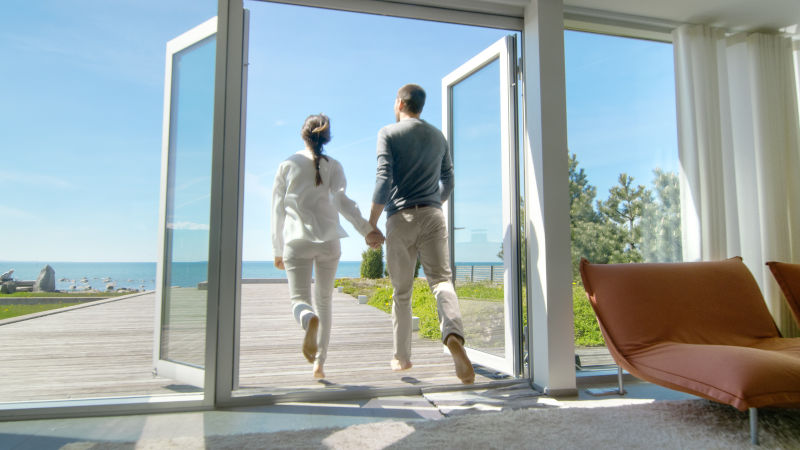
Cost comparisons should look beyond the upfront number and consider what’s included in the system — panel configuration, hardware quality, glazing specifications, and installation complexity. Larger openings, structural reinforcement, and custom finishes can all influence the final investment. Understanding these variables helps set realistic expectations and ensures the system chosen delivers long-term value, not just short-term savings.
Average Canadian Price Ranges
While exact pricing depends on opening size and customization, national averages suggest:
- Stacking patio doors: $5,000 – $12,000+ installed
- Bifold patio doors: $8,000 – $20,000+ installed
Bifold systems typically cost more due to:
- Complex hinge systems
- Reinforced headers
- Additional hardware engineering
- Installation precision requirements
Structural modifications — particularly enlarging openings in load-bearing walls — typically increase overall project costs due to the need for engineering review, structural reinforcement, and permit requirements
Cost Breakdown Table – Provincial Comparison
| Province | Stacking Doors (Installed Avg.) | Bifold Doors (Installed Avg.) | Key Cost Variables |
|---|---|---|---|
| Ontario | $6,000–$14,000 | $9,000–$22,000 | Labour rates, structural retrofits |
| Alberta | $5,500–$13,000 | $8,500–$20,000 | Climate-rated glazing upgrades |
| Maritimes | $5,000–$12,000 | $8,000–$18,000 | Shipping, moisture protection |
Long-Term Value & ROI
Modern patio doors can enhance resale appeal and overall property presentation. According to Remodelling Magazine’s Cost vs. Value Report , upscale exterior door replacements can recoup approximately 60–70% of project cost in resale value, depending on the market.
Which Option Requires Less Maintenance Over Time?
Long-term maintenance is closely tied to how well the system handles changing weather conditions. Snow, ice buildup, moisture, and temperature swings can all affect tracks, seals, and moving components over time. Choosing a system designed to perform consistently in these conditions helps reduce upkeep and ensures reliable operation throughout the seasons.
Track Cleaning & Hardware Wear
Bifold Doors:
- Multiple hinges require periodic inspection
- More moving connection points
- Bottom track debris can affect alignment
Stacking Doors:
- Heavy-duty rollers bear panel weight
- Track channels must remain clean
- Fewer mechanical connection points
Both systems benefit from regular maintenance to ensure smooth operation and long-term reliability. Keeping tracks clean and inspecting moving components helps prevent wear, maintain alignment, and support consistent performance over time.
Climate Impact
In provinces with heavy snowfall:
- Recessed tracks may require clearing
- Freeze-thaw cycles affect exposed hardware
- Proper sealing prevents water intrusion
ENERGY STAR® Canada guidelines emphasize proper installation and sealing as critical factors for maintaining performance in cold climates.
Warranty Considerations
Warranty coverage typically includes:
- Frame structure
- Sealed glass units
- Hardware components
Because bifold systems contain more mechanical joints, long-term servicing may be more involved.
Maintenance Tip
To keep your door system performing smoothly over time, a simple routine can make a noticeable difference:
Step-by-Step Track Maintenance Guide:
- Vacuum debris monthly
- Wipe tracks with mild detergent
- Lubricate rollers annually (manufacturer-approved lubricant only)
- Inspect seals before winter
Preventative maintenance protects long-term smooth operation — regardless of door type. It also helps reduce premature hardware wear and keeps the system sealing properly through seasonal changes. Over time, this consistent care supports reliable performance and extends the lifespan of the entire door system.
Which Option Is Better for Your Canadian Home and Lifestyle?
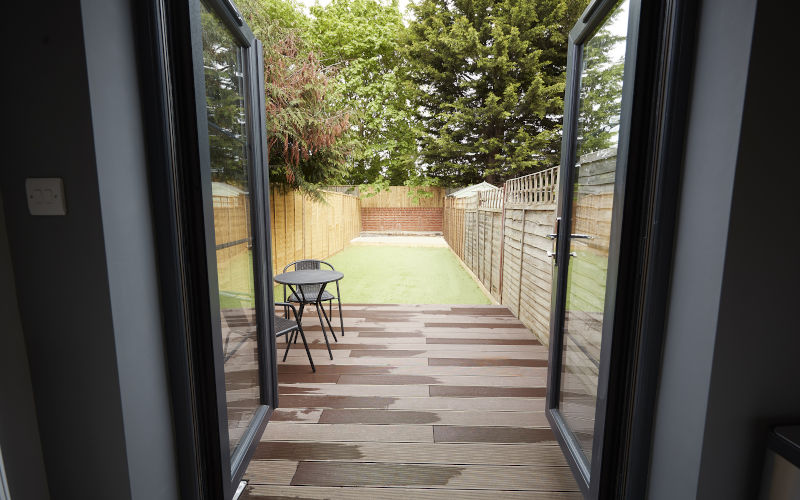
If you’re choosing between bifold and stacking patio doors, here’s the honest answer: the better option depends on your climate zone, your budget, your home’s architectural style, and how you plan to use the space over the next 10–20 years.
There isn’t a universal winner. In colder provinces, performance and sealing may matter more than maximum opening width. In urban modern builds, sightlines may outweigh full wall retraction. And if you’re planning to age in place, ease of daily use becomes critical.
Climate Zone Considerations
Canada’s climate isn’t uniform. From humid summers in Ontario to coastal moisture in the Maritimes and deep freezes in Alberta, your patio door system must handle local realities.
According to Natural Resources Canada , heat loss through windows and doors can account for up to 25% of total residential heat loss in colder climates. That means proper glazing, sealing, and installation are critical.
In Colder Regions (Ontario, Alberta, Prairies)
Priorities typically include:
- High-performance glazing (double or triple pane)
- Strong weatherstripping
- Airtight locking systems
- Durable frame materials resistant to expansion and contraction
Both bifold and stacking systems can be manufactured to meet ENERGY STAR® climate zone requirements. However, bifold systems contain more panel junctions — meaning more sealing points. Precision installation becomes essential.
Tony Wong, Project Manager at Canadian Choice, explains:
“In Canadian winters, it’s not just about the door system. It’s about how it’s installed, sealed, and supported structurally. A well-installed stacking or bifold system can both perform well, but shortcuts show quickly in cold weather.”
In Coastal or Humid Regions (Maritimes, BC)
Moisture management and corrosion resistance are becoming increasingly important. Track drainage and hardware durability should be evaluated carefully.
For homeowners unsure which glazing option suits their region, our team typically begins with a performance-first discussion before design preferences.
Budget Considerations
Let’s be direct — the budget often narrows the decision quickly. In most cases, stacking doors have a lower upfront cost, while bifold systems tend to be more expensive due to their more complex hardware and additional structural requirements. However, the visible price tag doesn’t tell the full story, as long-term performance, maintenance, and installation factors all play a role in the overall investment.
Cost Factors to Consider
- Structural modifications (especially widening an opening)
- Header reinforcement
- Installation labour
- Hardware quality
- Threshold customization
If budget flexibility is limited, stacking systems often provide a more accessible entry point while still delivering a modern look.
Home Style & Architectural Fit
Architectural style plays a key role in how well a door system fits both visually and functionally. Clean lines, proportions, and material choices should align with the home's overall design, not compete with it. Choosing a system that complements the architecture helps create a cohesive look while supporting the way the space is used day to day.
Modern and Contemporary Homes
Stacking doors often integrate seamlessly with:
- Flat-roof designs
- Black or dark frame finishes
- Large glass walls
- Minimalist exteriors
Because stacking systems allow larger individual panels, they typically produce fewer vertical breaks when closed — creating a cleaner aesthetic.
Transitional or Traditional Homes
Bifold doors may suit:
- Homes prioritizing indoor-outdoor entertaining
- Properties with wider structural openings
- Renovations aiming to remove visual barriers entirely
When fully opened, bifold systems can retract almost completely, creating a wide, unobstructed opening.
The decision often comes down to this question:
Do you want uninterrupted glass when closed — or maximum open space when entertaining?
Long-Term Plans Matter More Than Trends
It’s easy to choose based on today’s design trends. But we encourage homeowners to look further ahead.
Consider These Questions:
- Are you planning to sell within 5–10 years?
- Will the daily ease of operation matter as mobility changes?
- Do you entertain frequently?
- Are you permanently expanding your living space?
For aging-in-place considerations, stacking doors may make daily operation easier, as panels slide independently rather than folding as a connected system.
For resale value in design-driven neighbourhoods, both systems can add appeal — provided they are professionally installed and properly insulated.
Step-by-Step Decision Guide
If you’re unsure, use this structured approach:
Step 1 – Evaluate Your Climate Zone
Confirm which ENERGY STAR climate zone your province falls under. Ensure your door system meets those performance standards.
Step 2 – Define Your Primary Goal
Is your priority:
- Maximum openness?
- Cleaner sightlines?
- Budget control?
- Entertaining flexibility?
Step 3 – Assess Structural Requirements
Determine whether header reinforcement or structural changes are needed. This significantly impacts cost.
Step 4 – Compare Long-Term Maintenance
Consider:
- Track exposure to snow and debris
- Hardware complexity
- Accessibility for cleaning
Step 5 – Review Warranty & Installation Standards
Ask:
- What is covered?
- Who performs the installation?
- Is the team experienced with large-opening systems?
Quick Comparison Table
| Consideration | Bifold Doors | Stacking Doors |
|---|---|---|
| Cold Climate Performance | Strong if well-installed | Strong if well-installed |
| Upfront Cost | Higher | Moderate |
| Visual Minimalism | Moderate | High |
| Maximum Opening Width | Very High | Moderate |
| Daily Ease of Use | Moderate | High |
| Best For Entertaining | Excellent | Good |
Choosing between bifold and stacking doors comes down to how you balance openness, design, and everyday performance. Bifold systems suit those looking for a fully open, fold-away experience, while stacking doors offer clean sightlines, larger glass panels, and smooth operation. If you're uncertain, begin with a structural assessment and climate-performance requirements. These factors typically determine which system is best suited to your home.
Choosing the Right Patio Door for Long-Term Performance
Bifold and stacking patio doors are both strong solutions for large openings — but they serve different priorities. If your goal is to open nearly the entire wall for entertaining and full airflow, bifold systems deliver unmatched opening width. If you prefer clean sightlines, larger glass panels, and smoother daily operation, stacking doors often provide a better balance.
The real differentiator isn’t just the operating mechanism — it’s performance. Glazing quality, airtight sealing, structural reinforcement, and professional installation will ultimately determine how well your patio doors handle winter temperatures, wind loads, and long-term wear.
Before making a decision, assess your climate zone, structural requirements, lifestyle needs, and long-term plans for the home. When properly specified and installed, both systems can enhance natural light, improve indoor-outdoor flow, and support lasting comfort — the key is choosing the one that aligns with how you actually live in your space every day.
What Homeowners Ask About Bifold and Stacking Doors
Which patio door option is better for Canadian winters?
Both bifold and stacking doors can perform well in Canadian climates when properly manufactured and professionally installed. The key factors are glazing quality, weatherstripping, and airtight sealing. In colder regions, installation precision often matters more than the door style itself.
Do bifold doors lose more heat than stacking doors?
Not necessarily. While bifold systems have more panel joints, modern designs use advanced sealing and energy-efficient glazing to maintain performance. A properly installed system that meets ENERGY STAR® guidelines can provide strong thermal protection regardless of configuration.
Which option is easier to use daily?
Stacking doors are often smoother to use every day because each panel slides independently. Bifold systems operate as a connected unit, which may require slightly more effort when opening multiple panels. The right choice depends on how frequently you plan to use the door.
Are bifold doors more expensive than stacking doors?
In many cases, yes. Bifold systems typically involve more complex hardware and structural reinforcement, which can increase both product and installation costs. However, overall pricing depends on opening size, glazing specifications, and structural requirements.
Which door system works better for modern home designs?
Stacking doors are commonly selected for contemporary homes because they offer larger, uninterrupted glass panels and slimmer sightlines. Bifold systems can still complement modern spaces, but tend to create more visible vertical divisions when closed.
Do large patio doors require structural modifications?
They can. Expanding or creating large openings often requires header reinforcement and engineering review, especially in load-bearing walls. A professional assessment ensures structural safety and long-term performance.
Which option requires less maintenance over time?
Both systems benefit from regular track cleaning and hardware inspection. Stacking doors typically have fewer mechanical joints, while bifold systems include multiple hinges that may require periodic adjustment. Consistent maintenance helps extend the lifespan of either system.
How do I decide which option is right for my home?
Start with your climate zone, budget, and how you plan to use the space. If maximum opening width is your priority, a bifold may be a good option. If daily ease of use and clean sightlines matter more, stacking doors may offer a better fit. A professional consultation can help clarify structural and performance considerations.

1000’s of Colours & Textured Finishes
Transform your home from ordinary to extraordinary with our new coloured and non-glare textured finishes. Available in a wide array of colours as well as custom matched colours for your very own personalized design.
Our Most Popular Replacement Window Colours: