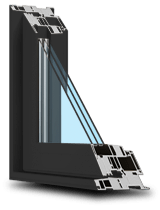
Windows for North York Homes: Solutions for Drafts and Cold Weather

If your North York home feels cold near the windows in January, or you notice condensation forming on the glass before the heating bill arrives, the windows are telling you something. Most North York windows in detached homes, semis, and post-war bungalows were installed decades ago. They were not built to the efficiency standards that exist today, and even windows from the 1990s can lose meaningful thermal performance over time. Replacement windows North York homeowners are increasingly choosing come down to a straightforward need: staying warm, reducing energy waste, and dealing with a housing stock that has aged unevenly. This article covers the full picture, from what causes the problem to how to choose the right solution.
Key Takeaways
- A large share of North York's housing stock was built before 1980, and the original windows in these homes were not designed to meet today's energy performance expectations.
- Drafts, cold spots, condensation, and rising heating bills are the clearest signs that windows are no longer doing their job.
- Replacement windows in North York projects often involve non-standard openings caused by additions, past remodelling, and older framing methods. Precise measurement matters.
- Custom-fit vinyl windows deliver tighter seals than standard-size units installed into irregular openings, directly reducing air leakage.
- Installation quality matters as much as product quality. Even high-performance windows underperform when installed without proper preparation, flashing, and sealing.
- ENERGY STAR certified windows can reduce overall annual energy costs by up to 16%, according to Natural Resources Canada.
- Triple-pane windows offer improved thermal performance and condensation resistance for homes in colder climates or those with larger window openings.
- Before signing a contract, ask every potential installer about the measurement process, warranty responsibility, installation scope, and post-install support.
Why do so many North York homes struggle with drafts and cold rooms in winter?
North York's housing stock is among the oldest in Toronto. According to Statistics Canada data compiled by Point2Homes , approximately 58% of homes in Toronto were built before 1981. North York, with its concentration of post-war detached homes, semi-detached properties, and brick bungalows, closely reflects this pattern. Homes built between 1945 and 1975 typically used single-pane or early double-pane windows with aluminum spacers and basic frame construction. Those original windows were not engineered to manage the thermal demands of a Canadian winter.
Common signs your windows are failing
The symptoms are consistent across older North York properties:
- Drafts near closed windows: air leaking through failed seals, warped frames, or deteriorated weatherstripping
- Condensation between panes: the IG unit seal has failed, allowing moisture to enter the inter-pane cavity
- Cold glass surfaces: single-pane or low-performance double-pane units conduct cold directly to the interior surface
- Difficulty opening or closing: frames have warped or shifted, which is common in older wood and aluminum frames
- Visible gaps around frames: caulking has cracked or shrunk, creating direct air pathways
- Rising heating bills: unexplained increases in gas or electric usage during cold months
How urban exposure affects comfort indoors
North York homes face a combination of factors that accelerate window wear. Street-facing facades on Yonge Street corridors, Sheppard, and Wilson Avenue absorb traffic noise and wind exposure that residential side streets do not. Homes on corner lots have two exposed facades. Brick construction, common in older North York neighbourhoods, efficiently transfers cold to the framing, which compounds air leakage at window perimeters. For homeowners planning a vinyl window project in North York, understanding the specific exposure of each window in the home helps prioritize which replacements will deliver the most immediate improvement in comfort.
How can replacement windows improve comfort in North York homes?

Modern energy-efficient windows address the core problems of older windows directly: air leakage, low insulation value, and thermal bridging through frames and spacers. The performance improvement is not subtle. A well-installed replacement window in an older North York home eliminates the primary sources of heat loss at that opening.
What does better insulation feel like day to day
Most homeowners notice the change in a few specific ways. Rooms that previously required the thermostat to run constantly to stay comfortable stabilize at a consistent temperature. The radiating cold feeling near windows in bedrooms and living areas disappears. Condensation on the interior glass surface drops significantly. For homes with forced-air heating, the furnace cycles less frequently because less heat is escaping through the glass and frame.
According to Natural Resources Canada, ENERGY STAR-certified windows, doors, and skylights are designed to improve energy efficiency and reduce heat loss. The overall benefit depends on the home's existing conditions, including the age and performance of the current windows, insulation levels, and installation quality. In older North York homes, replacing aging windows can make a noticeable difference in indoor comfort and thermal performance.
Why comfort matters beyond energy savings
Energy savings are measurable, but comfort is what homeowners feel every day. A living room that maintains a consistent temperature without cold zones near the windows changes how usable the space feels from November through March. For families with children or elderly residents, the difference between a draughty room and a properly insulated one has real daily consequences that go beyond a lower heating bill.
What window problems are most common in older North York houses?
Older homes accumulate window problems over time. Some are visible immediately. Others are hidden behind previous repairs, paint layers, and cosmetic renovations that made windows look better without addressing underlying performance issues.
Signs of aging window systems
The most common problems found in North York's older housing stock include:
- Condensation between panes — caused by IG unit seal failure, resulting in loss of argon gas, fogged glass, and reduced insulation
- Air leakage at the frame perimeter — caused by failed caulking or shrunken weatherstripping, leading to drafts, cold spots, and heat loss
- Warped or swollen frames — caused by moisture infiltration over the years, creating gaps in the seal and operational difficulty
- Single-pane glazing — original installation from pre-1970s construction, providing minimal insulation and high condensation risk
- Aluminum spacers in IG units — standard manufacturing before warm-edge systems, causing thermal bridging at the glass edge and perimeter condensation
- Paint-sealed sashes — result of multiple repaint cycles over decades, leaving windows that cannot open or seal properly
- Non-functioning hardware — caused by general aging and corrosion, leading to the inability to lock and latent air leakage at the sash
When repairs stop being cost-effective
Recaulking and weatherstripping can extend a window's useful life for a few seasons when the frame itself is still sound. Once the frame has warped, the IG unit has failed, or the sash no longer seals against the frame reliably, repairs address symptoms rather than the structural problem. Most window professionals use a straightforward threshold: if a repair costs more than 30% of the replacement value, replacement is the better long-term investment.
Why do non-standard window sizes matter more than homeowners expect?
Standard window sizes exist because manufacturers build to common rough opening dimensions. The challenge in North York is that many homes have openings that do not match these standard dimensions, and homeowners do not always know this until a measurement is done.
What makes a window opening non-standard
Non-standard openings appear in North York homes for several reasons:
- Additions built at different times using different framing standards
- Previous window replacements that altered the rough opening
- Original post-war construction that used sizing norms from the 1950s and 1960s
- Structural modifications during kitchen or bathroom renovations
- Bay windows or picture window openings unique to a specific house plan
When a standard-size window is forced into a non-standard opening, the installer has two choices: alter the rough opening or fill the gap with extra framing and insulation. Both create risk. Altering the opening adds labour cost and structural complexity. Filling gaps introduces thermal weak points and air leakage pathways if not done precisely.
Why precise measuring affects long-term results
A window measured and manufactured to the exact rough opening dimensions seals cleanly against the framing on all four sides. There are no gaps to fill, no extra insulation wedged into corners, and no visible trim needed to cover mismatches. The result is a tighter air seal, better thermal continuity between the window frame and wall insulation, and a cleaner finish. For homeowners planning Toronto replacement windows projects across multiple openings, getting measurements right on the first visit prevents delays, return visits, and performance problems that show up months after installation.
How do custom-fit windows help solve draft issues more effectively?
Custom manufacturing means the window is built to the specific dimensions of the opening, not adapted to fit after the fact. For North York's older homes, where openings often deviate from standard sizes, this distinction directly affects performance.
Custom vs standard-fit units
| Factor | Custom-fit window | Standard-size window in a non-standard opening |
|---|---|---|
| Fit to opening | Manufactured to exact dimensions | May require shimming, packing, or opening modification |
| Air seal quality | Tight perimeter contact on all sides | Gaps filled with foam or insulation; variable quality |
| Thermal performance | Full frame insulation continuity | Thermal bridging at gap-fill areas |
| Aesthetic result | Clean finish, no visible mismatches | May require extra trim to cover gaps |
| Installation time | Typically faster with a correct fit | Longer if opening needs adjustment |
| Long-term durability | Frame settles into the opening evenly | Gap-fill areas can compress or shift over time |
Performance advantages of exact-fit manufacturing
The air sealing benefit alone justifies custom sizing for most older North York openings. Air leakage through window perimeters is one of the primary causes of drafts and heat loss in homes. When the window is manufactured to fit the opening precisely, the weatherstripping and frame seal work as designed rather than compensating for a size mismatch. For homeowners pursuing vinyl windows in North York across several openings, custom sizing is typically the standard approach rather than the premium option.
What should homeowners know about installation before buying windows in North York?
Product quality and installation quality are equally important. A high-performance window installed without proper preparation will underperform. This is not a minor caveat. Air leakage, moisture infiltration, and reduced lifespan can all be traced back to installation shortcuts taken at any stage of the process.
What happens during professional installation
A thorough installation process covers these stages:
- Measurement and pre-order verification: openings measured precisely, including checking for square and level
- Removal of old window: including old caulking, stops, and any damaged framing material
- Frame and sill inspection: checking for rot, moisture damage, or structural compromise before the new window goes in
- Shim and level: ensuring the new window sits plumb and square in the opening
- Flashing installation: creating a waterproof barrier at the sill and head to prevent water infiltration
- Insulation around the frame: filling the gap between the window frame and the rough opening with low-expansion foam
- Interior and exterior sealing: caulking all perimeter joints to eliminate air pathways
- Hardware check and adjustment: verifying that locks, cranks, and sashes operate correctly before leaving the site
Where shortcuts usually happen
The most common installation shortcuts occur at the flashing and sealing stage. Flashing adds time and materials. Installers under pricing pressure sometimes caulk without flashing and call it done. Within a few years, water finds its way behind the caulk line and into the framing. By the time a homeowner notices interior water damage or mould, the window frame and surrounding wall may require significant repair. Asking specifically about the flashing procedure is one of the most useful questions a homeowner can ask before work begins.
“The installation stage is where we see the most variation in outcomes. A well-made window installed without proper flashing and perimeter sealing will develop problems that appear to be product failure but trace directly back to the installation. We take the preparation seriously because it protects the window's performance for the full service life.” — Tony Wong, Project Manager at Canadian Choice Windows & Doors
Can poor window installation affect warranty or long-term coverage?
This question comes up often, and the honest answer is: it depends on the specific terms in the warranty documentation. Most window warranties distinguish between product defects and installation-related issues. A warranty covers what the manufacturer controls. It does not automatically cover performance problems that result from improper installation by a third party.
Questions to ask before signing
Before committing to any replacement windows North York project, ask the following directly:
- Who performs the installation: the company's own employees, or a subcontractor?
- If a subcontractor installs the windows, who is responsible for the workmanship warranty on the installation?
- How is a warranty claim initiated, and what documentation is required?
- Does the company's warranty cover both the product and the labour for repairs?
- What is the warranty term for seal failure on the IG unit?
Why documentation matters after installation
Retaining the installation contract, product specification sheet, warranty document, and any inspection photos taken on installation day creates a record that supports any future warranty claim. If a window develops a problem three years after installation, having documented the original scope of work and product specifications removes ambiguity about what was installed and how.
Which window features matter most for cold-weather performance?
For North York homes, the relevant performance question is not which window looks most impressive in a showroom. It is the question of which window will perform reliably through twenty winters of freeze-thaw cycling, condensation stress, and sustained cold exposure.
Features that reduce heat loss
| Feature | What it does | Why it matters in cold climates |
|---|---|---|
| Multi-chamber vinyl frames | Creates air pockets within the frame structure | Reduces thermal conduction through the frame itself |
| Double-pane windows with argon | Two glass layers with an insulating gas fill | Baseline energy-efficient performance for most applications |
| Triple pane windows | Three glass layers, two gas-filled cavities | Better U-factor, reduced condensation risk on inner pane |
| Low-E coating | Microscopically thin metallic coating on glass | Reflects radiated heat back into the room in winter |
| Warm-edge spacers | Non-aluminum spacer between glass panes | Reduces thermal bridging at the glass edge and less perimeter condensation |
| Compression seals | A seal that compresses as the window closes | Tighter air seal than contact-type weatherstripping |
When triple pane may be worth considering
Triple-pane windows have a higher upfront cost than double-pane windows, and the payback period depends on the home's current performance. They make the strongest case in North York homes with:
- Large north-facing window openings with no passive solar benefit
- Rooms that have historically been the coldest in the house
- Corner lots or street-facing facades with higher wind exposure
- Homeowners planning a long-term hold of 15 or more years
Are triple-pane windows worth it for North York homes?
The practical difference between double-pane windows and triple-pane windows comes down to how much thermal work the glass needs to do in a given situation. Triple-pane glass has a lower U-factor, meaning less heat escapes through the assembly. It also keeps the interior glass surface warmer, which reduces condensation and the cold, radiant feeling near the window.
Best fit for older homes
Older North York homes with high ceilings, large original window openings, and minimal wall insulation often lose more heat through windows than newer homes with smaller, better-positioned openings. In these cases, upgrading to triple-pane windows can deliver a noticeable improvement in comfort beyond what the energy bill reflects. The room simply feels warmer and more usable in winter.
When ROI is strongest
Triple-pane windows are most compelling when replacing genuinely poor-performing windows: single-pane windows, early double-pane windows with aluminum spacers, or windows with failed IG unit seals. The performance gap between those and modern triple-pane windows is large. Replacing a solid, recently installed ENERGY STAR double-pane window with a triple-pane for marginal gains is a different calculation and harder to justify on cost alone.
| Comparison factor | Double-pane windows | Triple pane windows |
|---|---|---|
| Number of glass layers | 2 | 3 |
| Gas-filled cavities | 1 (argon) | 2 (argon or krypton) |
| Typical U-factor range | 1.2 to 1.8 W/m²K | 0.7 to 1.1 W/m²K |
| Interior surface temperature | Cooler in deep winter | Warmer, less condensation risk |
| Noise reduction | Moderate | Stronger, especially with laminated glass |
| Upfront cost | Lower | Higher (approx. 15–25% premium) |
| Best application | Most residential openings | Cold exposures, large openings, and long-term ownership |
How can homeowners choose the right windows for North York's mix of older and updated homes?
North York is not a uniform housing market. Willowdale and Newtonbrook have concentrations of post-war bungalows and raised ranches that have been extended and modified over decades. York Mills and Lawrence Park include larger detached homes with original wood windows still in place. Bathurst Manor and Clanton Park have a mix of brick semis and small detached homes built in the 1950s and 1960s. Each neighbourhood pattern creates a distinct window-replacement context.
What works for older detached homes
Older detached homes typically have larger window openings, more exposed framing, and more varied renovation histories. The priorities are: confirm the rough opening dimensions before ordering, inspect the framing for moisture damage before installation, and choose a frame profile with enough depth to fill the existing opening cleanly. For these homes, custom sizing is rarely optional.
What updated homes still get wrong
Homes that have been renovated but not fully re-windowed sometimes have a patchwork of window ages and types. A kitchen renovation in 2005 may have introduced one updated window while leaving original 1970s units in bedrooms. This inconsistency indicates that the home's thermal envelope has gaps that are not apparent on visual inspection. A professional assessment that looks at each opening individually, not just the windows that look oldest, gives a more accurate picture.
What questions should you ask a window company before starting the project?
The right questions protect your investment and clarify what you are actually buying. Window replacement is a significant project, and the company you choose determines both the product quality and the installation outcome.
Questions about fit and finish
- Will you measure each opening individually, or use a single size for similar openings?
- Are windows custom-manufactured to my specific opening dimensions?
- What happens if a window does not fit correctly on installation day?
- Who handles the framing inspection before installation begins?
Questions about support after installation
- Who do I contact if a seal fails or a window develops a problem in year three?
- Is the installation warranty separate from the product warranty?
- How long has your installation team been doing this work?
- Will you provide a written scope of work before I sign anything?
Canadian Choice Windows & Doors follows a four-step process: an in-home appointment, a written quote, professional installation, and post-installation service. Asking any company to walk you through their equivalent process and get it in writing is the clearest way to assess whether their approach matches what they are promising.
How do professionally installed windows support energy efficiency and long-term home value?
Replacement windows are among the few home improvements that address comfort, energy use, and resale value simultaneously. For North York homeowners who plan to sell within the next ten years, updated windows are among the first things buyers notice during a showing and among the first questions in a home inspection.
Comfort and cost over time
The energy-efficiency argument for energy-efficient windows is well documented. Natural Resources Canada confirms that ENERGY STAR certified products can reduce annual energy costs by up to 16% . In a North York home with original windows in place for thirty or forty years, the gap between current performance and what a certified replacement delivers is typically much wider than the average improvement suggests. The thermal benefit is compounded across every window in the home.
Why buyers notice quality window upgrades
A home with updated, well-sealed windows presents better in all seasons. In winter, no draft complaints from buyers during showings. In summer, no visible condensation between panes. In any season, properly installed windows that operate smoothly, lock securely, and sit cleanly in their openings communicate that the home has been maintained to a higher standard. For a competitive North York market where buyers are making large purchase decisions, those signals matter.
“Homeowners often underestimate how much a window project affects the day-to-day experience of the house. The energy savings are real, but what people tell us after installation is that the house simply feels different. Rooms they avoided in winter become comfortable again. That quality of life improvement is what stays with them.” — Helen Sin, Customer Success Manager at Canadian Choice Windows & Doors
What is the best next step if your North York home feels cold and drafty?
The answer depends on how many symptoms you are seeing and how widespread they are. A single draughty window with visible caulk failure may be a candidate for targeted repair. Multiple failing windows, consistent cold spots throughout the home, or condensation in several openings are signs that the window system as a whole has reached the end of its useful life.
The most useful first step is a professional in-home assessment. A qualified installer can evaluate each opening, identify whether the issue is the product, the installation, the framing, or some combination, and give you a clear picture of what replacement would involve. For North York homes with mixed renovation histories, this assessment often uncovers openings that were not on the homeowner's radar but are contributing to the comfort problem.
Canadian Choice Windows & Doors offers vinyl window replacement throughout North York and the broader Toronto area, with custom sizing, professional installation, and a documented warranty. The best starting point is a conversation about your specific home and openings, not a standard quote based on assumed dimensions.
Frequently Asked Questions
Why does my North York home feel cold near the windows even when they are closed?
The most common cause is air leakage through deteriorated caulking, warped frames, or failed weatherstripping. In older North York homes built before 1980, original window frames have often shifted enough to break the seal between the frame and the rough opening. Even when no gap is visible, air can move through hairline cracks in aged caulk. A professional assessment can identify where the leakage is occurring and whether repair or replacement is the more practical solution.
How do I know if my window seal has failed?
The clearest indicator is persistent condensation or fogging between the panes of a double or triple-pane window. Once moisture appears in the inter-pane cavity, the sealed insulating glass unit has failed and can no longer be restored to its original performance. The argon gas fill has escaped, and the Low-E coating may begin to degrade. Replacing the window is the only effective remedy.
Are my North York windows a non-standard size?
Possibly. A significant number of North York homes have window openings that do not match current standard manufacturing dimensions, particularly homes built before 1975 and any home with an addition or renovation history. The only way to know is to measure each opening individually before ordering. Assuming standard sizing and ordering accordingly is one of the most common sources of poor window fit and air leakage after installation.
What is the difference between double-pane and triple-pane windows for a Toronto winter?
Double-pane windows with argon fill and a Low-E coating meet current ENERGY STAR requirements and perform well in most residential applications. Triple-pane windows add a second gas-filled cavity, which lowers the U-factor further and keeps the interior glass surface warmer. In North York homes with large north-facing openings, corner-lot exposure, or rooms that have historically been the coldest in the house, triple-pane windows deliver a noticeable improvement in comfort. The upfront cost is higher, and the payback is strongest for homeowners planning to stay in the home for 15 or more years.
How much can new windows reduce my energy bills?
According to Natural Resources Canada, ENERGY STAR-certified windows, doors, and skylights can reduce overall annual energy costs by up to 16% compared to non-certified products. The actual savings in a specific home depend on how many windows are being replaced, how poorly the existing windows are performing, and the home's overall insulation level. For older North York homes with original single or early double-pane windows, the improvement is typically at the higher end of that range.
Does poor installation void my window warranty?
Warranty terms vary by manufacturer and installer. Most product warranties cover defects in materials and manufacturing, but do not automatically cover performance problems caused by improper installation. If the installation is done by a third party not affiliated with the manufacturer, warranty responsibility for workmanship may fall on the installer rather than the product supplier. Before signing a contract, ask specifically who is responsible for warranty claims that arise from installation issues, and get the answer in writing.
How long does a window replacement take in a typical North York home?
A standard window replacement for a single opening takes approximately two to four hours, including removal, preparation, installation, and sealing. A full-house project covering eight to twelve windows is typically completed in one day by an experienced crew. Homes with non-standard openings or framing issues that require additional preparation work may take longer.
Can I replace just one or two windows, or do I need to do the whole house at once?
You can replace individual windows. Targeted replacement makes sense when one or two windows are clearly failing while the rest of the home is performing adequately. However, if multiple windows are showing the same symptoms, drafts, condensation, or difficulty operating, a full assessment often reveals that a broader replacement project delivers better value than repeated single-window interventions over several years.

1000’s of Colours & Textured Finishes
Transform your home from ordinary to extraordinary with our new coloured and non-glare textured finishes. Available in a wide array of colours as well as custom matched colours for your very own personalized design.
Our Most Popular Replacement Window Colours: