uPVC Windows: What They Are and Why They're Different from Standard PVC

uPVC windows are rigid frames made from unplasticized polyvinyl chloride. The "u" means no plasticizers were added to soften the polymer, so the profile holds its shape instead of flexing. That is the difference between a window frame and flexible PVC products such as cable insulation, sheet flooring, and garden hose.
On a quote, the same frames often show up as "vinyl" or simply "PVC." Homeowners use "vinyl," and uPVC is the technical name for the compound. Plasticized PVC, the flexible kind, goes into products such as cable insulation, sheet flooring, and garden hose, not window frames.
Key takeaways
- The "u" in uPVC means unplasticized: the plasticizers that soften PVC are left out, so the frame stays rigid.
- Flexible, plasticized PVC is used in cable insulation, sheet flooring, and hose. Window frames, like drinking-water pipe, use the rigid compound because they have to hold their shape.
- A Canadian climate asks the frame to handle deep freezes and strong sun on the same wall, so the compound must stay rigid and resist UV.
- What separates one uPVC frame from another is the chamber design, fusion-welded corners, and a UV-resistant finish.
- The vinyl line is lead-free uPVC. Wood- and aluminum-clad windows are a separate line for homes that need those materials.
PVC vs uPVC: what the "u" actually means
Polyvinyl chloride is the plastic itself. Plasticizers are additives mixed in so a batch can bend, which is how you get a garden hose or a sheet of flooring. Leave those additives out and the same polymer becomes a rigid profile. That rigid form is unplasticized PVC, shortened to uPVC.
Health Canada describes rigid PVC for drinking-water pipe as a material with little or no plasticizer , which is why it's also called unplasticized. A window frame relies on that same rigidity. The profile has to keep a square corner and meet the sash evenly along the whole opening.
The rigid compound is extruded into a long profile, then cut and welded into a frame. A showroom tag that says vinyl points to this rigid material. If one quote says PVC and another says uPVC, both describe the same rigid frame material, so compare the chambers, the corners, and the glass instead.
Why standard PVC isn't used in quality window frames

Plasticized PVC is mixed so it will flex. That flex is the point of a garden hose that has to coil, and of flooring that has to give underfoot. A window frame has the opposite job. It has to stay put while the sash closes against it, the hardware pulls on it, and the wall shifts a little with the season.
A flexible compound loses that job in three practical ways:
- It will not hold a square corner. A soft profile creeps, and the sash no longer meets the frame the way it did on installation day.
- It will not hold a welded corner. Fusion welding joins two rigid profiles into one stiff corner, and a soft compound cannot keep that corner square under load.
- It will not stay stable in the sun. A compound built to flex is a poor match for a wall that takes the afternoon sun.
That is why plasticized PVC is not used for window profiles at all, and why there is no failure rate to quote for it. A window sold as PVC, vinyl, or uPVC uses the rigid compound. The real difference between two quotes sits in how that compound is built into a frame, not in the name on the tag. Ask for the chamber design, the corner welds, and the glass package in writing.
What makes uPVC a good fit for Canadian climates
A frame on a Canadian house sees a long freeze and then strong sun on the same wall. The profile must stay rigid in the cold and resist fading, cracking, and warping under high UV. Wide seasonal temperature swings are the test in a prairie city, which is why vinyl windows in Winnipeg are built with welded frames to handle them.
What the frame material does not decide
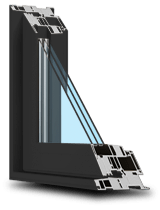
The frame is only one path for heat. Conduction moves heat through the solid parts, including the frame and the sash. Natural Resources Canada states that vinyl frames and sashes have multiple interior chambers that can be foam-filled to increase efficiency. Those chambers slow heat moving through the profile. Foam in the chambers is an option on this line, so a quote should say whether the foam is actually in the unit.
Chambers leave the rest of the unit to do its own work. The glass layers, the coating, the gas in the gap, the spacer, and air leakage at the sash still decide how the opening behaves. A rigid frame with a tired seal is still a drafty window.
Canadian Choice Windows & Doors™ builds the rigid profile for homes that live through that swing.
"On a replacement, I check whether the frame is still square after a hard winter and a hot week on the same wall. uPVC holds that shape because the profile is rigid and the corners are welded into one piece. A flexible compound would creep at those corners, and the sash would not seal the way it did on installation day," says Tony Wong, Project Manager, Canadian Choice Windows & Doors.
uPVC vs standard PVC: side-by-side
A uPVC vs PVC windows search usually compares two names for the same frame, so the useful contrast is between the two forms of the polymer. One column is the flexible, plasticized material used in other products. The other is the rigid compound used for window frames. The grid shows those differences at a glance, and it leaves the glass and installation out of the score.
| Feature | Flexible (plasticized) PVC | uPVC |
|---|---|---|
| Plasticizers | Added so the material bends | Left out, so the profile stays rigid |
| Typical use | Cable insulation, sheet flooring, garden hose | Window frames, sliding patio door frames, and drinking-water pipe |
| UV and cold | Not formulated for an exposed window frame | UV-resistant, and built to resist fading, discolouration, warping, cracking, and peeling |
| Corners | Not used for welded window corners | Fusion-welded corners |
| Heat through the frame | Not used as a window profile | Multi-chamber walls slow that path |
A stronger frame compound will leave a badly adjusted sash exactly as it was. Use the grid to check the material, then ask which glass is in the unit and who is setting it in the wall.
How Canadian Choice Windows & Doors builds with uPVC
The vinyl line is lead-free uPVC and 100% recyclable. The compound is UV-resistant, so the frame does not fade, discolour, warp, crack, or peel. The frame and sash corners are fusion welded for structural strength. The profiles are multi-chamber. Glass units come from Cardinal I.G. and Guardian Glass, with argon between the panes, so the frame can focus on its job.
You will see the same frames sold as vinyl windows . That is the homeowner's name for this uPVC. The line includes casement, awning, sliding tilt, bay and bow, double hung tilt, TrueCrankless tilt and turn, and architectural windows. Sliding patio door frames are also uPVC. Stacking patio doors use a thermal, commercial-grade aluminum frame because they're a different system.
Wood and aluminum-clad windows sit beside the vinyl line. They are the choice when the interior has to be real wood, or when a character home needs that exterior. The opening can be the same size and still call for a different material.
The trusted choice. Canadian-made. Canadian Choice Windows & Doors has manufactured these frames in Canada since 1997. Those frames carry a 25-year transferable warranty, and coverage periods vary by component, so the frame and the hardware each follow their own term.
uPVC windows stay rigid where standard PVC flexes
A window frame sold as vinyl, PVC, or uPVC should be the rigid compound, with no plasticizers added. It stays square in a freeze, it holds a welded corner, and it is specified to resist UV. Chambers in the profile slow heat moving through the frame, and they leave the glass, the gas fill, and the install to do their own work.
When the interior has to be wood, or the exterior has to be aluminum-clad, this frame is the wrong material for that opening. For the openings that take this compound, a project manager can measure each one and match it to the types of windows built in uPVC.
Frequently asked questions
Is uPVC the same as vinyl?
For these frames, vinyl and uPVC are the same rigid compound. Vinyl is the consumer term, and uPVC is the technical name. A window quote that says PVC refers to that same rigid profile, while plasticized PVC is the flexible material used in products such as cable insulation, sheet flooring, and garden hose.
Is uPVC better than standard PVC for windows?
Window frames are made only from the rigid compound, so in practice uPVC and PVC windows are the same material. Flexible PVC is designed to bend and won't hold a square, welded corner, so it isn't used for frames. The glass, the seal, and the install still have to be right, or a good frame will leave a draft where the sash meets the weatherstripping.
Is uPVC environmentally friendly?
The frame compound is lead-free and 100% recyclable. That is the material claim, and it still leaves a manufacturing footprint, so "friendly" is too broad a word for the whole process. The house gains a rigid, insulated frame that holds its seal, which is as much an energy question as a materials question.
Does uPVC yellow or fade over time?
The uPVC in these frames is UV-resistant and designed so the surface does not fade, discolour, warp, crack, or peel. That describes the compound and the factory finish. A gouge through a colour is a different mark from a frame that chalks on its own, and the finish claim does not cover impact damage.
Are all Canadian Choice windows made from uPVC?
The vinyl line is. Casement, awning, sliding tilt, bay and bow, double hung tilt, TrueCrankless, and architectural windows are built in uPVC. Wood and aluminum-clad windows are a separate line for homes that need a wood interior or that exterior. The material follows the product, so a whole-house quote can mix the two.

1000’s of Colours & Textured Finishes
Transform your home from ordinary to extraordinary with our new coloured and non-glare textured finishes. Available in a wide array of colours as well as custom matched colours for your very own personalized design.
Our Most Popular Replacement Window Colours: