Retractable Screen Doors in Canada: Complete Guide for Homeowners
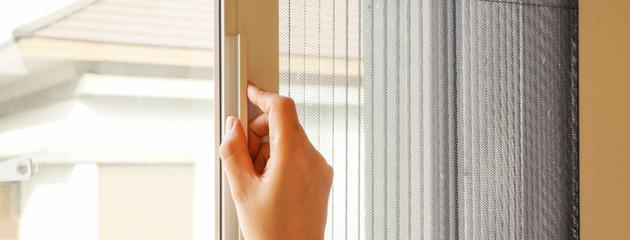

A retractable screen door is a mesh screen that rolls into a compact housing when it is not needed and deploys in seconds when required. It keeps mosquitoes and insects out, lets fresh air in, and disappears completely when not in use, so your doorway looks clean and open at all times.
For Canadian homeowners, that combination is genuinely useful. Our summers are short and warm, insect activity is significant during warmer months, and most of us want to keep doors and windows open without allowing insects to enter the living space. A quality retractable screen solves that problem without adding bulk or compromising the look of your home.
This guide explains: how retractable screens work, which type fits your situation, what installation actually involves, and when it makes sense to call a professional rather than go DIY.
Key Takeaways
- Retractable screen doors roll away when not in use, with no fixed frame blocking your view or your entryway.
- They block up to 90–95% of common insects while allowing full natural ventilation.
- Three main types exist: door screens, patio screens, and window screens, each built for different openings.
- Professional installation ensures a precise fit and protects your warranty.
- Screens can be retrofitted to existing doors and windows at any time, not just during new builds.
- With minimal upkeep, most retractable screens last 10–15 years.
A common situation for homeowners in Ontario occurs during summer evenings. The weather is finally perfect, warm, with a light breeze coming through. You prop open the front door to let the air circulate, and within ten minutes, you're chasing mosquitoes out of the kitchen.
That moment is exactly why retractable screen doors exist. Not as a luxury upgrade, but as a practical fix for a problem every Canadian homeowner knows well. A properly installed retractable screen door can effectively reduce this issue.
What Is a Retractable Screen Door?
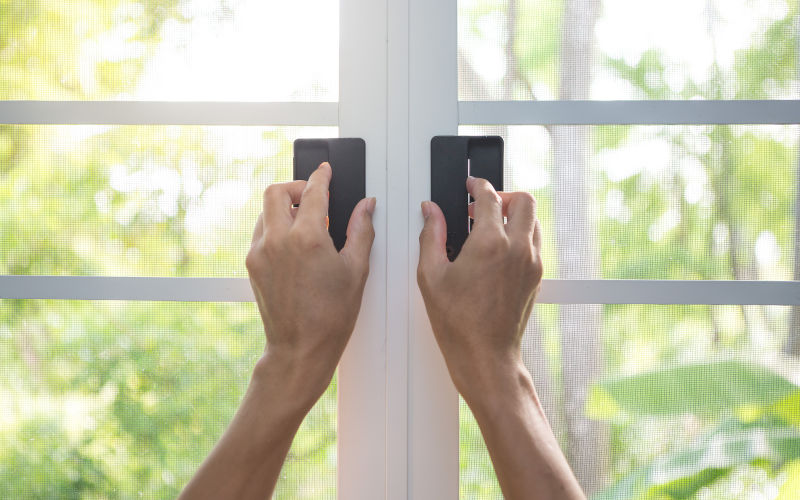
A retractable screen door is a mesh screen mounted in a spring-loaded cassette that sits beside or above your door frame. When needed, the mesh panel is pulled across the opening, and it clicks into a track on the other side. When you don't, a light push sends it rolling back into the housing, out of sight and out of the way.

How the Mechanism Works
The mesh is wound onto a tensioned roller inside a slim housing unit, typically less than 5-10 centimetres wide. The screen travels along a top guide and a bottom track, keeping it taut and flush against the frame. High-quality retractable screens typically operate with one hand and open or close within seconds.
Unlike fixed screens, which stay in place year-round and accumulate dirt, pet hair, and damage from seasonal wear, a retractable screen spends most of its life protected inside the cassette. This significantly extends its lifespan and maintains a clean, unobstructed doorway appearance.
Where Retractable Screens Are Used
Retractable screens work across a wide range of residential openings: front entry doors , back doors, sliding patio doors , French doors , large deck openings, and windows where a fixed screen would block the view or make cleaning awkward. Their versatility allows them to be used across a wide range of home layouts.
The Core Benefits for Canadian Homes
- Insect protection: Blocks mosquitoes, blackflies, wasps, and other common Canadian insects without blocking airflow.
- Natural ventilation: Allows a full cross-breeze without opening the home to debris or pests.
- Improved comfort in warmer months: Reduces reliance on air conditioning on mild days.
- Clean aesthetics: Disappears completely when retracted, with no permanent frame cluttering your entryway.
- Protection from light debris: Catches dust and light wind-blown material without restricting air circulation.
Types of Retractable Screens
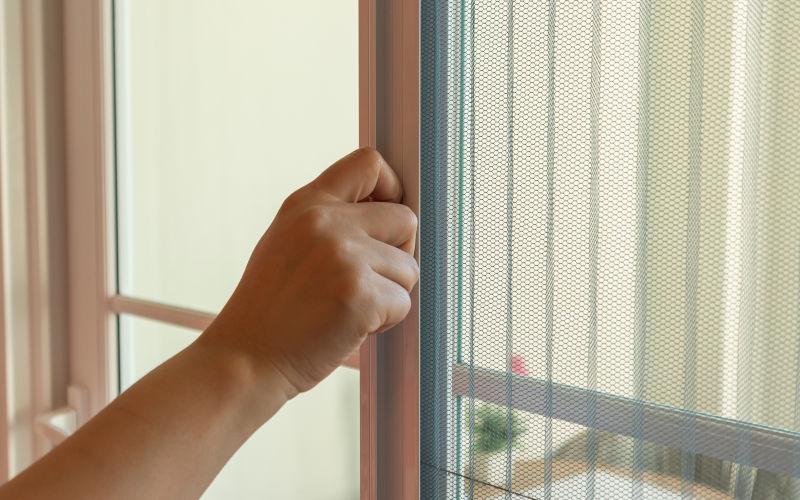
Retractable screens come in configurations designed for different openings. Choosing the right type comes down to the size of the space, how often it's used, and the level of coverage you need.
Retractable Screen Doors
The most common installation in Canadian homes. Designed for frequent daily use on entry and sliding doors, these screens open and close dozens of times a day without wearing down the mechanism. Because they retract fully, they're a good fit for front doors where curb appeal matters.
Retractable Patio Screens
Designed for wider openings, decks, large patio doors, and outdoor living areas. They span a greater distance than standard door screens and can help create a more usable outdoor space while reducing insect exposure during the summer months. Particularly useful in areas with high mosquito activity.
Retractable Window Screens
For windows where a fixed screen would be inconvenient, blocking a view, making the window harder to clean, or simply looking out of place. Retractable window screens deploy when you want ventilation and disappear the rest of the time, maximizing light and sightlines.
A quick comparison of all three types:
| Screen Type | Best Used For | Key Benefit |
|---|---|---|
| Retractable Screen Door | Entry doors, sliding patio doors | Everyday convenience, space-saving design |
| Retractable Patio Screen | Decks, patios, and large outdoor openings | Full insect protection across wide spans |
| Retractable Window Screen | Windows where fixed screens aren't ideal | Preserved visibility, flexible seasonal use |
Best Retractable Screen Doors in Canada: What to Look For
The best retractable screen door isn't defined by brand alone; it's the one that fits your specific opening, suits how you use the space, and is built from materials that hold up to Canadian conditions.
Key Quality Factors
- Build quality and durability: Housing, tracks, and mesh should all handle Canada's temperature range from freezing winters to humid summers without warping, cracking, or losing tension.
- Smooth retractable mechanism: The spring tension should be consistent. The mesh should retract cleanly without bunching, catching, or fraying.
- Proper fit for the opening: Gaps around the edges defeat the purpose. A screen that doesn't seal the frame lets insects in just as easily as having no screen at all.
- Ease of use and maintenance: The best screens require minimal upkeep — clean tracks, simple mesh replacement if needed, and a mechanism that works the same in year five as it did on day one.
- Professional installation: Even a well-made screen underperforms if it's installed without precise measuring and proper tensioning.
Canadian Climate Compatibility
Products designed for milder climates often struggle in Canada. Look for screens rated for wide temperature fluctuations, UV-resistant mesh for long summer daylight hours, and hardware that won't corrode or seize up after a Canadian winter. Getting this right from the start means a screen that lasts, not one that needs replacing in three years.
Getting the Right Guidance
Choosing the right retractable screen involves knowing your door type, understanding the available hardware options, and measuring accurately. The process is more complex than it may initially appear. Canadian Choice Windows & Doors provides homeowners with guidance on selecting and installing retractable screen systems based on the opening type and usage requirements. navigate exactly these decisions for over 40 years with honest advice, no pressure, and a clear focus on getting the fit right from the start. From the initial quote through to the final install, you're guided through every step.
Retractable Screen Door Installation: What to Expect
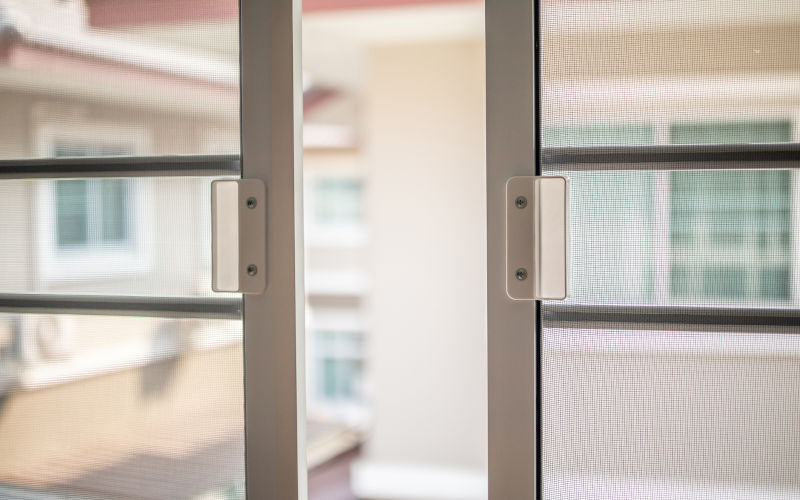
Installation is more involved than it appears. A retractable screen has to be precisely measured, correctly mounted, and properly tensioned to operate smoothly every day without premature wear.
Basic Installation Steps
A standard installation follows this sequence: accurate measurement of the door or window opening, selection of the correct cassette housing and track configuration for the frame type, secure mounting of the housing unit, installation of the bottom or side track, final tension adjustment, and a full operation test before the installer leaves.
When installed correctly, a single unit typically takes one to two hours. When installed incorrectly, it creates problems that compound over time.
DIY vs. Professional Installation
For a straightforward, single-panel door screen in a standard frame, DIY installation may be suitable. For anything more complex, irregular frames, multi-panel openings, French doors, or high-traffic main entry doors, professional installation is the more reliable choice.
The most common DIY failure points are inaccurate measurements, tracks that aren't perfectly level, and tension set too tight or too loose. Any of these results in a screen that sticks, wears unevenly, or fails to seal properly against the frame.
| Factor | DIY Installation | Professional Installation |
|---|---|---|
| Cost | Lower upfront | Higher upfront, lower long-term risk |
| Fit & Alignment | Depends on skill and tools available | Precise measuring and fitting guaranteed |
| Time | Varies, often longer than expected | Typically 1–2 hours per unit |
| Warranty | May void product warranty | Warranty typically preserved |
| Long-term result | Acceptable for simple, standard frames | Smooth operation and durability for 10–15 years |
Why Proper Installation Protects Your Investment
A correctly installed retractable screen operates smoothly for a decade or more with minimal maintenance. An improperly installed one creates daily frustration and wears out the mechanism years ahead of schedule. Professional installation helps ensure the product performs as intended over time.
Common Problems and Replacement Options
Even well-made retractable screens develop issues over time. Understanding common issues allows homeowners to address problems before they become more costly.
Typical Issues
- Torn or worn mesh: Direct sun, repeated use, and wind exposure gradually weaken the mesh. Fraying or small holes reduce insect protection.
- Screen not retracting smoothly: Usually caused by debris in the track, a spring that needs rebalancing, or mesh that has come slightly off the roller.
- Loose or damaged tracks: Bottom and side tracks can loosen over time, particularly in high-traffic doorways.
- Misalignment after extended use: Seasonal temperature changes cause materials to expand and contract, which can gradually shift the screen out of alignment.
Repair vs. Full Replacement
In most cases, only the mesh needs replacing. The housing, cassette, and track hardware typically outlast the mesh itself by several years. A straightforward assessment which any professional installer can do quickly will tell you whether a mesh replacement is sufficient or whether the full system has reached the end of its service life.
Best Time to Install Retractable Screens
The ideal moment is during a window or door installation. At that point, the frame is accessible, measurements are exact, and the screen integrates into the overall installation without additional adjustments.
That said, retrofitting an existing door or window is completely practical and is actually how most Canadian homeowners add retractable screens. With accurate measuring and the right hardware, a retrofit achieves the same clean fit and smooth operation as a new-build install.
Are Retractable Screens Worth It?
For many Canadian homeowners, retractable screens provide clear practical benefits during the first season of use.
The Real-World Difference
A warm evening with the front door open and no insects getting in. A patio that's usable at dusk without covering every surface in citronella. Kids running in and out without a cloud of mosquitoes following them through the door. These are meaningful improvements in everyday comfort; they're the kind that make a home genuinely more liveable during the months that matter most.
In areas of Canada with high insect activity, including Ontario, Quebec, the Prairie provinces, and regions near water, a retractable screen on the main entry door or patio can become one of the most-used features in the house.
Practical Benefits Summary
- Insect protection: Blocks mosquitoes, blackflies, wasps, and other common Canadian insects.
- Better ventilation: Full airflow without opening the home to pests or debris.
- Comfort on mild days: Reduces the need for air conditioning when a breeze is enough.
- Preserved aesthetics: Disappears completely when retracted, with no permanent hardware cluttering the entry.
- Long service life: 10–15 years with normal use and basic maintenance.
For families with young children, pet owners, or anyone who spends summer evenings near an open door, a retractable screen stops being a "nice-to-have" and becomes a highly practical addition.
The Right Screen, Installed Right
A retractable screen door is one of the most practical home upgrades a Canadian homeowner can make. It solves a real problem, operates reliably with minimal user interaction, and improves indoor comfort and usability for months, keeping your home feeling open and connected to the outdoors.
The key is choosing a screen that fits your specific opening correctly and having it installed by someone who understands the variables. Canadian Choice Windows & Doors has been guiding Canadians through exactly these decisions for over 40 years, with honest guidance, no pressure, solutions built around your home, your timeline, and your budget.
To explore retractable screen doors in Canada , or to get a free, no-obligation consultation and speak with a specialist to assess your home and installation requirements
Frequently Asked Questions About Retractable Screen Doors in Canada
Can I add a retractable screen to my existing door without replacing the door?
Yes. Retrofitting is one of the most common ways to install retractable screens in Canada. The cassette housing mounts to the existing door frame, and the track attaches to the threshold or opposite jamb. In the vast majority of standard residential frames, no door replacement is needed. The only requirement is accurate measurement and hardware that matches your frame profile.
My door frame is not perfectly square. Will a retractable screen still work?
Out-of-square frames are common in older Canadian homes, and a skilled installer knows how to work with them. Minor frame irregularities can usually be compensated for with adjustable hardware and careful track positioning. Severely out-of-square frames may require a custom-cut cassette or shimming. This is one of the situations where professional installation is recommended, as most issues originate from DIY installation on irregular frames.
How well do retractable screens actually block insects compared to fixed screens?
High-quality retractable screens use the same mesh grades as fixed screens and block the same insects, including mosquitoes, blackflies, and no-see-ums, when they're properly installed and fully sealed against the frame. The keyword is "sealed." A retractable screen with gaps at the edges is no more effective than a screen with holes. Proper installation eliminates those gaps.
Is a retractable screen door suitable for a front door that gets heavy daily traffic?
Yes, provided you choose a mechanism rated for high-cycle use. A screen on a main entry door may open and close 30 to 50 times a day. Quality retractable screens designed for residential entry doors are built to handle this. The mechanism should be tested by the installer before they leave and should operate smoothly with minimal resistance. If it sticks or drags on day one, it will only get worse.
Can a retractable screen door be used on a double door or a French door?
Yes. Double-door configurations use two single-panel screens that meet in the middle, each retracting into its own housing on the outer jambs. This works well on French doors and double patio entries. Correct measurement is critical; the two panels need to align precisely at their joint to avoid gaps. This configuration is typically not suited for DIY installation unless you have experience with multi-panel screen systems.
What happens to the screen in winter? Do I need to remove it?
No removal is needed. When retracted, the mesh is fully protected inside the cassette housing, shielded from snow, ice, and UV exposure. Quality screens built for Canadian climates use hardware and mesh materials that handle thermal expansion and contraction without warping or cracking. The mechanism should operate smoothly when you pull it out in spring, just as it did when you last used it in autumn.
How do I clean a retractable screen without damaging the mesh?
For the mesh itself, a soft brush or microfibre cloth with warm water and a mild detergent is all you need. Avoid high-pressure washing directly at the mesh — it can stretch or dislodge the material from the roller. For the tracks, a dry cloth or a vacuum with a brush attachment removes debris that accumulates over the season. Clean the tracks at least twice a season. Buildup of grit is the most common cause of screens failing to retract smoothly.
How do I know when the mesh needs to be replaced vs. when the entire unit needs to be replaced?
Mesh replacement is the right call when the mesh itself is torn, fraying at the edges, or has lost its tension, but the housing, cassette, and tracks are all in good working order. Full unit replacement makes sense when the mechanism has stopped retracting consistently, the housing is cracked or warped, or the tracks have bent or separated from the frame. A professional can diagnose this in a few minutes. In most cases, a mesh swap extends the life of the unit by five or more years at a fraction of the cost of full replacement.
Is there a noticeable difference in mesh quality between products?
Yes, and it matters more than most homeowners expect. Lower-grade mesh is thinner, tears more easily under UV exposure, and can stretch out of alignment within a season or two. Better mesh is woven more tightly, resists UV degradation, and holds its shape and tension over years of use. In Canada, where screens undergo freeze-thaw cycles each year, material quality directly affects how long a screen performs reliably. It's worth asking specifically about mesh grade when comparing options.

1000’s of Colours & Textured Finishes
Transform your home from ordinary to extraordinary with our new coloured and non-glare textured finishes. Available in a wide array of colours as well as custom matched colours for your very own personalized design.
Our Most Popular Replacement Window Colours: