How to remove and prevent black mould on windows in Canada
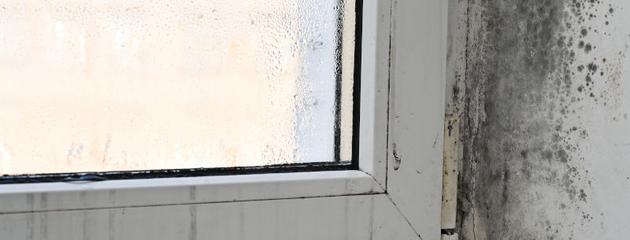

Black mould on windows is usually a moisture problem
It usually starts small. A patch of dark speckling in the bottom corner of a bedroom window, or a thin line along the seal where the sash meets the frame. You wipe it away, the sill looks clean again, and by the next cold snap it is back in the same corner. In most Canadian homes this follows the heating season rather than the calendar: it appears when the furnace starts running, fades in spring, and returns the following winter on the same two or three windows.
When we inspect those windows, the mould itself is rarely the main problem. What sits behind it is trapped moisture. Warm indoor air carries humidity from showers, cooking, laundry, and everyday living, and the glass is almost always the coldest interior surface in the room. Where air cannot circulate freely, behind heavy curtains, above a blocked heat register, or in a corner the room’s air never really reaches, that moisture condenses on the glass and runs down onto the frame and sill. Older units make it worse, because worn seals and dated glazing keep interior surfaces cold enough to condense for much of the day.
This is why cleaning on its own so often disappoints. Homeowners tell us they have scrubbed the same sill three or four times with vinegar or a mould cleaner and it still comes back, and they are not doing anything wrong. Removing the growth does not change the conditions that created it. If the window still condenses on cold mornings, the frame and sill stay damp long enough for mould to re-establish, and the cycle simply restarts.
So this guide covers the full picture rather than the cleaning step alone. You will find what actually causes black mould on window frames and sills in Canadian winters, how to clean small spots safely, the warning signs that separate a cosmetic patch from a moisture problem inside the opening, and what we look for on older Canadian window systems when a homeowner asks whether better ventilation, sealing, or replacement is the honest next step.
Key takeaways
- Black mould around windows often starts as a few dark spots on the frame, sill, or seal, then returns each winter if moisture stays.
- Condensation on cold glass, air leakage, ageing seals, and weak airflow are the usual drivers in Canadian homes.
- Safe DIY cleaning can clear small spots, but if mould returns quickly, the moisture source is still there.
- Lower indoor humidity, better exhaust, and clear airflow to the glass reduce risk.
- Chronic mould, daily winter condensation, drafts, or damaged trim usually need a professional window and opening assessment.
- Modern, well-installed windows raise the temperature of interior glass and cut off moisture pathways that feed mould.
What black mould on windows is, and why it shows up in Canada

Mould is a fungus that grows where moisture and organic material meet. Window frames, gaskets, wood trim, and dust give it a surface when condensation lingers.
Canadian winters create large temperature gaps between warm indoor air and cold glass. Warm air holds moisture. When that air hits cold window surfaces, water forms. If condensation is frequent or sits on the frame and sill, black mould on windows becomes likely. Searchers often type “black mold on windows” as well (US spelling); the cause is the same moisture pattern.
Windows are often the first place where moisture problems show up because glass is typically the coldest interior surface in the building envelope.
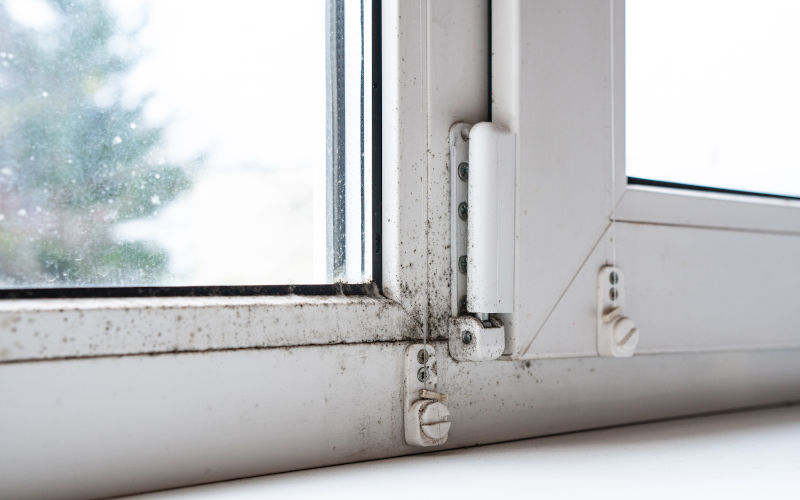
Where black mould commonly develops around windows
| Location on the window | Why mould forms there | What it usually indicates |
|---|---|---|
| Lower frame and sill | Condensation collects and dries slowly | Cold surface and limited airflow |
| Corners of the frame | Air leakage and thermal bridging | Installation or sealing weaknesses |
| Behind gaskets and weatherstripping | Trapped moisture | Ageing seals or compression failure |
| Adjacent drywall or trim | Moisture migrating from the opening | Possible insulation or flashing issues |
Why black mould on windows is more than cosmetic
Black mould is not only unsightly. Over time it can stain finishes, degrade sealants, and damage window components. It also hurts indoor air quality.
Children, seniors, and people with asthma or respiratory sensitivities are more vulnerable to prolonged exposure to mould. Even when symptoms are mild, recurring mould is a sign that moisture is affecting the window opening and should not be ignored.
The real causes of black mould on windows
Persistent condensation on cold glass
When interior glass stays cold, moisture forms again and again, feeding colonies along the frames and sills. This is the classic window condensation mould pattern in Canadian winters.
Air leakage around the window opening
Gaps in installation or perimeter sealing let cold exterior air cool interior surfaces and create moisture pathways.
Failing window seals and gaskets
As seals age, they lose elasticity and compression. Moisture then collects inside the frame system.
Inadequate ventilation and airflow
Bathrooms, kitchens, and bedrooms add a lot of moisture. Without effective exhaust and ventilation, humidity builds up on the glass.
Older window designs and glazing
Older windows often keep colder interior surface temperatures, so condensation lasts longer and mould returns after cleaning.
“When black mould keeps coming back around windows, it usually means moisture is entering or condensing inside the window assembly. Cleaning alone cannot correct installation issues, failed seals, or outdated window systems,” explains Tony Wong, Project Manager at Canadian Choice Windows & Doors™ .
How to prevent black mould on windows before it starts
Control indoor moisture at the source
- Run bathroom exhaust fans during showers and for about 20 to 30 minutes afterwards.
- Use kitchen range hoods while cooking.
- Avoid drying clothes in living areas when you can.
- Fix plumbing leaks promptly.
- Track indoor humidity with a simple hygrometer.
Improve airflow to window surfaces
- Keep blinds and curtains slightly open so warm air can reach the glass.
- Keep heating registers under windows clear.
- Use a low-speed ceiling fan for gentle air movement when it helps.
Inspect seals and perimeter caulking regularly
Small failures in caulking and weatherstripping invite cold air and moisture. An annual check helps stop the slow build-up that feeds mould.
How to remove black mould from windows safely (DIY)
Small, localized spots can be cleaned when the area is limited, and you also address moisture.
Basic cleaning steps
- Health Canada recommends the following approach for small mould spots:
- Wear protective gear: safety glasses or goggles, a disposable, well-fitting N95 respirator, and household disposable gloves.
- Scrub the surface with a cloth and an unscented soap solution.
- Dry the area completely and quickly once cleaning is done.
- Do not use bleach to clean up mould.
- Improve ventilation in the room right after cleaning.

Why mould keeps coming back after cleaning
If mould returns soon after you clean, moisture is still inside the window system or opening. Trapped condensation, cold frames, and air leakage continue to feed growth even after aggressive scrubbing.
In many homes, repeated cleaning only hides a building-performance issue that a proper assessment can identify.
“We encourage homeowners to focus on solving the source of moisture, not just the visible mould. Proper inspection and professional installation are what prevent the problem from returning,” adds Helen Sin, Consumer Success Manager at Canadian Choice Windows & Doors™ .
When window replacement becomes the right solution
You do not always need new windows for a small patch of the surface. Replacement becomes the more reliable path when mould returns despite solid ventilation and humidity habits, especially if you also see:
- Mould returning shortly after repeated cleanings
- Condensation almost daily in winter
- Noticeable drafts around frames
- Visible deterioration of seals and gaskets
- Moisture damage on surrounding trim or drywall
Modern windows from Canadian Choice Windows & Doors™ are uPVC casement units built for Canadian climates. Properly installed, they help by improving airtightness, raising interior glass temperature, and closing moisture pathways left by ageing assemblies.
Why professional installation matters as much as the window
Even a strong window cannot stop mould if the opening is poorly sealed. Gaps in the air barrier, inadequate insulation at the rough opening, and thin perimeter sealing allow cold air and moisture to migrate.
Canadian Choice Windows & Doors™ focuses on assessment, precise installation, and long-term performance, not short-term cosmetic fixes alone.
uPVC windows vs wood windows for mould resistance
| Feature | uPVC (vinyl) windows | Wood windows |
|---|---|---|
| Moisture resistance | Highly resistant to moisture and swelling | Sensitive to prolonged moisture exposure |
| Maintenance | Low | High and ongoing |
| Practical mould resistance | Generally higher | Lower if moisture persists |
| Best application | Most Canadian climates and households | Design-driven projects with careful moisture control |
Canadian Choice Windows & Doors™ supplies uPVC casement windows (not wood or fibreglass as CCW products). Wood remains a common material in older homes and is included here only for comparison.
Solution comparison for black mould on windows
| Solution | Best for | Advantages | Limitations |
|---|---|---|---|
| Ventilation and humidity control | Early or mild cases | Low cost, fast impact | Needs consistent habits |
| DIY cleaning | Small isolated spots | Immediate cosmetic improvement | Mould often returns |
| Targeted air sealing | Draft-driven condensation | Improves comfort | Does not fix cold glass alone |
| Window replacement | Chronic mould and failed windows | Stronger moisture control and comfort | Higher upfront investment |
What this looks like in a real renovation project
A pattern we often see: mould returns on several bedroom or living-room windows every winter, even with regular cleaning and a dehumidifier. Inspection usually finds air leakage and ageing insulated-glass units behind the visible mould, not only a housekeeping issue. After the affected units are replaced with modern, energy-efficient windows and installed correctly, condensation typically drops, mould does not return the next season, and drafts ease.
A practical homeowner checklist
- Note where mould appears and how fast it returns after cleaning.
- Measure indoor humidity in affected rooms for at least one week.
- Confirm exhaust fans vent outdoors and work properly.
- Inspect window seals and interior trim for air leakage.
- Book a professional window and opening assessment if mould persists.
Why Canadian Choice Windows & Doors™ is a solid partner for mould problems
Black mould around windows is a building-performance issue, not a personal failure. Canadian Choice Windows & Doors™ focuses on clear diagnostics, transparent recommendations, and fixes that address moisture and condensation at the source.
From assessment through installation, the goal is comfort, healthier indoor air, and lasting prevention, not product replacement for its own sake. When windows are part of the solution, coverage includes a 25-year transferable warranty.
Address black mould on windows early
Black mould on windows is a warning that moisture is affecting your home. Left alone, it can damage finishes, reduce comfort, and affect indoor air quality.
If you want a lasting plan, Canadian Choice Windows & Doors™ can assess the opening, explain options without pressure, and help you decide whether cleaning, sealing, or new windows is the right next step for your climate and home.
Book a Free Consultation
The trusted choice. Canadian-made.
FAQs
Why does black mould keep returning even after cleaning?
Because moisture, air leakage, or cold surfaces remain. Cleaning removes visible mould but not the conditions that cause it.
Can dehumidifiers alone stop mould on windows?
They can lower humidity, but they cannot fix cold glass, failed seals, or installation gaps on their own.
Is black mould on windows dangerous?
Prolonged exposure to mould can affect indoor air quality and aggravate respiratory conditions. It should be addressed promptly.
Does every mould problem require window replacement?
No. Early, mild cases may improve with ventilation and sealing. Chronic recurrence usually needs a professional evaluation.
How long should a proper mould solution last?
When the root cause is corrected, mould should not return season after season.
What is the safest next step if I am unsure?
A professional assessment from Canadian Choice Windows & Doors™ provides clarity before you spend more on short-term fixes.

1000’s of Colours & Textured Finishes
Transform your home from ordinary to extraordinary with our new coloured and non-glare textured finishes. Available in a wide array of colours as well as custom matched colours for your very own personalized design.
Our Most Popular Replacement Window Colours: