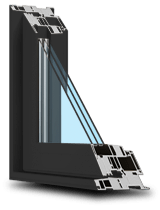
How to choose window film for privacy: a practical guide
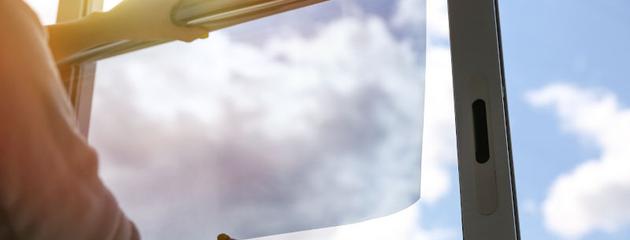

Privacy is one of the most common reasons homeowners consider changes to their windows, whether that means a bathroom facing a neighbour's deck, a home office at street level, or a front-door sidelight that lets people see straight into the entryway. There are two practical ways to solve it: apply a window film to your existing glass or replace the window with one that has built-in privacy glass.
This guide walks through both options. It covers the different types of window film, what to look for when choosing one, when film is the right choice, and when it makes more sense to replace the window itself. The goal is to help you spend on the right solution for your home, not on the more expensive one by default.
Key takeaways
- Window film is an aftermarket adhesive layer applied to existing glass. Privacy glass is a factory option on a new window. Both achieve privacy, but they suit different situations.
- Window film is the right choice when your existing windows are in good condition, and you want a quick, lower-cost privacy upgrade.
- Built-in privacy glass is the right choice when you're already replacing windows or want a more permanent, lower-maintenance solution.
- Five main types of window film exist: decorative, one-way mirror, blackout/whiteout/translucent, solar/sun control, and security. Each suits a different purpose.
- Quality window film typically lasts 10–15 years when professionally installed. Built-in privacy glass lasts as long as the window, 25 to 30 years or more.
- Canadian Choice Windows & Doors does not install window film. We manufacture windows with frosted, etched, textured, or patterned privacy glass as a factory option.
What is window film?
Window film is a thin adhesive material, usually made of polyester (PET), that adheres to the interior surface of an existing window. Modern films are engineered for one or more specific purposes: privacy, solar control, UV protection, decoration, or security. They remain a single layer, dry within a few days, and last for years.
Window films are an aftermarket product. They're applied to windows that are already in place. Specialized installers, many of them 3M-certified or partnered with brands like Solar Gard or Llumar, handle most professional installations. DIY-grade films are available at home improvement retailers, though installation quality has a major effect on how long they last and how good they look.
How window film differs from privacy glass
Privacy glass, frosted, etched, textured, or patterned, is made at the factory as part of a new window unit. The privacy effect is in the glass itself, not in a layer applied to it. Once installed, the glass and the privacy effect are the same component. There's no film to peel, replace, or maintain separately.
Both options achieve privacy. The right choice depends on whether you're keeping your existing windows or replacing them.

Window film or privacy glass: which is right for your home?
This is the question most homeowners actually need to answer. The right choice depends on the condition of your existing windows, your timeline, and your budget.
| Factor | Window film | Privacy glass (on new window) |
|---|---|---|
| Upfront cost | Lower — film + installation only | Higher — part of the full window replacement cost |
| Lifespan | 10–15 years for quality professional film; less for DIY | 25–30 years or more — the lifespan of the window itself |
| Maintenance | Replace when film bubbles, fades, or peels | None is separate from window cleaning |
| Installation | 1–2 hours per window by a specialist | Same as a standard window installation |
| Reversibility | Removable — can be peeled off later | Permanent — the glass IS the privacy |
| Best for | Existing windows in good condition; rented properties; quick fixes | Homeowners are already planning a window replacement |
Choose window film if
- Your existing windows are in good condition, and you don't need a full replacement.
- You want a lower-cost, shorter-term solution.
- You're renting and can't make structural changes.
- You only need privacy in one or two specific windows.
- You want a decorative pattern that isn't available in standard privacy glass.
- You want the option to remove the privacy effect later.
Choose built-in privacy glass if
- You're already planning to replace windows for energy efficiency, age, or other reasons.
- You want a one-time solution that lasts the life of the window.
- You prefer a cleaner, more integrated appearance.
- You're concerned about long-term durability or warranty coverage.
- You want privacy without affecting the warranty on a new window. (Aftermarket films can sometimes void glass warranties. Confirm with the manufacturer.)
“When a homeowner calls us about privacy, the first question we ask is about the windows themselves. If the windows are healthy and they just need privacy in one or two openings, film is a sensible answer; they don't need us. If they were already thinking about replacement, then factory-frosted or textured glass usually makes more sense than putting film over a brand-new window.”
— Helen Sin, Consumer Success Manager, Canadian Choice Windows & Doors
The five main types of privacy window film
Most privacy films fall into one of five categories. Each suits a different purpose.
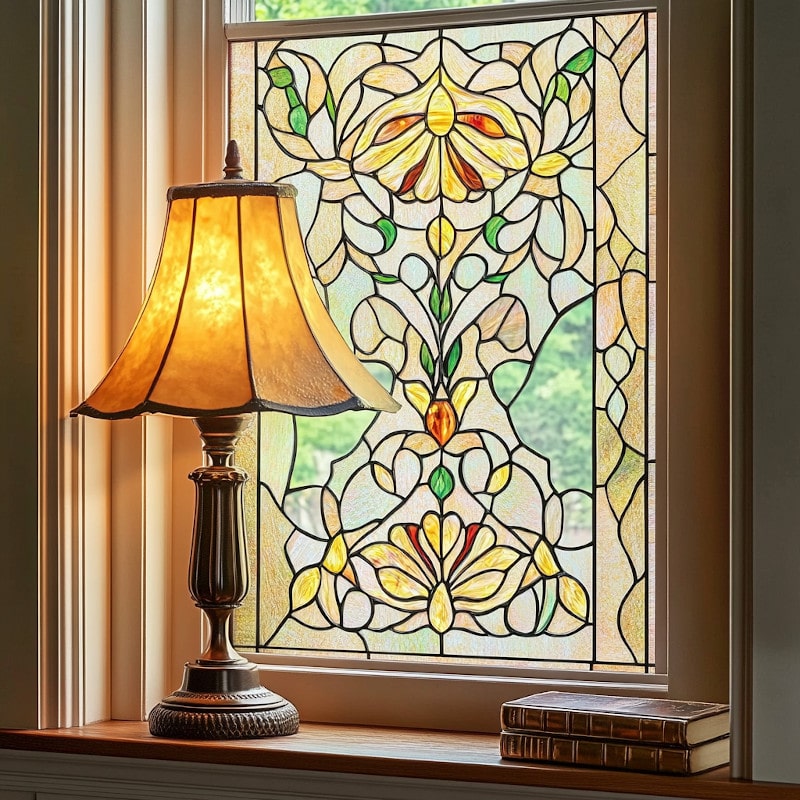
1. Decorative films (frosted, etched, patterned)
Decorative films mimic the look of frosted, etched, or patterned glass. They block visibility while letting natural light through. Patterns range from simple frosted finishes to geometric designs, floral motifs, or stained-glass appearances. The privacy level is high; light passes through, but you can't see specific shapes or movement clearly.
Best for: bathrooms, front door sidelights, bedroom windows facing close neighbours, home office windows where you don't want passersby to see in.
2. One-way mirror films (reflective)
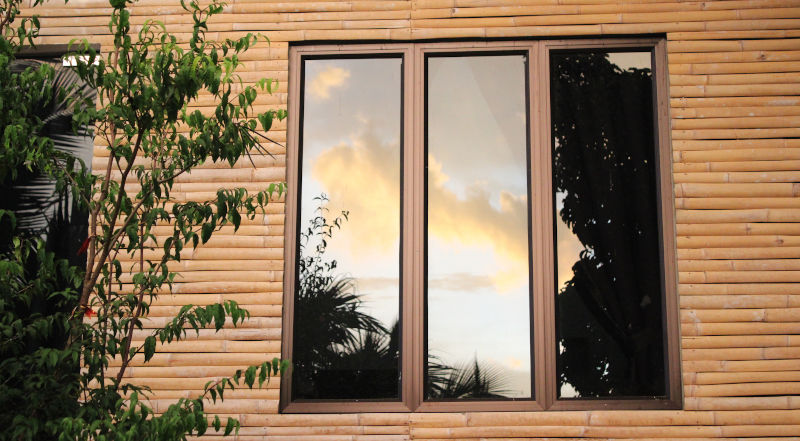
One-way mirror films have a reflective metallic layer that creates a mirror appearance on the brighter side. During the day, when it's brighter outside than inside, the film reflects the outside view, making the window appear opaque from the outside while you can still see out. At night, when interior lights are on and it's darker outside, the effect reverses: people outside can see in.
Best for: daytime privacy in front-facing rooms where you also want to see out. Less effective at night unless paired with curtains.
3. Blackout, whiteout, and translucent films
- Blackout films block nearly all light. Used in media rooms, home theatres, or bedrooms for shift workers who need full darkness during the day.
- Whiteout films obscure the view from both sides while letting some light through. Often used in commercial settings or temporary residential applications.
- Translucent films sit between the two; they obscure visibility but let plenty of light pass. The most common choice for residential privacy where natural light still matters.
4. Solar and sun control films
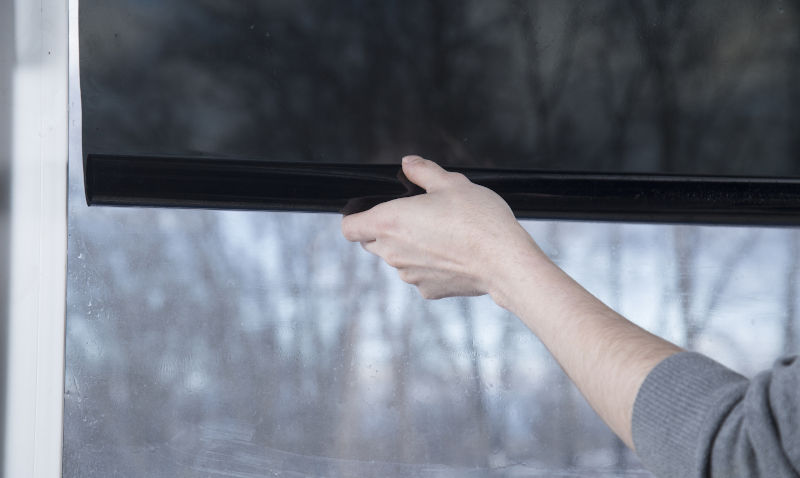
Solar films reduce both heat and UV transmission through the window. The privacy effect is secondary; they make the window slightly tinted, which reduces visibility from outside during the day. The main benefits are comfort and protection: solar films can block up to 99% of UV rays (preventing furniture, flooring, and artwork from fading) and reduce solar heat gain, lowering cooling costs in summer.
Best for: large windows facing south or west, sunrooms, rooms with significant fade-prone furnishings, or homeowners wanting to reduce AC use.
5. Security films
Security films are thicker (typically 4 to 14 mil compared to 2-mil decorative films) and bond glass together if broken. They don't make glass unbreakable, but they significantly delay forced entry. A thief expecting a single hit to break the glass instead has to keep hitting, which slows them down and creates noise.
Best for: ground-floor windows, French door sidelights, areas with security concerns. Security films can be combined with privacy or solar films for layered benefits.
What to look for when choosing a window film
Tint level (Visible Light Transmission)
VLT measures how much visible light passes through the film, expressed as a percentage. A 70% VLT film lets 70% of light through; a 5% VLT film lets only 5% through. Higher VLT = more light, less privacy. Lower VLT = more privacy, less light. For most residential privacy applications, a balance somewhere between 30% and 60% VLT works well — enough light to keep the room bright, enough privacy to block clear views from outside.
UV blocking
Quality window films block 99% of UV rays. This is one of the strongest practical benefits — UV light is the main cause of fading on hardwood floors, fabric upholstery, artwork, and even some paints. If you have any sun-exposed rooms with valuable furnishings, UV-blocking film is worth specifying even when privacy is the primary goal.
Solar heat rejection (Total Solar Energy Rejected — TSER)
TSER measures how much of the sun's heat the film blocks. Solar-control films often have TSER values of 40% to 60%. Privacy films without solar properties may only block 20–30% of solar heat. If summer cooling is a concern, look for a film with both privacy and solar properties.
Glare reduction
Films that reduce glare make screens (TVs, monitors) easier to see in bright rooms. Glare reduction is measured as a percentage and correlates with VLT — a lower-VLT film generally reduces more glare.
Adhesive quality and lifespan
Better adhesives stay clear longer, resist bubbling, and don't yellow over time. Cheaper films often discolour, peel at the edges, or develop bubbles within a few years. Manufacturer warranties, typically 10 to 15 years for premium films, are a reasonable proxy for quality.
Compatibility with your existing glass
Not every film is compatible with every type of window. Insulated glass units (modern double-pane windows) can build up heat between the panes if the wrong film is applied, which can stress the seal and lead to premature failure. Some film manufacturers void their warranty if applied to triple-pane glass or glass with certain Low-E coatings. Before installing film on modern windows, check both the film manufacturer's compatibility chart and your window manufacturer's warranty.
“Aftermarket film can affect a window's warranty. We see this every year — a homeowner adds heat-rejecting film, the sealed unit fails the next summer, and the warranty conversation gets complicated. If you're considering film on a window that's still under warranty, check with the window manufacturer first.”
— Tony Wong, Project Manager, Canadian Choice Windows & Doors
DIY versus professional installation
Window film can be installed by homeowners themselves, and many do. But the result depends heavily on technique. The main installation challenges are air bubbles, dust trapped under the film, and lifting at the edges where the film doesn't bond evenly.
DIY installation
Best for small, simple windows (bathroom panes, single sidelights). Decorative films are the easiest to apply as a DIY project because pattern alignment is more forgiving. Solar and security films require more precision and benefit from professional application.
- Cost: lower upfront, usually $5 to $30 per square foot for materials only.
- Time: 30 minutes to an hour per window, depending on size and your experience.
- Trade-off: visible bubbles, alignment issues, and shorter lifespan are common with first-time DIY applications.
Professional installation
Best for larger windows, technical films (solar, security, mirror), and any installation where appearance matters. Professional installers use squeegees, soap-water application, and specialized cutting tools to create a clean, bubble-free finish.
- Cost: typically $10 to $25 per square foot installed, depending on the film type and the installer.
- Time: same per window as DIY, but the result is generally cleaner and longer-lasting.
- Includes an installer warranty in addition to the film manufacturer's warranty.
The alternative: built-in privacy glass from Canadian Choice Windows & Doors
If you're already planning to replace windows for age, energy efficiency, or any other reason, built-in privacy glass is usually a stronger choice than applying film to a brand-new window. Canadian Choice Windows & Doors manufactures windows with several privacy glass options as factory features.
Frosted glass
Frosted glass is acid-etched or sandblasted at the factory to create a uniformly translucent surface. Light passes through easily; visibility is fully obscured. Frosted glass is the most common privacy glass choice and works well for bathrooms, sidelights, basement windows, and any room where you want full daytime privacy while still letting in strong natural light.
Textured/patterned glass
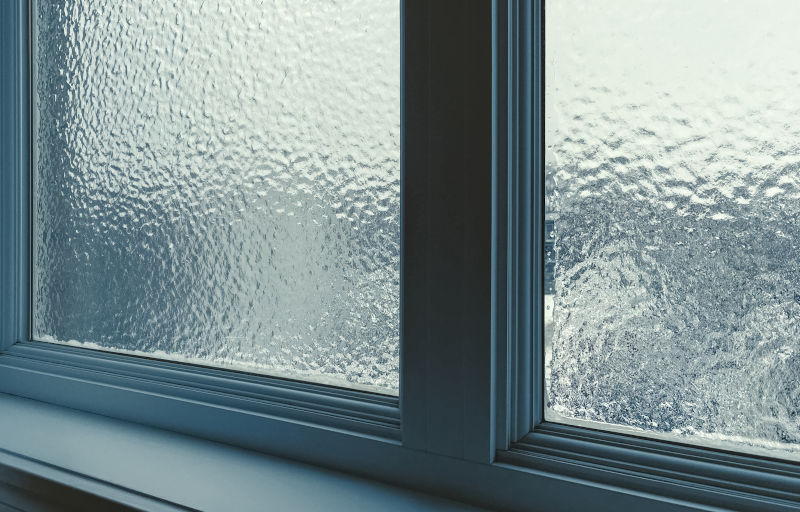
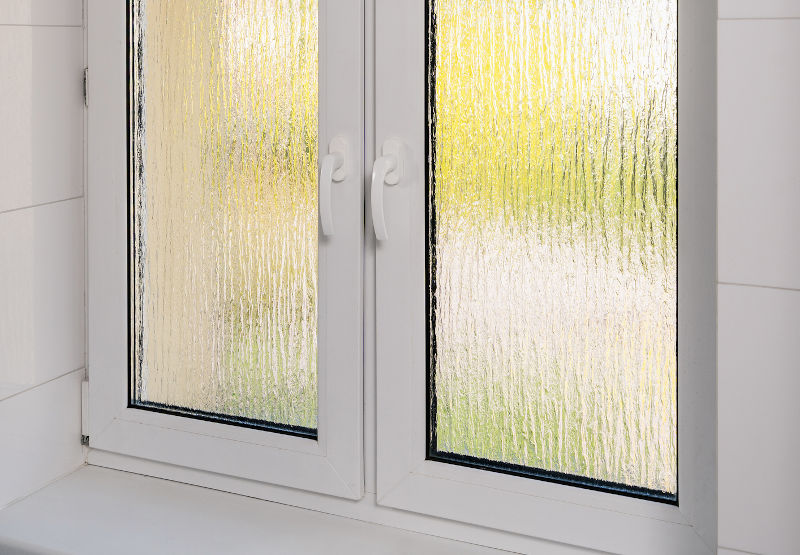
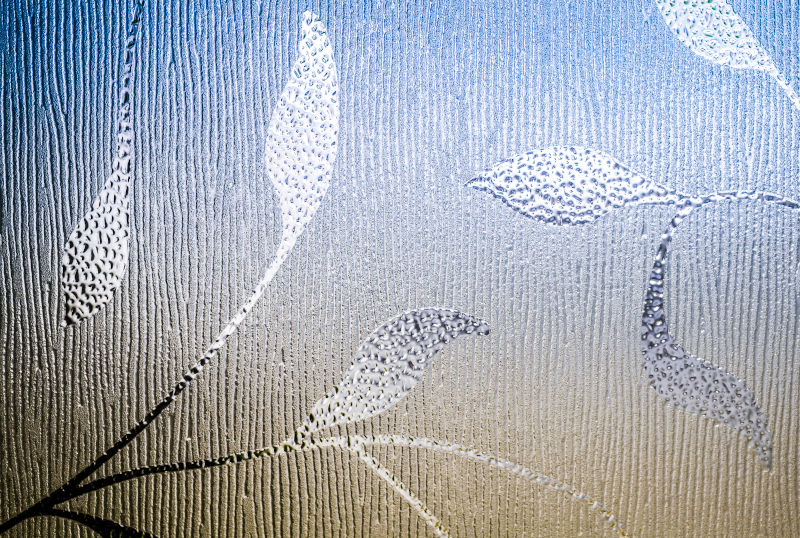
Textured glass features patterns moulded into the glass during manufacturing, such as ribbed, rain, hammered, or geometric designs. The texture provides partial privacy while maintaining a decorative appearance. Common choices include ribbed (vertical lines), rain (drop-pattern), and Chinchilla (irregular pebble pattern). Textured glass provides moderate to high privacy depending on the pattern.
Etched glass
Etched glass is acid-treated with specific patterns or designs, geometric shapes, floral motifs, or custom artwork. Etched glass combines privacy with decorative appeal and is most commonly used on entry door inserts and sidelights.
Tinted glass
Tinted glass uses a colour additive in the glass itself (not a film) to darken the surface. Reduces daytime visibility from outside, provides moderate UV protection, and helps control solar heat. Tinted glass is less common on residential windows than the other options, but available as a custom configuration.
Combining with Low-E coatings
All Canadian Choice Windows & Doors privacy glass options can be paired with Low-E coatings, argon gas fills, and warm-edge spacers, the same energy-efficiency features used on clear glass. You don't lose thermal performance by choosing privacy glass. Canadian Choice Windows & Doors' privacy glass windows maintain ENERGY STAR certification and the same 25-year transferable warranty as clear glass options.
When window film makes sense, when it doesn't
Window film is a good fit when
- Your existing windows are in good shape and don't need to be replaced.
- You want a specific decorative pattern not available in standard privacy glass.
- Your home is rented, or you can't make permanent changes.
- Privacy is needed only in one or two specific windows.
- Budget for a full window replacement isn't there.
- You want the option to remove or change the privacy effect later.
Privacy glass on a new window is a better fit when
- You're already replacing windows for other reasons (age, energy efficiency, drafts).
- The existing windows are old single-pane or low-quality double-pane windows that would benefit from replacement anyway.
- You want a single solution that lasts the life of the window without separate maintenance.
- You want to preserve the manufacturer's warranty without aftermarket modifications.
- You want energy performance and privacy in a single integrated unit.
Lifespan and maintenance
Window film maintenance
- Use only soft cloths and pH-neutral cleaners. Ammonia-based cleaners can break down the adhesive over time.
- Avoid abrasive sponges, razor blades, or any tool that could scratch the film surface.
- Wait at least 30 days after installation before cleaning — the adhesive needs to fully cure.
- Check the film annually for bubbling, peeling, fading, or scratches. Edge lifting is the most common sign of failure.
- Expect 10–15 years for quality professionally installed film; 3–7 years for DIY-grade products.
Privacy glass maintenance
- Clean exactly as you would clear glass — there's no separate film to worry about.
- Frosted glass can pick up fingerprints; use the same cleaner you'd use for clear glass.
- Textured glass may need more attention in the textured grooves — a soft brush or microfibre cloth works well.
- No expected degradation. The glass lasts as long as the window — typically 25–30 years or more.
Why Canadian homeowners choose Canadian Choice Windows & Doors for privacy glass windows
Canadian Choice Windows & Doors has been serving Canadian homes for over 40 years. Every window is manufactured at our Canadian facility, custom-built for your opening, and installed by our own in-house teams, without subcontractors.
- Recommended by Bryan Baeumler, HGTV host and Canada's recognized construction expert.
- Over 3,100 positive reviews on HomeStars.
- More than 1 million windows and doors have been installed across Canada.
- 25-year transferable warranty on every window.
- DraftLOCK windows are available with frosted, textured, etched, and patterned privacy glass options as factory configurations.
- Privacy glass maintains the same energy efficiency as clear glass — Low-E coating, argon gas fill, and warm-edge spacer are standard.
- ENERGY STAR-certified configurations available across all privacy glass options.
- CSA-compliant installation by factory-trained crews.
Frequently asked questions
Does window film actually provide privacy?
Yes. Quality privacy films obscure or block visibility from outside while letting natural light through. Decorative and frosted films provide consistent privacy day and night. One-way mirror films work during the day (when it's brighter outside) but reverse at night unless paired with curtains.
Is window film cheaper than replacing windows with privacy glass?
Upfront, yes. Film typically costs $10–$25 per square foot installed, while a new window with privacy glass costs more because you're replacing the entire window. Long-term, the math changes — film lasts 10–15 years and needs replacement, while privacy glass lasts the life of the window. If you're already planning a replacement, the marginal cost to upgrade to privacy glass is usually lower than installing film on a brand-new window.
Can I install window film myself?
Yes, for simple decorative films on smaller windows. The main DIY challenges are air bubbles, dust trapped under the film, and uneven edges. Larger windows, solar films, security films, and one-way mirror films benefit significantly from professional installation. DIY film also tends to have a shorter lifespan than a professionally installed product, 3 to 7 years versus 10 to 15 years for a quality professionally installed product.
Will window film damage my windows?
Quality films installed correctly don't damage glass. However, certain films applied to modern insulated glass units can cause the sealed unit to overheat, particularly solar films on triple-pane windows. The trapped heat can stress the perimeter seal and cause premature failure. Before applying film to modern windows, verify compatibility with both the film manufacturer and your window manufacturer's warranty terms.
Does window film void window warranties?
Sometimes. Some window manufacturers void their warranty if aftermarket film is applied — particularly heat-rejecting solar films. Others permit film application with manufacturer-approved products. Check your window warranty before installing film, especially on newer windows still under coverage. If you're replacing windows anyway, built-in privacy glass avoids this risk entirely.
How long does privacy window film last?
Quality professionally installed film typically lasts 10–15 years. DIY-grade products last 3–7 years on average. Manufacturer warranties — often 10 to 15 years for premium films — are a reasonable proxy for expected lifespan. Lifespan depends on the film quality, the installation quality, and exposure (films on south-facing windows degrade faster than those on north-facing windows).
Can I remove window film later if I change my mind?
Yes. Film is designed to be removable; that's one of its main advantages over privacy glass. Removal can be straightforward for newer film (soaking in soapy water and peeling slowly) or more difficult for older film, where the adhesive has degraded. Professional removal services are available for difficult cases.
What's the difference between frosted film and frosted glass?
Frosted film is an adhesive layer applied to the interior side of existing glass. Frosted glass is acid-etched or sandblasted during the factory manufacturing of a new window — the frosted effect is in the glass itself. Visually, both create a similar look. Functionally, frosted glass lasts longer, requires no separate maintenance, and doesn't affect window warranties.
Can Canadian Choice Windows & Doors install window film for me?
No — window film installation is not a service offered by Canadian Choice Windows & Doors. Canadian Choice Windows & Doors manufactures windows with built-in frosted, textured, etched, or patterned privacy glass. For aftermarket window film on your existing windows, look for a specialized installer (3M-certified dealers and similar specialists serve this market across Canada). If you're considering window replacement, Canadian Choice Windows & Doors' privacy glass options provide a more permanent alternative.
Considering privacy glass on new windows?
Book a free, no-obligation in-home consultation with Canadian Choice Windows & Doors. We'll walk through the right privacy glass option for your home, frosted, textured, etched, or patterned — and pair it with the energy-efficiency package that suits your climate. No pressure.

1000’s of Colours & Textured Finishes
Transform your home from ordinary to extraordinary with our new coloured and non-glare textured finishes. Available in a wide array of colours as well as custom matched colours for your very own personalized design.
Our Most Popular Replacement Window Colours: