How to Choose Exterior Doors for Maximum Energy Savings


You can’t see it, but you can feel it. That faint chill near your entryway is often a sign of heat loss — something many Canadian homeowners experience during winter. Across Canada, poorly sealed or outdated doors can be a significant source of heat loss in many Canadian homes. And yet, many homeowners still choose doors based solely on appearance, ignoring the numbers that truly matter: R-value, U-factor, and ENERGY STAR® certification .
Here’s the truth: in a climate that can swing from humid summers to −40°C winters, your exterior door isn’t just an entry point — it’s a thermal barrier, a shield against energy waste. Whether you live in downtown Toronto or northern Ontario, the right door can reduce your heating costs, improve comfort, and even extend your home’s lifespan.
In this guide, Canadian Choice Windows & Doors™ experts break down what makes a door truly energy efficient, how to spot the leaks that cost you hundreds every year, and which ENERGY STAR® models perform best for your region. Because saving energy in Canada isn’t just a trend — it’s long-term resilience with style.
Key Takeaways
- Energy-efficient doors in Canada must resist heat loss, air leaks, and condensation.
- High R-values, quality weatherstripping, and tight air sealing determine real performance.
- Materials and installation matter as much as the door design itself.
- ENERGY STAR® certification provides measurable assurance of efficiency in harsh climates.
What Makes a Door Truly Energy Efficient in Canadian Climates?
When winter winds sweep across Canada, a door does more than open and close — it guards the warmth inside. But what exactly makes a door energy efficient in a climate that can dip below −40°C? The answer lies in thermal performance, R-values, air sealing, and weatherstripping.
Understanding Thermal Performance
Thermal performance measures how well a door resists heat transfer. In Canada’s cold regions, this means keeping heat in during winter and out during summer. A door with high thermal resistance, as indicated by a higher R-value, slows heat transfer between indoor and outdoor environments. The National Research Council of Canada (NRC) notes that it can help reduce heat loss, with actual savings depending on climate, door size, and installation quality. ( NRC Canada ).
Fibreglass and insulated steel doors often achieve R-values between R-5 and R-6, while older wood doors might rate below R-2. The difference is tangible: that extra insulation could save hundreds annually on heating bills.

The Role of Air Sealing
Even a high R-value door can fail if air leaks through gaps. Air infiltration — the unintended movement of outdoor air into your home — can account for up to 25% of total heat loss. According to Natural Resources Canada, properly installed weatherstripping and threshold seals help reduce air leaks ( NRCan ).
Common air-sealing elements include:
- Compression seals around door frames
- Adjustable sweeps at the bottom edge
- Multi-point locks to pull the door tightly against the frame
As Tony Wong, Project Manager at Canadian Choice Windows & Doors™ , puts it:
“A great door isn’t just about material — it’s about the fit. A millimetre of air space can turn into a draft you’ll feel all winter.”
Weatherstripping: Small Details, Big Difference
Weatherstripping might look minor, but it’s a frontline defence against drafts and moisture. In cold-weather testing, EPDM rubber and magnetic strips outperform foam or felt, maintaining flexibility in sub-zero temperatures. Regular inspection and replacement of these seals maintains consistent efficiency over time.
Helen Sin, Consumer Success Manager, emphasizes this point:
“Most homeowners don’t realize their energy loss starts at the threshold. Replacing worn-out seals is one of the simplest ways to boost comfort and reduce heating costs.”
Why It Matters in Canada
Canadian climates aren’t just cold — they fluctuate. Freeze-thaw cycles, wind pressure, and humidity changes constantly test a door’s structure. That’s why choosing an energy-efficient exterior door isn’t only about comfort; it’s about long-term durability and lower energy costs.
A well-constructed, properly sealed door contributes directly to a home’s overall energy rating, an essential factor for resale and environmental sustainability.
Key Factors That Define Energy Efficiency in Doors
- Insulated core materials – polyurethane or polystyrene-filled cores retain heat effectively.
- Thermal breaks – internal barriers that prevent metal parts from conducting heat.
- Low-emissivity (Low-E) glass inserts – reflect heat indoors while allowing natural light.
- Precision installation – minimizes gaps, ensuring complete contact between frame and structure.
Topical Research and Data
According to the Canadian Home Builders' Association ( CHBA ), upgrading to an ENERGY STAR®-certified door can improve home energy efficiency by up to 15%, depending on the age of the existing unit. Similarly, a 2023 study by Efficiency Canada highlighted that air sealing alone could reduce annual heating demand by 9% in older homes.
For further guidance, explore Canadian Choice Windows & Doors™ Energy-Efficient Entry Doors to learn about insulated door systems specifically designed for Canadian weather.
What Are the Key Differences Between Pre-Hung and Slab Exterior Doors?
At first glance, a door is just a door — but when you compare pre-hung and slab exterior doors, the difference becomes more than hardware. It’s about energy efficiency, installation precision, and sealing integrity. Let’s unpack how each type affects performance and long-term savings.
Pre-Hung vs. Slab: What’s the Real Difference?
A pre-hung door comes pre-mounted in its frame, complete with hinges, threshold, and weatherstripping. It’s designed for quicker, more accurate installation. In contrast, a slab door is simply the panel itself — no frame, no hinges, just the door blank.
| Feature | Pre-Hung Door | Slab Door |
|---|---|---|
| Installation | Comes ready with frame, hinges, and threshold | Requires fitting into an existing frame |
| Air Sealing | Superior, with factory-installed seals | Depends on the installer's skill and the frame condition |
| Thermal Performance | Consistent insulation along the frame | Variable — gaps may compromise efficiency |
| Best Use Case | New builds, major renovations | Replacing an old door in a reasonable frame |
Step-by-Step: Choosing and Installing for Efficiency
- Evaluate the Frame: If your existing frame is warped or rotted, start with a pre-hung unit. Otherwise, a slab may suffice.
- Check for Factory Sealing: ENERGY STAR®-certified pre-hung doors are tested for airtightness and insulation.
- Add Expanding Foam Insulation: Seal gaps between the frame and wall to block air leaks.
- Inspect the Threshold: Ensure the sill is aligned correctly and sealed against moisture.
Which Type Saves More Energy?
For most Canadian homes, pre-hung doors outperform slab types in energy savings. According to Natural Resources Canada, professionally installed pre-hung systems can reduce air leakage by up to 20% compared to slab installations (NRCan). The reason is simple — factory alignment ensures uniform compression on weatherstrips.
Tony Wong, Project Manager at Canadian Choice Windows & Doors™, explains:
“When a door, frame, and seal are built as one unit, you eliminate the biggest source of heat loss — misalignment. That’s where pre-hung doors excel.”
How Do Weatherstripping and Door Seals Impact Energy Efficiency?
Ever noticed a chill near your entryway even with the door shut? That’s likely air infiltration — the hidden culprit behind higher heating bills. The fix? Proper weatherstripping and sealing.
Why Small Gaps Lead to Major Heat Loss
Even a 1 mm gap along a door edge can let in the equivalent of a two-inch hole when multiplied around the frame. This not only reduces comfort but can add 10–15% to annual heating costs.
Helen Sin, Consumer Success Manager, explains:
“We often find that replacing a worn sweep or tightening the latch makes a measurable difference. It’s not expensive, but it’s crucial for performance.”
Step-by-Step: Improving Door Sealing
- Inspect Existing Seals: Look for cracks, stiffness, or flattening along the perimeter.
- Choose the Right Material: Magnetic strips or EPDM rubber seals stay flexible in freezing temperatures.
- Adjust the Strike Plate: Ensure the latch pulls the door snugly against the weatherstripping.
- Seal the Bottom Sweep: Use an adjustable or double-fin sweep for better compression.
- Test with a Flashlight: If light passes through edges at night, so does air.
Can Glass Inserts in Exterior Doors Still Be Energy Efficient?
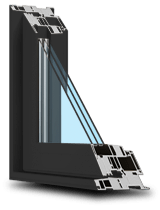
The answer is yes — if designed correctly. Glass inserts add style and natural light, but poor glazing can compromise insulation. Modern technology solves that with Low-E coatings, gas fills, and multi-pane construction.
How Energy-Efficient Glass Inserts Work
Energy-efficient door glass uses advanced layering techniques to minimize heat transfer.
| Glass Feature | Function | Efficiency Benefit |
|---|---|---|
| Double or Triple Glazing | Two or three panes separated by spacers | Reduces heat loss and noise |
| Low-E Coating | Reflects infrared heat indoors | Keeps warmth inside during winter |
| Argon or Krypton Gas Fill | Dense gases between panes | Reduces convective heat transfer |
| Warm Edge Spacers | Non-metallic edges | Prevent condensation at glass edges |
Why It Works in Canada
In colder zones, triple-glazed windows with Low-E coatings can achieve R-values of R-5 or higher, comparable to those of insulated door panels. Combined with airtight sealing, this design keeps glass inserts efficient even in extreme cold.
How to Ensure Maximum Efficiency
- Select ENERGY STAR®-Certified Models: They’re tested for both insulation and condensation resistance.
- Check Spacer Material: Avoid metallic spacers, as they conduct cold.
- Inspect the Sealant: Look for continuous, double-sealed edges.
Helen Sin concludes:
“Choosing the right glazing is like buying a winter jacket. The layers make all the difference in comfort and cost savings.”
What Are Common Mistakes to Avoid When Selecting Energy-Efficient Doors?
Even the best-looking door can fail if key efficiency details are overlooked. Homeowners often make costly mistakes when choosing a new door — errors that could compromise insulation, comfort, and even structural integrity.
Mistake 1: Ignoring the U-Factor and R-Value
The U-factor measures how much heat a door allows to escape, while the R-value reflects its resistance to heat flow. In simple terms, lower U-factor = better insulation. ENERGY STAR® recommends exterior doors with a U-factor of 1.8 W/m²·K or lower for most Canadian climates (ENERGY STAR Canada).
Avoid this by
:
Checking both ratings before purchase. If one is missing, request documentation from the manufacturer.
Mistake 2: Skipping ENERGY STAR® Certification
ENERGY STAR-certified doors are independently tested for insulation and airtightness. Choosing a non-certified model might save upfront costs but lead to higher long-term energy bills.
Avoid this by
:
Looking for the ENERGY STAR label and reviewing the door’s climate zone rating. Canadian regions are categorized from Zone 1 (milder) to Zone 3 (coldest). Always choose for your specific zone.
Mistake 3: Poor Installation or DIY Fitting
Even a top-tier door loses efficiency if installed poorly. Gaps between the frame and wall can create air leaks that waste energy and cause drafts.
Avoid this by
:
Hiring a certified professional.
Tony Wong, Project Manager at Canadian Choice Windows & Doors™, explains:
“A small misalignment — just a few millimetres — can undo all the benefits of an insulated door. Proper levelling and sealing make the difference between comfort and constant drafts.”
Mistake 4: Ignoring Frame and Threshold Condition
Many homeowners replace the door panel but keep an old, warped frame. This allows air infiltration and moisture intrusion.
Avoid this by
:
Inspecting for soft wood, cracks, or uneven alignment. If damage is found, opt for a pre-hung unit with a new frame.
Checklist of Common Pitfalls
| Mistake | Consequence | How to Avoid |
|---|---|---|
| Ignoring U-factor | Poor insulation | Ask for U-factor and R-value before purchase |
| Skipping certification | Reduced efficiency | Choose ENERGY STAR®-rated models |
| DIY installation | Air leaks and drafts | Hire certified installers |
| Reusing a damaged frame | Moisture & energy loss | Replace with a pre-hung system |
| Overlooking weatherstripping | Heat loss through gaps | Inspect and replace regularly |
How to Tell If Your Current Exterior Door Is Costing You Money
You might not realize it, but your existing door could be quietly inflating your energy bills. Over time, seals wear out, frames shift, and insulation breaks down — especially under Canada’s temperature extremes.
Step-by-Step: Detecting Energy Loss
- Feel for Drafts: On a cold day, run your hand along the frame. Cold air means leaks.
- Use a Candle or Incense Test: Light smoke moving horizontally indicates air infiltration.
- Check for Condensation: Moisture buildup on the inside of glass panels suggests poor insulation.
- Inspect Weatherstripping: If it’s brittle, cracked, or missing sections, efficiency is compromised.
- Use a Thermal Camera: These devices, available at most hardware stores, show cold spots around doors.
What Role Does Proper Installation Play in Maximizing Door Efficiency?
Even the most advanced door system can’t perform without precise installation. It’s not just about getting the door to close — it’s about air sealing, insulation, and alignment.
Step-by-Step: Ensuring an Airtight Installation
- Prepare the Opening: Remove old caulk, debris, and damaged framing. Clean, level surfaces prevent gaps.
- Apply Insulation Foam: Low-expanding polyurethane foam seals the perimeter and blocks drafts.
- Align the Threshold: Ensure even contact between sill and door bottom — this prevents condensation buildup.
- Use Shims Correctly: Adjust the hinge side first for proper weight distribution.
- Seal and Caulk: Apply continuous exterior caulk to block moisture intrusion.
Why Installation Matters So Much
A poorly installed door can negate even the best insulation rating. According to Natural Resources Canada, incorrect installation can increase heat loss by up to 25%, especially in cold-weather zones ( NRCan ).
Tony Wong comments:
“We’ve seen beautifully engineered doors perform poorly because of gaps hidden behind trim. Installation plays a major role in how well a door performs over time.”
How to Choose the Right Installer
- Look for Certification: Installers trained in CSA or ENERGY STAR® standards understand sealing dynamics.
- Ask About Materials: Quality foam and weatherstripping last longer and maintain flexibility in cold climates.
- Request a Blower Door Test: This measures air leakage after installation for verification.
For more guidance, explore Canadian Choice Windows & Doors™ Installation Services to see how professional fitting enhances efficiency.
What Types of ENERGY STAR Exterior Doors Are Best for Cold Regions Like Ontario?
Ontario’s long winters and fluctuating temperatures demand doors that can withstand extreme cold without losing efficiency. ENERGY STAR® has defined performance criteria by climate zone, with Ontario classified as a colder ENERGY STAR® climate zone, which places higher demands on insulation and airtightness. This means doors must offer superior insulation, airtightness, and resistance to condensation.
Understanding ENERGY STAR® Door Ratings by Climate Zone
Each ENERGY STAR®-certified door is tested for U-factor, solar heat gain coefficient (SHGC), and air leakage. For Ontario and other Zone 3 regions, the U-factor must be ≤ 1.8 W/m²·K and SHGC ≥ 0.17, ensuring maximum retention of indoor heat.
| Climate Zone | Typical Regions | U-Factor (W/m²·K) | SHGC | Recommended Door Types |
|---|---|---|---|---|
| Zone 1 | Coastal BC | ≤ 2.0 | ≥ 0.20 | Light-insulated steel or composite |
| Zone 2 | Southern Prairies, GTA | ≤ 1.8 | ≥ 0.17 | Fibreglass or insulated steel |
| Zone 3 | Northern Ontario, Quebec, Prairies | ≤ 1.6 | ≥ 0.17 | Triple-glazed fibreglass or insulated steel with thermal breaks |
ENERGY STAR® Exterior Door Models for Ontario
| Model | Material | Insulation Type | Climate Zone | Notable Features |
|---|---|---|---|---|
| Canadian Choice Signature Series™ | Steel | Multi-density foam | Zone 3 | Factory-fitted frame, superior weatherstripping |
| Therma-Tru Smooth-Star® S200 Series | Fiberglass | Polyurethane foam core | Zone 3 | Low-E glass inserts, rot-resistant frame |
| Masonite HD Steel Door | Steel | Foam-filled steel skin | Zone 3 | Thermal break core, ENERGY STAR® certified |
| Stanley Doors Prestige Collection | Fiberglass | Multi-layer polyurethane | Zone 3 | Triple-glazed inserts, low U-factor |
Why These Doors Excel in Cold Regions
- Fibreglass shells resist warping and moisture absorption.
- Foam cores maintain high R-values even at sub-zero temperatures.
- Triple-glazed inserts reduce condensation and radiant heat loss.
- Factory-fitted weatherstripping ensures air sealing during harsh winters.
Tony Wong, Project Manager at Canadian Choice Windows & Doors™, comments:
For more examples, visit Canadian Choice Windows & Doors™ ENERGY STAR® Door Systems to compare options tailored to regional climates.
What’s the Practical Approach to Choosing an Energy-Saving Exterior Door?
Choosing the right exterior door for Canada’s climate is part science, part experience. The smartest choice combines high performance ratings, professional installation, and verified certification.
Comparing Key Door Types for Energy Savings
| Door Type | Pros | Cons | Ideal Use Case |
|---|---|---|---|
| Fiberglass | High R-value, moisture-resistant, customizable | Higher upfront cost | Cold climates (Zone 2–3) |
| Steel | Strong, cost-effective, good insulation | Can dent or rust over time | Mixed climates, north-facing entries |
| Wood | Aesthetic appeal, natural insulation | Requires maintenance, less efficient | Milder climates or heritage homes |
| Composite | Balanced performance, durable | Limited design options | Versatile for all regions |
Key Factors to Remember
- Always verify ENERGY STAR® climate zone ratings before purchase.
- Ensure U-factor ≤ 1.8 W/m²·K for maximum efficiency in the cold areas.
- Choose factory-sealed, pre-hung units to prevent air leakage.
- Schedule professional installation with certified contractors.
Authoritative Resources
- Natural Resources Canada – ENERGY STAR Door Ratings
- Efficiency Canada – Residential Efficiency Reports
- Canadian Home Builders’ Association (CHBA)
Final Thought
Ultimately, the smartest investment is a door that performs like part of your home’s insulation system. By combining proper installation with a certified ENERGY STAR® model — when paired with a correctly specified, ENERGY STAR®-certified system designed for Canadian climates — homeowners in Ontario can reduce heating costs, enhance comfort, and protect their homes from Canada’s harshest weather.
FAQ
What makes a door energy-efficient in Canada?
An energy-efficient door resists heat loss, air leaks, and condensation. High R-values, quality weatherstripping, and proper installation ensure consistent warmth and reduced energy costs.
Are glass doors or inserts bad for insulation?
Not necessarily. Modern triple-glazed, Low-E glass inserts with argon gas fills maintain high insulation performance while allowing natural light to enter.
Which is better for energy efficiency — pre-hung or slab doors?
Pre-hung doors typically provide tighter seals and better insulation since they’re factory-fitted with weatherstripping and thresholds. Slab doors depend more on the installer’s precision.
How can I tell if my current exterior door is wasting energy?
Look for drafts, frost buildup, or cold spots detected with a thermal camera. Worn seals or misaligned frames are common signs your door needs resealing or replacement.
Which ENERGY STAR® doors are best for Ontario?
In cold regions like Ontario, fibreglass or insulated steel doors with R-values above R-5 and U-factors below 1.8 W/m²·K are ideal. ENERGY STAR® Zone 3-certified models are most effective.

1000’s of Colours & Textured Finishes
Transform your home from ordinary to extraordinary with our new coloured and non-glare textured finishes. Available in a wide array of colours as well as custom matched colours for your very own personalized design.
Our Most Popular Replacement Window Colours: