Exterior doors for Halifax's coastal wind and salt air

On the coast, the door that lasts seals tightly against wind-driven rain and gets regular care for its finish and hardware. For most exterior doors in Halifax, an insulated steel entry door with good weatherstripping is a practical choice. Canadian Choice Windows & Doors brings 40 years of experience to the job, and our Dartmouth office handles door replacement in Halifax and across the Maritimes.
Key takeaways
- On the coast, wind drives rain under thresholds, so the seal and the sill matter most.
- Salt air wears hinges and locks faster; rinse and lubricate them every spring and fall.
- A steel entry door doesn't swell or rot, but chipped finishes need prompt touch-ups.
- Keep large glass on sheltered sides and give windward doors the tightest seal.
What wind-driven rain and salt air do to exterior doors
Wind pushes rain sideways into the joints around a door and under its threshold, and salt in the air speeds up wear on finishes and metal hardware. On an exposed Halifax lot, those two forces decide how long a door keeps sealing more than cold does. The weak points are predictable: the sill, the head of the frame, the hinges and the lock.
Environment and Climate Change Canada's climate normals for the Halifax Stanfield International Airport station track wind speed, strong-wind days and fog days if you want the local numbers. For glass and frames, see how our windows protect Halifax homes from the coastal climate .
Wind-driven rain at the sill and head
Gusts press sideways rain into the gap between door and frame and can push water over a threshold that stays dry in calm weather, which is why leaks under a door show up in storms. At the head of the frame, flashing (a strip of metal or membrane that sheds water from a joint) and caulking must stay intact.
Salt on finishes, hinges and locks
Salt spray settles as a fine film near the water and holds moisture against metal. Hinges, screws, strike plates and lock cylinders wear faster than they would inland, and a lock can start to feel gritty or stiff. On the door itself, salt does the most damage where the finish is already chipped.
Drafts on the windward side
The windward side is the side of the house that faces the prevailing or storm winds. On a coastal lot, it's usually the side facing open water, and it's often the first to collect salt film. A door there is under steady air pressure, which finds any gap in worn weatherstripping.

Steel entry doors on the coast: finish, hardware and weatherstripping
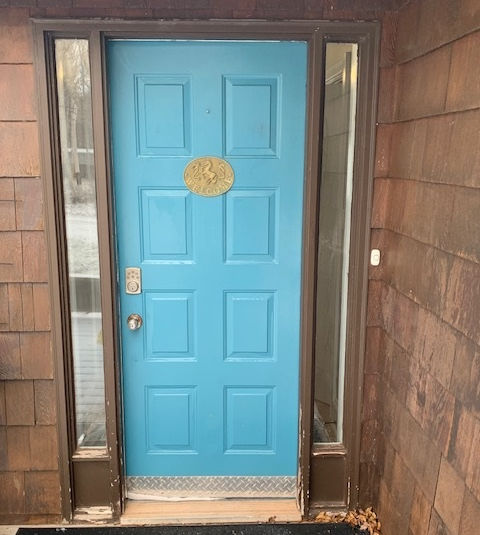
A steel entry door doesn't swell or rot, and its weatherstripping seals the door against the wind each time it closes. Near salt water, its finish and hardware still need regular attention. Our DraftLOCK steel entry doors come in the Shaker, Design, Prestige and Classic collections, and the care below applies to all of them.
Touch up chips before they spread
Do steel doors rust near the ocean? The steel is protected by its finish, so trouble starts only where that finish breaks. Clean any chip, let it dry and touch it up with paint matched to the door on a mild, dry day.
Rinse and lubricate the hardware
Wipe hinges and the lockset with fresh water and a soft cloth, dry them, then use a lock lubricant on the cylinder and a light oil on the hinges. If a key starts to drag, deal with it before the lock seizes.
Check that the weatherstripping still compresses
Weatherstripping is the flexible seal the door presses against when it closes. For front doors in Halifax, try the paper test: close the door on a sheet of paper at several points, and if it slides out easily, adjust the strike plate (the metal plate the latch catches in) or replace that section.
"Many homes in the Maritimes are older and take the full force of coastal weather and strong winds, so drafts at the front door come up a lot. A rinse of the hardware and a look at the weatherstripping every spring and fall keeps most doors sealing. If air still gets in after the seals and strike are adjusted, that's when I'd replace the door rather than patch it again."
Vince Gunin , Director of Maritime Operations, Canadian Choice Windows & Doors

Which door types suit exposed coastal sites?
A DraftLOCK steel entry door suits the most exposed side of a coastal home, and a tilt & turn patio door is the patio option to consider first where wind is a concern. Sliding & stacking and bifold patio doors work best on sheltered sides, where their longer seal lines face less wind pressure. Table 1 compares them.
Table 1. Canadian Choice door types on exposed coastal sites
| Door type | How it seals | Exposed-site fit | Care on the coast |
|---|---|---|---|
| DraftLOCK steel entry door | Closes against weatherstripping, with a threshold and sweep at the bottom | Good for a windward entry | Touch up chips, rinse and lubricate hardware |
| Sliding & stacking patio door (vinyl) | Brush weatherstripping and an interlock between panels | Sheltered or partly sheltered sides | Keep the track and drain holes clear |
| Tilt & turn patio door | Seals on all four sides, locks at several points | Good for exposed sides | Rinse hardware, check seals |
| Bifold patio door | A seal at every panel joint and along the track | Sheltered sides only | Check joint seals, keep the track draining |
Where you can, put large glass areas and patio doors on sides facing away from open water or screened by a garage or trees, because the joints around glass are what wind tests first. For the local product range, see windows and doors in Halifax .
Not sure which of your doors takes the most weather? Book a free consultation through our Dartmouth office, and we'll assess your most exposed door.
A coastal door maintenance schedule
A short check in spring and fall, plus a quick look after each big storm, catches most door problems early. This is the care routine Canadian Choice suggests for homes on exposed coastal sites. It needs only fresh water, a cloth, lubricant and touch-up paint, and it keeps seals, sills and hardware working.
Table 2. Canadian Choice care schedule for coastal exterior doors
| When | Task | Why it matters on the coast |
|---|---|---|
| Spring | Rinse salt film off; touch up winter chips; paper-test the weatherstripping | Winter storms leave salt and finish damage behind |
| Fall | Lubricate hinges and lock; clear sill drain holes; replace flattened weatherstripping | Readies the door for storm season |
| After a storm | Look for water at the sill or behind trim; check for chips; confirm the door latches firmly | Catches leaks before water or salt works in |
| Any time you see salt film or stiff hardware | Wipe with fresh water, dry, lubricate | The sooner salt is removed, the slower the wear |
How often should a coastal door be resealed? There's no fixed date: replace weatherstripping when it stays flat, cracks, or stops springing back.
Getting doors ready for storm season
Before the fall storms, check each door's seals, threshold and hardware, clear drainage at the sill, and secure anything that could strike a patio door. It takes an afternoon and lowers the chance of a leak, a jammed lock, or a cracked glass panel once wind-driven rain arrives.
- Paper-test each door's weatherstripping and replace any that doesn't grip.
- Check the threshold and the door sweep (the seal along the bottom edge).
- Clear sand and salt crust from patio door tracks and drain holes.
- Lubricate locks and hinges.
- Store or tie down furniture and planters near glass doors.
No door is immune to a severe storm, so fix a door that already leaks in ordinary rain before the season starts.
Patio doors on the windward side
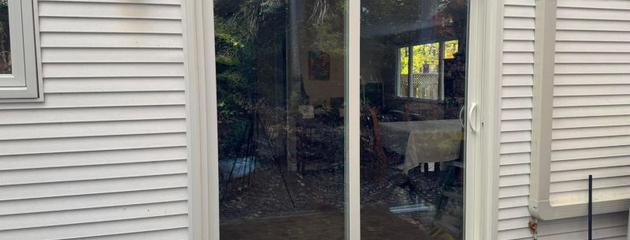
Patio doors on the windward side need the tightest seal and a well-drained sill. A tilt-and-turn patio door closes against seals on all four sides and locks at several points, while a sliding door relies on brush weatherstripping and an interlock between panels. Both can work on the coast with the right placement and care.
Are patio doors a good idea on a windy coast? Yes, if the type fits the exposure. A sliding door's track sits where rain collects, so its drain holes must stay clear. A tilt & turn door tilts in for everyday airflow and swings in occasionally for cleaning. For patio doors in Halifax facing open water, a smaller opening or a side-wall location is often the better trade-off.
How to choose an exterior door for a coastal home
Choose each door by its exposure first and its style second:
- Windward front entry: a DraftLOCK steel door with sound weatherstripping.
- Lots of glass: keep large glass doors and sidelites on sheltered sides.
- Patio door facing the sea: put seal type and sill drainage first.
- Older home near the water: plan hardware care from day one.
As a guide, a Canadian Choice steel entry door is $2,000 installed or $1,500 supply-only, and a sliding patio door is $2,500 installed or $2,000 supply-only.
Frequently asked questions
Can a door be replaced in winter in Nova Scotia?
Yes. Canadian Choice installs year-round when weather allows, and our factory-trained crews usually finish a home in one to two days. Production takes four to eight weeks after you confirm your order, so plan around that lead time if you want the new door in before a particular date.
Do you install doors in New Brunswick and PEI?
Yes. Our Dartmouth office serves all of Nova Scotia, New Brunswick and Prince Edward Island, and our Maritime team works from seven offices across the three provinces. The same DraftLOCK steel entry doors and patio door options are available throughout the region, and you can book a free consultation online.
Are there rebates for new doors in Nova Scotia?
Programs change, so check the current rules before you count on a rebate. Our guide to window and door rebates in Nova Scotia explains what's available and how to claim it. You can also ask about rebates during a free consultation, before you order your new door.
Should a door on an exposed side have less glass?
Usually, yes. Glass inserts and sidelites (narrow glass panels beside the door) add joints that have to stay sealed, so on the most exposed side a door with less glass is simpler to keep tight. Save larger glass areas for sheltered sides of the house, and choose a smaller insert or a solid panel for the windward entry.
How do I stop a draft at my front door on windy days?
Check the weatherstripping and the threshold first, because worn seals cause most drafts. Replace flattened sections, and adjust the threshold or sweep if light shows underneath. Then adjust the strike plate so the door closes firmly against the seal. If the draft stays after that, the door or frame may need replacing.
Ready for exterior doors in Halifax that suit your exposure? Book a free consultation through our Dartmouth office, which serves Nova Scotia, New Brunswick and PEI. Canadian Choice is rated 4.7/5 from 3,500+ reviews on HomeStars . This month only: 50% off installation, built for Canadian homes. Still comparing installers? Read how to choose a window company in Halifax .

1000’s of Colours & Textured Finishes
Transform your home from ordinary to extraordinary with our new coloured and non-glare textured finishes. Available in a wide array of colours as well as custom matched colours for your very own personalized design.
Our Most Popular Replacement Window Colours: