Small guest bedroom design ideas: a practical 2026 guide
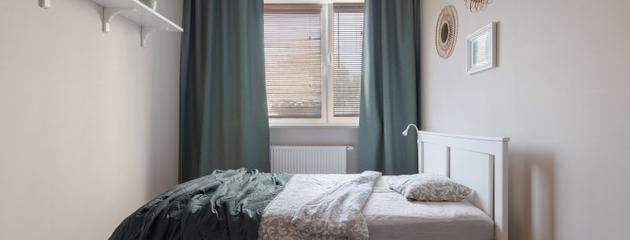

A guest bedroom doesn't need to be large to feel welcoming. With the right layout, window choices, and a few smart design moves, even a 100-square-foot room can provide your guests with a comfortable, restful stay.
This guide walks through what really matters when designing a small guest bedroom in 2026: the furniture that earns its space, the window styles that bring in light without crowding the room, and the design choices that make a small space feel calm rather than cramped.
Key takeaways
- A small guest bedroom works when furniture is scaled to the room, and every piece serves more than one purpose.
- Casement, tilt-and-turn, and picture windows are the three styles that best suit small bedrooms, each for different reasons.
- In Canada, any window in a bedroom must meet egress requirements: a clear opening of at least 0.35 m² (3.77 sq ft), with no dimension under 380 mm (15 inches).
- Light colours, mirrors, and layered lighting do more for a small room than any single piece of furniture.
- You can update a guest room significantly without renovating: foldable furniture, vertical storage, and the right window treatments go a long way.
- Modern guest bedroom trends in 2026 lean into warm neutrals, natural textures, and quiet, intentional design rather than busy decor.
What makes a small guest bedroom functional?
A functional guest bedroom isn't about how much you put into the space; it's about how well each piece earns its place. Three things matter most: the essentials, the layout around them, and the storage you can hide in plain sight.
The furniture you actually need
A guest room can be inviting with very little. Keep it to the pieces that matter:
- A double or queen bed for most rooms. In tighter spaces, a high-quality sofa bed or daybed works well, especially if the room doubles as an office or reading nook.
- At least one nightstand with bedside lighting. Two if the room can fit them.
- Layered lighting: an overhead source plus a bedside lamp or wall-mounted sconce. A single overhead fixture rarely flatters a small room.
- A chair, bench, or small ottoman is useful for luggage, getting dressed, or simply sitting down.
- Some form of closet or wardrobe. If the room doesn't have built-in storage, a freestanding armoire or open clothing rack works.
A layout that protects movement
Most small-room mistakes come from layout, not furniture choice. A few rules that hold up across room shapes:
- Leave 24 to 30 inches of clear space around the bed wherever a guest will walk.
- Avoid placing furniture directly in front of windows, as it blocks light and limits ventilation.
- Keep clear paths to the door and to light switches.
- If the room is under 100 square feet, choose scaled-down furniture: a smaller bed frame, a slimmer nightstand, narrower lamp bases.
Storage that does double duty
Smart storage is invisible. In a small room, the best options work hard without crowding the space:

- Beds with drawers underneath.
- Storage ottomans at the foot of the bed.
- Floating nightstands and wall-mounted shelves that free up floor space.
- Closet organizers that maximize vertical capacity.
How small is too small?
Aim for 100-120 square feet to comfortably fit a bed, a nightstand, and basic storage. Below that, lean into minimalism: lighter colours, fewer pieces, and furniture that scales to the room.
Window styles that work best in small guest bedrooms
Windows do more than let in light. In a small bedroom, the window style on the right affects ventilation, privacy, energy efficiency, and the room's sense of spaciousness. Three styles consistently fit small guest rooms in Canadian homes.
Casement windows
Casement windows are hinged on the side and open outward with a crank handle . They use compression seal technology: when the sash is cranked closed, the seal compresses evenly against the frame, creating an airtight closure that's among the most energy-efficient for operable windows.
For a small guest bedroom, casement windows offer two practical advantages. First, the entire window opens, providing full-area ventilation useful in a room with little cross-flow. Second, they can be opened to direct breezes into the room, which is harder to do with sliders or hung styles.
Important point for Canadian homes: any window in a bedroom must meet egress requirements under the National Building Code. The clear opening must be at least 0.35 m² (3.77 sq ft), with no dimension less than 380 mm (15 inches). Standard casement windows generally meet this if sized correctly; for tighter openings, an egress hinge allows the sash to open close to 90 degrees so a person can exit in an emergency. Provincial and municipal codes can vary, so confirm with a window professional during your in-home consultation.
Best uses for casement windows in a small guest bedroom:
- Side walls where there's room for the sash to open outward.
- Rooms that need strong ventilation but don't have space for additional vents.
- Bedrooms where ease of opening matters — the crank handle is simpler than lifting a heavy hung sash.

Tilt-and-turn windows
Tilt-and-turn windows are a European design that's become popular in Canadian homes, especially in condos and modern builds. A single handle controls three positions: locked, tilted inward at the top for secure ventilation, and fully swung open like a door for maximum airflow or emergency exit.
That dual function is the main reason they fit small guest bedrooms well. You can tilt the top for fresh air without opening the entire sash useful when furniture is close to the window, or when you want airflow but don't want pets or insects coming through a fully open sash. When closed, the multi-point locking mechanism creates a tight seal that supports strong thermal performance.
Canadian Choice Windows & Doors manufactures tilt-and-turn windows here in Canada, with up to triple-pane glass and uPVC frames built for cold-climate performance.
Best uses for tilt-and-turn windows in a small guest bedroom:
- Urban homes or condos with limited exterior space (the sash opens inward, not outward).
- Rooms where furniture sits close to the window wall.
- Upper-floor bedrooms where outside cleaning is awkward — tilt-and-turn windows clean from inside the room.
- Modern interiors where a clean, frameless aesthetic matters.
“In smaller guest rooms, what homeowners often miss is that the window choice is also a furniture decision. A tilt-and-turn opens inward, a casement opens outward, which changes what you can put underneath it, what kind of treatment you can hang, and how the room feels. We try to walk through that with every client during the consultation.”
— Helen Sin, Consumer Success Manager, Canadian Choice Windows & Doors

Picture windows
Picture windows are fixed , non-operable windows designed to frame a view and bring in natural light. Because they don't open, they have fewer moving parts and a tighter seal than any operable window, which makes them one of the most energy-efficient options available.
In a small guest bedroom, a picture window can transform how the room feels. The slim frames and uninterrupted glass make the space feel larger and more open. Paired with an operable window on one side (a common combination is a fixed-casement layout), you get the light of a picture window with the ventilation of a casement.
One thing to plan for: a picture window cannot serve as the room's egress window, because it doesn't open. If the bedroom only has one window, that window must be operable. A picture window works best as a secondary window — either combined with an operable unit, or in a room where another window already meets egress.
Best uses for picture windows in a small guest bedroom:
- Rooms with a view are worth framing a garden, treeline, or street.
- Modern or minimalist interiors in which the window itself serves as a design element.
- Guest rooms with separate ventilation (a second operable window or a bathroom vent that handles airflow).
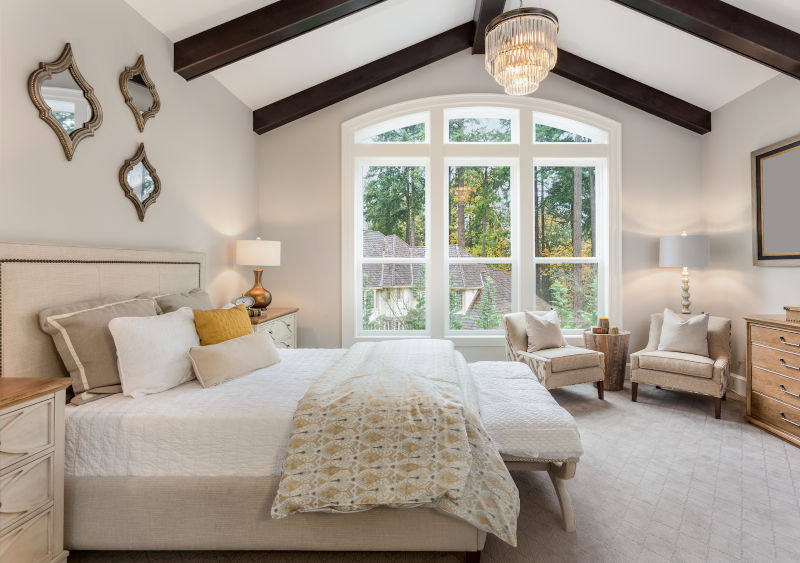
Window styles for small guest bedrooms
| Window style | Best for | Key strength | Things to consider |
|---|---|---|---|
| Casement | Side walls with outward-swing clearance | Full-area ventilation + tight compression seal | Needs exterior space to open |
| Tilt-and-turn | Condos, upper floors, tight layouts | Dual function (tilt or full swing); cleans from inside | Higher price point than standard casement |
| Picture (fixed) | Framing a view: modern interiors | Highest energy efficiency; maximum natural light | Does not open, cannot be the room's only window |
Balancing privacy and natural light
Guests value bedroom privacy, but you don't want to block daylight to achieve it. A few options work well together:
- Frosted or obscure glass on the lower portion of a window keeps sightlines blocked while still letting full light through.
- Top-down-bottom-up blinds let you cover the lower half (for privacy) while keeping the upper half open (for light).
- Sheer curtains soften light during the day and can be layered with blackout drapes for nighttime privacy.
- Internal blinds — built between the panes of glass — stay clean and don't take up any space in the room. Canadian Choice Windows & Doors offers these as an option on patio doors and some window styles.
How to transform a small guest bedroom without renovating
You don't need to rebuild walls to make a guest room feel larger and more welcoming. A few low-effort changes do most of the work.
Make the space feel bigger
- Mirrors placed opposite a window double the perceived natural light and visually extend the room.
- Vertical storage, such as wall-mounted shelves or tall, narrow cabinets, uses height instead of floor space.
- Floating desks or wall-mounted nightstands free up the floor and make the room feel airier.
Use furniture that does more than one job
- A Murphy bed or fold-out bed turns the room into something other than a bedroom when guests aren't around.
- Nesting tables tuck under each other when not in use.
- A daybed works as seating during the day and a bed at night.
Decor that earns its space
- Storage baskets that double as decor.
- Wall hooks and racks for bags, towels, or coats keep things off the floor.
- Pegboards for displaying or storing small items.
Colour and tone
Light tones, soft greys, blues, off-whites, and pale greens visually open up a room. Keeping the wall and ceiling close in tone reduces visual boundaries and makes the room feel taller. Avoid using more than two or three colours throughout the room.
Modern guest bedroom trends in 2026
If 2025 was about maximalism and bold patterns, 2026 has settled into something quieter. The current direction in guest bedroom design is intentional, calm, and built around how a room actually feels, not how it photographs.
Colour direction
- Soft sage and dusty rose for warmth without overwhelming a small space.
- Greige, a grey-beige neutral, is a clean, modern backdrop.
- Warm whites and taupes that reflect light and pair well with natural materials.
- Broader accents, such as navy or forest green, are used sparingly in textiles and art.
Materials and textures
- Textured woods (ash, oak) over high-gloss finishes.
- Natural textiles: linen, cotton, wool.
- Sustainable accents: recycled glass, bamboo, reclaimed wood.
Lighting layers
The single-overhead-fixture approach is largely gone. Modern guest rooms layer:
- A central source (recessed or a low-profile pendant) for general light.
- Wall sconces with dimmers next to the bed.
- Table lamps with USB-C ports for guest convenience.
- Warm bulb temperatures (2700K to 3000K) for a restful feel — cool white bulbs work for kitchens, not bedrooms.
Minimalist vs. cozy modern: how they compare
| Element | Minimalist modern | Cozy modern |
|---|---|---|
| Colour palette | Monochrome — greys, whites, blacks | Warm neutrals with one or two accent tones |
| Texture | Sleek, low-pattern surfaces | Layered fabrics: linen, wool, knit throws |
| Decor approach | Few, considered pieces | Pillows, rugs, plants, more layers, still curated |
| Best for | Very small rooms, modern condos | Family homes, guest rooms are often used |
Mistakes to avoid in a small guest bedroom
Relying on a single overhead light
One ceiling fixture creates flat, shadow-heavy lighting. Add a bedside lamp, a sconce, or a small floor lamp, even one extra source, changes how the room feels.
Overcrowding the room
More furniture doesn't make a guest feel more cared for. Restricted movement, blocked sightlines, and visual clutter all make a small room feel smaller. Keep to the essentials.
Ignoring privacy
Thin curtains, no door lock, or a window pointed at a neighbour's house all undermine a guest's sense of comfort. Layered window treatments (sheer + blackout, or top-down-bottom-up blinds) solve most of this.
Mismatched furniture scale
A queen bed crammed into a 90-square-foot room with a full-sized dresser will overwhelm the space. Scale matters more than style in a small room.
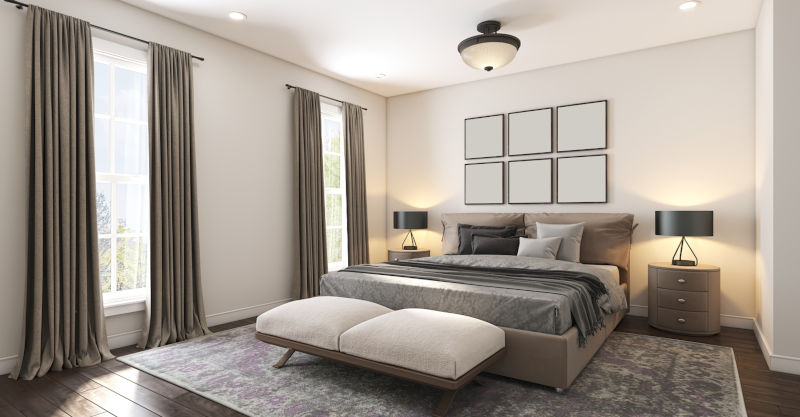
How natural light shapes a guest bedroom
Natural light makes a small room feel larger, calmer, and more welcoming. Window placement and orientation play a big role in how a room reads throughout the day.
Window orientation
- East-facing windows bring in morning light, which is generally welcome in a bedroom.
- South-facing windows give the strongest daylight overall, but in summer can lead to heat gain. Low-E coatings on the glass help reduce that.
- West-facing windows pick up afternoon glare. Heavier window treatments or a Low-E glass package helps here.
- North-facing windows provide soft, even light throughout the day, but less of it when paired with mirrors or lighter wall colours.
“When we walk through a guest bedroom project, the first thing I think about is what the homeowner wants the room to feel like in the morning. East-facing windows change a room in a way that no lamp can match. The second thing is energy performance — a small room with the wrong glass package can be cold in winter and hot in summer, and the homeowner notices that every time a guest stays.”
— Tony Wong, Project Manager, Canadian Choice Windows & Doors
Window treatments that don't kill the light
- Sheer curtains soften light without blocking it.
- Roman blinds give precise control and store flat when open.
- Top-down-bottom-up blinds let you choose privacy or light, depending on the time of day.
Surfaces that amplify light
- A mirror opposite a window doubles perceived brightness.
- Light-coloured furniture and walls reflect more light than dark finishes absorb.
- Glossy paint finishes bounce light around, useful on the ceiling of a small room.
Which colours make a small guest bedroom feel larger?
Colour is one of the cheapest, fastest ways to change how a small room feels. The right choices reflect light, soften visual boundaries, and create a calm tone.
Paint choices that open the space
- Soft white or off-white reflects the most light. A safe, flexible baseline.
- Light grey or pale blue creates a sense of depth; the wall feels further away.
- Pale green or sage feels calm and natural, good for guest comfort.
Ceiling and accent tricks
- Painting the ceiling the same colour as the walls reduces visual boundaries and makes the room feel taller.
- A feature wall in a slightly darker tone (behind the bed, for example) adds depth without shrinking the room.
- Vertical lines through paint, wallpaper, or curtain placement draw the eye upward.
How colour affects how guests feel
- Blues feel calm and restful, well-suited to a sleep space.
- Greens feel peaceful and grounded.
- Warm neutrals feel welcoming without being busy.
Should the guest room match the rest of the house?
There's no single right answer. It depends on what you want the room to feel like an extension of your home or a small retreat for visitors.
Cohesive design (matches the rest of the house)
Works well when:
- You want a single design language across the home.
- The room is also used as an office or library.
- You don't want to overthink furnishing choices.
Distinct guest room style
Works well when:
- You want guests to feel they've stepped into a calmer, more curated space.
- The rest of the home has a busy or strong design that wouldn't suit a sleep space.
- You're willing to invest in a separate look for the room.
Why Canadian homeowners choose Canadian Choice Windows & Doors for guest bedroom windows
Canadian Choice Windows & Doors has been serving Canadian homes for over 40 years. Every window is manufactured in Canada, custom-built to your opening, and installed by in-house teams, not subcontractors.
- Recommended by Bryan Baeumler, HGTV host and Canada's recognized expert in quality construction.
- Over 3,100 positive reviews on HomeStars.
- More than 1 million windows and doors have been installed across Canada.
- 25-year transferable warranty on all windows.
- Up to 40 window styles, including casement, tilt-and-turn, and picture windows in double or triple-pane configurations.
- DraftLOCK sealing technology is designed for Canadian climate performance.
From the first in-home consultation to the final install, the process is built to feel honest and stress-free, with no pressure and no hidden costs.
Frequently asked questions
What size should a guest bedroom be?
Aim for 100-120 square feet to comfortably fit a double or queen bed, a nightstand, and basic storage. Smaller rooms (90 square feet or less) still work, but call for scaled-down furniture, lighter colours, and a more minimalist approach.
What window style is best for a small guest bedroom?
Casement, tilt-and-turn, and picture windows are the three styles that best fit small bedrooms. Casement gives strong ventilation and meets bedroom egress requirements. Tilt-and-turn works well where furniture is close to the window or in upper-floor rooms. Picture windows bring in maximum light but don't open, so they're best paired with an operable window.
Do bedroom windows need to meet egress requirements in Canada?
Yes. Under the National Building Code, any bedroom window must allow a person to exit in an emergency. The clear opening must be at least 0.35 square metres (3.77 sq ft), with no dimension less than 380 mm (15 inches). Provincial and municipal codes can vary, so confirm with your window professional during the in-home consultation.
Can a picture window be the only window in a bedroom?
No. Picture windows don't open and don't meet egress requirements. They work well as a secondary window paired with an operable casement, hung, or tilt-and-turn window that meets code requirements.
How do I keep a small guest room private without making it dark?
Layer window treatments: sheer curtains during the day for soft light with limited visibility, plus blackout drapes or roller blinds for nighttime privacy. Top-down-bottom-up blinds are a strong single solution that allows you to keep the upper half open for light while the lower half stays closed for privacy.
What colours make a small bedroom feel larger?
Light, cool tones reflect the most light: soft whites, pale greys, light blues, and pale greens. Painting the ceiling the same tone as the walls reduces visual boundaries. Keep the palette to two or three colours throughout the room.
How can I update a small guest bedroom without a full renovation?
Replace furniture with smaller-scale or multi-purpose pieces (e.g., a Murphy bed, daybed, or floating nightstand). Add a mirror opposite the window. Switch to layered lighting, a bedside lamp plus an overhead source. Repaint in lighter tones. New window treatments alone can change how the room reads.
Are tilt-and-turn windows worth the extra cost?
They cost more than standard casement windows because of the European hardware and the multi-point locking system. Whether they're worth it depends on the room. For an upper-floor guest bedroom, a condo, or any space where furniture sits close to the window, the inward-opening design and easy interior cleaning often justify the price. For a ground-floor room with clear exterior space, a casement window may offer most of the benefits at a lower cost.

1000’s of Colours & Textured Finishes
Transform your home from ordinary to extraordinary with our new coloured and non-glare textured finishes. Available in a wide array of colours as well as custom matched colours for your very own personalized design.
Our Most Popular Replacement Window Colours: