Why Surrey Homes Often Face Early Window Seal Failure
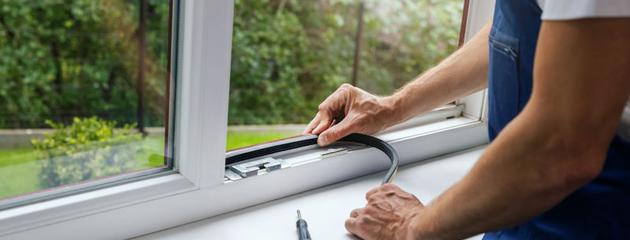

Surrey homeowners face unique conditions when it comes to window performance. The combination of high moisture, persistent humidity, and ongoing temperature changes places consistent stress on window seals over time. In this environment, a seal that typically lasts around 20 years in drier regions can begin to show issues sooner if the product and installation are not suited to local conditions. Understanding these factors helps you choose windows that actually hold up in Surrey’s climate and keep your home comfortable year-round.
Key takeaways
- In Surrey, window seal failure is usually caused by the climate rather than defects, as constant moisture and temperature changes wear seals down faster.
- Under normal conditions, modern IGUs are designed to last 20–30 years, but real-world performance depends heavily on installation quality and material specification.
- Seal failure is a gradual process that can begin as early as 10 years and becomes more likely over time rather than occurring suddenly.
- The most common causes of premature failure include poor installation, low-quality sealants, UV exposure, thermal cycling, and water accumulation at the seal edge.
- Failed window seals significantly reduce energy efficiency, increase heating costs, and degrade indoor comfort due to heat loss and cold-surface radiation.
- Long-term performance depends on a complete system approach, including proper product selection, professional installation, effective drainage, and regular maintenance.
Why do Surrey homes experience window seal failure earlier than expected?
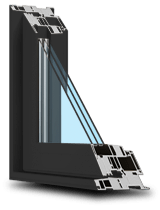
The glass unit inside your window, called an insulated glass unit (IGU), is a sealed system. Two or more panes of glass are held apart by a spacer, the cavity between them is filled with an insulating gas such as argon, and the whole perimeter is sealed with a combination of primary and secondary sealant materials. That seal system is what keeps the gas in, the moisture out, and your home warm.
Over time, the sealed glass unit can break down. This usually means the edge seal weakens, insulating gas escapes, and the coating that helps control heat transfer becomes less effective. In Surrey, this matters even more because once seals weaken, heat loss increases quickly in damp conditions.
Surrey's climate creates conditions that put every one of those degradation pathways under accelerated stress. The city sits in one of the wettest corners of the country, with annual precipitation exceeding 1,300 mm. Relative humidity regularly reaches 85% in the winter months and stays above 70% even in summer. Temperatures swing from below 0 degrees C in winter to above 25 degrees C in summer, meaning window frames and glass undergo thousands of expansion and contraction cycles over their lifetimes.
Each of those cycles places mechanical stress directly on the sealant at the perimeter of your IGU. Over time, that stress adds up. And in a high-moisture environment like Surrey, any micro-crack in the sealant provides moisture with a direct path into the cavity, accelerating fogging and gas loss more than in drier climates.
How long do window seals last under normal conditions?

Modern insulated glass units (IGUs) are engineered with a design lifespan of approximately 20 to 30 years under normal service conditions. This reflects how long the seal system is expected to maintain its intended performance when properly specified, manufactured, and installed.
At the same time, real-world studies show that seal failure does not affect all units at once. Instead, it occurs gradually across a population of windows. Field data indicate that only a small percentage of IGUs fail within the first decades of use, with failure rates increasing incrementally over time rather than appearing as a single end-of-life point.
For homeowners, this means that lifespan should be understood as a performance range rather than a fixed deadline. Well-made and properly installed units can perform for decades, while deviations in materials, installation, or environmental exposure can significantly shorten that timeframe.
Why lifespan and failure rates don’t contradict each other
The design lifespan of an IGU does not imply that all window seals will fail simultaneously. Instead, it represents the period during which the majority of units are expected to perform as intended.
In practice, seal failure follows a gradual curve:
- A small number of units may fail earlier due to installation or material issues
- Most units continue to perform within expected parameters for many years
- The probability of failure increases steadily as the system ages
This is why both statements can be true at the same time: IGUs are designed for long-term performance, but the risk of failure increases progressively rather than occurring at a single, predictable moment.
What are the most common causes of broken window seal issues?
Window seal failure usually doesn't happen all at once. It's a gradual process driven by one or more of these causes, each well documented in building science research.
Poor installation
This is consistently identified as the leading driver of premature failure. When a window isn't level, when shimming is inadequate, or when the frame isn't fully supported, the IGU sits under uneven mechanical load. The sealant at weak points fatigues faster under that constant pressure, and once a micro-crack forms, moisture and air enter the cavity.
"We regularly see cases where perfectly good glass units fail years earlier than expected simply because of poor installation practices. In a climate like Surrey’s, there is very little margin for error when it comes to sealing and drainage." — Tony Wong, Project Manager at Canadian Choice Windows & Doors
Low-quality or mismatched sealant materials
Research published in Studies into the Life-Expectancy of Insulating Glass Units (ScienceDirect) established that the flexibility of the outer sealant over time, particularly its ability to recover after being stretched, directly affects whether the primary PIB seal can do its job. A secondary sealant that loses elasticity too early exposes the PIB to increasing loads, accelerating gas permeation and eventual failure.
UV exposure on outer sealants
Polysulphide-based secondary sealants, which have historically been common in residential windows , show poor UV resistance compared to silicone alternatives. When the outer sealant degrades, it loses adhesion to the glass and spacer, creating gaps that allow moisture to attack the primary PIB seal underneath.
Thermal cycling and the pumping effect
Every day, the sealed gas cavity in your window warms and expands, then cools and contracts. This creates a constant pumping motion at the seal perimeter. Over thousands of cycles across years, even well-made sealants fatigue. In a climate with Surrey's temperature range, that pumping effect is more pronounced because the swing between a winter night and a summer afternoon is considerable.
Water pooling at the seal edge
Construction Specifier's analysis of visually obscured IGUs identifies long-term water exposure at the seal edge as a primary contributor to premature failure, particularly at the bottom of the unit. According to the Glass Association of America (GANA) guidelines, the report notes that frames without proper drainage allow water to pool at the sill , keeping the bottom seal wet for extended periods. In Surrey's wet season, this is a regular occurrence for any window that is not properly installed and drained.
How can you tell if you have a broken window seal?
Catching seal failure early gives you more options and can prevent moisture damage from spreading to the surrounding framing and wall structure. Here are the signs to look for and what they each indicate.
| Sign | What you will see | What does it tell you |
|---|---|---|
| Fogging between panes | Hazy or milky appearance inside the glass unit | Seal has failed; moisture has entered the cavity |
| Condensation inside the unit | Water droplets are visible between the glass panes | The desiccant is saturated; the unit needs replacement |
| Glass distortion | Wavy or bowed appearance when looking through the glass | Gas has escaped; pressure differential is deforming the panes |
| Cold spots on interior glass | Interior glass feels noticeably cold to the touch | The thermal barrier is compromised; heat is escaping |
| Rising energy bills | A noticeable increase in heating or cooling bills without another clear cause | Insulation value has dropped significantly |
| Drafts near the frame | Cool air movement felt around the window frame | Frame seal or weatherstripping may also be failing |
How to check your windows at home
- Stand close to each window on a cold day and place your hand on the interior glass surface. A noticeably cold surface suggests the thermal barrier has been compromised.
- Look through the glass at an angle toward a light source. Fogging, haziness, or a milky appearance inside the unit is a clear sign that the seal has failed.
- Check directly between the panes for any moisture or water droplets. If you see condensation between the glass, the desiccant inside the spacer is fully saturated.
- Look at the glass straight on. Any waves, bowing, or distortion suggest the sealed cavity has lost gas pressure, causing the panes to flex.
- Review your recent energy bills, particularly winter heating costs. A steady, unexplained increase may indicate multiple windows are losing thermal performance.
- Run your hand around each window frame on a windy day. Any draft indicates the frame seal or weatherstripping may have failed, in addition to the IGU.
If you find two or more of these signs on the same window, that window's IGU almost certainly needs to be replaced. Once the seal fails, it cannot be restored, which is why replacement is the only reliable long-term solution. The glass, spacer, and sealant assembly needs to be replaced as a complete unit.
Does Surrey's climate accelerate window seal failure?
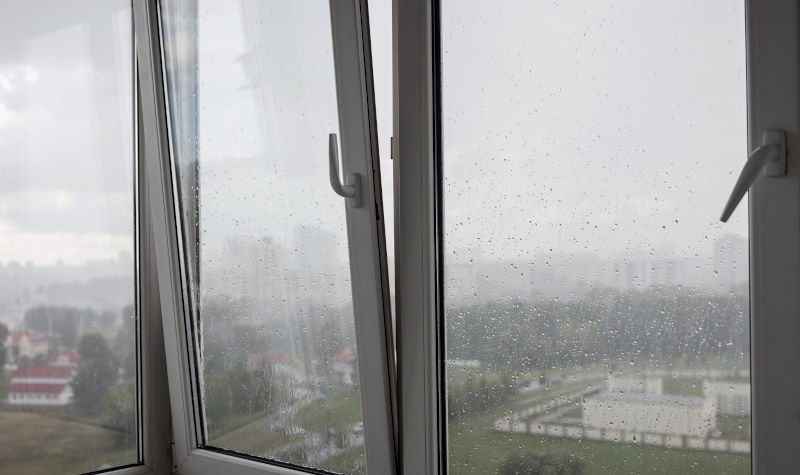
Yes, and the connection is directly tied to how sealant materials respond to specific environmental stressors.
Sealant performance is highly sensitive to temperature fluctuations. As materials expand and contract with changing conditions, their ability to maintain a consistent seal gradually weakens. Over time, this repeated thermal movement can lead to reduced seal integrity and earlier failure compared to more stable climates.
Surrey's specific climate pressures on window seals include:
- Surrey sees heavy rainfall, high humidity, and frequent temperature swings, all of which put constant stress on window seals.
- A seasonal temperature swing of roughly 25 degrees C between the coldest winter nights and warmest summer days, driving thousands of thermal expansion cycles through the seal system every year.
- Frequent freeze-thaw events: Surrey's winters don't deliver sustained deep cold, but cycling around 0 degrees C is enough to physically stress any water that has worked into marginal gaps in sealant or framing.
- Wind-driven rain in fall and winter, which can force water into poorly drained frame assemblies and keep the bottom seal edge wet for extended periods.
The combination of moisture and temperature cycling is especially hard on polysulfide secondary seals. As research has demonstrated, these seals exhibit significantly higher moisture permeability at elevated temperatures than silicone alternatives. In Surrey's warmer summer months, outer seals on south- and west-facing windows are subject to exactly this condition.
How do different window types affect seal durability?
The type and construction of the IGU in your windows directly affect how long the seals perform and how badly energy efficiency suffers when they fail.
| Feature | Double-pane IGU | Triple-pane IGU |
|---|---|---|
| Number of sealed cavities | One | Two |
| Seal points per unit | Two (one per cavity edge) | Four (two cavities) |
| Typical warranty range | 10 to 20 years under normal conditions | 10 to 20 years; longer with premium seals |
| Insulation value (R-value) | Approximately R-3 to R-4 | Approximately R-5 to R-7 |
| Seal inspection at manufacture | Both seals visible for quality check | Inner seals not visible; quality control is more complex |
| Performance impact if one seal fails | Unit loses full thermal value | The outer cavity may maintain partial performance |
For homeowners considering vinyl windows in Surrey , the frame material's low thermal conductivity helps reduce the temperature differential at the frame edge, where seals experience the most stress. This is one practical reason why properly installed quality vinyl windows tend to show consistently good long-term seal performance in climates like Surrey's.
"When we are assessing which products to recommend for a Surrey home, the seal system and spacer technology are always high on the list. The homeowners who come back to us satisfied years later are almost always the ones who chose products built with durability in mind and had them installed correctly from the start." - Helen Sin, Consumer Success Manager at Canadian Choice Windows & Doors
What are the energy efficiency consequences of window seal failure?
Natural Resources Canada states that windows, doors, and skylights can account for up to 25% of a home's total heat loss. When seals fail, that figure worsens because the insulating gas has been replaced by humid air, which conducts heat far more efficiently.
| Seal condition | Effect on thermal performance | Homeowner impact |
|---|---|---|
| Intact and functioning | Full insulation value as rated; gas fill intact | Heating and cooling costs within the expected range |
| Early-stage failure (minor fogging) | Gas leakage begins; U-factor starts to rise | Modest increase in energy costs; may not be noticeable yet |
| Moderate failure (visible condensation) | Moisture displaces insulating gas; R-value drops substantially | Noticeable spike in heating or cooling bills |
| Severe failure (multiple windows affected) | Significant heat loss through glass; comfort is affected throughout the home | NRCan confirms windows can account for up to 25% of total home heat loss |
The comfort impact goes beyond what shows up on your bill. A failed-seal window creates a radiant cooling effect on the interior glass surface, making the area feel cold even when your heating system is technically maintaining room temperature. In Surrey, where the heating season runs from October through April, that loss of comfort is significant and sustained.
How can homeowners prevent broken window seal problems?
Prevention is almost always less costly than replacement. These steps are drawn from documented installer best practices and building science guidelines, and are particularly relevant for Surrey's wet climate.
Practical homeowner checklist
- Inspect seals visually every spring and fall. Look directly at the glass for any fogging, clouding, or discolouration between the panes.
- Check exterior caulking around the window frame annually. Any cracking, shrinkage, or separation should be re-caulked before the rainy season begins.
- Clear weep holes on window sills each autumn. These small drainage openings keep water from pooling at the frame base, where it can work into the bottom seal edge.
- Avoid pressure washing window glass and frames. High-pressure water directed at the seal area can force moisture into marginally sealed gaps.
- Keep vegetation trimmed away from window frames. Plants pressing against frames trap moisture and promote the damp conditions that attack sealants.
- Maintain indoor relative humidity between 40 and 50%. Consistently high humidity above 55% increases the risk of condensation on interior glass surfaces, adding moisture load to interior frame seals.
- Ensure kitchen and bathroom exhaust ventilation is functioning properly. These rooms generate the highest indoor humidity, and inadequate venting allows moisture to migrate to window surfaces.
- Address any frame damage promptly. Cracks, rot, or deformation in window framing increase mechanical stress on adjacent seals, accelerating failure.
- When choosing replacement windows , Surrey installers recommend asking specifically about the seal specification: whether it uses dual-seal PIB and silicone construction, what spacer system is included, and what the warranty covers for how long.
- If your windows are approaching 10 years old and you have not had a professional assessment, it is worth getting one. Early-stage seal failure can be identified before it becomes visible, keeping your energy costs in check.
Are modern windows more resistant to window seal failure?
Yes, meaningfully so. The window products available today are built with considerably better seal durability than those installed even 15 years ago, and the improvements are grounded in real engineering advances.
Dual-seal construction with PIB primary seals
Modern insulated glass units (IGUs) commonly use dual-seal systems that combine a primary PIB (polyisobutylene) seal with a secondary silicone or polysulfide sealant. This configuration improves resistance to gas loss and moisture infiltration compared to older single-seal designs. Dual-seal construction also provides better long-term elasticity, helping the unit withstand repeated expansion and contraction without premature failure.
Warm-edge spacer technology
Traditional aluminum spacers conduct heat efficiently, creating a thermal bridge at the seal location that both reduces energy performance and accelerates seal fatigue from thermal stress. Modern warm-edge spacers, including composite and hybrid stainless-steel designs, significantly reduce thermal conductivity. Spacers with integrated vapour barriers are particularly effective at limiting gas loss and maintaining long-term seal integrity.
Low-E coatings that reduce thermal cycling stress
Low-emissivity (Low-E) coatings applied to interior glass surfaces reduce heat transfer through the window in both directions. This improves overall energy efficiency while also minimizing temperature differences across the glass. As a result, the seal perimeter is exposed to less thermal stress over time, which helps extend the IGU's lifespan.
Quality standards and manufacturing consistency
The durability of window seals depends heavily on consistent manufacturing processes and quality control. IGUs produced under recognized performance standards are typically tested for seal integrity, gas retention, and resistance to environmental stress. Choosing windows built to established quality benchmarks is a practical way to ensure more reliable long-term performance.
Conclusion: Choosing the right windows is a long-term decision
Early window seal failure in Surrey isn’t a matter of bad luck; it is a predictable result of sustained moisture, temperature fluctuations, and installation quality. As real-world evidence shows, even the most advanced window systems won’t reach their full lifespan without proper specification for the local climate and professional installation.
The key takeaway is straightforward: window durability depends not just on the product itself, but on the entire system, from IGU construction and seal technology to drainage design, installation practices, and ongoing maintenance. When these elements work together, windows can perform reliably for decades, even in demanding conditions.
On the other hand, overlooking even one of these factors almost always leads to premature issues, including reduced energy efficiency, indoor discomfort, and avoidable costs.
That’s why the most practical approach for homeowners is proactive rather than reactive: choose proven solutions, monitor window performance over time, and installation quality is one of the most important factors to get right. This is what separates short-term savings from a truly worthwhile investment in comfort and energy efficiency.
Frequently Asked Questions
How many years do window seals realistically last in Surrey?
In Surrey’s climate, seals often fail before their 20–30-year design lifespan. In many cases, issues can begin to appear around the 10–15-year mark if the window system is not properly specified for high-moisture and temperature cycling.
Can a failed window seal be repaired, or does the glass need to be replaced?
A failed seal cannot be repaired. Once moisture enters the IGU, the entire sealed glass unit must be replaced, as the internal gas and moisture barrier cannot be restored.
Is fogging between panes always a sign of seal failure?
Yes. Condensation or fogging between panes indicates that the seal has already failed and moisture has entered the sealed cavity. This is one of the most reliable visual indicators.
Do better windows actually last longer, or is failure inevitable?
Failure is not inevitable in the short term. High-quality IGUs with proper seal systems, combined with correct installation, can perform close to their full design lifespan even in demanding climates.
Are triple-pane windows more prone to seal failure than double-pane?
Triple-pane units have more seals and a more complex structure, but when manufactured to high standards, they are not inherently less durable. In some cases, they can maintain partial performance even if one cavity fails.
What is the earliest sign that a window seal problem is developing?
Early signs include slight haziness, minor condensation between panes, or a subtle drop in thermal comfort near the glass. These often appear before full fogging or visible water buildup.

1000’s of Colours & Textured Finishes
Transform your home from ordinary to extraordinary with our new coloured and non-glare textured finishes. Available in a wide array of colours as well as custom matched colours for your very own personalized design.
Our Most Popular Replacement Window Colours: