Top entry door trends for 2026: stylish ideas for Toronto homes

Your front door does more than open and close. It's the first thing a visitor sees, the first line of defence against Toronto's freeze-thaw winters, and one of the few exterior upgrades that genuinely change how a home feels inside and out.
This guide walks through what's actually trending in entry doors for 2026 : the colours homeowners are choosing across the GTA, the materials that hold up to Canadian weather, the hardware that's quietly modernizing how we use a front door, and the design choices that fit Toronto's mix of heritage homes and new builds.
Key takeaways
- Entry door trends in 2026 lean into deeper, more natural colours — matte black, deep red, navy, sage green, and warm wood tones.
- Steel and fibreglass continue to outperform wood for Toronto's freeze-thaw climate. Wood looks best but needs the most maintenance.
- Canadian Choice Windows & Doors manufactures steel entry doors with DraftLOCK sealing technology built in Canada and engineered for Canadian winters.
- More glass is the biggest design shift: ¾-lite panels, full-glass inserts, sidelites, and transoms are increasingly common.
- Smart locks, keypad entry, and home-automation integration are becoming standard expectations in new builds and renovations.
- A good entry door is judged less by how it looks on day one and more by how it performs after five Canadian winters.
What's trending in front doors for 2026
Entry door design in 2026 has settled into a calmer, more grounded direction. The bright statement colours of recent years haven't disappeared, but warm wood tones and earthy hues are now leading the conversation. The bigger shift, though, is in how doors are built, not how they look.
Colour direction
- Matte black: still strong in modern, minimalist homes. Pairs well with brushed metal hardware and dark window frames.
- Deep red: a heritage favourite, with renewed interest in traditional Toronto streets like the Annex and Cabbagetown.
- Navy blue works in both modern and transitional architecture and is particularly popular on semi-detached homes.
- Sage green is rising fast as part of the broader move toward earth tones and biophilic design.
- Warm wood tones: walnut, cherry, and honey oak, either real wood or wood-look finishes on steel and composite doors.
- Dual-tone doors: one colour inside, another outside. Let the door match both the home's exterior palette and the entryway's interior decor.
Paint technology has improved alongside the colour trends. Modern factory finishes are UV-resistant and engineered to hold colour for years, not the seasonal fading older painted doors were known for.
Material direction
Three materials dominate the Toronto entry door market in 2026, and each suits a different priority:
- Steel: the most secure and most cost-effective option for Canadian climates. Modern steel doors are built with two steel skins around a polyurethane foam core and a thermal break in the frame to prevent condensation and heat transfer. They handle Toronto's freeze-thaw cycles without warping, cracking, or rotting.
- Fibreglass: known for mimicking wood grain while resisting moisture, warping, and rotting. A reasonable choice for homeowners who want a wood appearance without the upkeep, though it carries a higher price point and is not part of the Canadian Choice Windows & Doors product line.
- Wood is still preferred for heritage homes and high-end custom builds where authenticity matters. The trade-off is that maintenance wood expands, contracts, and absorbs moisture, which is hard on any door in Toronto's climate.

“Toronto homeowners are getting more thoughtful about what a front door has to do. They're not just buying a look; they're asking how it'll hold up in February, whether it'll still seal properly in five years, and how it integrates with the rest of the home. That's a healthy shift, and it's where we spend most of our consultation time.”
— Helen Sin, Consumer Success Manager, Canadian Choice Windows & Doors
Finishes and textures
Two finish directions are trending in 2026:
- Smooth matte finishes are clean, contemporary, and great for bold colour.
- Textured wood-grain finish is the wood-look option, applied to steel or composite doors for a natural appearance without the wood maintenance burden.
- Brushed metal accents and powder-coated frames are also widely used for their weather resistance, which is important in a city that ranges from –20 °C to +30 °C throughout the year.
Panel styles and glass inserts
Door design has moved toward geometric simplicity, even in homes that are otherwise traditional:
- Flush panels and clean lines dominate the modern category.
- 3-lite and 5-lite horizontal glass inserts give semi-private entries popular on contemporary downsizer homes.
- Traditional doors still feature raised panels, arched inserts, and bevelled glass, particularly on older homes in the Beaches, Riverdale, and west-end heritage neighbourhoods.
- Larger glass ¾-lite or full-lite panels are the biggest trend. It brings more natural light into the foyer and improves curb appeal.
Modern homes vs. traditional homes: what works where
A front door should reflect the architecture it sits in, not fight against it. The same door style that suits a downtown loft conversion will look out of place on a Victorian-era home in Cabbagetown. Here's the divide that's playing out across Toronto in 2026.
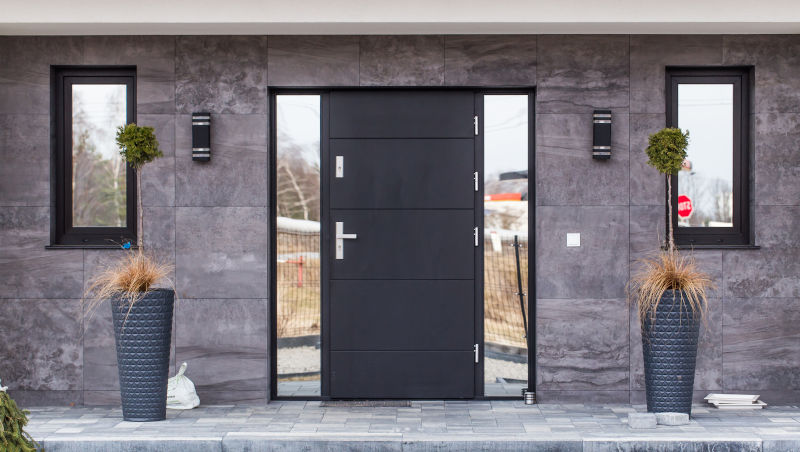
Modern homes
- Large glass panels or full-glass doors that emphasize transparency.
- Minimalist pulls instead of traditional knobs.
- Frameless or hidden-hinge designs for clean visual lines.
- Matte black, charcoal, or anodized aluminum finishes.
- Sidelites and transoms used to extend the door visually rather than as decorative add-ons.
Traditional homes
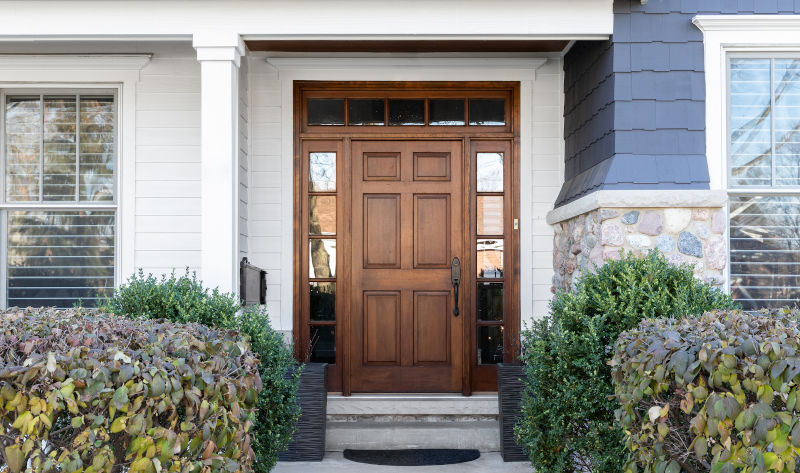
- Solid panels with detailed mouldings, raised panels, carved details, arched tops.
- Wrought-iron glass inserts or bevelled-glass detailing.
- Multi-panel or craftsman-style builds.
- Warm tones: cherry, walnut, honey oak or steel doors finished in wood-grain stain.
- Classic hardware finishes: polished brass, antique bronze, satin nickel.
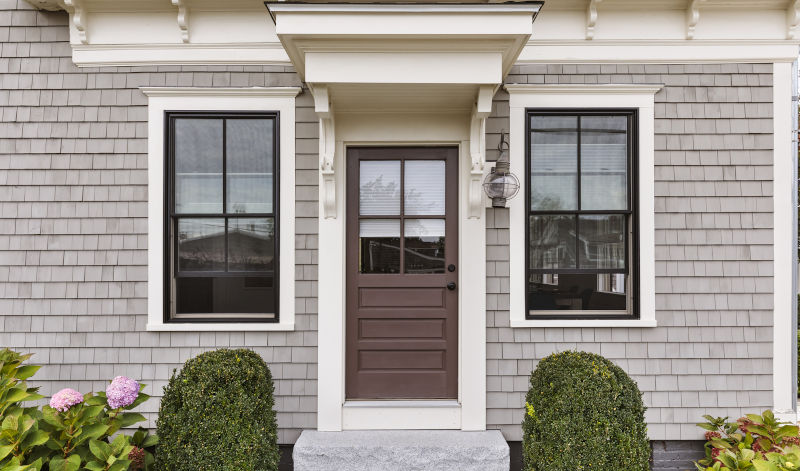
| Feature | Modern homes | Traditional homes |
|---|---|---|
| Material | Steel or fibreglass with smooth finishes | Solid wood or steel with wood-grain finishes |
| Style | Sleek, minimalist, linear | Detailed, craftsman, arched |
| Glass | Full-light, ¾-lite, wide sidelites | Bevelled inserts, decorative leaded glass |
| Colour | Black, charcoal, anodized metals | Warm woods, deep reds, muted neutrals |
| Hardware | Minimalist pulls, smart locks, matte black | Classic knobs, brass or bronze finishes |
What actually makes an entry door good quality
Appearances can be misleading. A door that looks great in a showroom may not perform well after five Toronto winters. The qualities that separate a long-lasting door from a disappointing one are mostly invisible; they're in the core, the frame, and the installation.
Core construction
What's inside the door matters more than what's on the surface:
- Insulated steel doors are built with two steel skins around a polyurethane foam core. The foam provides thermal performance; the steel handles the structure and security.
- A thermal break inside the steel frame prevents heat transfer and stops frost or condensation from forming on the interior surface, an important detail in Toronto's cold months.
- Multi-layer weatherstripping (often a combination of fins and a compression bulb seal) creates an airtight seal when the door is closed. Look for full-perimeter compression stripping, not just along the top and bottom.
- A self-draining sill design directs water away from the threshold and prevents leaks into the entryway floor.
Security features
A quality door's security comes from several layers working together:
- Multi-point locking systems engage the door at multiple points (top, middle, bottom) rather than relying on a single deadbolt.
- Reinforced strike plates resist forced entry by distributing impact across a wider area of the frame.
- Impact-resistant cores withstand kicks and pry attempts.
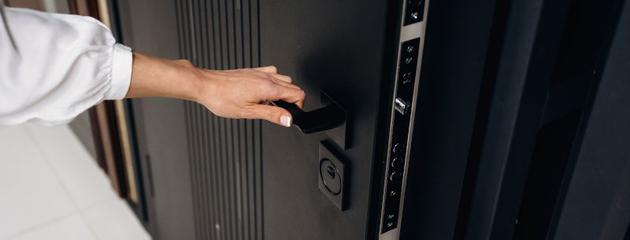
- Smart-lock compatibility, including keypad entry and remote unlocking, is increasingly standard in new builds.
None of this matters if the door is installed poorly. A premium door with a shimmed frame or a gap behind the strike plate is no more secure than a basic builder-grade door.
Certifications to look for
- ENERGY STAR certification confirms that the door meets energy-efficiency standards for the Canadian climate zone.
- CSA Group certification confirms the door meets Canadian Standards Association requirements for residential construction.
- A clear, transferable warranty backed by the manufacturer, not just the installer, protects you if you sell the home.
Top entry door colours in Toronto for 2026
Toronto's neighbourhood mix is one of the most varied in Canada, and door colour choices reflect that. Heritage streetscapes and newer suburban builds are pulling in opposite directions, and the colour palette breaks down accordingly.
Most popular colours across the GTA
- Matte black: the dominant modern choice, particularly in newer builds in North York, Etobicoke, and across the 905.
- Deep red: a heritage statement colour, common on older detached homes.
- Navy blue: a stately, restrained option popular on transitional homes in midtown.
- Sage green: the biggest mover in 2026, growing fastest in renovations and rebuilds.
- Warm wood tones: walnut and oak stains on steel doors with wood-grain finishes are frequently chosen for suburban two-storey homes.
Regional preferences within Toronto
- Downtown heritage neighbourhoods (the Annex, Cabbagetown, Rosedale, Riverdale): charcoal, navy, deep red, and stained wood-grain finishes that respect older architecture.
- North York, Etobicoke, Scarborough new builds: matte black, deep green, and dual-tone finishes.
- Mississauga, Vaughan, Markham: a mix of heritage suburbs lean traditional, while new developments favour modern matte finishes.
Modern UV-resistant coatings make these colour choices more practical than they were a decade ago. Older painted doors faded noticeably in three or four years. Today's factory finishes hold colour significantly longer.
Steel, fibreglass, and wood: how the three materials compare
Each material has trade-offs. The right choice depends on your home, your climate priorities, and how much maintenance you're willing to do over the years.
| Feature | Steel | Fibreglass | Wood |
|---|---|---|---|
| Cost | Most affordable | Mid-range to premium | Highest upfront |
| Security | Best — most resistant to forced entry | Strong, but can crack under heavy force | Variable; depends on construction |
| Durability | Excellent; won't warp or rot. May dent. | Excellent; resists warping, rotting, denting | Fair; can warp, crack, or rot over time |
| Maintenance | Low — occasional repainting | Very low — basic cleaning only | High — staining, sealing, refinishing |
| Insulation | High with foam core + thermal break | High | Moderate |
| Climate suitability | Excellent for Canadian winters | Excellent for Canadian winters | Best in mild, dry climates |
Canadian Choice Windows & Doors recommendation: steel, for most Toronto homes
Canadian Choice Windows & Doors manufactures and installs steel entry doors — built with DraftLOCK sealing technology, engineered for Canadian climates, and backed by a 25-year transferable warranty. Steel is also the most affordable of the three materials, which makes it a practical first choice for homeowners who want strong security and thermal performance without paying a premium for fibreglass or wood.
If you specifically need fibreglass or wood, a heritage home with strict architectural requirements, or a custom project where authenticity is the priority, those materials are widely available through other Canadian suppliers.
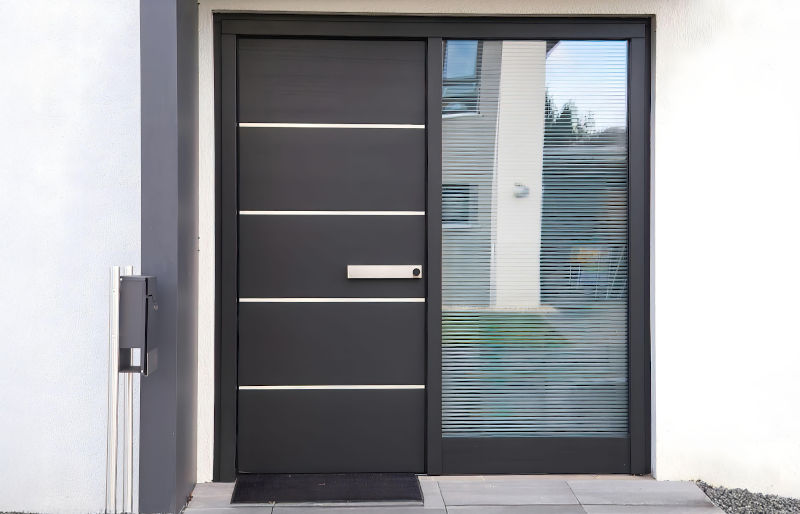
Hardware and glass: the details that define the door
Door hardware and glass are often underestimated, but in 2026, they're doing more design work than the door itself. The right combination ties an entryway together and signals the home's design language at a glance.
Hardware trends
- Smart locks with brushed-nickel or matte-black finishes, keypad, Bluetooth, or app-based unlocking.
- Oversized vertical pulls in place of traditional knobs are modern, architectural, and easier to use.
- Flush-mounted handles for minimalist door faces.
- Decorative knockers in heritage finishes are a small comeback in vintage-leaning renovations.
Glass inserts
- Frosted or etched glass: privacy with full daylight transmission. The most common choice is doors with full or ¾-light panels.
- Bevelled designs: a traditional look that catches light and adds dimension.
- Clear or Low-E-coated glass: the maximum-light option, with Low-E coatings reducing summer heat gain and winter heat loss.
- Tinted panels: useful for west- or south-facing doors that get strong afternoon sun.
Canadian Choice Windows & Doors entry doors are available with sidelites, transoms, and a range of glass options. Sidelites vertical glass panels alongside the door let in significantly more natural light without compromising security. Transoms with fixed glass above the door work especially well in homes with high foyer ceilings.
Hardware and glass pairings
| Style | Hardware finish | Glass type |
|---|---|---|
| Modern minimalist | Matte black, brushed steel | Clear, frosted, or full-light panels |
| Traditional | Polished brass, antique bronze | Bevelled, etched, leaded inserts |
| Transitional | Mixed metals — satin nickel + black | Frosted with simple geometric framing |
| Industrial | Iron, dark bronze, brushed nickel | Tinted or wired-style decorative glass |
Smart entry doors: how the front door has become a system
Front-door technology has moved past the novelty stage. In 2026, smart locks and door automation are standard expectations in new construction and most major renovations across the GTA.
What smart locks offer
- Keypad entry with separate codes for family members, cleaners, dog walkers, or short-term guests.
- Bluetooth or Wi-Fi unlocking through a mobile app.
- Biometric access (fingerprint scanning) on premium models.
- Auto-locking after a set time is useful for households that often forget to lock the door.
- Activity logs that record when each code was used.
Smart home integration
Front doors don't operate in isolation anymore. They connect to broader smart home ecosystems:
- Voice assistants Google Home, Amazon Alexa, and Apple HomeKit can lock, unlock, and confirm door status.
- Geofencing unlocks the door automatically when an authorized phone approaches.
- Security routines link the door to lights, cameras, and alarm systems at set times of day.
- Video doorbells extend the smart-door system to record visitors and deliveries even when no one's home.
These features add convenience and a real layer of security, but they're only as reliable as the door and lock they're mounted on. A smart lock on a poorly installed door doesn't make the entryway secure; it just makes a weak point easier to monitor.
Entry door warranties: what to look for
With material and installation costs rising across the GTA, an entry door is an investment that should be backed by a clear warranty. Understanding what's actually covered and what isn't makes a real difference if something fails.
What entry door warranties typically cover
- Manufacturer defects: cracking, warping, structural separation.
- Finish and paint integrity: fading, peeling, blistering.
- Glass insert sealing: fogging or moisture between panes.
- Hardware function: lock cylinders, handles, hinges, and weatherstripping.
Most warranties exclude damage caused by improper installation, which is why working with the manufacturer's installation team (rather than a third-party contractor) generally provides stronger protection.
Warranty duration by material
| Material | Typical warranty range | Notable exceptions |
|---|---|---|
| Steel | 10 to 25 years — some manufacturers offer transferable lifetime coverage | Rust coverage may be limited in salt-air regions |
| Fibreglass | 20 to 25 years; some include a limited lifetime | Glass insert seals are often covered separately |
| Wood | 5 to 15 years | Shorter range due to climate sensitivity |
Canadian Choice Windows & Doors backs every entry door installation with a 25-year transferable warranty, which means the coverage continues if you sell the home, adding value to the property at resale.
Custom-built entry doors: worth the investment?
The line between custom and pre-made entry doors has been blurring for years. Modern manufacturing makes semi-custom options affordable, and most homeowners now get a door that's at least partly tailored to their opening, even if it's not fully bespoke.
Pre-made vs. custom: what's the difference?
- Pre-made doors are mass-produced in standard sizes and finishes. They're faster to deliver and cost less, but the design and size options are limited.
- Custom doors are built to spec size, material, hardware, glass, and finish, all of which are selected by the homeowner. Canadian Choice Windows & Doors makes every door to order, which is closer to semi-custom: built for your exact opening, with selection from a wide range of styles and configurations.
When custom is worth it
- Heritage homes with non-standard frame sizes for which pre-made doors can't fit.
- Architecturally significant renovations where the door visually anchors the whole exterior.
- Wider entries need double doors, oversized sidelites, or full transom assemblies.
- Homes where curb appeal directly affects resale value, particularly in established Toronto neighbourhoods where character details matter.
Pros and cons of custom doors
- Pros: perfect fit for the opening, full design control, stronger visual impact, and often improved resale value.
- Cons: higher upfront cost, longer lead times (typically 6 to 12 weeks), fewer return options, and more reliance on installation precision.
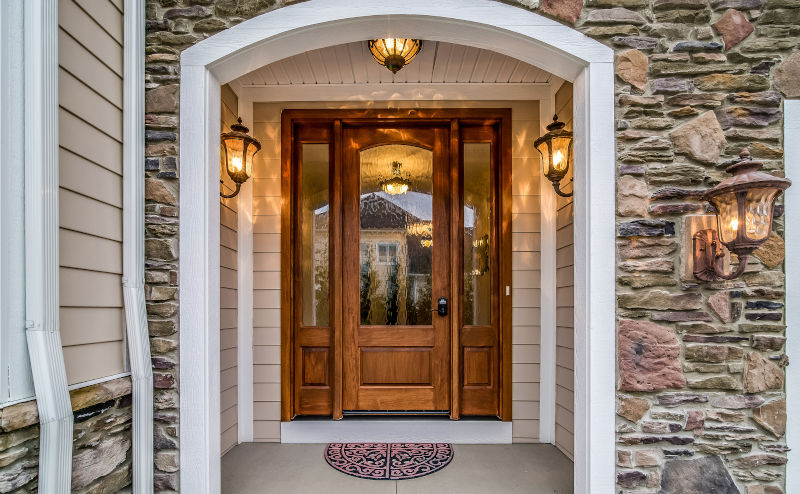
“Custom is worth it when the door has to do something a pre-made can't — fit a heritage opening, anchor a renovation, match a specific home style. When a standard size works, a made-to-order door from a manufacturer's standard line will usually give you most of the benefit without the custom lead time. The harder part is the installation — a beautiful door installed badly is worse than a standard door installed well.”
— Tony Wong, Project Manager, Canadian Choice Windows & Doors
Toronto entry door trends 2026 at a glance
| Feature | Trending direction in 2026 |
|---|---|
| Colours | Matte black, sage green, deep red, navy, warm wood tones |
| Materials | Steel (most secure, best value) Canadian Choice Windows & Doors product line. Fibreglass and wood as alternatives. |
| Styles | Flush panels, larger glass inserts, mixed-glass detailing |
| Hardware | Smart locks, oversized pulls, mixed-metal finishes |
| Glass | Frosted, clear, bevelled, or tinted chosen by home style |
| Tech integration | Smart locks, video doorbells, geofencing, voice control |
| Warranty | 10 to 25 years standard; installation quality matters most |
| Custom builds | Worth it for heritage homes, oversized entries, high-end renovations |
Tips for Toronto buyers in 2026
- Choose steel if you want strong security, low maintenance, and the best value for Toronto's climate.
- Confirm ENERGY STAR and CSA certifications before signing both are easy to verify.
- Don't overlook hardware and glass. They define how the door looks from the street more than the door material itself.
- Ask whether installation is done by the manufacturer's own team or a subcontractor. The answer affects warranty coverage.
- Get the warranty in writing, with the duration, what's covered, and whether it's transferable on sale.
Why Toronto homeowners choose Canadian Choice Windows & Doors for entry doors
Canadian Choice Windows & Doors has been serving Toronto-area homes for over 40 years. Every steel entry door is manufactured in Canada at our facility, custom-built to your exact opening, and installed by our own in-house teams with no subcontractors.
- Recommended by Bryan Baeumler, HGTV host and Canada's recognized construction expert.
- Over 3,100 positive reviews on HomeStars.
- More than 1 million windows and doors are installed across Canada.
- 25-year transferable warranty on every entry door.
- DraftLOCK sealing technology is engineered to prevent air leakage and improve thermal performance.
- Built to ASTM and NFRC standards. Made with 100% eco-friendly, recyclable uPVC components in the frame.
- Energy rating improvement of up to 30% over older entry doors through air-leak prevention and thermal upgrades.
- A dedicated Toronto project manager guides every project from consultation through installation.
Frequently asked questions
What's the most popular entry door colour in Toronto for 2026?
Matte black remains the strongest single colour, particularly on modern and new-build homes. Sage green is the fastest-growing choice for renovations, while deep red and navy stay popular in heritage neighbourhoods. Warm wood tones continue to dominate suburban two-storey homes.
Is steel or fibreglass better for Toronto's climate?
Both materials handle Toronto's freeze-thaw cycles significantly better than wood. Steel is more secure and more affordable, with a polyurethane foam core and a thermal break that delivers strong insulation. Fibreglass resists warping, denting, and rot and convincingly mimics wood grain, but it costs more. Canadian Choice Windows & Doors manufactures steel entry doors, specifically not fibreglass, and recommends steel as the practical choice for most Toronto homes.
How long do modern entry doors last?
Most well-built steel and fibreglass entry doors last 20 to 30 years or longer. Lifespan depends on three things: material quality, installation precision, and ongoing maintenance. Wood doors have a shorter lifespan in Canadian climates, typically 10 to 20 years, depending on exposure and upkeep.
What certifications should I look for in an entry door?
ENERGY STAR (which confirms the door meets Canadian energy-efficiency requirements for your climate zone) and CSA Group certification (which confirms it meets Canadian Standards Association requirements for residential construction) are the two most important. A clear, transferable warranty backed directly by the manufacturer is the third piece worth confirming before purchase.
Are smart locks worth installing on an entry door?
For most homeowners, yes particularly families with multiple users, frequent guests, or short-term rental needs. The main features that justify the investment are keypad entry (no more spare keys), activity logs (you can see when each code was used), and integration with broader home automation. The lock is only as secure as the door it's mounted on, so installation quality matters more than the lock brand.
How much glass is too much in a front door?
There's no fixed limit, but the more glass, the more you trade security and insulation for natural light. For entry doors in Toronto, ¾-lite panels and full-light doors are popular choices — both can include Low-E coatings to maintain thermal performance and decorative or frosted glass options to maintain privacy. If you want more light without more glass in the door itself, sidelites and transoms achieve that effect.
Are custom entry doors worth the extra cost?
It depends on your home. For heritage homes with non-standard openings, double-door entries, or specific architectural requirements, custom work is often necessary. For standard openings in newer homes, a made-to-order door from a manufacturer's standard line will give you most of the benefits at a lower cost and with a shorter lead time. Canadian Choice Windows & Doors builds every steel entry door to order for your specific opening, with a wide range of styles, glass options, and hardware configurations.
What's typically covered under an entry door warranty?
Most entry door warranties cover manufacturer defects (warping, cracking, separation), finish failure (peeling, fading), glass insert sealing, and hardware function. Coverage usually runs 10 to 25 years on steel and fibreglass, less on wood. Installation issues are often excluded unless the door was installed by the manufacturer's own team. Canadian Choice Windows & Doors entry doors carry a 25-year transferable warranty that includes installation.

1000’s of Colours & Textured Finishes
Transform your home from ordinary to extraordinary with our new coloured and non-glare textured finishes. Available in a wide array of colours as well as custom matched colours for your very own personalized design.
Our Most Popular Replacement Window Colours: