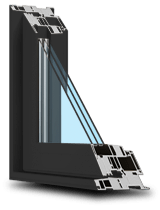
Best Window Solutions for High-Ceiling Homes
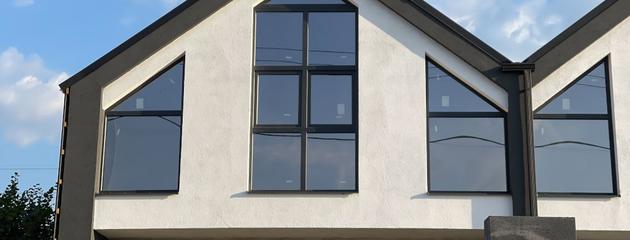

Key Takeaways
- Fixed, picture, clerestory, and transom windows are ideal for high-ceiling homes, offering various benefits in terms of light, airflow, and aesthetics.
- High-ceiling windows can both improve and complicate energy efficiency, depending on the glazing, insulation, and placement.
- Custom window solutions are often necessary for vaulted or tall spaces due to their specific sizing requirements, architectural integration, and performance expectations.
- Selecting the right frame material is crucial for the longevity, efficiency, and aesthetics of windows in tall installations.
- Privacy can be maintained in large window areas with glass treatments, blinds, or innovative technologies.
- Homes with tall windows often benefit from increased resale value and design appeal if planned strategically.
According to Helen Sin, Consumer Success Manager , tailoring window solutions to a home’s unique structure is crucial for achieving optimal performance, comfort, and style.
What are the best window styles for homes with high ceilings?
When designing or upgrading a home with high ceilings , the choice of window style plays a central role in shaping natural light, ventilation, aesthetics, and energy efficiency. The right design strikes a balance between form and function. Let's take a closer look at four styles most suitable for tall or vaulted interiors.
Fixed Windows
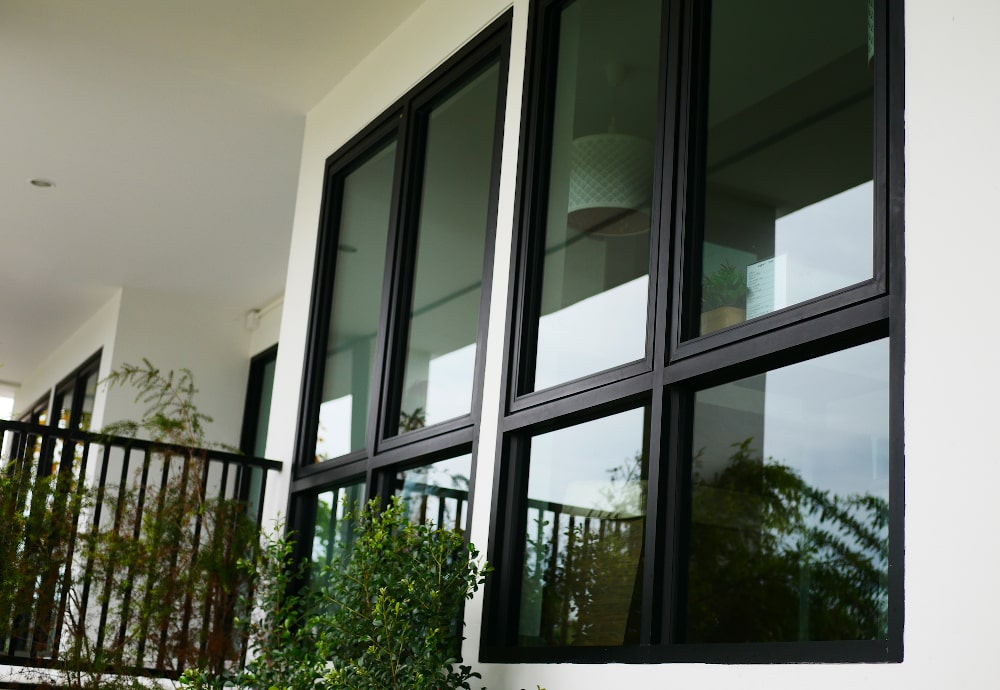
Fixed windows are non-operable units commonly placed in upper-wall or gable-end areas to maximize natural light.
-
Pros
:
- Excellent for uninterrupted views and daylighting.
- Highly energy-efficient when paired with low-E coatings and argon gas fills.
- Fewer mechanical parts mean lower maintenance.
-
Cons
:
- Do not open, so they offer no natural ventilation.
- They can contribute to heat buildup if not properly treated or shaded.
Best Use : Complementary to operable windows or as high accent windows in cathedral spaces.
Picture Windows
Picture windows integrate well with contemporary or minimalist interiors thanks to their clean, unobstructed glazing

-
Pros
:
- Maximizes natural light and exterior sightlines.
- Seamless integration with contemporary or minimalist designs.
-
Cons
:
- No airflow.
- A large glazing area can lead to heat loss or gain if not adequately insulated.
Best Use : Ideal for double-height living rooms where dramatic light and views are prioritized over airflow.
Clerestory Windows
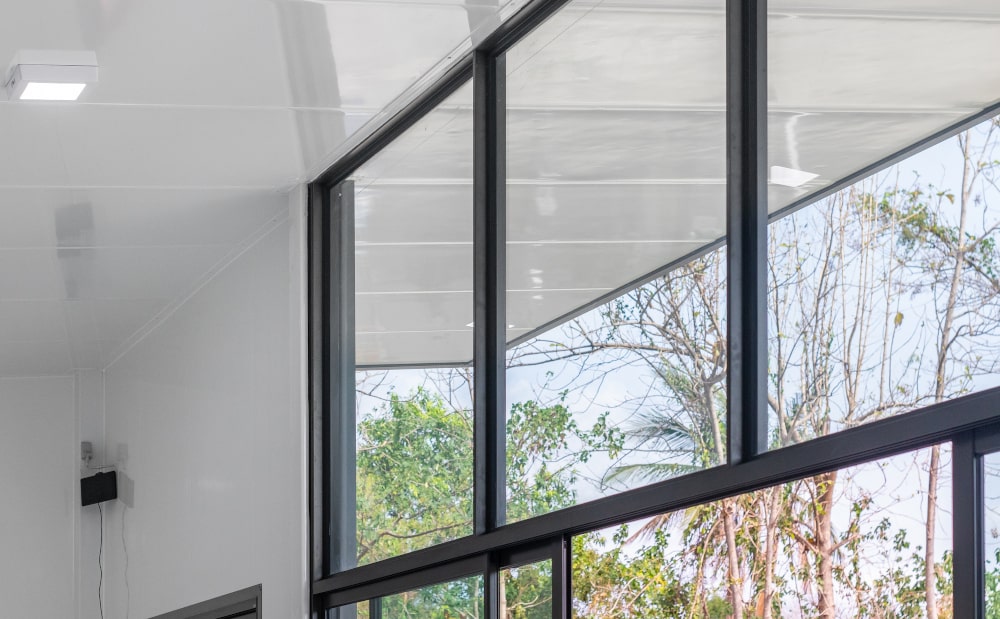
Clerestory windows are a band of horizontal windows set near the roofline, often above eye level.
-
Pros
:
- Provides soft, indirect lighting throughout the day.
- It can be operable to allow hot air to escape, enhancing natural ventilation.
- Helps create a balanced visual rhythm along upper walls.
-
Cons
:
- May require custom sizing or framing, especially in renovations.
- Harder to clean or operate manually without automation.
Best Use : Passive solar homes or loft-style interiors needing both privacy and light. Clerestory windows are especially effective in reducing glare while still brightening the room, which is a key advantage in tall or open-concept spaces.
Transom Windows
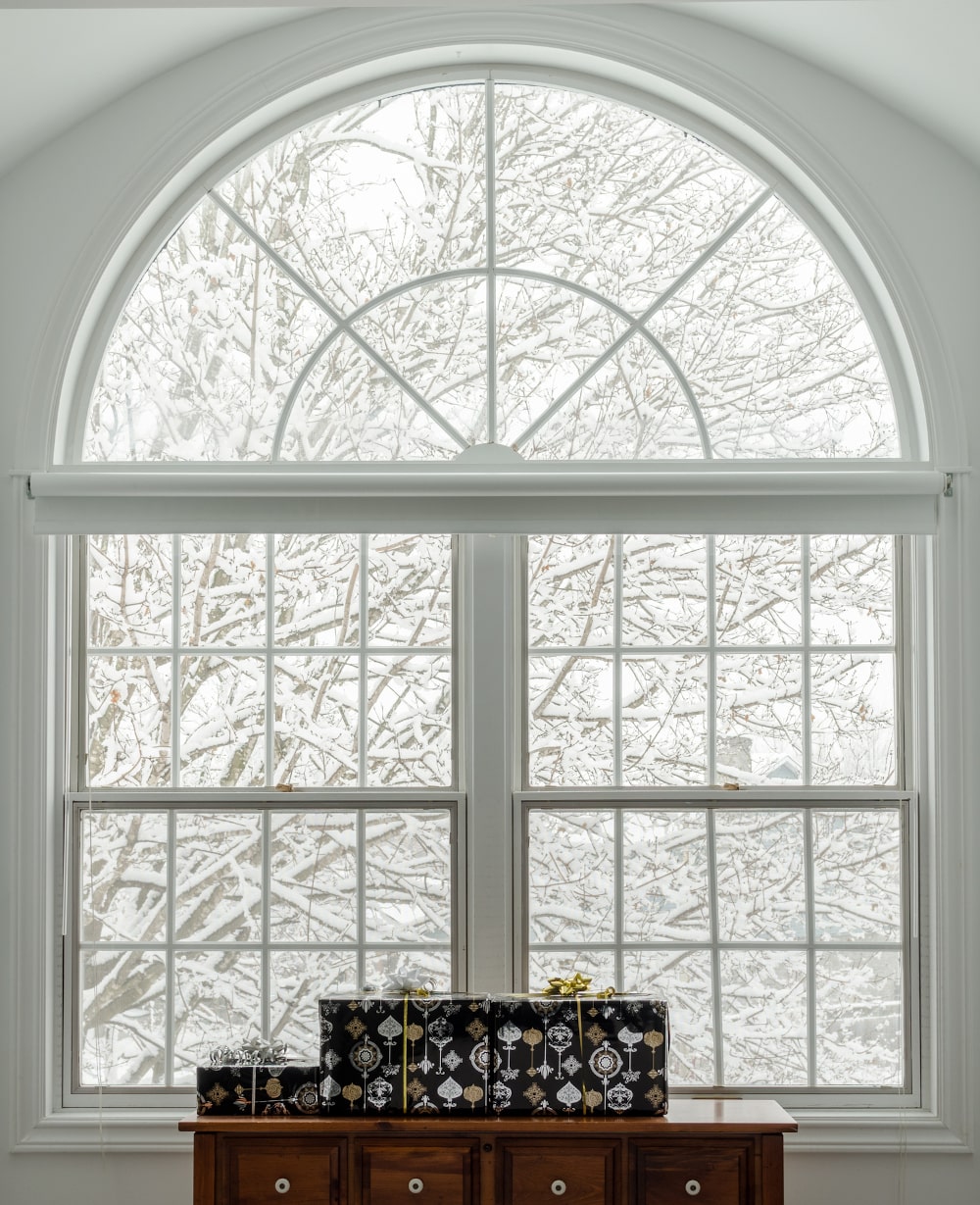
Transoms are smaller windows placed above doors or larger windows to add light without compromising privacy.
-
Pros
:
- A classic solution for taller spaces, particularly in traditional or transitional homes.
- Can be operable, enabling airflow without opening primary windows.
-
Cons
:
- Less light than picture or clerestory windows.
- Custom transoms may increase fabrication costs depending on size and materials.
Best Use : Entryways or bathrooms where added light and a sense of space are needed.
Comparing Window Styles
| Window Style | Light Control | Ventilation | Energy Efficiency | Maintenance | Best Use |
|---|---|---|---|---|---|
| Fixed | High | None | High (if glazed) | Low | High gables, architectural accents |
| Picture | Very High | None | Moderate-High | Low | Living rooms, modern designs |
| Clerestory | High | Possible | High (passive gain) | Moderate | Lofts, passive solar, hallways |
| Transom | Medium | Optional | Moderate-High | Moderate | Entryways, above doors or windows |
Tony Wong, Project Manager , adds: “ We always advise considering long-term maintenance and seasonal airflow when selecting high wall windows. Automation and glazing technology now make it easier to get beauty without losing practicality.”
What materials are best for frames in high-ceiling window installations?
Choosing the right window frame material is especially important for homes with high ceilings. Large-format windows often experience greater thermal exposure and structural stress, so the integrity of the frame plays a critical role in determining performance, style, and cost. Let’s compare the top materials: wood, vinyl, fibreglass, and aluminum.
Wood Frames
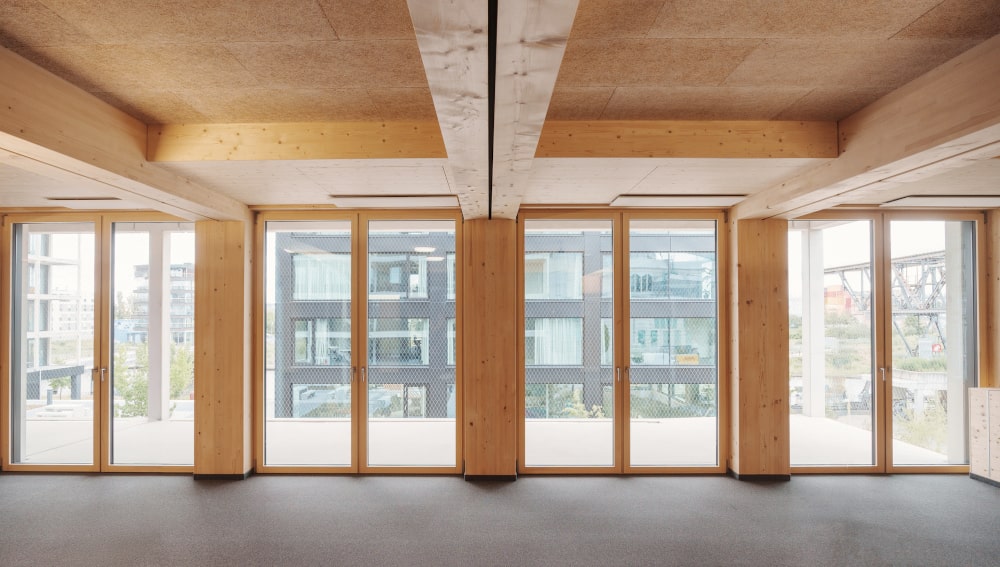
-
Pros
:
- Classic, warm appearance ideal for heritage or luxury homes.
- Naturally insulating when properly sealed.
-
Cons
:
- High maintenance: requires regular painting or sealing.
- Expensive and prone to warping in extreme moisture.
Best Fo r: Traditional or custom-designed homes seeking authenticity.
Vinyl Frames
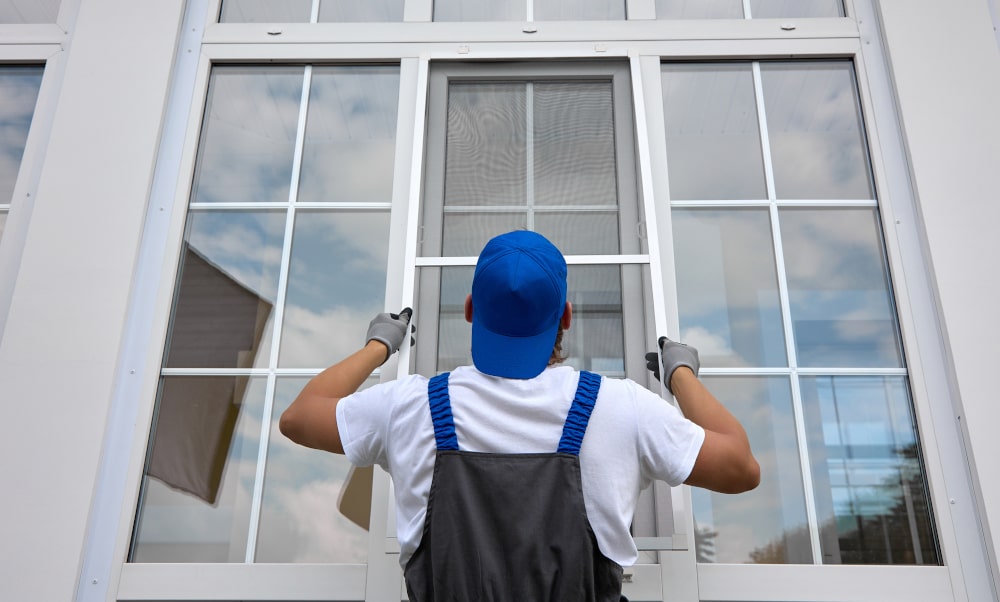
-
Pros
:
- Budget-friendly and energy efficient.
- Low maintenance; does not require painting.
-
Cons
:
- Limited colour and style options.
- Less rigid for huge formats, may require reinforcement for very large window spans.
Best for : Value-conscious buyers seeking durable and efficient solutions.
Fibreglass Frames
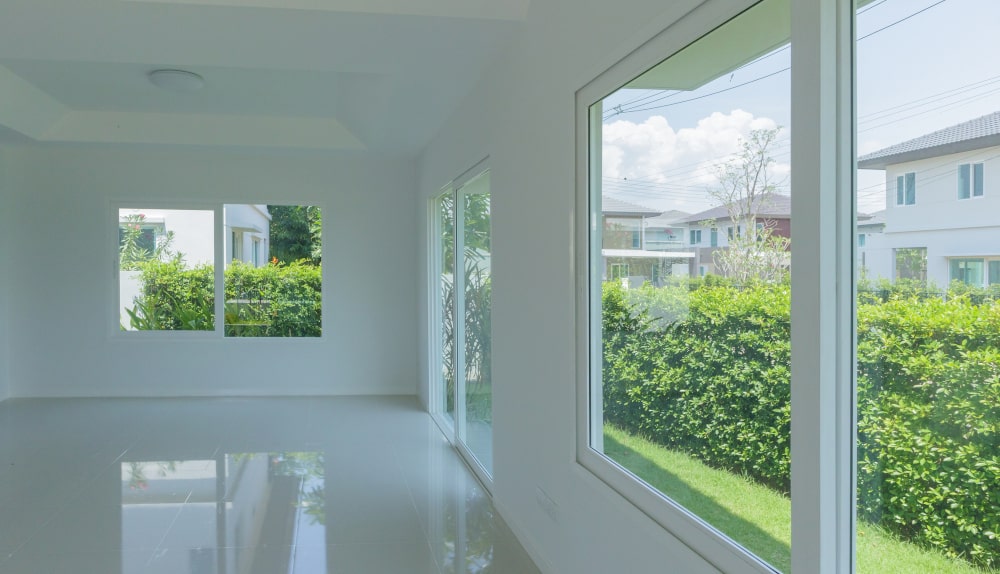
-
Pros
:
- High strength-to-weight ratio; excellent for large or tall windows.
- Expands and contracts less in response to temperature changes.
- Paintable for flexible design options.
-
Cons
:
- Mid-to-high cost range.
- Limited availability depending on region.
Best For : High-performance builds or custom homes with unique needs.
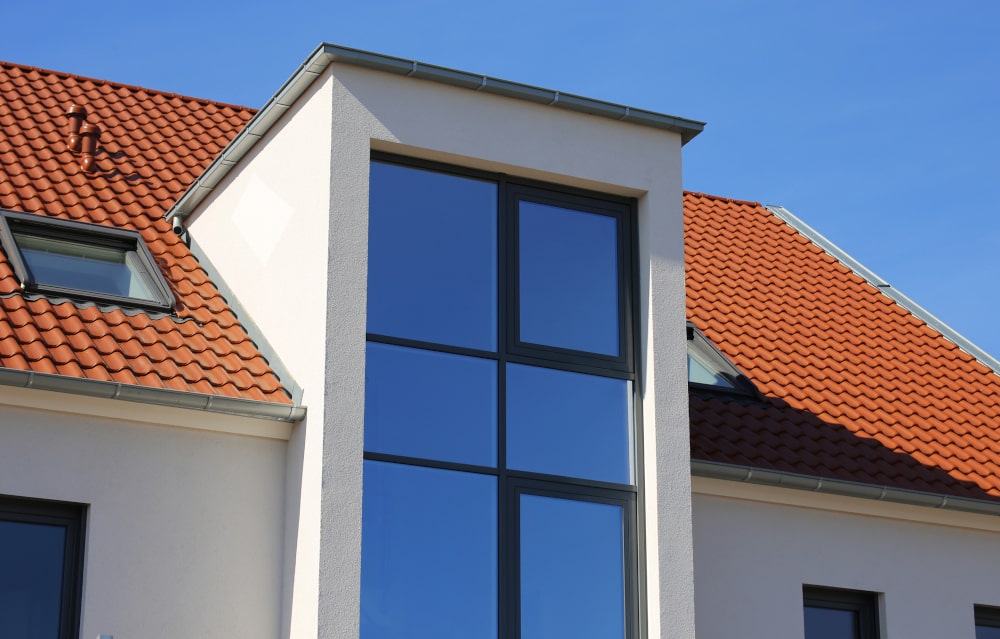
Aluminum Frames
-
Pros
:
- Sleek, modern appearance; slim sightlines.
- Extremely durable and rigid.
-
Cons
:
- Poor insulation unless thermally broken.
- Susceptible to condensation in cold climates.
Best For : Modern architecture or commercial-style builds with proper thermal breaks. Because aluminum conducts heat more readily than other materials, choosing models with high-quality thermal breaks is essential in colder regions of Canada.
Frame Material Comparison
| Material | Style Appeal | Durability | Energy Efficiency | Cost | Maintenance | Best Use |
|---|---|---|---|---|---|---|
| Wood | High (classic/luxury) | Medium (needs care) | Moderate-High | $$$ | High | Luxury homes, traditional designs |
| Vinyl | Moderate (standard) | Good | High | $ | Low | Budget-focused renovations or new builds |
| Fiberglass | High (customizable) | Excellent | Very High | $$-$$$ | Low | Custom projects, large window installations |
| Aluminum | Very High (modern) | Excellent | Low-Moderate | $$ | Low | Minimalist/modern homes with thermal breaks |
How can homeowners balance privacy and openness with tall windows?
Tall windows flood interiors with light, elevating room aesthetics. But what about privacy? Especially in urban areas or homes with second-storey neighbours, finding that balance between open views and discretion can be a challenge. Fortunately, there are several innovative, stylish solutions.
Frosted or Textured Glass
- Benefit : Maintains daylight while diffusing visibility.
- Style Fit : Works beautifully in bathrooms, stairwells, or transitional spaces.
- Limitation : Permanent and can reduce visibility from the inside out.
Smart Glass and Switchable Tinting
- Benefit : Electronically controlled opacity; switch from clear to frosted with a tap.
- Best Use : Bedrooms, home offices, or any area needing day-to-night flexibility.
- Consideration : Typically, a higher upfront investment due to the technology involved.
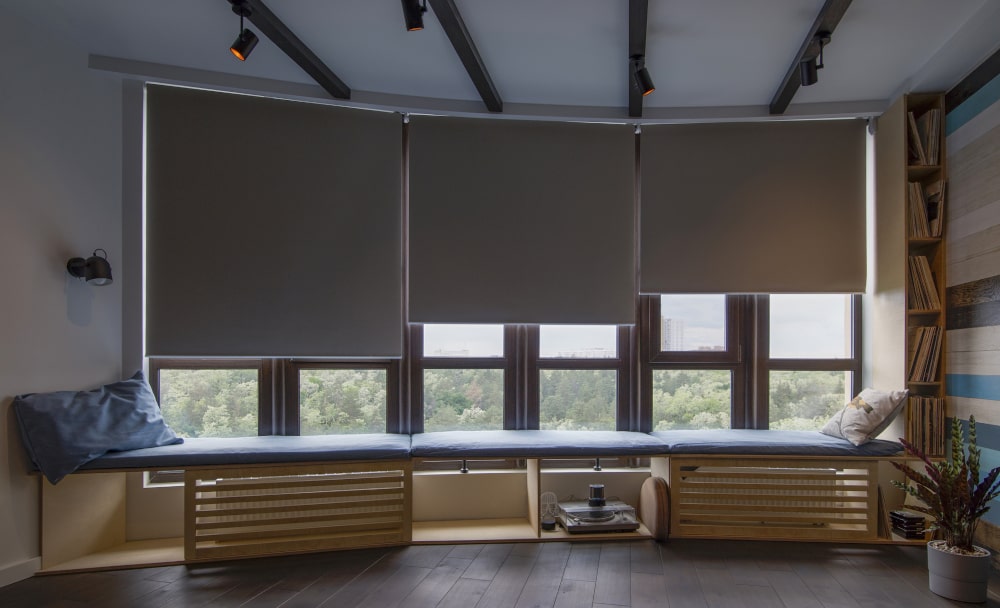
Automated Blinds or Curtains
- Benefit : Timed or remote-controlled operation allows convenience for unreachable heights.
- Design Tip : Pair sheer curtains for softness during the day and blockouts for night.
- Smart Integration : Can connect to lighting schedules or smart home systems.
Interior Screens or Louvres
- Benefit : Provides a visual break without eliminating natural light.
- Best Use : Open-concept spaces or staircases with exposed glazing.
Expert Tip from interior design consultant Samantha Dreyfus (Toronto-based) :
“Layering is key. I often combine sheer automated shades with smart glass for clients who want full control over their light and privacy. It’s not just about blocking views — it’s about shaping how you experience the room.”
Do high ceiling windows increase home value and curb appeal?
Yes — when designed and installed correctly. Well-designed high-ceiling windows often act as architectural focal points, drawing attention and enhancing a home’s visual appeal — both inside and out.
Return on Investment (ROI)
While ROI varies based on the housing market, adding dramatic windows to living areas, staircases, or front facades has been shown to boost resale potential. According to Remodelling Magazine's Cost vs. Value Report, upscale window replacements recover up to 68.5% of project costs.
Curb Appeal and Design Impact
- Creates bold vertical lines, enhancing the perceived height of a home.
- Allows for show-stopping façade treatments, mainly with transoms and picture windows.
- Enhances first impressions during home walkthroughs or open houses.
Visual Before-and-After Scenarios
Imagine replacing a traditional window setup with a clerestory-paired picture window combo:
- Before : Dark entry hall, dated curb profile.
- After : Light-filled foyer, modernized exterior, boosted first impression.
What are the most popular modern designs for high ceiling windows?
Today’s high ceiling windows reflect a broader trend in architecture: blending function with understated elegance. From black frames to expansive glazing, the modern aesthetic is clean, bold, and purpose-driven. Here are the standout trends homeowners and designers are embracing.
Floor-to-Ceiling Glass Walls
- Impact : Creates a dramatic, seamless connection between interior and exterior.
- Functionality : When operable, it improves ventilation; fixed formats maximize energy performance.
- Design Note : Often paired with minimalist frames or curtain wall systems.
Visualization Tip : Use digital design tools to preview how floor-to-ceiling windows transform the space before installation..
Matte Black or Graphite Frames
- Why it works : Offers contrast and a modern edge against both light and dark interiors.
- Best Fit : Industrial-chic, modern farmhouse, and minimalist homes.
- Durability : Powder-coated aluminum or fibreglass frames offer a long-lasting finish that won't fade.
Minimalist Mullions and Slim Sightlines
- Design Feature : Reduces visual clutter, highlights glass.
- Popular With : Passive homes, LEED-certified builds, and modernists.
- Technical Note : Often requires reinforced materials (fibreglass, aluminum) to maintain strength.
Suggestion : Showcase window configurations using 3D visualization tools like SketchUp or RoomSketcher to model before/after scenarios for homeowners.
Architectural Grids and Asymmetry
- Trend : Moving away from traditional symmetry to bold, modern geometric layouts.
- Use Case : Multi-pane floor-to-ceiling windows in staggered formation.
- Benefit : Adds character and contemporary flair.
Smart Integration
- Highlight : High ceiling windows that integrate with smart lighting, blinds, and solar sensors.
- Advantage : Automatic light adjustment, privacy settings, and energy optimization.
Modern Design Features
| Feature | Visual Impact | Best Paired With | Material Compatibility | Home Style Fit |
|---|---|---|---|---|
| Floor-to-ceiling glass | Very High | Open concept layouts | Fibreglass, aluminum | Contemporary, luxury homes |
| Matte black frames | Bold and modern | White walls, neutral palettes | Aluminum, fibreglass | Industrial, modern, farmhouse |
| Minimalist mullions | Sleek, clean sightlines | High glass-to-frame ratio | Reinforced fibreglass/alum. | Passive, Scandinavian |
| Geometric grids/asymmetry | Artistic, unconventional | Large blank wall spaces | Wood, aluminum | Architect-designed builds |
| Smart automation | High-tech, functional | Blinds, smart home systems | Any | High-end and tech-forward homes |

What permits or building codes apply to high ceiling window projects in Canada?
Installing windows in high-ceiling areas doesn’t just require a design eye — it also requires compliance with a range of Canadian building codes and local bylaws. Neglecting permits or misinterpreting guidelines can lead to safety issues, delays, or fines.
1. National Building Code of Canada (NBC)
-
Key Requirements:
- Windows over a certain height must use safety glass (tempered or laminated).
- Openable windows above 1.5m must limit fall risk (guards, restrictors).
- U-factor and solar heat gain coefficients (SHGC) must align with regional energy requirements.
Source: National Research Council Canada - NBC Overview
2. Regional/Provincial Codes
-
Ontario Building Code (OBC):
- Reinforces NBC but may add specifics, such as maximum glass area without support framing.
- Requires permits for any structural window alterations.
-
BC & Quebec Codes:
- Include seismic considerations for large fixed windows.
- Additional insulation criteria in colder zones (Zone 6+).
3. Municipal Permits and Zoning Bylaws
-
Most municipalities require permits if the window:
- Increases wall opening area.
- Alters structural supports (e.g., headers, load-bearing beams).
- Zoning bylaws may restrict window placements based on privacy or setback rules (especially side elevation windows).
4. HOA or Condominium Rules
-
Homeowners in planned communities or condos must verify design approval for:
- Frame colour
- Window grid design
- Visible treatments (e.g., blinds, curtain colour facing out)
Tip : Check with your municipality’s building department to confirm permit requirements, as rules can vary between regions.
Regulatory Considerations
| Regulatory Level | What to Watch For | Applies To |
|---|---|---|
| National (NBC) | Safety glass, fall protection, energy performance | All Canadian builds |
| Provincial (e.g., OBC) | Structural rules, energy code alignment | Ontario, BC, Quebec (varies) |
| Municipal | Zoning setbacks, structural permits | All local jurisdictions |
| HOA/Condo | Appearance guidelines, uniformity | Planned or shared developments |
What’s the final verdict on choosing windows for homes with high ceilings?
High ceiling windows are one of the most transformative design choices a homeowner can make. But as with any investment, success comes from thoughtful planning.
Key Benefits Recap
- Light and Space : Maximize natural light and create a sense of grandeur.
- Ventilation : Clerestory and transom configurations enhance airflow.
- Energy Efficiency : With proper glazing and placement, they reduce costs.
- Curb Appeal : Enhances resale value and aesthetic appeal.
Most Recommended Styles
| Style | Best Feature | When to Use It |
|---|---|---|
| Fixed | Light, low-maintenance | For accent lighting in vaulted ceilings |
| Clerestory | Airflow, daylighting | Passive ventilation + upper wall privacy |
| Picture | Views, drama | Feature walls in double-height spaces |
| Transom | Design balance | Over doors or windows in entryways |
Pro Tips for Installation
- Plan Early : Window placement affects HVAC, lighting, and structural plans.
- Custom is Common : Tall windows usually require custom sizes and reinforcement.
- Don't Skimp on Glass : Low-E, argon-filled, or triple glazing is essential.
- Use Professional Help : Work with certified installers familiar with vaulted structures.
Final Thought
With the right window type, frame material, and compliance planning, high ceiling windows offer more than just a view — they add lasting comfort, value, and architectural identity to your home.
FAQ
What window styles work best for high-ceiling homes?
Fixed, picture, clerestory, and transom windows are ideal. Fixed and picture windows maximize light and views, while clerestory and transoms enhance ventilation and privacy.
Which frame materials are most suitable for tall window installations?
Wood, vinyl, fibreglass, and aluminum are standard. Wood offers classic appeal, vinyl is low-maintenance, fibreglass provides strength and thermal stability, and aluminum delivers a sleek, modern look with proper thermal breaks.
How can I maintain privacy with large high-ceiling windows?
Options include frosted or textured glass, bright switchable tinting, automated blinds, or interior screens/louvres to control visibility without sacrificing light.
Are there special permits required for installing high-ceiling windows in Canada?
Yes. Compliance with the National Building Code (NBC), provincial codes (e.g., Ontario Building Code), and local municipal permits is essential. Safety glass, structural reinforcement, and energy performance must meet regulations. HOA or condo approvals may also be required.
Should I hire a professional to install high-ceiling windows?
Absolutely. Due to custom sizing, reinforcement needs, and glazing technology, professional installers ensure proper performance, safety, and compliance with codes.

1000’s of Colours & Textured Finishes
Transform your home from ordinary to extraordinary with our new coloured and non-glare textured finishes. Available in a wide array of colours as well as custom matched colours for your very own personalized design.
Our Most Popular Replacement Window Colours: