Are Bifold Patio Doors Energy Efficient in Canadian Winters?


Bifold patio doors are becoming increasingly popular in modern Canadian homes. Homeowners appreciate their ability to open wide, bring in natural light, and create a strong connection between indoor and outdoor living spaces. However, because these doors have multiple panels and large glass surfaces, many homeowners ask an important question: Can bifold patio doors remain energy-efficient during cold Canadian winters?
Modern bifold patio door systems are designed with insulated glazing, compression-sealing systems, and thermally broken frames to reduce heat loss and maintain indoor comfort. When properly engineered and professionally installed, these doors can perform well even in harsh winter conditions.
This guide explains how bifold patio doors work, how they retain heat, how they compare with sliding patio doors, and what features Canadian homeowners should consider when choosing an energy-efficient door system.
Key Takeaways
- Bifold patio doors use multiple connected panels that fold together along a track system, similar to an accordion, allowing large openings between indoor and outdoor spaces.
- When fully opened, bifold doors can create an opening of up to 90–95% of the doorway width, which is much wider than traditional sliding or hinged patio doors.
- Modern systems are designed with strong track hardware, precision hinges, and insulated frames to ensure smooth operation and durability.
- They are commonly installed in patios, decks, and backyard entrances to create seamless indoor–outdoor living spaces.
- With proper installation and high‑quality materials, bifold patio doors can perform well even in Canadian winter conditions.
What are bifold patio doors, and how do they work?
Bifold patio doors are designed to open wide between indoor and outdoor spaces. Instead of sliding halfway like traditional patio doors , the panels fold neatly to one side. This design is popular with homeowners who want more natural light and easier access to patios, decks, or backyards.
At their core, bifold patio doors operate through a series of connected panels that move along a track and fold together like an accordion. The design may look simple when it’s open, but the mechanics behind it involve carefully engineered tracks, hinges, and rollers that allow multiple panels to move smoothly while maintaining a tight seal when closed.
In Canada, exterior doors must withstand heavy use, temperature swings, and seasonal weather changes. Modern bifold systems are designed with durable materials and precision hardware to handle these conditions.

Door panel system
A bifold patio door system consists of several panels connected with heavy‑duty hinges. Each panel is mounted on rollers that glide along a track, allowing the door to fold and stack neatly when opened.
The opening process typically works like this:
- The first panel acts like a traditional hinged door.
- When it is pulled open, the connected panels begin folding.
- The panels slide along the track and stack together at the side of the frame.
This folding mechanism allows most of the doorway to remain unobstructed. Depending on the configuration, bifold systems can include two to eight panels.
Key characteristics of the panel system include:
- Interconnected hinges that allow panels to fold smoothly
- Precision rollers for quiet movement
- Locking points along the frame to keep the door secure
- Weather seals between panels to reduce air leakage
Because the panels fold rather than slide past each other, bifold doors maximize usable opening space. This is particularly beneficial for homeowners who frequently move between their living space and outdoor areas such as patios, decks, or backyard entertainment zones.
Track configurations
The track system is one of the most important components of a bifold patio door. It guides the panels' movement and supports their weight during operation.
Most systems use either a top‑hung or bottom‑rolling configuration.
Top‑hung systems support the door weight from the upper track. This often results in smoother movement and less friction when opening the door.
Some systems use bottom-rolling tracks, in which the panels are supported by rollers moving along the lower track. These systems are often used for heavier door configurations and can simplify installation in certain renovations.
Tracks are typically made of reinforced aluminum and designed to support the weight of large glass panels. When the door is fully opened, the panels fold together and sit neatly to the side of the frame. This is how bifold doors achieve opening widths of up to 90–95% of the total doorway.
Typical materials used in bifold patio doors
The materials used in bifold patio doors influence both durability and energy performance. In Canadian homes, where winters can be harsh and temperature swings are significant, the choice of materials is especially important.
Common frame materials include:
- Aluminum – strong, lightweight, and modern in appearance
- Vinyl (uPVC) – known for excellent insulation and low maintenance
- Wood or composite frames – offering a traditional appearance and natural insulation
Glass units typically include double-pane or triple-pane insulated glass, often filled with insulating gases such as argon.
These materials help bifold doors maintain performance while supporting the design goal homeowners care about most: a bright, open connection between interior living spaces and the outdoors.
Where bifold patio doors are commonly installed
Bifold patio doors are most often installed where homeowners want maximum openness and natural light.
Typical installation locations include:
- Backyard patios
- Deck entrances
- Garden‑facing living rooms
- Sunrooms
- Large kitchen openings
In many renovations, homeowners replace traditional sliding patio doors with bifold systems. The goal is not just access to the outside — it’s creating a living space that extends beyond the walls of the home.
Are bifold patio doors suitable for Canadian winters?
Canadian winters present unique challenges for exterior doors. Temperatures can drop far below freezing, snow accumulation can affect door operation, and strong winds can push cold air through even small gaps.
Because of this, homeowners often wonder whether bifold patio doors, known for their large glass areas and multiple panels, can perform well in cold climates.
The answer depends largely on design quality and installation. Modern bifold systems have evolved significantly and now include insulated frames, advanced glazing, and compression seals designed for colder regions.
Climate challenges in Canada
Canada’s climate varies by region, but several winter conditions affect exterior doors nationwide:
- Freezing temperatures
- Heavy snowfall
- Strong winter winds
- Indoor humidity leading to condensation
Exterior doors must withstand these conditions without warping, leaking air, or losing thermal efficiency.
Bifold doors address these challenges through engineered sealing systems and insulated glass units. Many systems use multi‑point locking mechanisms and compression seals that tighten the door panels against the frame when closed.
Airtight sealing systems
Unlike sliding patio doors, which often rely on brush seals, bifold patio doors use compression gaskets between panels and around the frame.
When the doors are closed and locked:
- The panels press tightly together
- Rubber or silicone seals compress between them
- The locking system pulls panels firmly into the frame
This creates an airtight barrier that helps prevent cold drafts and maintain indoor temperatures.
Helen Sin, Consumer Success Manager at Canadian Choice Windows & Doors , explains:
"Homeowners often assume folding doors mean weaker insulation, but modern systems are engineered with tight compression seals and insulated glass units. When installed correctly, they perform reliably even in Canadian winters."
Insulated glass performance
Glass accounts for a large portion of a bifold door’s surface area, so glazing performance is critical.
Most systems designed for colder climates use:
- Double‑pane or triple‑pane insulated glass
- Low‑E coatings
- Argon gas filling
These technologies help slow heat transfer through the glass.
Low‑emissivity coatings reflect indoor heat back into the home during winter while allowing natural light to pass through.
Proper installation matters
Even high‑quality door systems can underperform if installation is not precise. Installation must account for frame alignment, structural support, and proper perimeter sealing.
Tony Wong, Project Manager at Canadian Choice Windows & Doors , notes:
"In colder climates like Canada, installation is just as important as the door itself. Proper alignment and sealing ensure the system stays airtight and operates smoothly through seasonal temperature changes."
With proper materials, professional installation, and insulated glazing, bifold patio doors can remain comfortable and energy-efficient even in harsh Canadian winters.
How do bifold patio doors keep heat inside during winter?
Heat retention is one of the most important performance factors for exterior doors in Canada. During the winter months, poorly insulated doors can become a major source of heat loss.
Modern bifold patio doors address this challenge through several engineering features designed to reduce heat transfer and maintain airtight seals.
Airtight compression seals
One of the main ways bifold doors keep heat inside is through compression sealing systems.
These seals are placed:
- Between door panels
- Around the outer frame
- Along the track system
When the door closes, the panels press tightly together, compressing the seals and reducing air infiltration and drafts.
Thermal breaks in the frame
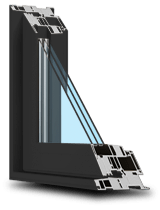
Another important feature is the thermal break built into many aluminum door frames.
A thermal break is an insulating barrier placed between the interior and exterior parts of the frame. Without it, metal frames would conduct cold temperatures directly into the building.
Thermal breaks help:
- Reduce heat conduction through the frame
- Improve interior comfort near the door
- Lower the risk of condensation
Insulated glazing units
Modern bifold patio doors typically use insulated glazing units (IGUs) consisting of two or three panes of glass separated by sealed spaces.
These units often include:
- Argon gas between panes
- Low‑E coatings
- Warm‑edge spacers
Each component improves insulation and reduces heat transfer.
Heat transfer reduction table
| Feature | How it helps reduce heat loss |
|---|---|
| Compression seals | Prevent air leakage between panels |
| Thermal breaks | Reduce heat conduction through frames |
| Low‑E glass coatings | Reflect the indoor heat back inside |
| Gas‑filled glazing units | Improve insulation between panes |
| Multi‑point locking systems | Keep panels tightly sealed |
Together, these features allow bifold patio doors to maintain strong thermal performance even with large glass surfaces.
For homeowners, this means more natural light, wider outdoor access, and improved indoor comfort during winter.
What glass options improve the energy efficiency of bifold patio doors?
Glass plays a major role in the energy performance of bifold patio doors. Because these door systems typically feature large glass surfaces, the glazing technology used in the panels directly affects how much heat stays inside during winter and how much solar heat enters during summer. In colder climates like Canada, choosing the right glass configuration can significantly reduce heat loss and improve year‑round comfort.
Modern patio doors rely on insulated glazing units (IGUs) rather than single glass panes. These units combine multiple layers of glass with insulating gases and specialized coatings to slow heat transfer. For homeowners considering bifold patio doors, understanding these glass options helps ensure the system delivers both visual openness and strong thermal performance.
Double‑pane vs triple‑pane glass
The most common energy‑efficient glazing configurations for patio doors are double‑pane and triple‑pane glass systems.
Double‑pane glass consists of two layers of glass separated by a sealed space filled with insulating gas or air. This space slows heat transfer through the glass.
Triple‑pane glass adds a third layer of glass and two insulating chambers, further improving thermal resistance.
Double‑pane systems are widely used because they provide a good balance between performance, cost, and weight. However, in colder climates such as Canada, many homeowners choose triple‑pane glazing for improved insulation.
Benefits of double‑pane glass include:
- Better insulation than single‑pane glass
- Lower cost compared with triple‑pane systems
- Reduced condensation risk
Benefits of triple‑pane glass include:
- Higher insulation values
- Improved noise reduction
- Better indoor temperature stability
Triple‑pane units are heavier than double‑pane systems, so door frames and hardware must be designed to support the additional weight. High‑quality bifold systems use reinforced frames and durable rollers to accommodate these heavier glass panels.
Low‑E coatings
Another key energy‑efficiency feature is the Low‑E (low‑emissivity) coating applied to glass surfaces.
Low‑E coatings are extremely thin metallic layers applied to glass during manufacturing. These coatings are designed to reflect heat energy while allowing visible light to pass through.
In winter, Low‑E glass reflects indoor heat back into the home. In summer, it helps reduce solar heat gain by reflecting some of the sun's infrared radiation.
This technology improves comfort without reducing natural daylight, which is especially important for large glass door systems like bifold patio doors.
Low‑E glass helps homeowners achieve:
- Lower heating costs during winter
- Reduced solar heat gain during summer
- Better indoor temperature stability
- Increased overall energy efficiency
Argon gas filling
Many insulated glass units are filled with argon gas, an inert gas that improves insulation performance.
Argon is denser than air, which slows heat transfer between the interior and exterior panes of glass. When sealed between glass layers, argon helps reduce convection currents that would otherwise allow heat to move more easily through the window or door.
Because argon is colourless, odourless, and non‑toxic, it is widely used in residential glazing systems.
Argon‑filled glazing units typically provide:
- Improved insulation performance compared with air‑filled units
- Reduced heat transfer through glass
- Better overall thermal efficiency
Laminated safety glass
Safety is another important consideration for patio doors. Many bifold systems incorporate laminated safety glass, particularly for large panels.
Laminated glass consists of two layers of glass bonded together with a durable plastic interlayer. If the glass breaks, the interlayer holds the fragments together, reducing the risk of injury.
Beyond safety, laminated glass also offers secondary benefits, including improved sound insulation and increased durability.
For homes near busy streets or in windy areas, laminated glass can help reduce outdoor noise while maintaining strong structural performance.
Insulated glazing units (IGUs)
All of the technologies above, multiple panes, gas filling, and Low‑E coatings, are combined in insulated glazing units.
IGUs are sealed systems designed to minimize heat transfer. When used in bifold patio doors, they allow homeowners to enjoy expansive views of glass without sacrificing insulation performance.
A typical high‑performance IGU includes:
- Two or three glass panes
- Argon or krypton gas filling
- Low‑E coatings
- Warm‑edge spacers that reduce heat transfer at the glass edges
Energy‑efficient glass specification table
| Glass Technology | How It Improves Efficiency | Typical Benefit |
|---|---|---|
| Double‑pane glass | Two layers of glass with a sealed air or gas space | Reduces heat transfer compared with a single glass |
| Triple‑pane glass | Three layers of glass with two insulating spaces | Higher insulation and improved noise reduction |
| Low‑E coating | Reflects infrared heat while allowing light through | Keeps the heat indoors during winter |
| Argon gas filling | Dense gas between panes slows heat transfer | Improves insulation performance |
| Laminated glass | Bonded glass layers with a protective interlayer | Adds safety and sound reduction |
Together, these glazing technologies allow bifold patio doors to deliver strong energy performance while maintaining the wide glass views that homeowners want.
How do bifold patio doors compare with sliding patio doors in terms of insulation?
Homeowners often compare bifold patio doors with sliding patio doors when planning a renovation. Both door styles offer large glass surfaces and access to outdoor spaces, but their designs influence how well they insulate a home.
The key differences involve sealing systems, opening configurations, frame structure, and glazing performance. Understanding these differences can help homeowners choose the option that best suits their climate, home design, and energy efficiency goals.
Structural differences between bifold and sliding doors
Sliding patio doors typically consist of two large panels mounted on tracks. One panel remains fixed while the other slides horizontally behind it.
Bifold patio doors, by contrast, use several connected panels that fold together along a track system.
Because sliding doors overlap when open, only about half of the opening can be used at a time. Bifold doors fold completely to the side, allowing up to 90–95% of the doorway to open.
However, this design difference also influences how each door type seals when closed.
Sealing systems and air leakage
Sliding patio doors rely on brush seals and overlapping panels to prevent air leakage. While these systems are effective, the sliding motion requires small gaps to allow the panel to move along the track.
Bifold patio doors use compression seals between panels and around the frame. When closed, the locking system pulls the panels tightly together, compressing the seals.
This type of sealing can reduce air infiltration when the door is properly installed and adjusted.
Frame construction and thermal performance
Another difference lies in frame design.
Sliding doors typically use larger frame sections to support the moving panel.
Bifold doors distribute weight across multiple panels and hinges. Modern systems often use thermally broken aluminum frames to reduce heat transfer.
A thermal break is an insulating barrier placed inside the metal frame to prevent heat from transferring from the exterior to the interior.
Both door types can achieve strong thermal performance when paired with high‑quality insulated glazing.
Insulation performance comparison
Energy efficiency depends heavily on the quality of the glass and frame materials, not just on the door style.
However, certain characteristics influence performance.
| Feature | Bifold Patio Doors | Sliding Patio Doors |
|---|---|---|
| Opening size | Up to 90–95% open | Typically 50% open |
| Sealing system | Compression seals between panels | Brush seals and overlapping panels |
| Frame structure | Multiple connected panels | Two large panels |
| Insulation potential | High with proper glazing and seals | High with insulated frames and glazing |
| Typical use | Large openings and indoor‑outdoor living | Simpler installations and smaller openings |
When each option may be more efficient
In extremely cold climates, systems with fewer panel joints may have fewer potential air-leakage points.
Modern bifold systems with high-quality seals and insulated frames can still provide strong insulation performance while offering a wider opening.
For homeowners prioritizing panoramic views and large outdoor access, bifold doors offer a strong balance of design flexibility and energy efficiency.
Ultimately, the energy efficiency of either door type depends on materials, glazing technology, and installation quality.
What features should homeowners look for in energy-efficient bifold patio doors in Canada?
Choosing bifold patio doors for a Canadian home requires careful attention to performance features. Because these doors include multiple panels and large glass surfaces, their design must address insulation, durability, and weather resistance.
Energy‑efficient bifold patio doors combine advanced glazing technology with strong frames, reliable hardware, and effective sealing systems. These features help ensure the doors remain comfortable and efficient throughout Canada’s cold winters and warm summers.
Multi‑point locking systems
A multi‑point locking system secures the door at several points along the frame rather than relying on a single central lock.
When engaged, these locking points pull the door panels tightly against the frame. This improves both security and airtightness.
Benefits include:
- Reduced air leakage
- Improved structural stability
- Increased security
For bifold patio doors, multi‑point locking systems are especially important because they help maintain tight compression seals between panels.
Thermally broken aluminum frames
Aluminum is commonly used in bifold patio doors because it is lightweight, strong, and corrosion-resistant. However, metal conducts heat easily.
To address this issue, modern aluminum frames include thermal breaks, insulating materials placed between the frame's interior and exterior sections.
Thermally broken frames help:
- Reduce heat transfer
- Improve indoor comfort
- Prevent condensation on interior surfaces
Insulated glass panels
High‑performance bifold doors use insulated glass panels designed to minimize heat transfer.
Important glazing features include:
- Double‑ or triple‑pane glass
- Low‑E coatings
- Argon or krypton gas filling
These features work together to slow heat transfer through the glass while allowing natural light to enter the home.
Weather seals and gaskets
Weather seals are critical for maintaining energy efficiency. Bifold doors use multiple sealing points between panels and around the outer frame.
These seals protect against:
- Cold air infiltration
- Water penetration
- Wind‑driven snow
Durable rubber or silicone gaskets are commonly used because they maintain flexibility even during freezing temperatures.
Durable hardware systems
Because bifold doors rely on multiple moving panels, the hardware must be strong enough to support repeated operation.
High‑quality systems include:
- Reinforced rollers
- Stainless steel hinges
- Heavy‑duty tracks
Durable hardware ensures smooth operation and prevents alignment problems that could affect sealing performance.
Hidden screens for ventilation
Some bifold patio door systems include retractable or hidden screens. These screens allow homeowners to open the doors to let in fresh air while keeping insects outside.
Retractable screens typically slide into discreet housing units when not in use, preserving the clean appearance of the door system.
Energy‑efficient bifold door specification table
| Feature | Purpose | Benefit |
|---|---|---|
| Multi‑point locking system | Secures the door along the frame | Improves airtight sealing |
| Thermally broken aluminum frame | Reduces heat transfer | Better winter comfort |
| Insulated glazing panels | Multiple glass layers with a gas fill | Higher energy efficiency |
| Weather seals and gaskets | Prevent air and water infiltration | Improved durability |
| Heavy‑duty hardware | Supports large glass panels | Smooth and reliable operation |
| Retractable screens | Allows ventilation | Maintains indoor comfort |
When selecting bifold patio doors, homeowners should prioritize systems engineered specifically for extreme climates.
Patio doors designed for cold climates combine durable structural components with effective insulation features. The result is a door system that delivers expansive views and easy outdoor access while maintaining the comfort and efficiency homeowners expect year‑round.
Does professional installation affect the energy efficiency of patio doors?
Even the most advanced patio door system can lose much of its energy efficiency if it is installed incorrectly. Patio doors must fit precisely within the wall opening, align correctly with the frame, and be sealed properly to prevent air leakage. Small gaps around the frame or poor panel alignment can allow cold air to enter and warm indoor air to escape.
According to building science research and guidance from Natural Resources Canada, air leakage around windows and doors can account for a significant portion of residential heat loss. Proper installation is therefore just as important as the door’s glazing technology, frame material, and weather seals.
Professional installers follow a detailed process to ensure that bifold or sliding patio doors maintain their designed thermal performance. This process focuses on accurate measurements, structural alignment, insulation, and airtight sealing.
Accurate measurement of the opening
The installation process begins long before the door arrives at the home. Accurate measurements are critical because even small dimensional errors can create gaps around the frame.
Installers measure:
- Width and height of the structural opening
- Wall thickness and framing conditions
- Floor level and wall alignment
Precise measurements ensure the door system fits tightly within the rough opening while still allowing space for insulation and sealing materials.
Frame alignment and structural support
Once the door system is positioned within the opening, installers must ensure the frame is perfectly level and square.
Improper alignment can lead to several issues:
- Panels may not close correctly
- Compression seals may not engage fully
- Air gaps can develop along the frame
Professional installers use shims and levelling tools to position the frame correctly before securing it to the house's structural framing.
For bifold patio doors, alignment is especially important because multiple panels must move smoothly along the track system.
Sealing and frame insulation
After the frame is secured, the space between the door frame and the wall structure must be insulated and sealed.
This step typically includes:
- Expanding foam insulation or fibreglass insulation
- Air barriers or flashing membranes
- Exterior weather sealing
These materials prevent drafts, moisture infiltration, and heat loss around the perimeter of the door frame.
Without proper insulation and sealing, even high-performance patio doors can allow significant heat loss.
Testing and final adjustments
The final stage of installation involves testing the door system to ensure proper operation and sealing.
Installers check that:
- Panels open and close smoothly
- Multi-point locks engage properly
- Compression seals close tightly
- No visible air gaps exist around the frame
Minor adjustments are often made to hardware, rollers, or hinges to ensure the system operates smoothly.
Step-by-step installation overview
| Installation Step | Purpose | Impact on Energy Efficiency |
|---|---|---|
| Measurement | Ensures the correct door size | Prevents gaps around the frame |
| Frame alignment | Keeps the door square and level | Maintains compression seals |
| Insulation around the frame | Fills structural gaps | Reduces heat loss |
| Weather sealing | Protects against air and water | Improves airtightness |
| Testing and adjustments | Ensures smooth operation | Maintains long-term performance |
In short, professional installation ensures the patio door performs exactly as designed. Proper measurement, sealing, and alignment allow the glazing system, frame insulation, and weather seals to function effectively.
What are the additional benefits of bifolding patio doors beyond energy efficiency?
While energy efficiency is an important consideration, bifolding patio doors offer several additional advantages that make them attractive for modern homes. These doors are designed not only to improve insulation but also to enhance the overall functionality, comfort, and appearance of a living space.
Because bifold systems can open almost the entire width of a wall, they create a strong connection between indoor and outdoor areas. This design flexibility has made them popular in home renovations and contemporary architectural designs.
Increased natural light
One of the most noticeable benefits of bifolding patio doors is the amount of natural light they allow into a home.
Research on daylighting strategies shows that increased natural light can reduce daytime lighting demand and improve indoor comfort.
More natural light also creates a brighter, more open atmosphere within living spaces.
Wider openings and indoor-outdoor living
Unlike sliding doors that typically open only halfway, bifold patio doors can open up to 90–95% of the doorway width. This creates a large unobstructed passage between the interior of the home and the outdoor space.
This feature is especially useful for:
- Backyard patios
- Outdoor dining areas
- Deck entertainment spaces
- Garden-facing living rooms
The result is a seamless indoor-outdoor transition that expands the usable living area during warmer months.
Improved ventilation
Bifold patio doors can be partially opened to allow fresh air to circulate through the home.
Because multiple panels can fold away, homeowners can control how much of the opening is exposed. This flexibility improves airflow compared with traditional sliding doors, which often limit ventilation to a smaller opening.
Improved ventilation can help regulate indoor temperature and create a more comfortable environment during spring and summer.
Modern architectural design
Another major advantage of bifold doors is their visual impact. Large glass panels and slim frames contribute to a clean, modern aesthetic.
Architects often use bifolding patio doors in contemporary home designs to:
- Create wide outdoor views
- Enhance minimalist architecture
- Improve the connection between interior spaces and landscapes
The doors can be customized with different frame finishes, hardware styles, and glazing options to match the home's overall design.
Increased property value
Upgrading to high-quality patio doors can also improve a home's resale value. Real estate studies consistently show that home improvements that enhance natural light, outdoor access, and energy efficiency tend to increase buyer interest.
Bifold patio doors combine all three benefits by providing modern design, expansive views, and improved thermal performance.
Key benefits beyond energy efficiency
| Benefit | Description | Impact on Home |
|---|---|---|
| Natural light | Large glass panels increase daylight | Brighter interior spaces |
| Wide opening | Panels fold to the side | Seamless indoor-outdoor living |
| Ventilation | Adjustable panel opening | Better airflow |
| Modern design | Slim frames and large glass areas | Contemporary appearance |
| Property value | Attractive architectural feature | Increased buyer appeal |
For many homeowners, these lifestyle and design benefits are just as important as insulation performance. Bifolding patio doors offer a combination of energy efficiency, aesthetic appeal, and functional flexibility that enhances both everyday living and long-term property value.
How much do bifold patio doors typically cost in Canada?
The cost of bifold patio doors in Canada can vary widely depending on several factors, including the size of the opening, the number of panels, the frame material, glazing options, and the complexity of installation. Because bifold doors are larger and more mechanically complex than standard patio doors, they typically require a higher initial investment.
However, many homeowners consider the long-term value — improved energy efficiency, increased property value, and enhanced indoor‑outdoor living — when evaluating the cost.
Key factors that affect pricing
Several components influence the overall cost of a bifold patio door system.
Door size and number of panels
The width of the opening and the number of panels significantly affect price. Larger openings require additional panels, stronger frames, and heavier hardware systems.
Typical residential systems range from 3 to 8 panels.
Frame materials
Frame materials influence both durability and price.
Common options include:
- Aluminum frames (often thermally broken for insulation)
- Vinyl frames
- Wood or aluminum‑clad wood frames
Thermally broken aluminum systems are often preferred for modern bifold doors because they combine strength with improved insulation.
Glass and glazing options
Energy-efficient glazing options such as triple-pane glass, Low‑E coatings, and argon-filled glazing can increase upfront costs but improve long-term thermal performance.
Installation complexity
Installation costs depend on factors such as wall structure, structural reinforcement requirements, and whether the door replaces an existing opening or requires a new structural opening.
Professional installation ensures proper alignment, insulation, and weather sealing.
Typical bifold patio door cost in Canada
While prices vary by manufacturer and region, homeowners in Canada can generally expect the following ranges.
| Door Configuration | Typical Price Range | Notes |
|---|---|---|
| Small bifold system (3–4 panels) | $4,000 – $8,000 | Basic systems with double‑pane glass |
| Medium bifold system (4–6 panels) | $7,000 – $15,000 | Common size for patio openings |
| Large bifold system (6–8 panels) | $12,000 – $25,000+ | Large wall openings with premium glazing |
| Professional installation | $1,500 – $5,000 | Depends on structural modifications |
These estimates include door systems only and may increase when premium hardware, custom finishes, or triple‑pane glazing are added.
Long‑term value considerations
Although bifold patio doors often cost more than sliding patio doors, they can deliver long-term value through several benefits:
- Improved insulation with modern glazing systems
- Increased natural light and usable living space
- Higher perceived property value
- Durable construction designed for long service life
Are bifold patio doors a good energy-efficient choice for Canadian homes?
Bifold patio doors have become increasingly popular in Canadian homes because they combine modern design with strong energy‑efficiency features. Advances in glazing technology, insulated frames, and compression-sealing systems enable these doors to perform effectively even in colder climates.
Throughout this guide, several key factors have emerged that determine whether bifold patio doors will perform efficiently in a Canadian environment.
First, high‑performance glazing plays a critical role. Double‑ or triple‑pane insulated glass units with Low‑E coatings and argon gas filling significantly reduce heat transfer through large glass surfaces.
Second, frame construction and sealing systems influence overall thermal performance. Thermally broken aluminum frames and compression weather seals help prevent heat loss and air leakage when the doors are closed.
Third, professional installation ensures the door system operates as designed. Accurate measurement, proper insulation around the frame, and airtight sealing are essential to maintaining energy efficiency.
Bifold vs sliding patio doors: efficiency overview
| Feature | Bifold Patio Doors | Sliding Patio Doors |
|---|---|---|
| Opening size | Up to 90–95% open | About 50% open |
| Sealing system | Compression seals | Brush seals |
| Design flexibility | Ideal for large openings | Simpler installations |
| Energy efficiency | High with proper glazing and installation | High with insulated frames |
| Lifestyle benefits | Strong indoor‑outdoor connection | More traditional design |
Final recommendation for Canadian homeowners
Bifold patio doors can be an excellent energy‑efficient choice for Canadian homes when the system includes:
- Thermally broken frames
- High‑performance insulated glazing
- Durable weather seals
- Multi‑point locking systems
- Professional installation
When these elements work together, bifold doors provide more than just energy savings. They create brighter interiors, expansive outdoor access, and a modern architectural feature that enhances both daily living and long‑term property value.
For homeowners planning a renovation or new build, choosing a well‑engineered bifold patio door system designed specifically for Canadian climates can provide both comfort and performance for years to come
FAQ Section
Are bifold patio doors energy efficient in cold climates?
Yes, modern bifold patio doors can be energy efficient in cold climates when they include insulated glazing, compression weather seals, and thermally broken frames. High-quality systems designed for Canadian weather help reduce heat loss and maintain indoor comfort during winter.
Do bifold patio doors lose more heat than sliding doors?
Not necessarily. While sliding doors have fewer panel joints, modern bifold patio doors use compression seals and multi-point locking systems to create a tight seal when shut. With proper glazing and installation, both door styles can achieve strong insulation performance.
What type of glass is best for energy-efficient bifold patio doors?
Energy-efficient bifold doors typically use double-pane or triple-pane insulated glass units with Low-E coatings and argon gas filling. These technologies help reduce heat transfer and improve comfort in both winter and summer.
Are bifold patio doors suitable for Canadian winters?
Yes. Many modern bifold patio door systems are specifically engineered for colder climates. Features such as insulated glass, durable weather seals, and thermally broken frames help the doors perform reliably even during freezing temperatures.
Do bifold patio doors increase home value?
Bifold patio doors can enhance property appeal by improving natural light, outdoor access, and overall home design. Many buyers view large glass doors and indoor-outdoor living spaces as desirable architectural features.
How much do bifold patio doors cost in Canada?
The cost of bifold patio doors in Canada typically ranges from about $4,000 to $25,000, depending on the number of panels, door size, glazing options, and installation requirements.

1000’s of Colours & Textured Finishes
Transform your home from ordinary to extraordinary with our new coloured and non-glare textured finishes. Available in a wide array of colours as well as custom matched colours for your very own personalized design.
Our Most Popular Replacement Window Colours: