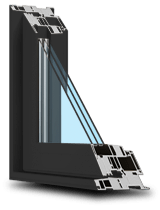
Soundproof replacement windows: what actually works in Canadian homes


If your home sits near a busy street, a flight path, a rail line, or anywhere noise pulls you out of sleep, you've probably looked at soundproof windows. The first thing worth knowing is that no window is fully soundproof. There's no replacement window on the residential market that delivers total silence.
What you can get and what makes a real, noticeable difference is a window engineered to significantly reduce sound. This guide explains how that engineering works, what STC ratings really mean, which window styles handle sound best, and when soundproof windows are worth the investment for a Canadian home.
Key takeaways
- No window blocks 100% of sound. A quality "soundproof" replacement window reduces noise significantly, often cutting perceived loudness by half or more, but absolute silence isn't available in the residential market.
- STC rating is the standard measure. The scale is logarithmic: every increase of +10 STC halves the perceived sound. Standard double-pane windows have an STC of 26–33; high-quality triple-pane or laminated windows reach 35–45.
- Laminated glass with a PVB interlayer is the single most effective glass upgrade for sound. It often outperforms simply adding a third pane.
- Asymmetric glass thicknesses (different-thickness panes) outperform matched-thickness panes for sound reduction.
- Window style matters. Casement, picture, awning, and tilt-and-turn windows seal tighter than sliders or double-hung windows, and seal quality is half the soundproofing equation.
- Installation quality often matters more than the spec sheet. A well-installed STC 35 window outperforms a poorly installed STC 45 window.
What "soundproof" really means for windows
The term "soundproof window" is widely used in marketing, but it's a misnomer. No window on the market eliminates outside noise entirely. Well-designed windows reduce, disrupt, and dampen sound waves, making the inside of your home substantially quieter than the outside.
It's worth clarifying one more thing up front: "noise cancellation," like the active noise cancellation in modern headphones, isn't how windows work. Active noise cancellation uses microphones and counter-frequency sound waves to neutralize specific noise. That technology doesn't exist in residential windows. Windows reduce noise passively by using mass, density, glass layering, and tight seals to block sound transmission.
How sound actually moves through a window
Sound travels as pressure waves through air. When those waves hit a window, three things can happen: the glass absorbs some of the energy, reflects some back, and lets some through to your room. A well-designed soundproof window maximizes the first two and minimizes the third. The denser the glass, the wider the gap between panes, and the tighter the seal, the less sound makes it through.
Understanding STC ratings

Sound Transmission Class (STC) is the industry-standard measure of how well a window blocks airborne sound. It's tested at multiple frequencies, then averaged into a single number. Higher numbers mean better sound reduction.
There's one important detail most homeowners don't know: the STC scale is logarithmic, like the Richter scale for earthquakes. Each +10 STC increase roughly halves the perceived loudness of sound coming through the window. So the difference between STC 28 and STC 38 isn't "a little bigger," it's about 90% less perceived noise.
Realistic STC ranges for residential windows
| Window type | Typical STC | What it sounds like inside |
|---|---|---|
| Old single-pane | 25–28 | Traffic, voices, and lawnmowers heard clearly |
| Standard double-pane | 26–33 | Noticeable improvement, but loud noise still gets through |
| Quality double-pane with tight seals | 33–37 | Most traffic noise is reduced to a low background level |
| Triple-pane | 33–37 | Similar to a good double-pane (tighter spacing offsets the third pane) |
| Asymmetric double-pane with laminated glass | 38–42 | Loud speech reduced to a murmur |
| Laminated triple-pane (Canadian Choice Windows & Doors DraftLOCK Plus configuration) | 38–45 | Traffic sounds become indistinct, suitable for busy streets |
| Specialized acoustic windows or interior secondary glazing | 48–55+ | Near-silent — designed for recording studios, near airports |
A key correction to a common misconception: STC 55–60 is not where standard residential windows operate. Reaching STC 50+ generally requires specialized acoustic products or secondary glazing (a separate interior window installed in front of the existing one).

What actually reduces sound in a window
Four things drive a window's sound performance, and they work together. Improving just one rarely makes a big difference. Optimizing all four is what separates a noisy window from a quiet one.
1. Glass thickness and mass
The mass law of acoustics says heavier materials block more sound. Doubling the mass of a barrier reduces sound transmission by about 6 decibels, a noticeable difference. In practice, this means thicker glass blocks more sound than thinner glass. A 6mm pane outperforms a 4mm pane. Laminated glass adds mass without making the unit unreasonably thick.
2. Asymmetric glass (different thicknesses)
This is the most important technical detail in soundproof window design, and it's often missed in consumer guides. When both panes of a double-glazed window are the same thickness, they resonate at the same frequency and allow certain sound waves to pass through together. Pairing different thicknesses (for example, a 4mm pane with a 6mm laminated pane) shifts the resonant frequencies and breaks up sound transmission across a wider range.
This is also why triple-pane windows don't always outperform double-pane windows in terms of sound. The narrower spacing between panes in a triple-pane unit can let sound reflect and amplify between the layers. A well-designed asymmetric double-pane unit with laminated glass can match or beat a triple-pane unit for sound reduction, while a triple-pane unit with laminated glass and asymmetric thicknesses is the strongest combination available in standard residential windows.
3. Air gap between panes
Wider gaps between the panes disrupt sound waves more effectively, especially at low frequencies (the rumble of traffic, bass from a neighbour's stereo). Standard insulated glass units use 12–16 mm air spaces; specialized acoustic products use much wider gaps — sometimes 5 inches or more for premium sound performance. For a standard replacement window, optimizing the gap within the frame depth matters.
4. Laminated glass with PVB interlayer
Laminated glass is two panes of glass bonded together with a polyvinyl butyral (PVB) film between them. The PVB layer absorbs sound vibrations and converts them into a tiny amount of heat. It also stops the glass from resonating like a drum head. For a Canadian home in a noisy area, the single most cost-effective sound upgrade is to specify laminated glass on the exterior pane of the sealed glass unit.
5. Seal quality and frame design
All of the above only matter if the window seals properly. A window with great glass but a poor seal lets sound leak around the perimeter, undoing most of the noise reduction. This is where window style makes a huge difference and where installation quality often matters more than the spec sheet.
“The advice we give homeowners in noisy areas is usually the same: don't fixate on a single spec. The realistic STC range for a quality replacement window is somewhere between 35 and 45. The way to land at the higher end of that range is laminated glass on at least one pane and a window style that seals tightly. STC 55 is a number people see in marketing, but it's almost always specialized acoustic glazing, not what you'd put in a standard replacement project.”
— Helen Sin, Consumer Success Manager, Canadian Choice Windows & Doors
Which window styles handle sound best
Most window styles can be built with sound-reducing glass, but some styles are naturally better than others. The reason is the seal.
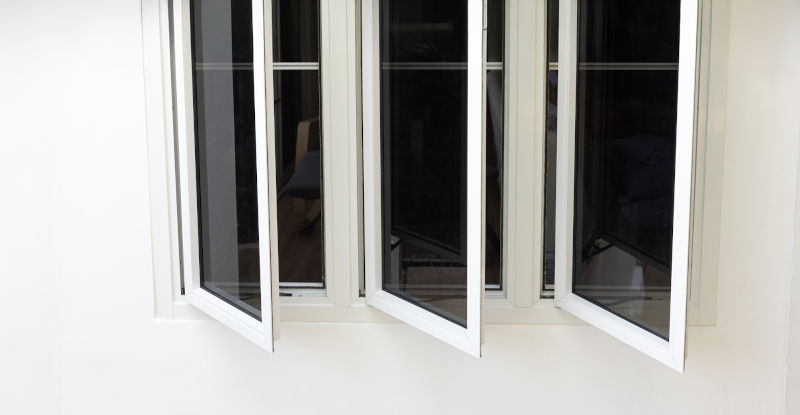
Casement windows
Casement windows seal tightest because the sash compresses against the frame when closed, like a refrigerator door. There's no track for the sash to glide along; the multi-point lock pulls the sash hard against a continuous perimeter seal. For sound reduction, this is the best-sealing operable window style available. Canadian Choice Windows & Doors casement windows use this compression-seal design as standard.
Picture (fixed) windows
Picture windows don't open at all, so there's no moving sash, no track, and no operating hardware to seal. The sealed glass unit sits in a fixed frame with a single continuous seal. This makes picture windows the best sound performers among window styles and the most energy-efficient. The trade-off, of course, is no ventilation.
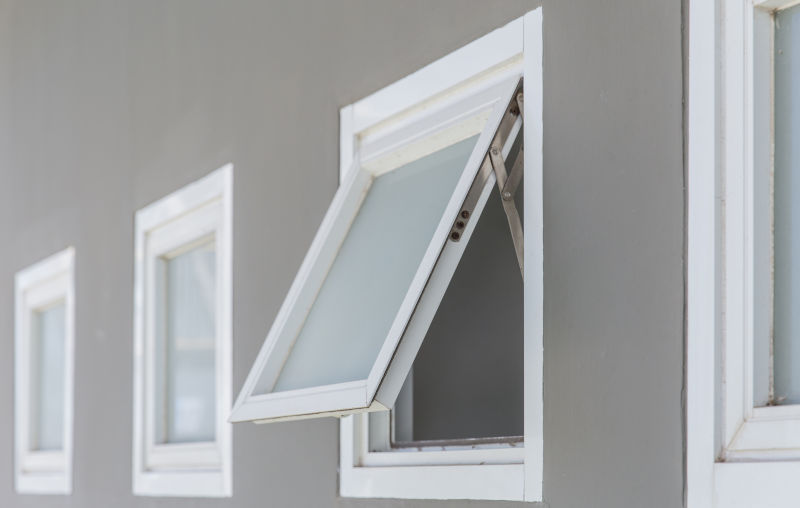
Awning windows
Awning windows hinge at the top and open outward at the bottom. Like casements, they use a compression seal and a multi-point lock. Sound performance is comparable to casement windows.
Tilt-and-turn windows
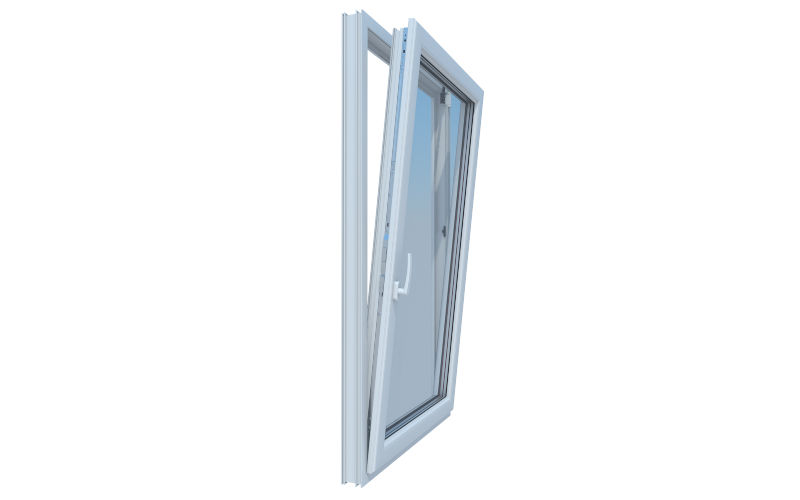
Tilt-and-turn windows use a European-style multi-point locking system that pulls the sash inward against a perimeter seal in the closed position. Sound performance is excellent, similar to casement windows.
Sliding windows
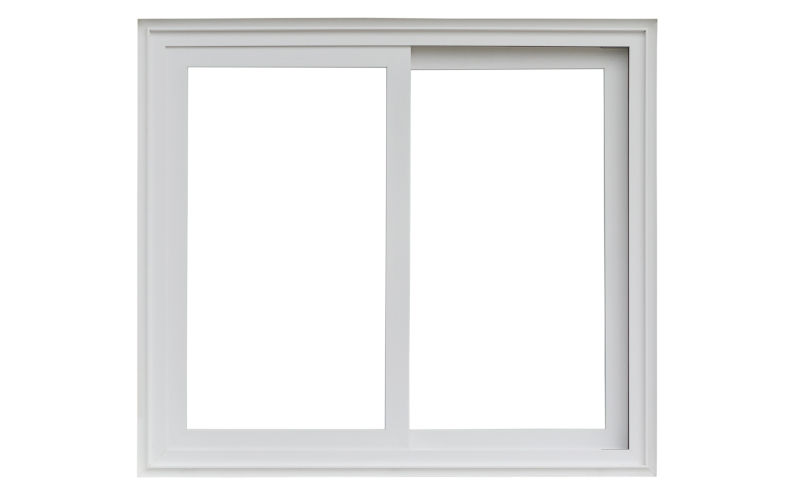
Sliders use weatherstripping along a track, which is structurally less sound-tight than a compression seal. Sliders can be improved with thicker glass and laminated layers, but they generally don't reach the same STC levels as casement, awning, or picture windows of the same glass package.
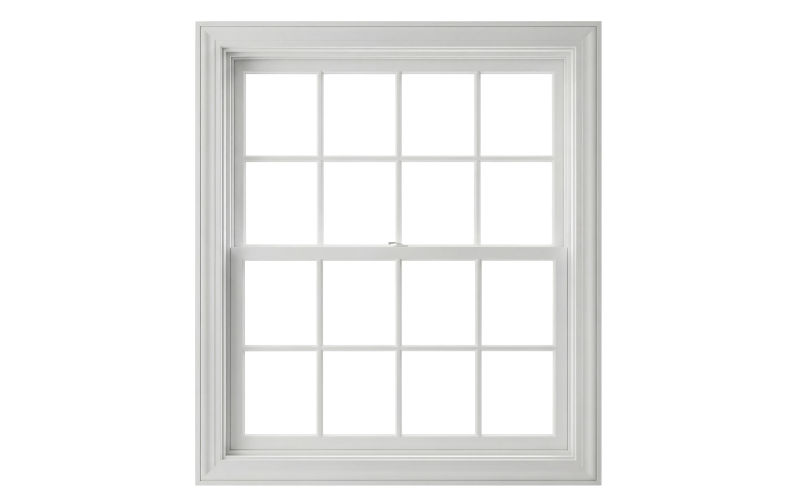
Double-hung windows
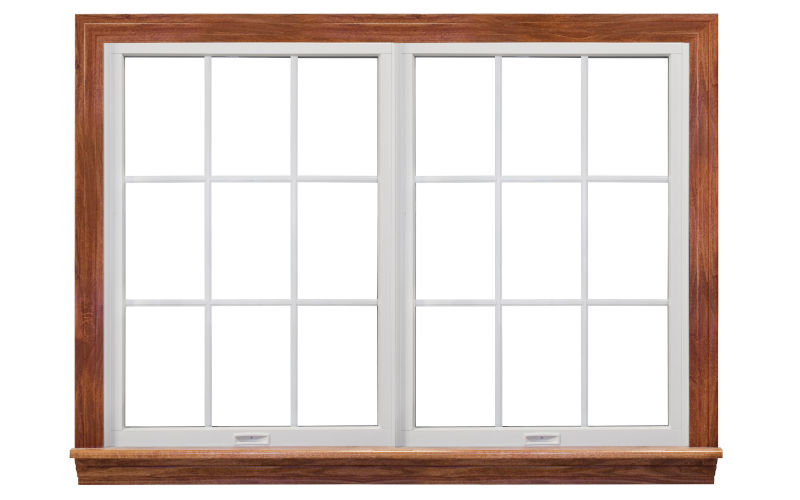
Double-hung windows have two operating sashes that slide vertically, with weatherstripping at the meeting rail. Like sliders, they're harder to soundproof than casements because of the moving parts and the meeting-rail joint. Sound performance is modest unless paired with laminated glass.
Bay and bow windows
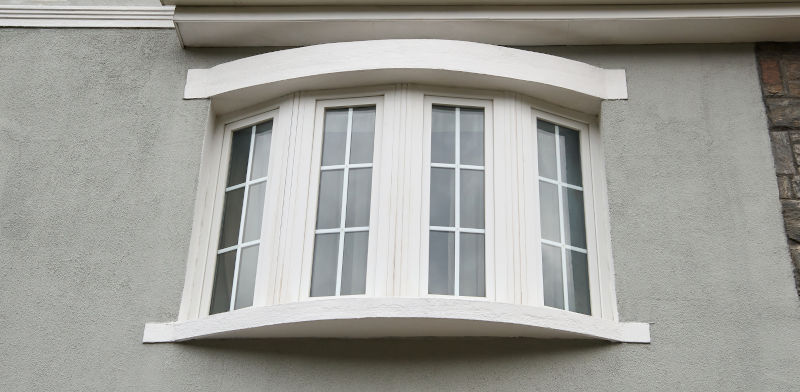
Bay and bow windows are assemblies of multiple windows joined together. Sound performance depends on the individual windows in the assembly. A bay built from casement and picture units performs well, while one built from sliders is harder to soundproof.
Window styles compared for sound reduction
| Window style | Seal type | Sound performance | Best for |
|---|---|---|---|
| Picture (fixed) | Continuous fixed seal | Best — no operating parts | Living rooms facing noisy streets |
| Casement | Compression (multi-point) | Excellent | Bedrooms, main floor rooms |
| Awning | Compression (multi-point) | Excellent | Bathrooms, kitchens, and basement openings |
| Tilt-and-turn | European multi-point | Excellent | Condos, upper floors |
| Sliding | Weatherstripping on track | Modest | Tight spaces where casements won't fit |
| Double-hung | Weatherstripping + meeting rail | Modest | Heritage homes pair well with laminated glass |
Soundproof windows for Toronto, Ottawa, and other Canadian cities
Noise concerns vary by location, and the right configuration changes with the noise source.
Toronto
Homes near Highway 401, the Gardiner Expressway, the DVP, or major arterials face constant low-frequency traffic noise. For these locations, asymmetric laminated glass in a casement or picture window typically delivers the best balance of cost and performance. STC 38–42 configurations make a substantial difference. Homes near Pearson Airport or under flight paths benefit from triple-pane laminated configurations at STC 40+.
Ottawa
Older Ottawa neighbourhoods near the 417 or the Queensway, or homes near downtown transit corridors, face similar low-frequency traffic noise. The same configuration applies — asymmetric laminated glass in casement or picture windows.
Vancouver, Calgary, and other urban Canadian markets
Densely built neighbourhoods with overlapping noise sources, traffic, transit, and construction usually benefit from triple-pane laminated configurations. In Vancouver specifically, rainfall noise on rooflines and balcony surfaces is part of the soundscape, and good window seals help with that too.
Suburban and exurban homes
Quieter locations may not need premium sound packages. A quality double-pane with Low-E coating, argon fill, and tight seals (STC 33–37) is usually sufficient. Spending up for laminated glass makes sense only if there's a specific noise source, such as a school, a busy intersection, or a flight path, that justifies it.
What drives the cost of soundproof windows
Concrete prices for soundproof window packages depend on too many variables to quote here meaningfully. The actual quote depends on:
- Larger window sizes cost more in materials and weigh more (which affects hardware and installation).
- Glass package — laminated glass costs more than standard glass. Asymmetric pane configurations add complexity.
- Number of panes — triple-pane is more expensive than double-pane, but the value depends on the specific noise source.
- Window styles—casement, picture, and awning — generally have similar pricing for a given glass package, while sliders may cost less, and tilt-and-turn typically costs more.
- Frame depth and construction — deeper frames support thicker glass packages and seal better.
- Installation complexity — replacing windows in older homes with rough or out-of-square openings adds labour.
- Location — pricing varies across Canadian markets.
An in-home consultation with accurate measurements and a noise assessment is the only way to get a useful number. Canadian Choice Windows & Doors consultation is free and non-obligation.
Soundproof window inserts: an alternative to full replacement
If full window replacement isn't an option due to budget constraints, heritage restrictions, or rental situations, soundproof window inserts are a viable alternative.
Inserts are clear panels (usually laminated glass or acrylic) mounted on the interior side of an existing window, creating a secondary barrier with a wide air gap between the two glazing assemblies. The principle is the same as that of a storm window, but engineered specifically for sound reduction rather than weather resistance. Industry suppliers typically report STC ratings of 45–50 for inserts installed over existing double-pane windows, which is competitive with high-end replacement windows.
When inserts make sense
- Heritage homes where modifying the exterior windows isn't permitted.
- Rental properties where structural changes aren't possible.
- Budget-constrained projects where full replacement isn't feasible.
- Specific rooms that need maximum sound reduction (e.g., a home studio or bedroom), while the rest of the home is fine.
Trade-offs
- Requires opening and closing the insert to access the existing window, which impedes daily ventilation.
- Adds visible depth to the window from the interior.
- Doesn't address weather sealing — the original window still handles thermal performance.
Canadian Choice Windows & Doors manufactures replacement windows, not specialized acoustic inserts. For homeowners considering inserts, specialized acoustic suppliers serve this niche. For most homeowners willing to replace their windows, a Canadian Choice Windows & Doors DraftLOCK Plus triple-pane laminated configuration delivers comparable sound performance, better thermal performance, and a single integrated unit.
Soundproofing existing windows without replacement
Short of replacement or inserts, a few measures can incrementally improve the sound performance of existing windows. The gains are modest, usually a few STC points, but they can be worthwhile if replacement isn't an immediate option.
Acoustic caulking
Standard caulking dries hard over time, which causes it to crack and let sound through. Acoustic caulking stays flexible and seals air gaps around the window frame. Resealing the perimeter with quality acoustic caulk can recover several STC points of lost performance, particularly on older windows where the original seal has degraded.
Weatherstripping
Replacing degraded weatherstripping on operable sashes restores the seal and reduces both air infiltration and sound transmission. A simple, low-cost fix that's often overlooked.
Soundproof curtains and panels
Heavy curtains, especially layered with a thermal or acoustic interlining, dampen sound transmission inside the room. They don't reduce sound at the window itself, but they reduce the noise that reaches you after it passes through the window. Helpful in bedrooms and living rooms where the curtains stay drawn during sleep or work hours.
Self-adhesive acoustic film
Applied to the interior side of existing glass, sound-dampening films add modest mass to the pane. The improvement is usually only 2–4 STC points, meaningful at the margin, not transformative. A good last-resort upgrade when replacement isn't on the table.
Why installation quality is half the equation
A premium soundproof window installed poorly will perform worse than a standard window installed well. The reason is straightforward: if there are gaps between the window frame and the rough opening, or if the perimeter isn't sealed properly, sound can get through those gaps regardless of how good the glass is.
What proper installation looks like:
- The window fits the opening exactly with no gaps. Shimming is even on all sides.
- Dense insulation fills all cavities between the frame and the wall, not just the visible gaps.
- Acoustic sealants are used along the perimeter of flexible products to maintain a long-term seal.
- Weatherstripping is in place on all operable components.
- The installer checks for square, plumb, and level before securing the unit.
“Frame design and sealing matter as much as the glass. A great sealed glass unit can't compensate for a window that doesn't seal properly to the wall. Our installation crews are factory-trained and follow CSA guidelines on every project, because we know the spec on paper means nothing if the seal at the wall isn't right.”
— Tony Wong, Project Manager, Canadian Choice Windows & Doors
Are soundproof windows worth it?
Soundproof windows are a meaningful investment, not a small upgrade. Whether they're worth the cost depends on how much noise affects your quality of life today and whether the home will benefit in the long term.
Worth considering if
- You're near a major road, highway, rail line, airport, flight path, school, or construction site.
- You work from home, and noise affects concentration during video calls or recordings.
- You're a shift worker or light sleeper struggling to maintain rest in a noisy environment.
- Your existing windows are old single-pane or basic double-pane units that need replacement anyway — combining a planned upgrade with sound-reducing glass costs much less than addressing it later.
- You're in an urban or transit-dense neighbourhood where buyers expect noise control in the home (a resale consideration).
Less likely to be worth it if
- Your home is in a quiet suburban or rural area, and standard-quality windows already meet most of your comfort and energy needs.
- The main noise issue is interior noise (footsteps overhead, mechanical noise) — windows don't solve it.
- The home has other significant weak points (poor wall insulation, gaps under doors) that would undermine the window upgrade. Address those first.
Other benefits worth considering
- Laminated glass is harder to break, which adds security.
- Triple-pane laminated configurations improve energy efficiency.
- Reduced outside noise improves sleep quality, lowers stress, and creates a better work-from-home environment.
Why Canadian homeowners choose Canadian Choice Windows & Doors for noise reduction
Canadian Choice Windows & Doors has been serving Canadian homes for over 40 years. Every window is manufactured at our Canadian facility, custom-built for your opening, and installed by our own in-house teams, without subcontractors.
- Recommended by Bryan Baeumler, HGTV host and Canada's recognized construction expert.
- Over 3,100 positive reviews on HomeStars.
- More than 1 million windows and doors have been installed across Canada.
- 25-year transferable warranty on every window.
- DraftLOCK windows are manufactured in three series — DraftLOCK, DraftLOCK Slim Contour, and DraftLOCK Plus Slim Contour (triple-glazed) — with laminated glass available as part of the glass package.
- Casement, awning, picture, and tilt-and-turn frames provide a tight compression seal that delivers strong sound performance.
- A 4 5/8-inch frame depth — deeper than the 3.25-inch industry standard — supports thicker glass packages and seals the rough opening more effectively.
- CSA-compliant installation by factory-trained crews.
Frequently asked questions
Are there truly soundproof windows?
No window blocks 100% of sound. "Soundproof" is a marketing term; what's actually available are sound-reducing windows that significantly cut perceived noise. Quality triple-pane laminated windows can reach STC 38–45, which reduces traffic and aircraft noise to a low background level inside the home. Truly silent rooms require specialized acoustic glazing typically used in recording studios or near airports.
What STC rating should I look for?
For standard residential noise concerns, aim for STC 35–42, which is achievable with quality double- or triple-pane windows featuring laminated glass. STC 38–42 with laminated glass is realistic for premium replacement windows, such as Canadian Choice Windows & Doors DraftLOCK Plus, with triple-pane laminated configurations. STC 50+ is the range of specialized acoustic glazing — uncommon in standard replacement projects.
How is STC related to actual noise reduction?
STC is a logarithmic scale — every increase of +10 STC roughly halves perceived loudness. Moving from STC 28 (basic double-pane) to STC 38 (quality laminated window) reduces perceived noise by about 90%. Moving from STC 28 to STC 43 reduces perceived noise by about 95%. Small numerical changes translate into significant real-world differences.
Which window style is best for noise reduction?
Picture (fixed) windows are best because they have no operating parts and a continuous seal. Casement, awning, and tilt-and-turn windows are close behind because they use compression seals that pull the sash tight against the frame. Sliding and double-hung windows are harder to soundproof because their weatherstripping seals are inherently looser than compression seals.
Is triple-pane glass always better for sound than double-pane?
No. Triple-pane windows often have STC ratings similar to those of good double-pane windows because the air spaces between panes are narrower. The most effective sound configuration is asymmetric glass thicknesses (different pane thicknesses paired together) combined with laminated glass, which can be achieved in either double or triple-pane formats. Triple-pane laminated glass with asymmetric thicknesses is the strongest combination available in standard residential products.
Do soundproof window inserts work?
Yes, they work well for specific situations. Inserts are clear interior panels that create a second sealed barrier in front of the existing window. Specialized acoustic inserts can reach STC 45–50 when installed over existing double-pane windows. They're particularly useful for heritage homes, rental properties, or specific rooms needing maximum sound reduction. The trade-off is that they get in the way of opening the original window for ventilation.
Can I make my existing windows quieter without replacing them?
Modest improvements are possible. Resealing the window perimeter with acoustic caulking, replacing degraded weatherstripping, and adding heavy soundproof curtains can recover several STC points of lost performance. Self-adhesive acoustic film on the interior glass surface adds 2–4 STC points. None of these match the performance of laminated glass in a new sealed unit, but they can be worthwhile when replacement isn't immediately feasible.
Do soundproof windows save energy at the same time?
Yes. Laminated glass, triple-pane construction, and tight seals all improve energy efficiency alongside sound performance. Canadian Choice Windows & Doors DraftLOCK Plus triple-pane configuration can improve a home's energy rating by up to 30% compared to older single-pane or basic double-pane windows. The combined benefits of lower noise and lower utility bills are among the strongest reasons to consider laminated triple-pane windows in noisy areas.
How long do soundproof windows last?
Twenty to thirty years is typical for quality replacement windows with regular maintenance. The sound performance can degrade earlier if the sealed glass unit fails visibly due to condensation between the panes, at which point the glass package can be replaced under warranty without replacing the entire window. Canadian Choice Windows & Doors' 25-year transferable warranty covers sealed unit failure.

1000’s of Colours & Textured Finishes
Transform your home from ordinary to extraordinary with our new coloured and non-glare textured finishes. Available in a wide array of colours as well as custom matched colours for your very own personalized design.
Our Most Popular Replacement Window Colours: