The Advantages of Crankless Windows for Modern Homes

Modern homes demand more than aesthetic appeal. They require window systems that perform consistently under climate stress, integrate seamlessly into contemporary architecture, and operate reliably over decades of daily use. In Canada — where temperature swings, wind pressure, humidity shifts, and freeze–thaw cycles are part of reality — engineering matters just as much as design.
A tilt-and-turn window represents a different approach to residential window construction. In modern multi-chamber vinyl frame systems, this design integrates precision hardware with full-perimeter compression sealing and dual-function ventilation.
Key Takeaways
- A tilt-and-turn window is not a push-out system — it uses dual-action European hardware.
- One handle controls two modes: tilt ventilation and full inward swing.
- Multi-point perimeter locking creates exceptional airtight compression sealing.
- Inward opening improves cleaning access and safety.
- Superior structural stability supports high energy performance in Canadian climates.
- Hardware is internal, concealed, and engineered for long lifecycle durability.
What Is a Tilt and Turn Window and How Does It Work?
In Canada, tilt-and-turn functionality is commonly integrated into high-performance vinyl window systems, combining modern hardware precision with the thermal benefits of multi-chamber vinyl frames. A tilt-and-turn window is a side-hinged, inward-opening window system built around precision European hardware. Unlike traditional North American crank systems, it is engineered to provide two distinct opening functions within a single integrated mechanism, offering greater versatility, enhanced sealing pressure, and refined interior aesthetics.
Two Operating Modes
Tilt Mode
- Handle turned upward
- Sash tilts inward at the top
- Bottom remains securely locked
- Ideal for controlled ventilation
Turn Mode
- The handle turned horizontally
- Sash swings fully inward
- Allows maximum airflow and easy exterior cleaning
This dual functionality eliminates the need for separate crank mechanisms or push-out operation. By combining ventilation control and full-access opening into a single streamlined system, a tilt-and-turn window delivers both performance flexibility and mechanical simplicity.

Core Components
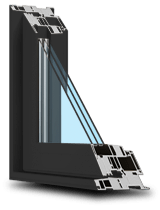
- Reinforced multi-chamber frame
- Steel-reinforced sash (in many systems)
- Multi-point locking hardware around the perimeter
- Dual-action hinge system
- Insulated glass unit (double or triple glazing)
- Continuous compression weatherstripping
Unlike crank casement systems that rely on gear operators and arms, tilt-and-turn windows operate through an integrated hardware channel embedded in the sash.
How Tilt and Turn Windows Differ from Crank or Push-Out Systems
The confusion often comes from grouping all “crankless” windows together. But mechanically, they are very different systems.
Mechanical Comparison
| Feature | Tilt and Turn Window | Crank Casement | Push-Out Casement |
|---|---|---|---|
| Opening direction | Inward | Outward | Outward |
| Ventilation mode | Tilt + Turn | Swing only | Swing only |
| Hardware control | Single multi-position handle | Worm gear crank | Manual push |
| Locking system | Full perimeter multi-point | Typically 1–2 points | Typically 1–2 points |
| Air seal | Compression around the full sash | Compression | Compression |
| Cleaning access | Interior | Exterior required | Exterior required |
The major distinction is perimeter engagement.
A tilt-and-turn window locks into the frame at multiple points along all four sides, distributing pressure evenly and creating superior sealing consistency.
Why Are Homeowners Choosing Tilt and Turn Windows?
Modern renovations today are driven not only by aesthetics but also by engineering logic. Homeowners increasingly look for window systems that combine architectural minimalism with measurable performance. The growing adoption of European design standards in Canada has naturally heightened interest in the tilt-and-turn window, especially in projects where durability, airtightness, and refined detailing matter.
Architectural Clarity and Modern Interior Design
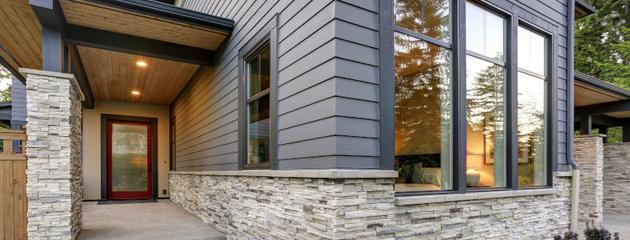
Tilt-and-turn windows align seamlessly with contemporary architectural trends. Because the hardware is fully internal, there are no protruding crank handles or visible operator arms interrupting the visual flow. The handle sits flush, the frame geometry remains symmetrical, and the glazing area feels more intentional and refined.
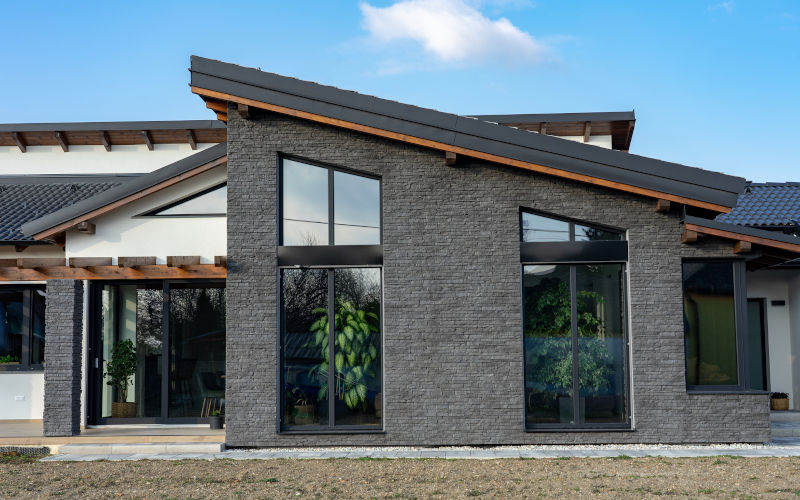
This understated design works particularly well in minimalist, Scandinavian-inspired, and modern transitional homes where clean lines and natural light define the space. Larger uninterrupted glass areas enhance sightlines and reinforce the sense of openness that many homeowners now prioritize.
Performance-Driven Renovation Decisions
Beyond aesthetics, the shift toward tilt-and-turn systems is strongly performance-driven. Homeowners value solutions that offer controlled ventilation, improved perimeter sealing, and long-term mechanical reliability. The dual-function hardware provides flexibility without adding mechanical complexity, while the multi-point locking system reinforces structural stability and airtightness.
In this way, the appeal of a tilt-and-turn window is not just stylistic — it reflects a broader renovation mindset focused on intelligent engineering, durability, and future-proof home upgrades.
As Helen Sin, Consumer Success Manager at Canadian Choice Windows & Doors , explains:
“Homeowners today are not just comparing styles — they’re comparing performance outcomes. Many clients choose tilt-and-turn windows because they want clean interior design, stronger airtightness, and long-term durability in one integrated system rather than adding upgrades later.”
Energy Efficiency & Climate Performance
Energy efficiency depends on the full window assembly — not just the operating style, glazing package, or frame material alone. While the mechanism itself does not determine thermal performance, tilt-and-turn systems provide measurable structural advantages that directly support airtightness and long-term climate resilience in Canadian conditions.
Multi-Point Compression Sealing
When closed, the sash pulls evenly into the frame along all four sides. Instead of relying on isolated latch points, the perimeter hardware distributes pressure consistently across the entire frame.
This results in:
- Reduced air infiltration
- Improved thermal stability
- Strong wind resistance
- Consistent seal pressure under load
Because exterior wind pressure reinforces the compression rather than working against it, the sealing performance can remain stable even in exposed Prairie or coastal environments.
U-Factor Performance and Thermal Engineering
In Canada, energy efficiency is primarily measured by the U-factor. Lower numbers indicate better insulation and reduced heat transfer through the full window system — including glass, spacers, frame, and sealing components.
Tilt and turn windows can support high-performance configurations such as:
- Double or triple glazing
- Low-E coatings
- Argon gas fill
- Warm-edge spacers
- Multi-chamber insulated frames
- particularly in modern multi-chamber vinyl frame construction
When properly manufactured and installed, tilt-and-turn windows can achieve strong air leakage performance under CSA A440 standards.
Structural Stability Under Climate Stress
Beyond lab-tested metrics, real-world performance depends on how a window behaves under pressure, temperature fluctuation, and seasonal expansion. Tilt-and-turn systems are engineered around reinforced sash construction and distributed locking engagement, which help maintain frame geometry and seal integrity over time.
In climates with freeze–thaw cycles, wind load exposure, and sustained temperature swings, this structural stability reduces the risk of micro-gaps forming at corners or along the sash edge. The result is not just improved short-term efficiency, but more predictable long-term thermal performance — a critical distinction in demanding Canadian environments.
Tony Wong, Project Manager at Canadian Choice Windows & Doors , notes:
“In Canadian climates, the real test of a window isn’t how it performs on installation day — it’s how it performs after years of freeze–thaw cycles and wind pressure. The perimeter locking system in a tilt-and-turn window helps maintain frame alignment and consistent sealing even under long-term environmental stress.”
Ventilation Advantages of a Tilt and Turn Window
Ventilation is not just about opening size — it's about control. The ability to regulate airflow precisely, safely, and consistently throughout the year directly impacts indoor comfort, humidity balance, and air quality. A tilt-and-turn window is engineered to provide flexible ventilation without compromising security or thermal performance.
Controlled Ventilation in Tilt Mode
In tilt mode, the sash leans inward from the top while remaining securely locked at the bottom. This creates a narrow but highly effective opening that promotes steady air exchange without exposing the full window opening.
This configuration provides:
- Secure top ventilation while the bottom remains locked
- Reduced rain intrusion risk due to the downward-facing opening angle
- Increased safety for homes with children or pets
- Continuous background airflow without strong drafts
Because warm, stale air naturally rises, the upper opening position allows efficient passive ventilation, making tilt mode particularly useful during shoulder seasons when full window opening is unnecessary.
Maximum Airflow in Turn Mode
When switched to turn mode, the sash swings fully inward, creating nearly the entire window area as an opening. This enables rapid air exchange and strong cross-ventilation when paired with openings on the opposite side of the home.
Turn mode allows:
- Full opening for accelerated fresh air intake
- Easy exterior glass cleaning from inside the home
- Maximum cross-ventilation potential
- Fast cooling during warm months without full HVAC reliance
Compared to sliding windows — which typically open only about 50% of the sash — tilt-and-turn systems can utilize almost the entire glazing area when in turn mode.
Seasonal Ventilation Strategy and Indoor Climate Balance
One of the often-overlooked advantages of a tilt-and-turn window is its adaptability across seasons. In colder months, tilt mode allows limited but consistent air refreshment without significant heat loss, helping reduce indoor condensation and maintain healthier humidity levels. In warmer months, the turn mode supports high-volume airflow, which can significantly improve indoor comfort during transitional weather.
This flexibility allows homeowners to shift between subtle background ventilation and full air exchange as needed, creating a more responsive and energy-conscious approach to indoor climate management.
Climate Comparison — Alberta vs. the Maritimes
Alberta and the Maritime provinces present very different environmental stress conditions for residential windows. Alberta’s climate is characterized by dry, cold winters, sharp temperature swings, strong wind exposure, and frequent freeze–thaw cycles. Thermal stability and resistance to air infiltration are especially critical in this environment, as pressure differentials and extreme cold can quickly expose weaknesses in sealing systems.
In contrast, the Maritimes experience milder winters but significantly higher humidity, frequent coastal storms, exposure to salt air, and sustained wind-driven rain. Here, moisture control, corrosion resistance, and consistent compression sealing become primary performance concerns.
A tilt-and-turn window performs well in both environments because its full-perimeter multi-point locking system maintains even compression under pressure. In Alberta, that compression helps reduce air leakage under extreme cold and wind load. In the Maritimes, it provides moisture resistance and stable sealing, even in humid coastal conditions.
Understanding these regional differences highlights why structural sealing design — not just glazing — plays a decisive role in long-term performance across Canadian climate zones.
Security Performance of a Tilt and Turn Window: Engineering, Locking Systems, and Frame Stability
Security is often considered a key advantage of tilt-and-turn systems when compared to basic single-latch window designs. Unlike many conventional window types that rely on limited locking points, a tilt-and-turn window is engineered around perimeter engagement and structural compression. This design approach increases resistance to forced entry while maintaining frame alignment under pressure. When properly manufactured and professionally installed, these systems provide a level of mechanical stability that goes beyond basic residential window locking.
Tony Wong, Project Manager at Canadian Choice Windows & Doors , notes:
“Multi-point locking is only effective when the frame is installed square and properly sealed. Precision installation is what allows a tilt-and-turn system to deliver both security and airtightness the way it was engineered to.”
Multi-Point Locking System
Instead of a single latch, tilt-and-turn hardware engages multiple locking cams distributed along the entire sash perimeter. When the handle is turned to the closed position, these locking points pull the sash tightly and evenly into the frame.
| Security Feature | Benefit |
|---|---|
| Multi-point locking | Even pressure distribution |
| Reinforced sash | Reduced frame distortion |
| Laminated glass option | Glass retention if broken |
| Internal hinge system | Reduced tampering risk |
Because engagement occurs along multiple sides rather than at isolated points, forced entry resistance is enhanced when properly installed.
Inward-Closing Structural Advantage
A key structural distinction of tilt-and-turn systems is that the sash closes into the frame rather than pressing against it. This inward compression means that external force typically increases resistance rather than weakening the seal. Under attempted prying or pressure, the distributed locking cams and reinforced sash geometry work together to maintain frame integrity.
This structural configuration reduces the likelihood of corner separation or localized failure, which can occur in systems with fewer locking points.
Long-Term Maintenance and Durability of a Tilt and Turn Window
Tilt-and-turn systems are engineered for long lifecycle performance, with hardware designed to withstand repeated operation without excessive wear. Unlike traditional crank systems that rely on exposed operator arms and gear-driven mechanisms, a tilt-and-turn window integrates its hardware into a reinforced internal channel, reducing vulnerability to environmental stress and mechanical failure.
Traditional crank systems may suffer from:
- Stripped gears
- Bent operator arms
- Corroded tracks
- Handle mechanism fatigue
Tilt and turn windows rely on:
- Reinforced hinge pivot systems
- Internal gear track integrated within the hardware channel
- Reduced exposed mechanical components
- Distributed load across multiple locking points
This structural approach minimizes localized stress and promotes consistent performance over time.
Reduced Mechanical Wear Through Internal Hardware Design
Because the majority of the hardware system is concealed within the sash and frame profile, exposure to dust, moisture, and temperature fluctuation is reduced. Outward-opening crank systems often place stress on a single operator arm, whereas tilt-and-turn systems distribute force through perimeter hardware.
This distribution reduces strain on individual components when properly installed and used as designed.
Seasonal Performance Stability in Canadian Climates
Canadian climate conditions — including freeze–thaw cycles, humidity shifts, and sustained wind loads — can accelerate wear in mechanically complex systems. The structural compression design of a tilt-and-turn window helps maintain frame geometry and hardware alignment even under repeated thermal expansion and contraction.
Because the sash closes inward into the frame, the system experiences less external mechanical leverage during wind events, reducing long-term hinge fatigue compared to some outward-opening systems.
Basic Maintenance Checklist for Optimal Longevity
Homeowner maintenance typically includes:
- Annual hardware lubrication (manufacturer-approved silicone lubricant)
- Weatherstripping cleaning to preserve compression sealing
- Frame alignment inspection to ensure even perimeter engagement
- Drainage channel check to prevent moisture buildup
With fewer exposed mechanical parts and integrated hardware, tilt-and-turn windows often require less corrective servicing over time while maintaining smooth operation and sealing performance.
Why a Tilt and Turn Window Is a Smarter Investment for Modern Canadian Homes
A tilt-and-turn window is not simply a crankless alternative. It is a fundamentally different window system based on European hardware design and built to provide secure sealing, reliable operation, and flexible ventilation. Rather than focusing on a single benefit, it integrates performance, durability, and a clean, balanced appearance into one cohesive solution.
It delivers:
- Dual ventilation modes
- Full-perimeter compression sealing
- Enhanced structural stability
- Strong energy performance
- Streamlined modern aesthetics
- Interior cleaning convenience
- Advanced locking security
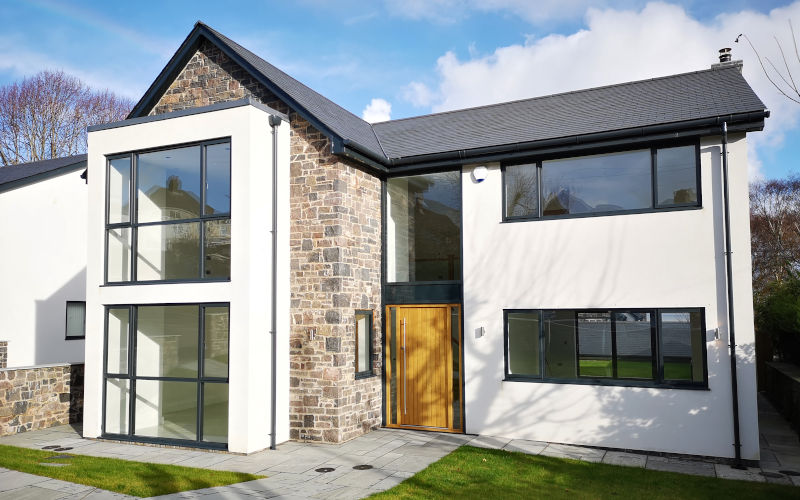
For homeowners upgrading to modern builds or pursuing high-performance renovations, tilt-and-turn windows offer a purposeful blend of design clarity and technical precision — particularly in climates where durability and airtightness are important long-term performance factors.
Designed for Canadian Climate Demands
Canadian homes experience diverse climate stressors, from Prairie wind pressure and deep winter cold to Atlantic humidity and coastal storms. A tilt-and-turn window is designed to respond to these pressures through balanced perimeter sealing and inward compression locking.
Because the sash pulls evenly into the frame, wind loads reinforce the seal rather than strain external hardware. This structural behaviour supports long-term stability in regions where temperature differentials and environmental exposure can accelerate mechanical fatigue in less robust systems.
Architectural Value That Extends Beyond Appearance
While often chosen for its clean, European-inspired aesthetic, a tilt-and-turn window offers long-term value beyond visual appeal. Flush hardware, symmetrical sightlines, and concealed mechanics contribute to a refined interior profile, reduce visual clutter, and simplify long-term maintenance.
For modern builds and performance-driven renovations, the system represents more than a stylistic upgrade — it reflects a shift toward engineered precision, lifecycle durability, and measurable building envelope performance.
Choosing the Right Window System for Long-Term Performance
Replacing windows is not just a design update — it directly affects how your home feels, performs, and holds up over time. Air sealing, ventilation control, structural stability, and installation quality all work together to determine real-world comfort.
Tilt-and-turn functionality, when integrated into modern vinyl window systems, offers a balanced approach. It provides secure perimeter sealing, flexible ventilation, and clean interior lines without adding unnecessary mechanical complexity.
In Canadian climates — whether facing Prairie wind, coastal humidity, or freeze–thaw cycles — long-term performance depends less on style and more on how consistently the window seals, operates, and maintains alignment.
For homeowners planning thoughtful upgrades, the goal isn’t simply to choose a different opening style. It’s to select a window system that delivers reliable comfort, controlled airflow, and dependable durability year after year.
Frequently Asked Questions
Are tilt-and-turn windows worth it in Canadian climates?
Yes — particularly in regions with extreme temperature swings, wind exposure, or high humidity. A tilt-and-turn window uses full-perimeter multi-point locking and inward compression sealing, which help maintain consistent airtightness under pressure. In provinces like Alberta or Nova Scotia, that structural sealing design can provide long-term performance stability that basic single-latch systems may not achieve.
Do tilt-and-turn windows leak air over time?
When properly manufactured and professionally installed, tilt-and-turn windows are engineered to maintain consistent air-tightness. The sash compresses evenly into the frame along all four sides, distributing pressure rather than relying on isolated latch points. Long-term air leakage performance depends primarily on installation precision, weatherstripping condition, and basic homeowner care — not the operating style itself.
Are tilt-and-turn windows more secure than casement windows?
They can be. A tilt-and-turn window typically includes multi-point locking hardware that engages around the full sash perimeter. Because the sash closes inward into the frame, external pressure reinforces the seal rather than pulling it outward.
Are tilt-and-turn windows more expensive?
Initial pricing can be higher than basic crank casement systems due to the integrated European hardware and reinforced construction. However, homeowners are investing in dual-function ventilation, full-perimeter sealing, improved security, and long-term durability — not just an opening mechanism. Total value should be evaluated based on lifecycle performance rather than upfront cost alone.
Do tilt-and-turn windows improve energy efficiency?
Energy efficiency depends on the full window assembly, including glazing configuration, Low-E coatings, gas fill, spacer system, frame insulation, and installation quality. However, tilt-and-turn systems support strong air leakage ratings due to their distributed compression locking. This structural advantage helps preserve real-world thermal performance, especially in colder Canadian regions.
Can tilt-and-turn windows handle strong wind loads?
Yes. Because the sash pulls inward and locks around the perimeter, wind pressure typically reinforces the seal rather than stressing the external hardware. This makes tilt-and-turn windows particularly well-suited for Prairie wind exposure and coastal Maritime conditions where pressure fluctuations are common.
Are tilt-and-turn windows harder to maintain?
No. Routine maintenance typically includes periodic lubrication of hardware, cleaning of weatherstripping, and checking frame alignment. Because there are no exposed crank arms or external operator tracks, fewer mechanical components are vulnerable to corrosion or debris buildup.
Are tilt-and-turn windows suitable for modern architecture?
Absolutely. Their concealed hardware, symmetrical geometry, and clean interior profile make them highly compatible with contemporary, minimalist, and Scandinavian-inspired designs. They offer architectural clarity without sacrificing structural performance.

1000’s of Colours & Textured Finishes
Transform your home from ordinary to extraordinary with our new coloured and non-glare textured finishes. Available in a wide array of colours as well as custom matched colours for your very own personalized design.
Our Most Popular Replacement Window Colours: