How to adjust a patio door that sticks, drags or won't latch
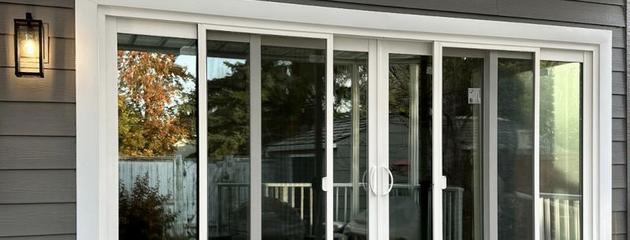

Most sliding patio doors that stick, drag or won't latch need two things: a clean track and a small roller adjustment. Both take under an hour with a vacuum, a cloth and a screwdriver.
This guide is organized by symptom. It also covers tilt-and-turn and bifold doors, winter freezing and the signs that a door needs patio door repair rather than a tune-up.
Quick fixes to try first
Start with the track, because debris under the rollers causes more sticking than anything else. If the door still drags, adjust the rollers; if it then won't latch, line up the keeper.
| Symptom | Likely cause | Fix | DIY or pro |
|---|---|---|---|
| Hard to slide or sticks partway | Grit, pet hair or ice in the track; dirty rollers | Clean the track and weep holes | DIY |
| Scrapes or drags along the bottom | Rollers set too low or worn | Raise both rollers evenly | DIY |
| Gap is wider at the top or bottom | Panel out of level | Adjust one roller at a time | DIY |
| Won't latch or lock; lines up wrong | Panel height changed; keeper shifted | Re-level the panel, then adjust the keeper | DIY |
| Grinds or bumps even when clean | Cracked or flat-spotted rollers; bent track | Roller or track replacement | Pro |
| Tilt-and-turn or bifold binds | Hinge or track alignment | Book a service visit | Pro |
Use the table as a starting point for sliding door repair, and never force the door.
Why patio doors stick, drag or stop latching
Patio doors usually stick for one of four reasons: debris in the track, dropped or worn rollers, a frame that has shifted slightly with the seasons, or ice.
Grit and leaves collect in the bottom track and under the rollers, and the door starts to stutter. Blocked weep holes, the small drainage openings in the sill, let water sit in the track, where it collects more grit and can freeze.

Every sliding panel rides on small wheels in the bottom of the door, and over the years they can drop or wear unevenly. Frames also move slightly as they expand and contract between seasons, which changes how the panel meets the latch. In winter, add ice in the track and snow against the sill.
How to clean a sliding door track
Cleaning the track fixes most sticking doors on its own, so do it before touching any adjustment screw.
- Slide the panel fully open and vacuum the bottom track with a crevice tool, then repeat with the door closed to reach the other end.
- Loosen packed dirt with a stiff nylon brush and vacuum again.
- Wipe the track with a cloth and mild soapy water, then dry it completely. A wet track holds grit and can freeze.
- Find the weep holes on the outside of the sill and clear them gently with a pipe cleaner or soft wire. Don't drill or enlarge them, which can damage the drainage channel and may void a warranty.
- Pour a little water into the track to check that it drains outside within a minute or two.
- Slide the door back and forth five or six times. If it now runs smoothly, stop here.
Before adding any lubricant, check your door's care instructions. Oil and grease hold grit and can make sticking worse; where a manufacturer recommends lubrication, use a light silicone-based product sparingly.
How to adjust sliding patio door rollers
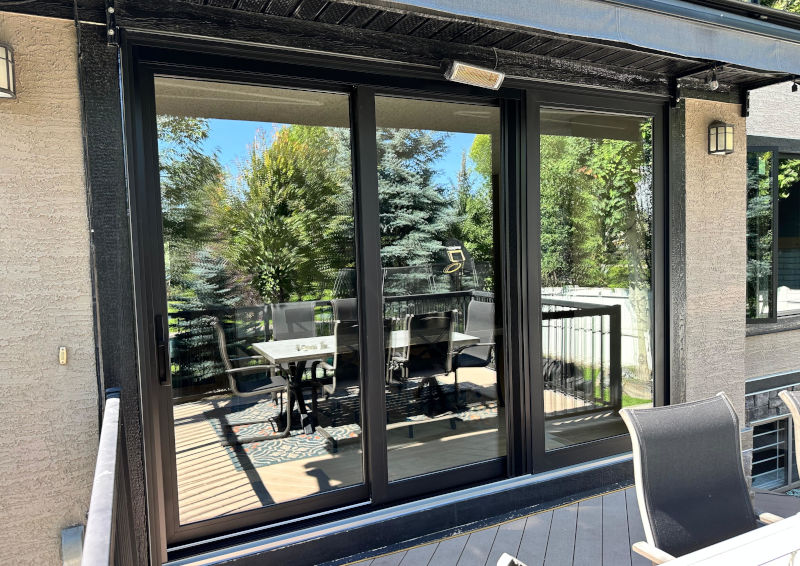
If the door still drags after cleaning, you may need to raise or level the rollers. On most sliding doors, the adjustment screws sit at the bottom of the panel near each end, on the edge or the face, often behind a small plastic cap.
Here's how to adjust sliding patio door rollers with the panel in place:
- Close the door until it's a few centimetres from the jamb, so you can see the gap along the edge.
- Pry off the caps covering the adjustment holes with a flat screwdriver.
- Turn each screw a quarter turn at a time. On many doors, clockwise raises that corner and counter-clockwise lowers it, but check by watching the gap as you turn.
- Raise both sliding door rollers evenly until the bottom of the panel clears the track without rubbing.
- Look at the gap between the panel edge and the jamb. If it's wider at the top or bottom, raise the low corner a little more.
- Slide the door fully open and closed after each adjustment, and stop when it moves with light, even pressure.
A word on safety: sliding glass panels are heavy. If you ever need to lift a panel off its track to inspect the rollers, don't do it alone, and never pry against the glass.
How to fix a patio door that won't latch
When a door won't latch, the latch and the keeper on the frame usually no longer line up, often because the panel height changed. Re-level the panel first, then adjust the keeper only if needed.
- Close the door slowly and watch where the latch meets the keeper. Note whether it hits high, low or short.
- If it's high or low, adjust the rollers as above until the latch lines up. This also keeps the gap even.
- If it's short, loosen the keeper screws slightly, slide the keeper toward the latch, then retighten.
- Test several times, including with the door closed gently.
If the latch lines up and still won't engage, or the handle feels loose or gritty, leave it for a technician.
Tilt-and-turn and bifold doors: what you can check yourself
Tilt-and-turn and bifold patio doors hang on hinges and multipoint hardware, so a trained installer should adjust them. You can still do a few safe checks before you book service.
For tilt and turn patio doors , check that nothing is caught between the sash and frame and that the handle turns fully without force. A sash that rubs at one corner has usually dropped on its hinges. For bifold patio doors , vacuum the bottom track, clear the drainage openings, and look for anything stuck in the top guide. If panels still bind or the door won't close evenly, book a service visit rather than turning hinge screws.
Winter problems: ice and frozen tracks
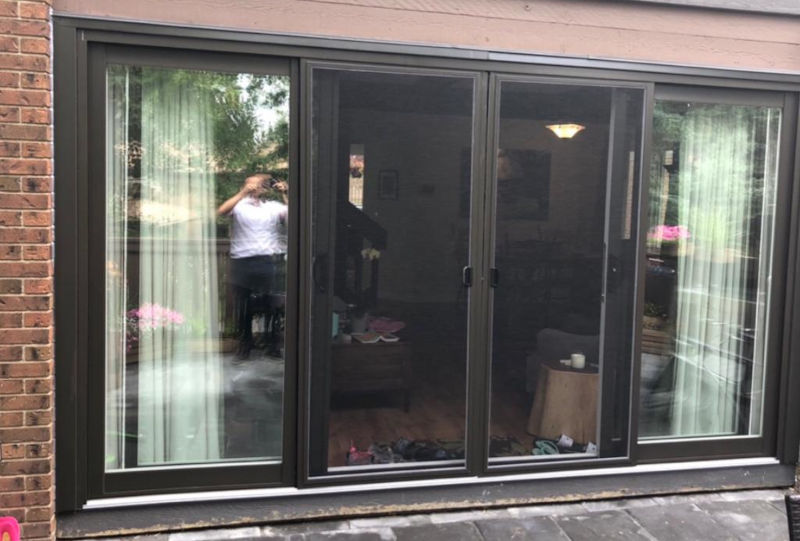
In winter, a patio door that sticks or won't latch is often frozen, not out of adjustment. Water left in the track, blocked weep holes, and snow drifted against the sill are the usual causes.
To free a frozen door, don't force it or chip at the ice with metal tools. Let the room warm the frame, then lift loose ice out with a plastic scraper and dry the track. Avoid heat guns and boiling water: sudden heat can stress the glass and the seals. To prevent it, keep the outside sill clear of snow, clean and dry the track before the first freeze and keep weep holes open. For drafts, weatherstripping and other cold-weather steps, see our guide on how to winterize a sliding glass patio door .
Cold can also change how a door latches, because frames shrink slightly in deep cold. Mention it when you book service if the latch only misbehaves on the coldest days.
When adjustment isn't enough
If a clean, level door still grinds, bumps or won't stay adjusted, the problem is usually worn parts or a door near the end of its life. Then sliding patio door repair or replacement makes more sense.
Signs you need a professional:
- Rollers that grind, wobble or have flat spots: this calls for sliding door roller replacement, which means lifting the panel out.
- A bent, cracked or worn track that the rollers bump over.
- Fog or moisture between the panes, which points to a failed seal in the glass unit.
- A frame that's visibly out of square, or gaps that come back weeks after adjusting.
If Canadian Choice Windows & Doors installed your door, submit a service or warranty request before you take anything apart. If an older door keeps fighting you, our sliding patio doors are made at our Canadian facility with double- or triple-pane glass, thermal breaks, and reinforced seals. You can compare every style on our patio doors page.
Frequently asked questions
Why is my sliding door suddenly hard to open?
Most often, debris has built up in the bottom track or under the rollers. Clean the track and weep holes and test again. If it still sticks, the rollers have probably dropped; in winter, check for ice first.
What should I use to lubricate a sliding door track?
Start with your door's care instructions, because some tracks are designed to run clean and dry. Avoid oil and grease, which hold grit. Where lubrication is recommended, a light silicone-based product used sparingly is the usual choice.
How do I know if my patio door rollers need replacing?
If the door still drags or bumps after cleaning and adjusting, or the rollers grind, wobble or look flat on one side, they're worn. You can replace sliding door rollers, but the panel has to come out, which is a two-person job.
Why won't my patio door latch in winter?
Ice in the track or on the keeper is the most common cause, along with frames that shrink slightly in deep cold. Clear and dry the track and keep the sill free of snow. If the door won't latch on mild days either, re-level the rollers and check the keeper.
When should I call a professional instead of adjusting the door myself?
Call a professional for worn rollers, a damaged track, fog between the panes, or any tilt-and-turn or bifold door that binds.

1000’s of Colours & Textured Finishes
Transform your home from ordinary to extraordinary with our new coloured and non-glare textured finishes. Available in a wide array of colours as well as custom matched colours for your very own personalized design.
Our Most Popular Replacement Window Colours: