Bay and Bow Windows: A Guide to Styles and Aesthetics

Key Takeaways
- Bay windows project outward in three angled panels, typically at 30 or 45 degrees, creating a defined angular alcove and a strong architectural focal point on the exterior.
- Bow windows use four or more panels of equal size set at gentler angles, forming a soft, continuous curve that suits traditional and period-style homes.
- Both styles expand interior space, increase natural light, and improve views without a full room addition, making them a practical way to improve natural light, curb appeal, and the feel of a room without adding a full extension.
- Because bay and bow windows project beyond the exterior wall, the glass package, framing, and professional installation matter more than they do for a standard flat window.
- Room placement, orientation, and glass specification should be decided before choosing between the two styles, as these factors affect both aesthetics and year-round performance.
Bay and bow windows are among the most recognizable architectural features in Canadian residential homes, and for good reason: they create a usable alcove that can make a room feel larger without requiring a full structural addition, bring significantly more natural light into the interior, and give both the inside and the outside of a home a sense of presence and character that flat windows cannot match. If you are deciding between a bow window vs. a bay window, the short answer is that bay windows are angular and bold, suited to traditional and craftsman-style homes where a strong exterior projection is the goal, while bow windows are curved and refined, better suited to Victorian, colonial, and period-style homes where the roofline and siding already carry ornate detail. Both styles can be built with durable vinyl frames and modern glass packages designed for Canadian weather, especially when the window is properly measured, insulated, and installed by an experienced replacement team. This guide compares the two styles in terms of lighting, room fit, energy performance, customization, and cost, with a focus on practical considerations for Canadian homes.
What Are Bay and Bow Windows?
A bay window is a multi-panel window assembly that projects outward from the exterior wall at defined angles, while a bow window uses a larger number of panels set at gentler angles to create a continuous curved profile.
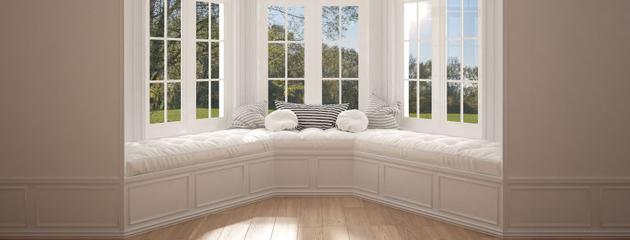
Both styles share the fundamental characteristic of extending beyond the exterior wall plane, which gives them their architectural impact and interior benefits. The projection creates an alcove inside the room, a recessed area of extra floor space that can serve as a window seat, a reading nook, a plant ledge, or simply add additional depth, making the room feel more generously proportioned. The expanded glass area captures light from multiple directions simultaneously rather than from a single fixed angle, which is why both styles are so effective at brightening interior spaces across different times of day and different seasons.
The difference between the two styles lies in geometry and proportion. A bay window typically consists of three panels: a large fixed centre panel flanked by two angled side panels set at either 30 or 45 degrees from the wall. The 45-degree configuration produces a more pronounced projection and a sharper angular profile, which reads as strong and defined from the street. The 30-degree configuration is shallower and slightly softer in appearance. A bow window uses four or five panels of equal or near-equal width, each set at a smaller angle, so the overall effect is a smooth curve rather than a sharp projection. The curve is subtle enough that from a distance, a bow window reads almost as a rounded bay, but the visual effect on the exterior elevation is considerably softer and more continuous.
Bay Window vs Bow Window: Key Design Differences

The main design difference is that bay windows project with sharp, defined angles and are typically three panels wide, while bow windows curve gently across four or more equal panels. This single distinction drives most of the differences in appearance, cost, and room impact.
| Feature | Bay Window | Bow Window |
|---|---|---|
| Panel count | 3 panels (centre + 2 sides) | 4 or 5 panels of equal size |
| Projection angle | 30 or 45 degrees | 10 to 15 degrees per panel |
| Profile shape | Angular; defined projection | Curved; continuous arc |
| Interior alcove | Deeper, more defined | Shallower, more gradual |
| Exterior character | Bold, structured | Soft, traditional, refined |
| Best style match | Craftsman, traditional, colonial | Victorian, period, and heritage homes |
| Width range | Varies by opening size and configuration | Usually requires a wider wall opening than a bay window |
| Operable panels | Side panels are often casement windows | Side panels are often casement or awning |
One practical consequence of the panel geometry is interior usability. The deeper alcove of a bay window, particularly at 45 degrees, creates a more defined recess that works naturally as a built-in window seat if the sill height is appropriate. A bow window's shallower, curved projection tends to produce a wider but less deep alcove, which works better as a display ledge or a place for houseplants than as a seating area. Neither configuration adds structural living space as a room addition does, but the psychological effect of both styles on room size and atmosphere is considerable and is one of the primary reasons homeowners choose them.
Which Style Looks More Traditional, Modern, or Elegant?
Bay windows read as more structured and versatile across architectural styles, while bow windows carry a distinctly traditional character that suits heritage and Victorian homes. Neither style is inherently more elegant than the other; the right choice depends on the home's existing architecture.
The angular geometry of a bay window is adaptable. In a craftsman home, a wide bay window with a simple roofline and a flat or slightly sloped roof over the projection looks clean and grounded. In a colonial or Georgian-style home, the same configuration adds symmetry and presence. In a more contemporary home with clean lines and minimal trim, a bay window with understated casing and a flat projection cap can work without appearing historically out of place. The key is that bay windows do not impose a specific historical style on the exterior: they can be detailed up or down depending on what is around them.
Bow windows, by contrast, carry a strong association with Victorian and Edwardian residential architecture. The curve reads as ornate and period-appropriate, which makes a bow window genuinely beautiful on a heritage home with decorative trim, scalloped siding, or a steeply pitched roofline. On a simple rancher or a modern box-style home, the same curve can look incongruous, as though it belongs to a different building. This is not a flaw in the bow window style; it is simply a characteristic that makes it more style-specific than the bay configuration.
“Bay windows are the more flexible architectural choice across different home styles. Bow windows work best when the home already has traditional detailing to match. We always ask homeowners to look at their roofline and exterior trim before deciding, because those existing details tell you which style will feel native to the building and which will feel added on.” — Helen Sin, Consumer Success Manager at Canadian Choice Windows & Doors
How Do They Affect Natural Light and Room Atmosphere?
Both bay and bow windows increase natural light beyond what a flat window of the same rough opening can deliver, because the angled or curved side panels capture light from directions that a flat window cannot reach. South-facing installations offer the greatest benefit in Canadian climates.
The light advantage of both styles comes from their geometry. A flat window captures light from the angle directly in front of it and nothing else. A bay or bow window, by projecting outward and including angled panels, catches light arriving from a wider arc of the sky. In the morning, the east-facing side panel receives direct sun while the centre panel is still in shade. In the afternoon, the relationship reverses. The result is a longer period of direct natural light entering the room across the day compared to a single flat window of equivalent or even larger size.
Orientation matters significantly for Canadian homeowners. A joint study by the National Research Council of Canada, Natural Resources Canada, and Canada Mortgage and Housing Corporation found that window performance in Canadian climates is strongly influenced by orientation and Solar Heat Gain Coefficient (SHGC). In simple terms, south-facing windows may benefit from glass that lets more winter sun into the home, while north-facing windows usually need glass that prioritizes insulation and reduces heat loss. For bay and bow windows, which have a larger total glass area than flat windows, applying this principle to the glass specification is particularly valuable: a south-facing bay window with a high-SHGC unit can contribute meaningfully to passive solar warming on clear winter days, while the same window on a north wall would benefit from a lower-SHGC, higher-insulation unit to minimize heat loss.
Inside the room, the effect of both styles on the atmosphere goes beyond raw brightness. The alcove created by the projection changes the spatial quality of the room by creating a transitional zone between inside and outside, a place where natural light pools and where views open in multiple directions at once. A living room with a bay or bow window feels different from a living room of the same size without one: the window becomes a focal point that organizes the room rather than simply a source of light and air.
Which Rooms Are Best Suited for These Styles?
Living rooms and dining rooms are the most common locations for bay and bow windows in Canadian homes, but the styles also work well in primary bedrooms and kitchens when the opening size, ceiling height, and exterior placement support the projection.
Living rooms
The living room is where bay and bow windows deliver the most visible return. The combination of expanded views, increased light, and the additional floor space of the alcove transforms the room's character. A window seat in a living room bay window is one of the most requested features in residential window installations, and it is a functional addition that also increases the usability of what would otherwise be perimeter space.
Dining rooms
A bay window in a dining room, particularly one that faces a garden or a significant outdoor view, creates a dining experience that feels more connected to the outside. The added width and depth of the projection also make the dining room feel more generously proportioned without any structural changes to the room itself. Bow windows in dining rooms are common in heritage homes, where the curved profile and the soft light they produce suit the formality of the space.
Primary bedrooms
A bay window in a primary bedroom creates a natural reading nook or a seating area that separates slightly from the main sleeping space. The added morning light from east-facing panels is a genuine comfort benefit, and the sense of expanded space is noticeable even in modestly sized rooms. Bow windows in bedrooms tend to work better in larger rooms where the width of the curved assembly is proportional to the wall it occupies.
Kitchens
Kitchen installations are less common but not unusual, particularly above a sink or along a wall facing a garden. A bay window above a sink replaces what is often the most utilitarian view in the house with an engaging connection to the outdoors. The depth of the alcove can also serve as a plant shelf or a display area for herbs and small containers. For kitchens, the window types and styles available at Canadian Choice Windows & Doors include configurations suited to different wall orientations and ceiling heights, which is worth reviewing before committing to a projection size.
Are Bay and Bow Windows Energy Efficient?
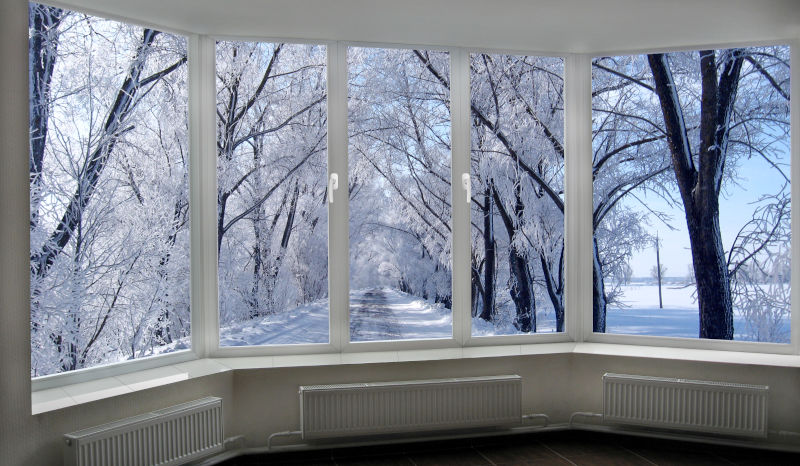
Bay and bow windows can be highly energy efficient when properly specified, but because they project beyond the exterior wall, they have more exposed surface area than flat windows and require careful attention to glazing, framing, and installation to perform well in Canadian winters.
The energy performance of both styles depends on the same factors that govern all windows in Canada: the U-factor, which measures the rate of heat transfer through the assembly, the Solar Heat Gain Coefficient, which determines how much solar energy the glass admits, and the Energy Rating (ER), which combines U-factor, SHGC, and air leakage into a single number used by the Canadian ENERGY STAR program. According to Natural Resources Canada's ratings and certification guidance , a higher ER value indicates better overall energy performance for windows in Canadian conditions. Both bay and bow windows can be specified with glazing that meets ENERGY STAR requirements for any Canadian climate zone.
The complication for bay and bow windows is geometry. Because the assembly projects outward from the exterior wall, the bottom of the projection, the angled knee wall below the window sill, is exposed to outdoor temperatures on three sides rather than one. This area is a significant source of heat loss if it is not properly insulated and finished. A well-insulated knee wall with rigid insulation, a vapour barrier, and appropriate interior finish is essential for the window to perform at or near the thermal level its glazing rating suggests. Skipping this step or treating it as an afterthought is one of the most common reasons bay and bow windows underperform in Canadian winters despite having adequate glass specifications.
The operable side panels in both styles, typically casement or awning windows, also contribute to energy performance by using compression seals that press the sash tight against the frame when closed. This is the same sealing mechanism that makes hinged windows more airtight than sliding windows, as confirmed by Natural Resources Canada, and it applies equally to the side panels of bay and bow assemblies. For the energy-efficient windows available from Canadian Choice Windows & Doors, the glass package options for bay and bow configurations include Low-E coatings and argon fills suited to different orientations and climate zones.
“The knee wall below a bay or bow window is where most of the energy problems happen. We frame it properly with rigid insulation and treat it the same way we would treat an exterior wall. If that step is missed, even a strong glass package may not deliver the comfort and performance the homeowner expects.” — Tony Wong, Project Manager at Canadian Choice Windows & Doors
Customization Options That Matter Most
The most impactful customization decisions for bay and bow windows are projection angle, glass package, roof style over the projection, and the finish of the knee wall below. Interior and exterior colour and grille patterns mainly affect appearance, while hardware can also influence daily operation, security, and long-term usability.
For bay windows, the projection angle of the side panels determines both the depth of the interior alcove and the visual weight of the exterior projection. A 45-degree configuration usually creates a deeper projection than a 30-degree bay, making the alcove feel more defined and giving the exterior a stronger architectural profile. A 30-degree bay is more restrained and suits smaller wall areas or homes where a large projection would look out of scale. The choice also affects cost, as a deeper projection requires more roofing material and a more complex installation.
The roof style over the projection is one of the most visible customization decisions, yet many homeowners underestimate its importance. The three common options are a shed roof with a single slope, a hip roof with slopes on three sides, and a flat or low-slope roof with a decorative copper or aluminum cap. The shed roof is the most cost-effective and suits craftsman and contemporary homes. The hip roof is more traditional and suits colonial and heritage styles. The flat cap is the cleanest contemporary option and pairs well with simple exterior trim. The roofing material should match or complement the main roof for a coherent exterior appearance.
Interior finish choices include the window seat or sill depth, the interior casing style, and whether the side panels are fixed or operable. Operable side panels allow ventilation and are the standard choice for living rooms and bedrooms. Fixed side panels slightly increase the glass area and reduce hardware costs, but eliminate the ability to open the window for fresh air. For the knee wall finish below the projection, options include painted drywall, panelling, or built-in storage, and this choice significantly affects both the appearance and functionality of the alcove space. If a window seat is planned, the knee wall needs to be framed and finished to support the seating load before the window is installed, not after.
Exterior colour and finish choices for vinyl windows now include a wide range of factory-applied colours that eliminate the need for painting and maintain their appearance without the maintenance cycles required by painted wood. Choosing a colour that complements the existing siding and trim is worth spending time on during the planning phase, because the bay or bow window will be one of the most visible elements of the exterior elevation, and its colour will read clearly from the street.
How Do Costs Compare in Canada?
In most cases, a bow window costs more than a bay window of similar overall size because it uses more window panels and requires a wider, more precise installation. A bay window is usually the more cost-effective option, while a bow window is often chosen for its wider curved profile and traditional appearance.
Bay windows are generally less expensive than bow windows of equivalent width because they use fewer panels and have a simpler structural geometry. For both styles, the total installed cost includes the window unit, the roofing over the projection, the knee wall framing and insulation, and the interior finish.
The unit cost of the window assembly reflects the number of panels, the size of each panel, the selected glass package, and whether the side panels are operable or fixed. A bow window uses four or five panels compared to three for a bay, and the equal sizing of all panels in a bow assembly means each panel tends to be larger than the side panels of a comparably wide bay window. This adds to both material cost and the precision required during installation, which is why bow windows consistently come in at a higher price point than bay windows of similar width.
Installation cost for both styles is higher than for flat windows because the projection requires structural support beneath the assembly, a roof or cap above it, and careful integration with the exterior cladding and interior finish on all three exposed sides. The framing of the knee wall and the roofing work are labour-intensive and require experience with projecting window assemblies to be done correctly. Choosing an installation team with documented experience with bay and bow windows is more important here than for any other window type, because errors in framing, flashing, or insulation at the projection are difficult and expensive to correct after the fact. For a realistic picture of the total installed cost for your specific project, the window replacement cost overview at Canadian Choice Windows & Doors covers the main variables.
Which Style Has Better Curb Appeal?
Both styles increase curb appeal, but in different ways. A bay window adds a strong, defined architectural feature with clear visual weight. A bow window softens the exterior elevation with a curved profile that suits homes with existing period or ornate detailing.
Curb appeal of a bay or bow window comes from two sources: the shape of the projection itself and how it interacts with the surrounding exterior details. A bay window projects decisively and creates shadow lines at the angles, which reads as bold and confident from the street. The defined geometry makes it a natural focal point on the facade, particularly when paired with a contrasting roof over the projection and detailed casing around the frame. On a home with simple exterior lines, a bay window introduces architectural interest that a standard flat window usually cannot create in the same way.
A bow window's curved profile creates a softer and more continuous relationship with the facade. It does not project as dramatically, and from most street-level viewing angles, it reads as a gentle sweep rather than a sharp feature. In a home with ornate trim, decorative woodwork, a steep or complex roofline, or exterior details associated with Victorian or Edwardian residential architecture, the bow window feels native and appropriate. It contributes to curb appeal not by adding a bold new feature but by reinforcing and complementing the existing architectural character.
Pros and Cons of Bay and Bow Windows
Both styles offer genuine benefits in terms of light, space, and aesthetics, but they also come with considerations regarding cost, installation complexity, and maintenance that are worth understanding before making a decision.
Advantages of both styles
- Expanded natural light from multiple angles across the day, beyond what any flat window of the same rough opening can provide.
- Added interior space through the alcove projection, which can be used as a window seat, plant shelf, or display area without a structural room addition.
- Significant impact on curb appeal and exterior character, making both styles among the most architecturally distinctive window upgrades available.
- South-facing installations can contribute to passive solar warming in winter when specified with appropriate high-SHGC glazing.
Considerations for both styles
- Higher installed cost than flat windows of the same size, driven by the roofing, knee wall framing, and installation complexity of the projection.
- Greater exposure of the glass and frame assembly to outdoor temperatures on three sides, requiring careful insulation of the knee wall to achieve the thermal performance the glazing rating indicates.
- Homeowners should periodically check the roof cap, flashing, and drainage above the projection to help prevent moisture issues over time.
- The projection reduces the usable wall area immediately below the window on the interior, which can limit furniture placement options in smaller rooms.
Specific to bay windows
- The angular geometry creates a more assertive exterior feature, which may not suit all architectural styles, particularly very simple or contemporary homes.
- The 45-degree configuration requires a deeper projection, which can be a constraint on narrow lots where setback or clearance limits the projection depth.
Specific to bow windows
- The curved profile is strongly associated with traditional and heritage architecture; on a modern or contemporary home, the style can look out of place.
- The wider assembly of a bow window requires a longer uninterrupted wall section and may not be practical in rooms with doors, adjacent walls, or structural elements that limit the available width.
Which Style Is Right for Your Home?
If your home has clean lines, a traditional or craftsman character, or a moderate exterior with room for a bold focal point, a bay window is the more versatile and typically more cost-effective choice. The angular projection delivers a strong design statement, creates a usable alcove, and works across a wider range of architectural styles than the bow configuration. It is a practical choice when you want more light, more character, and a usable alcove without opting for the wider, curved profile of a bow window.
If your home already features Victorian, Edwardian, colonial, or heritage detailing, and the exterior elevation includes ornate trim, decorative siding, or a complex roofline, a bow window is the style that will feel genuinely native to the building rather than added on. The gentle curve reinforces the existing character rather than introducing a competing feature, and, at its best, it makes a heritage home look more fully itself.
In both cases, the glass package, the knee wall insulation, and the quality of the installation will determine how the window performs through a Canadian winter and how well it maintains its appearance and performance over time with proper care. The team at Canadian Choice Windows & Doors can help you evaluate both styles against your specific home, your wall dimensions, and your climate zone. A consultation with Canadian Choice Windows & Doors can help you compare bay and bow window options based on your home’s layout, style, climate zone, and comfort goals.
Frequently Asked Questions
Can bay and bow windows be installed in any room?
Both styles require a wall section long enough to accommodate the full assembly width and structural support below and above the projection. Living rooms, dining rooms, and primary bedrooms are the most common locations. Kitchens and smaller bedrooms can work when the wall dimensions and ceiling height are appropriate, but the feasibility depends on the specific opening and the exterior conditions at that wall location.
Do bay and bow windows require a building permit in Canada?
In most Canadian jurisdictions, replacing an existing window with a bay or bow window that projects beyond the exterior wall may be subject to local building permit requirements, particularly if the projection affects lot setback distances. Requirements vary by municipality. Checking with your local building department before ordering the window is recommended, especially on homes in heritage districts or on narrow lots close to property lines.
How do I keep a bay or bow window from drafting in winter?
The most common source of cold air in bay and bow windows is an under-insulated knee wall below the sill, not the glass itself. Ensuring the knee wall is framed with rigid insulation and properly sealed is the most effective step. Checking the weatherstripping on any operable side panels before winter and inspecting the exterior caulk around the perimeter of the projection annually are also practical maintenance steps that keep the assembly airtight over time.
Which glass package should I choose for a north-facing bay window in Canada?
For many north-facing bay windows in colder Canadian climates, a glass package with a low U-factor and stronger insulation value is usually a smart choice. Triple glazing may be recommended depending on the home, window size, budget, and comfort goals. The low SHGC limits heat loss in the absence of direct solar gain, and the triple glazing reduces heat transfer through the glass assembly. For south-facing installations, a higher SHGC allows passive solar warming in winter without causing overheating in summer, when the sun is higher in the sky. The energy-efficient windows available at Canadian Choice Windows & Doors include glass package options suited to different orientations and climate zones.

1000’s of Colours & Textured Finishes
Transform your home from ordinary to extraordinary with our new coloured and non-glare textured finishes. Available in a wide array of colours as well as custom matched colours for your very own personalized design.
Our Most Popular Replacement Window Colours: